Cloud Computing
- 608 pages
- 22 hours of reading





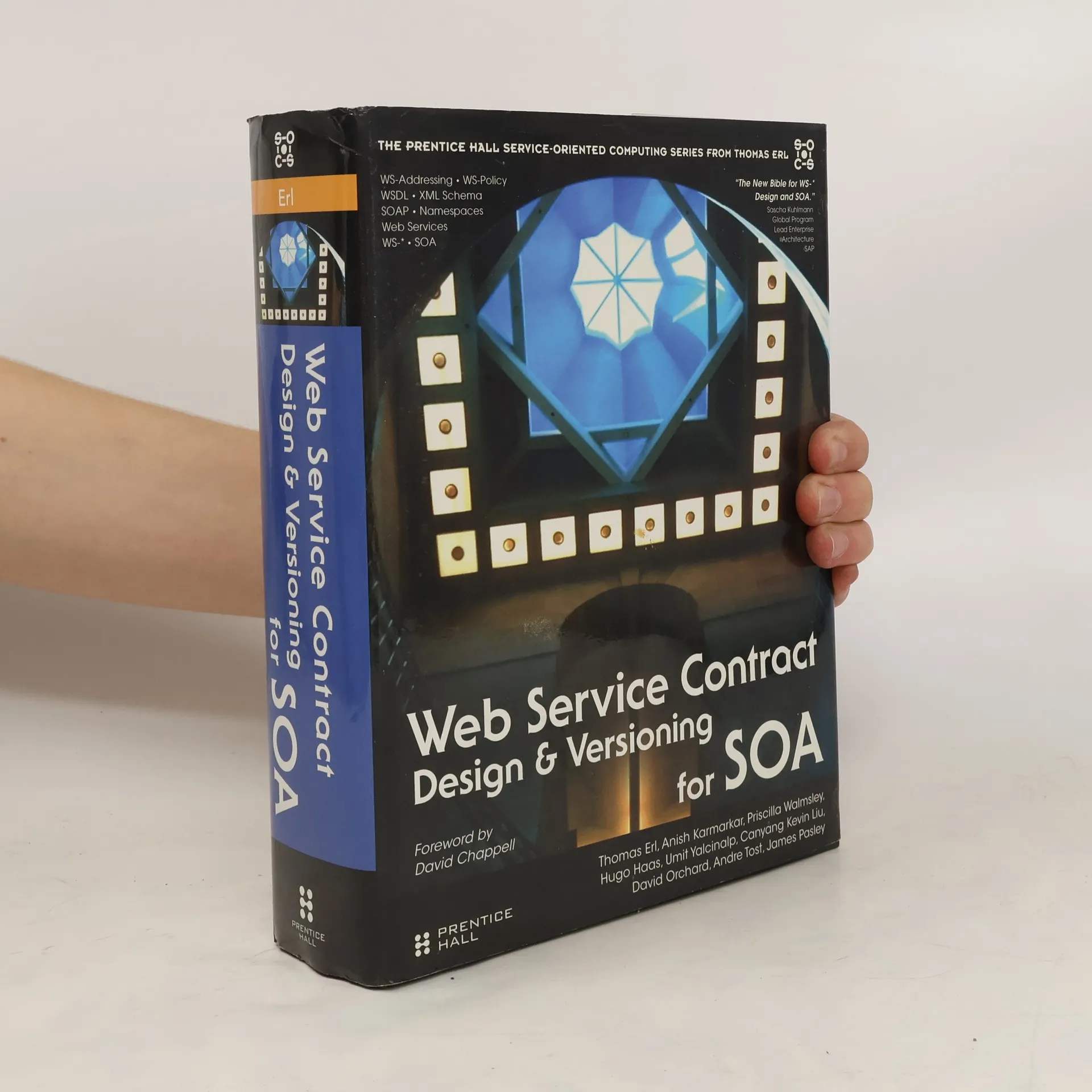

A comprehensive tutorial and reference for creating Web service contracts for service-oriented solutions.
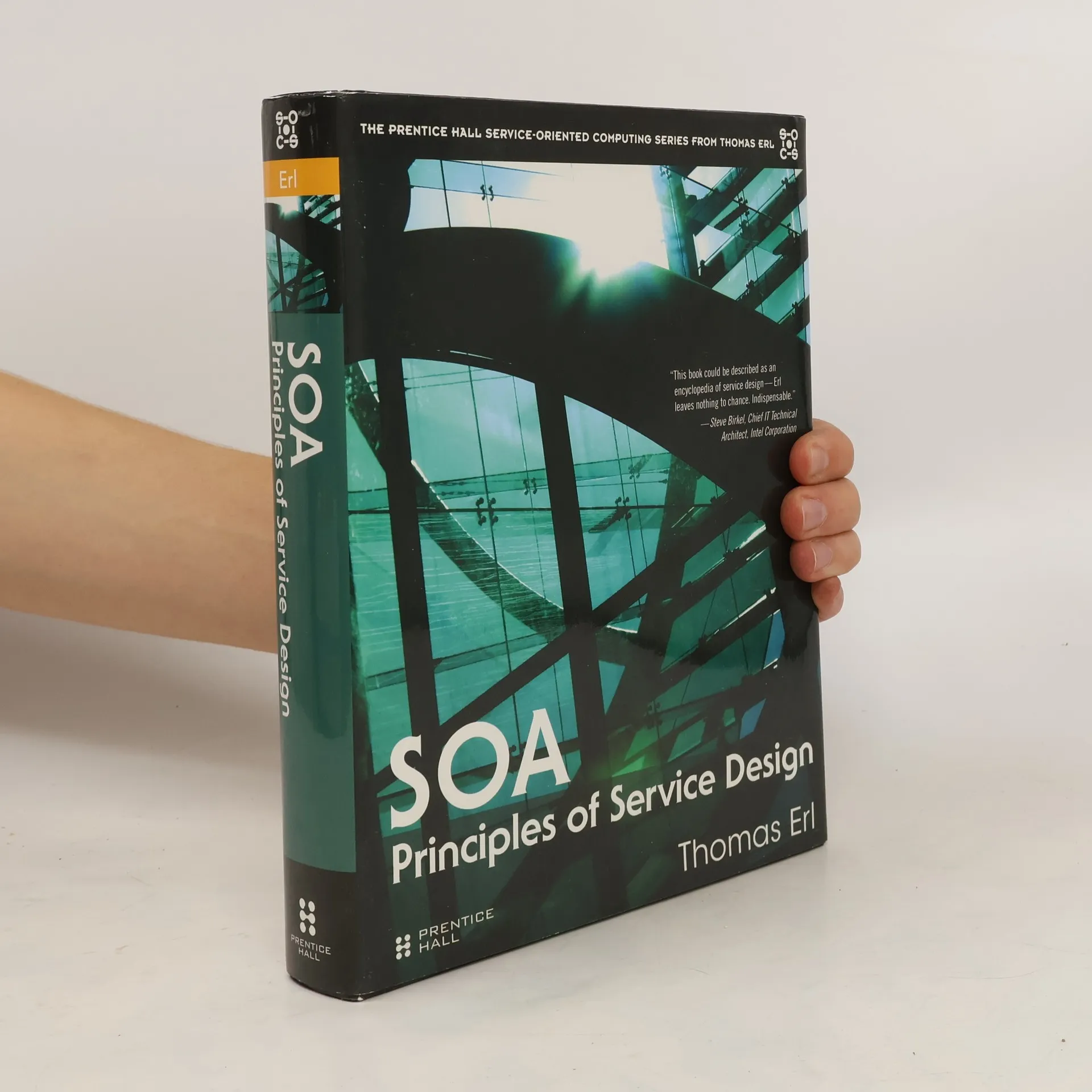
The bulk of the book covers design principles, with material on service contracts, service coupling, service abstraction, reusability, and service autonomy. Final chapters offer a comparison of service-orientation and object orientation, and look at supporting practices
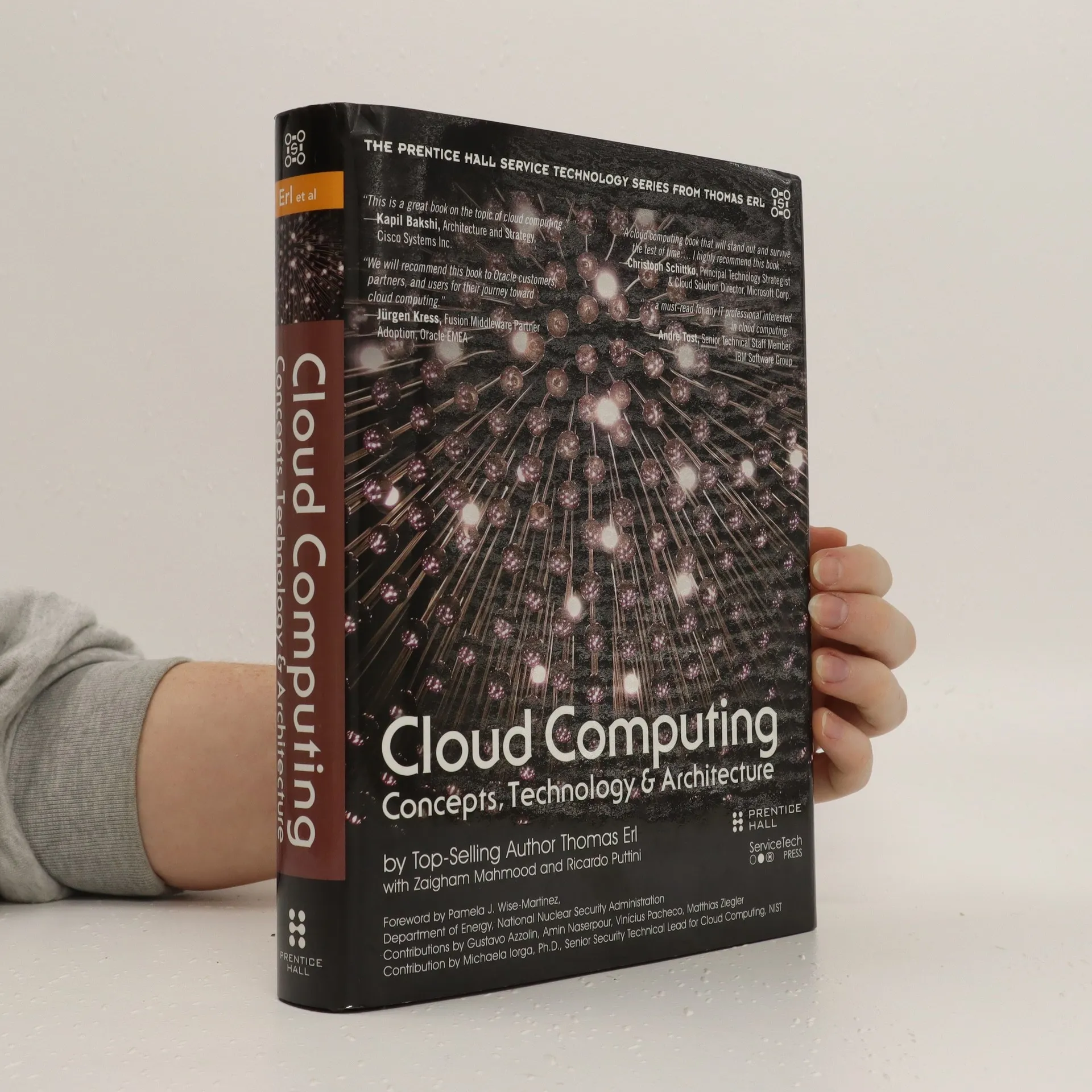
This book describes cloud computing as a service that is "highly scalable" and operates in "a resilient environment". The authors emphasize architectural layers and models - but also business and security factors.
The first start-to-finish, step-by-step guide to modeling and designing SOA. Using Service-Oriented Architecture (SOA), enterprises can deliver high-value business services more rapidly and effectively, and gain unprecedented flexibility and value from existing IT infrastructure. SOA has earned the support of virtually every major software provider, and some 75% of enterprises surveyed are now investing in SOA technology and expertise. In Service-Oriented Architecture: Concepts, Technology, and Design, the author of 2004's best-selling SOA book presents the first end-to-end-tutorial for modeling and designing successful service-oriented architectures from the ground up. Writing in plain English, Thomas Erl provides step-by-step process descriptions for analyzing and designing any service or service-oriented business process definition.
A formal catalog that provides a pattern language for building service-oriented solutions through solving common design problems, this text offers expert guidance in the form of proven design patterns (and anti-patterns) to minimize the risk and maximize the potential of service delivery in support of SOA.
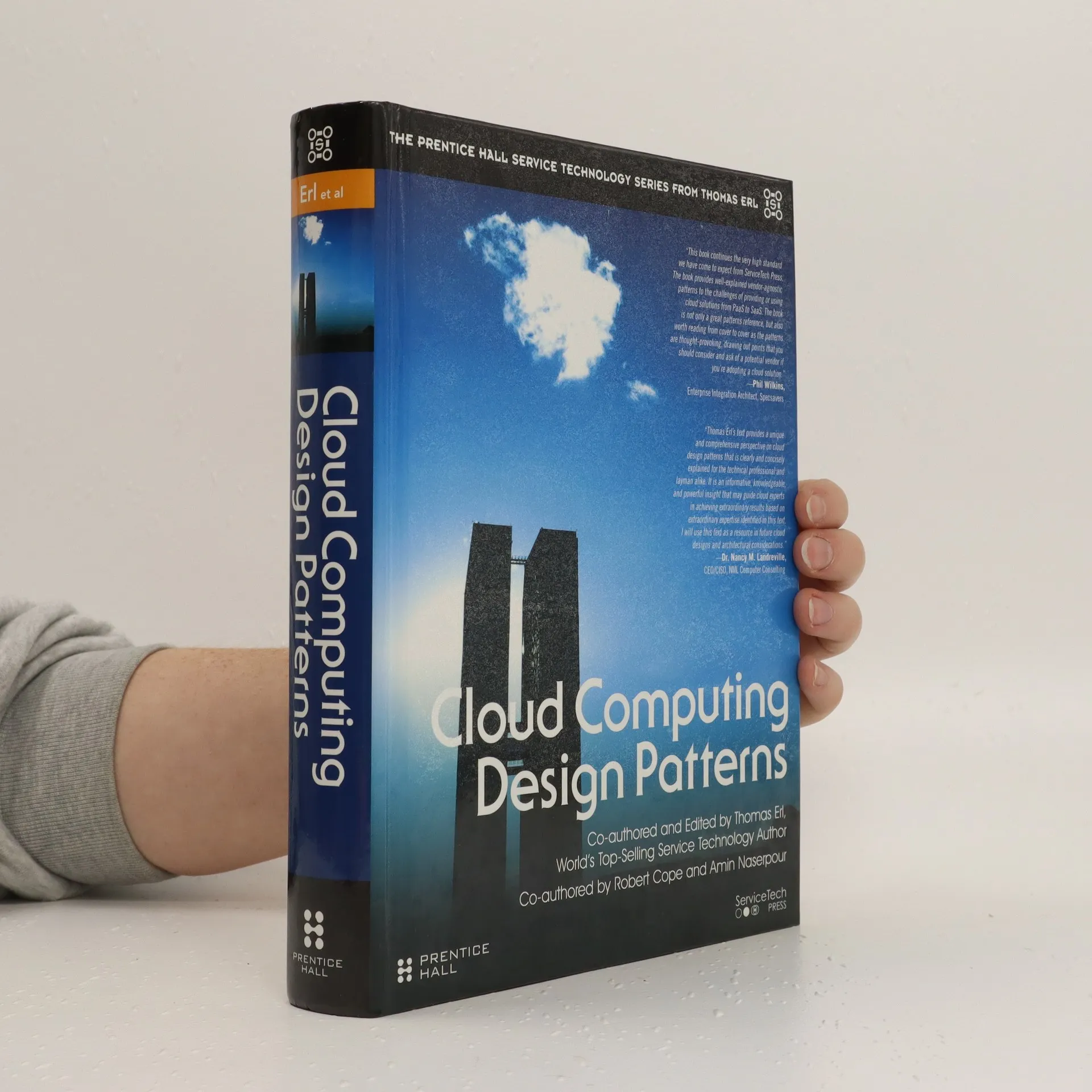
This book upholds the high standards of ServiceTech Press, offering vendor-agnostic patterns to address challenges in cloud solutions, from PaaS to SaaS. It serves as both a valuable reference for patterns and a thought-provoking read, prompting critical questions for potential vendors when adopting cloud solutions. Thomas Erl's work presents a unique perspective on cloud design patterns, clearly explained for both technical professionals and laypersons. The text is a powerful resource for cloud experts seeking extraordinary results, making it essential for future cloud designs and architectural considerations. Over two years in development, this comprehensive catalog features 100+ design patterns that illustrate proven solutions to common cloud challenges, supported by over 300 diagrams. Key topics include scalability, elasticity, reliability, resiliency, recovery, data management, and storage. The book also covers cloud security extensively, addressing networking safeguards, identity systems, trust assurance, and auditing. With unprecedented technical depth, it is an indispensable resource for cloud technology architects, solution designers, developers, administrators, and managers. Key areas discussed encompass enabling scalable network access, optimizing multitenant environments, ensuring operational resiliency, provisioning cloud resources, implementing security controls, and monitoring cloud security. The book also tac
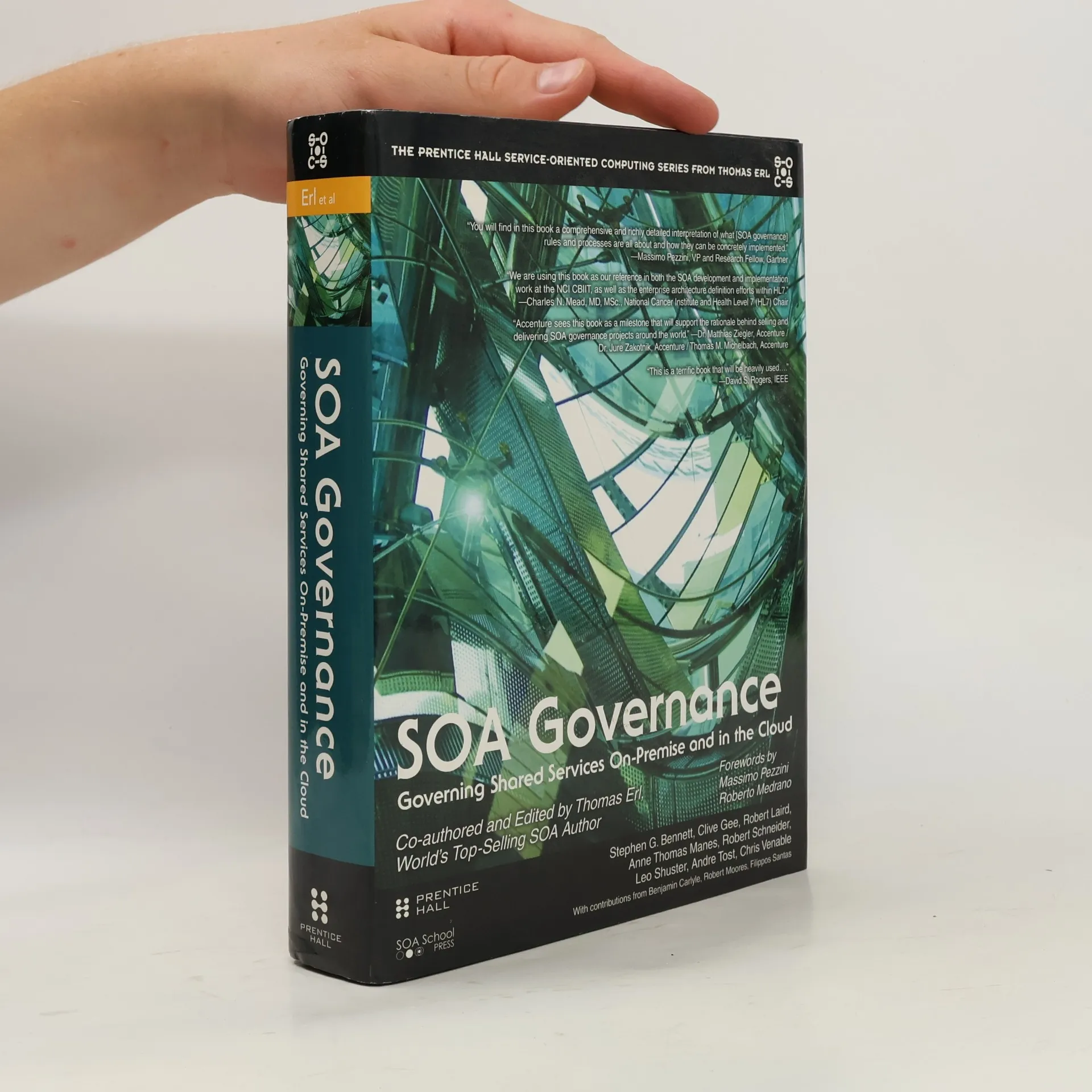
"This book provides an indispensable guide for establishing a firm SOA governance foundation. Easy to read, comprehensive, pragmatic...excellent job." --Nick Laqua, Enterprise SOA Architect, Cathay Pacific Airways " SOA Governance is a must-read that provides an in-depth look at the organizational, managerial, procedural, and technical aspects that any SOA project needs to consider. If you're investing in SOA, you'll benefit greatly by having this excellent resource available to you as you contend with the many challenges of creating your own SOA governance." --David E. Michalowicz, Principal, Information Systems Engineer, The MITRE Corporation "With this book Thomas Erl [and his team] do a great job in outlining a framework to implement an SOA governance program. For each stage of the project lifecycle, necessary governance precepts and processes are described concretely by referring to the service-orientation principles and SOA patterns. This makes it an indispensable source of information for any SOA practitioner or any professional who plans to start an SOA initiative." --Jean-Paul De Baets, Principal SOA Architect, Fedict (Belgian Federal Government Information and Communication Technology Service)