Gilbert Sorrentino was a pivotal figure in the American literary landscape, co-founding the literary magazine Neon and later serving as its editor. His editorial work at Grove Press encompassed significant works, laying groundwork for his own extensive authorial career. His writing is characterized by formal experimentation and a profound exploration of the human condition. Sorrentino's oeuvre has been celebrated for its intellectual depth and distinctive voice.
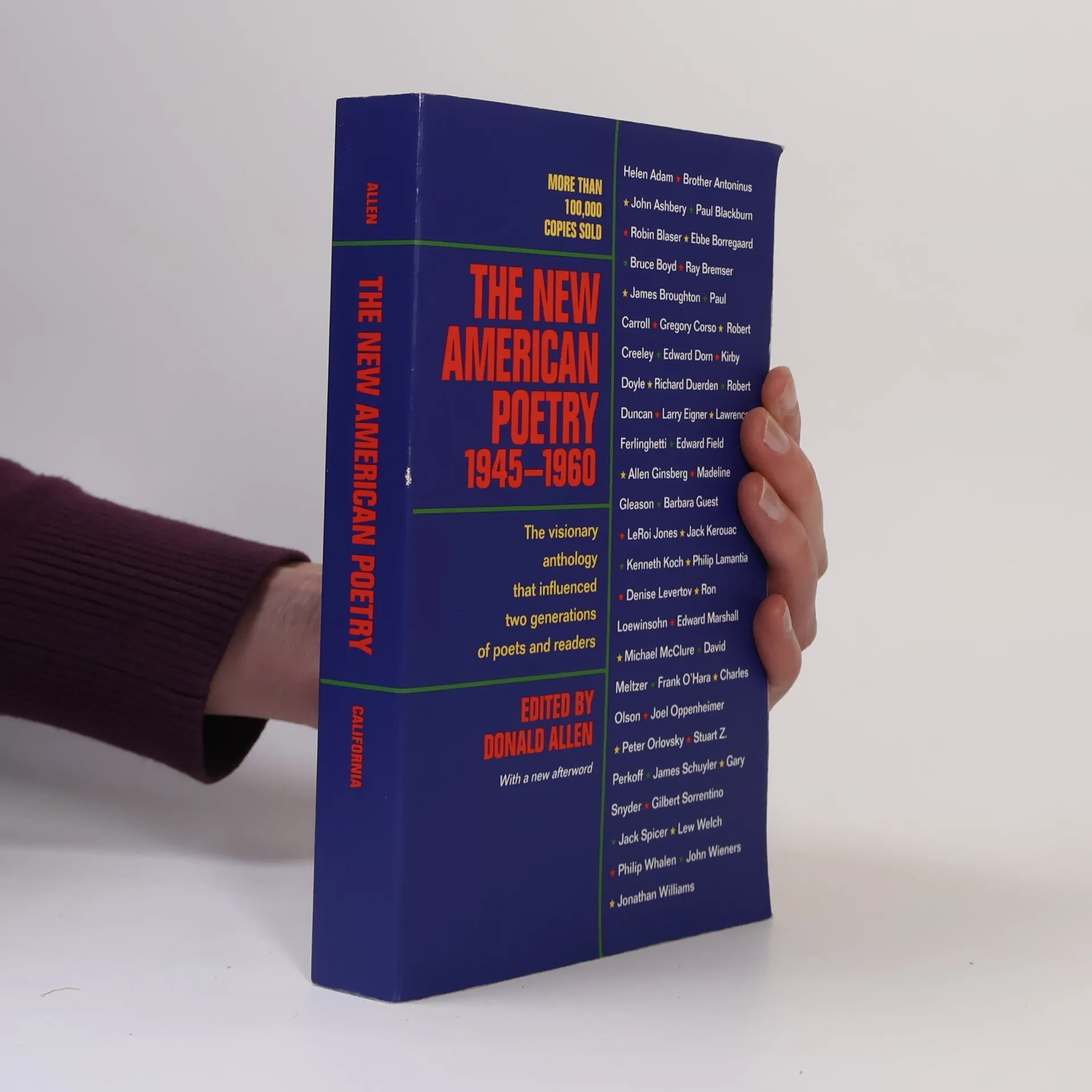
This counter-cultural collection of American verse fits in Robert Lowell's famous definition of the raw in American poetry. Contributors include: Olson; Duncan; Creeley; Guest; Ashbery; Ginsberg; Kerouac; Levertov; O'Hara; Snyder; and Schuyler.
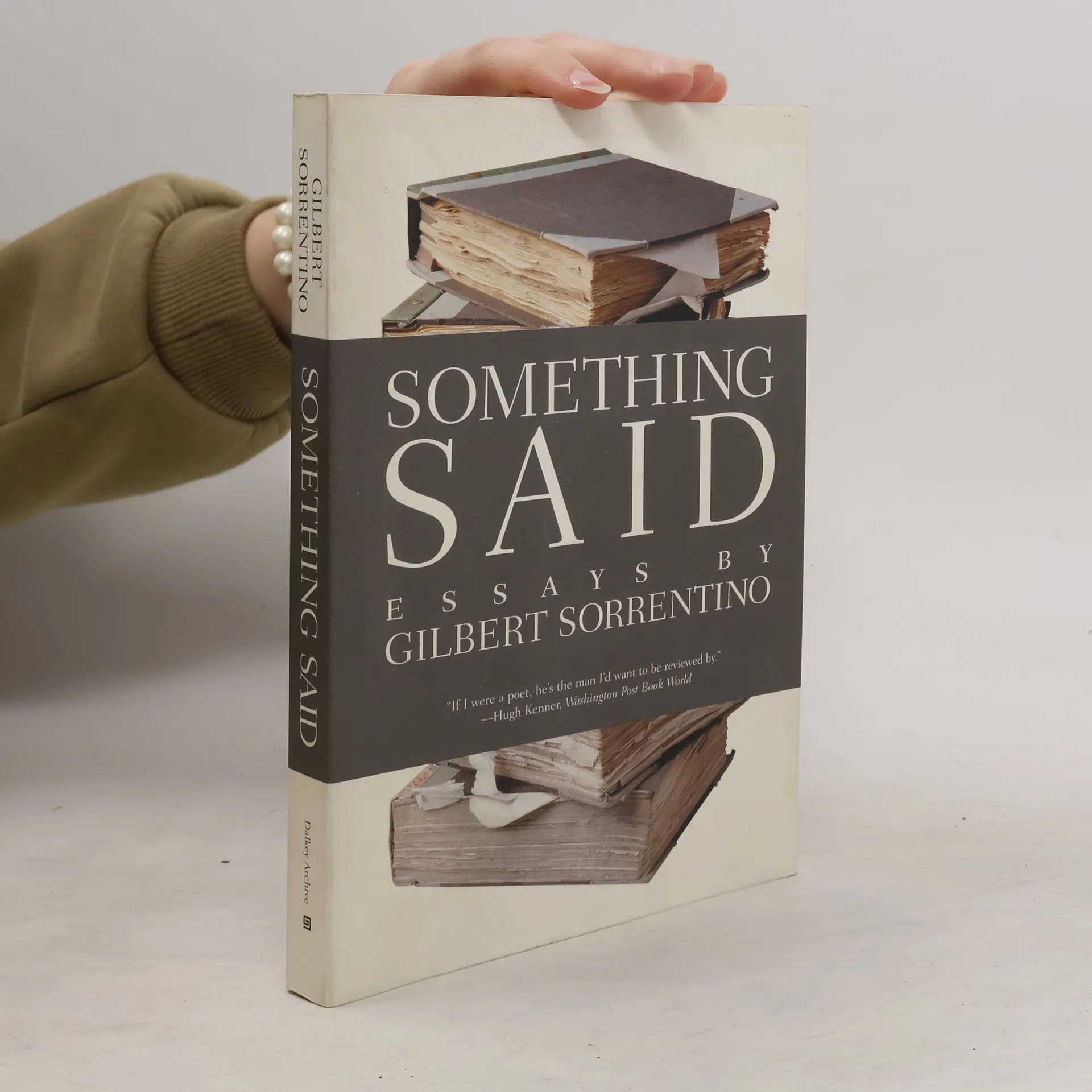
For over four decades, Gilbert Sorrentino has produced brilliant, penetrating essays and reviews, each one an uncompromising statement of what is good - and what is not - in literature and culture. Something Said collects in a single volume these definitive readings of such major twentieth-century innovators as William Carlos Williams, Edward Dahlberg, Hubert Selby, John Hawkes, Flann O'Brien, William Gaddis, Italo Calvino, John Hawkes, and Robert Creeley, along with critical writings on film, pop culture, and visual art. Featuring seventy-two pieces in all, this new expanded edition includes twenty-five pieces written since the publication of the first edition in 1984, and demonstrates Sorrentino's concern for the craft of writing and the development of an American aesthetic.
Set at a boardinghouse in rural New Jersey in the summer of 1939, this novel revolves around four people who experience the comedies, torments, and rare pleasures of family, romance, and sex while on vacation from Brooklyn and the Depression. As the novel's perspective shifts to each of the four primary characters, four discrete stories take form, stories that Sorrentino further enriches by using a variety of literary methods--fantasies, letters, a narrative question-and-answer, fragments of dialogue and memory. Combining humor and feeling, balancing the details and the rhythms of experience, Aberration of Starlight re-creates a time and a place as it captures the sadness and value of four lives.
Widely regarded as Sorrentino's finest achievement, Mulligan Stew takes as its subject the comic possibilities of the modern literary imagination. As avant-garde novelist Antony Lamont struggles to write a "new wave murder mystery," his frustrating emotional and sexual life wreaks havoc on his work-in-progress. As a result, his narrative (the very book we are reading) turns into a literary "stew" an uproariously funny melange of journal entries, erotic poetry, parodies of all kinds, love letters, interviews, and lists--as Hugh Kenner in "Harper's" wrote, "for another such virtuoso of the List you'd have to resurrect Joyce." Soon, Lamont's characters (on loan from F. Scott Fitzgerald, Flann O'Brien, James Joyce, and Dashiell Hammet) take on lives of their own, completely sabotaging his narrative. Sorrentino has vastly extended the possibilities of what a novel can be in this extraordinary work, which both parodies and pays homage to the art of fiction.
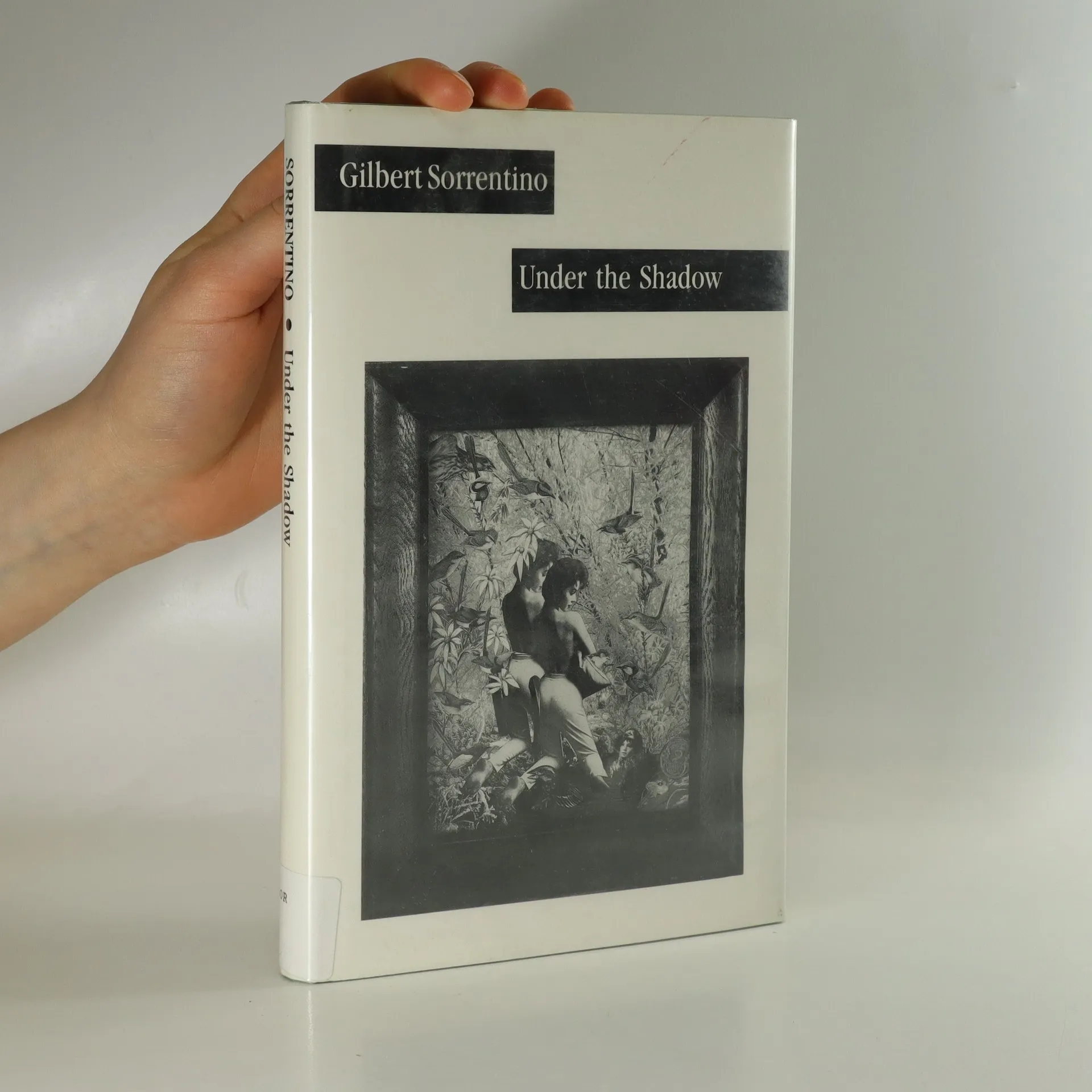
"Under the Shadow" takes the form of fifty-nine brief sketches with simple nouns as titles. These exquisite vignettes take place on a plane at once surreal, abstract, and ominous, describing a set of people and incidents derived largely from fragments of conversation and gossip gathered here and there. They are reminiscent of characters amid inimitable ersatz pastorals, with tableaux both innocent and grotesque. There is something ambiguous about these passages, something deliberately closed and dreamlike. Many of them read like primal scenes of private pathologies; others are memories that, many years later, retain their power to haunt.
One of the most noted of American fiction writers, Gilbert Sorrentino is also a brilliant poet, and has authored some nine books of poetry, including the renowned The Orangery, first published in 1978 and republished by Sun & Moon Press in 1995. This new volume of selected poems includes the poems of the Black Sparrow edition of 1981 and the numerous new poems written in the 20 years following that volume.
Like a series of snapshots, this novel presents a picture of a particular Brooklyn neighborhood between the years 1935 and 1951, covering the Depression, World War II, the beginnings of the Cold War, and the Korean War. In short, colorful, dramatic episodes, the book details the collapse of a basically decent, homogeneous, and honorable group of people into a greedy, ignorant, and slipshod conglomeration, corrupted by money made available by the war economy. The neighborhood as a whole is the protagonist, although there are many characters who become familiar. Moving the way memory does, the narrative skips from episode to episode in no conventional time sequence, projecting indelible flashes of the past as they strike the mind. Gilbert Sorrentino has beautifully encompassed a section of America in this very human, funny, intelligent novel which re-creates perfectly the mood and the time of its inhabitants and its past.
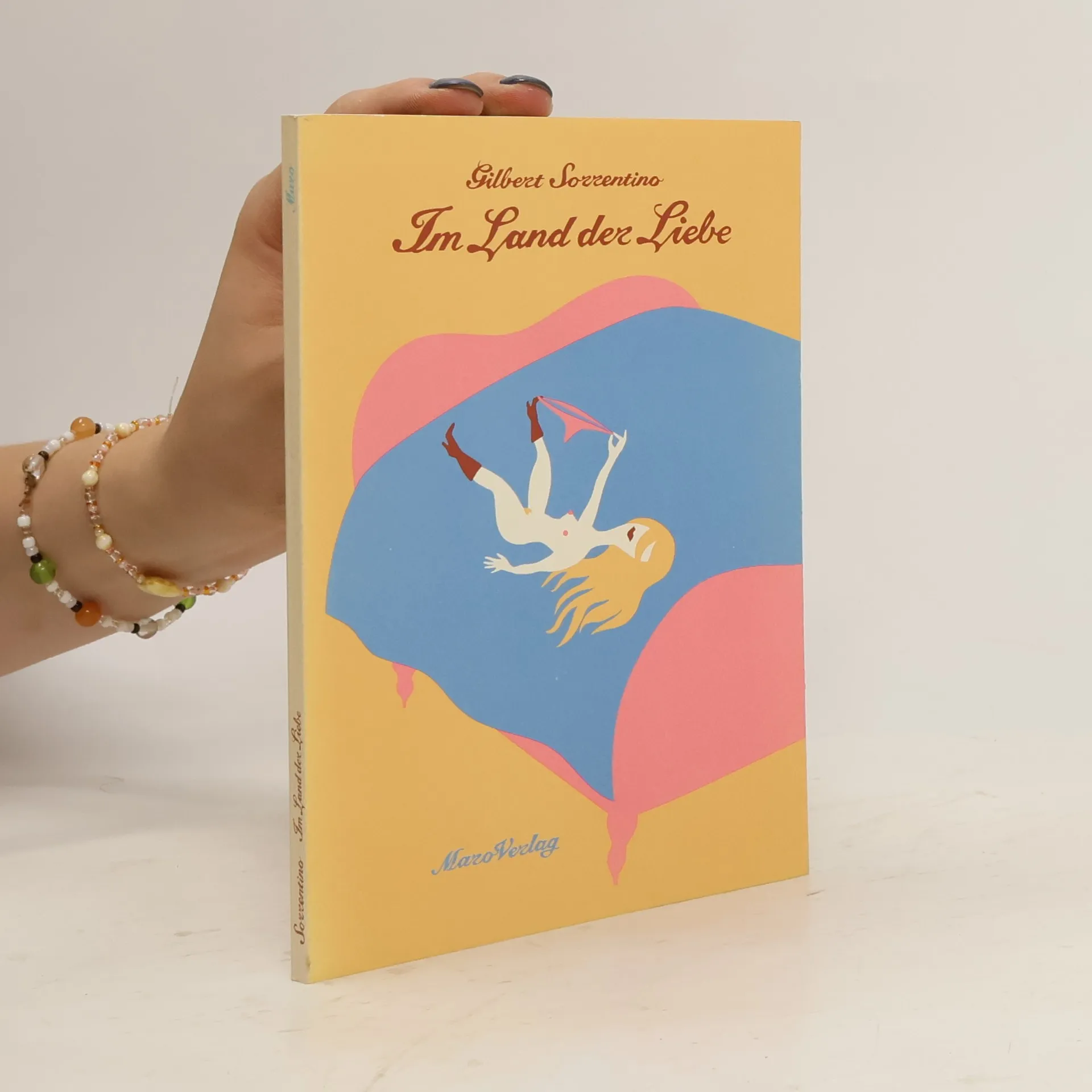
Gilbert Sorrentino präsentiert in diesem Werk eine bizarre und traurige Meditation über die Liebe sowie eine komische Reflexion über das Schreiben. Es handelt sich um eine Gespenstergeschichte, illustriert von der Schweizer Künstlerin Anna Sommer, deren Illustrationen Scherenschnitt und zarten Bleistift vereinen.
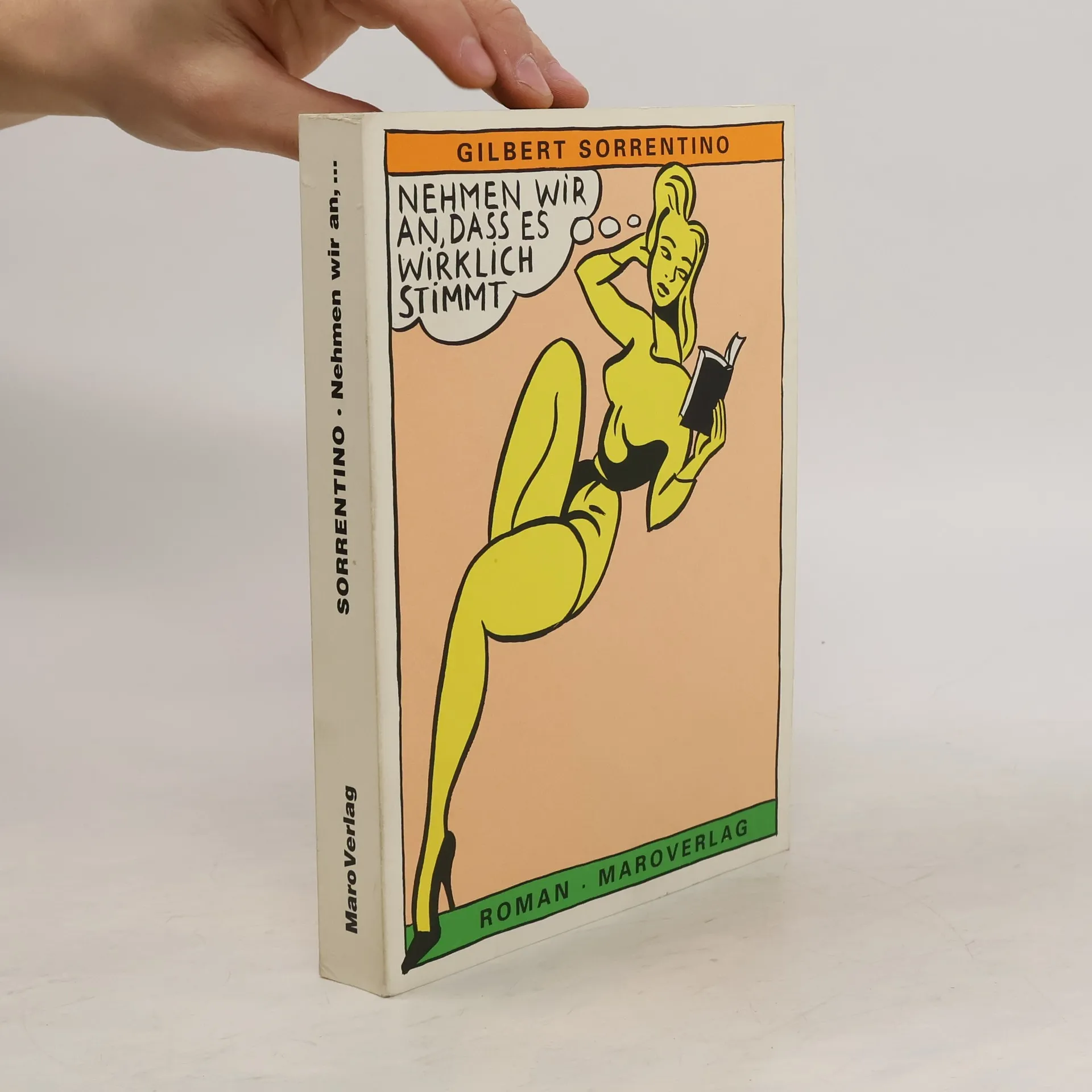
„Nehmen wir an, dass es wirklich stimmt“ ist ein Schlüsselroman der New Yorker Kunstszene der 60er Jahre. Es ist ein absurd-komisches Buch über Eifer, Eitelkeit und Dummheit der echten und Möchtegern-Künstler, „eine Beschimpfungsorgie, die an Thomas Bernhard erinnert.“ (Deutschlandfunk)„. viele Leute haben sich darin wiedererkannt – einer meiner besten Freunde hat daraufhin nie wieder mit mir gesprochen.“