Ronald Firbank was a British novelist whose work is celebrated for its eccentric and decadent style. Firbank often explored themes of religion, homosexuality, and social hypocrisy in his novels, employing an unusual sense of humor and irony. His unique prose, characterized by linguistic experimentation and novel metaphors, sets him apart from his contemporaries. Firbank's writing remains a fascinating glimpse into a world of beauty, sin, and spiritual seeking.
This scarce antiquarian book is a facsimile reprint of the original. Due to its age, it may contain imperfections such as marks, notations, marginalia and flawed pages. Because we believe this work is culturally important, we have made it available as part of our commitment for protecting, preserving, and promoting the world's literature in affordable, high quality, modern editions that are true to the original work.
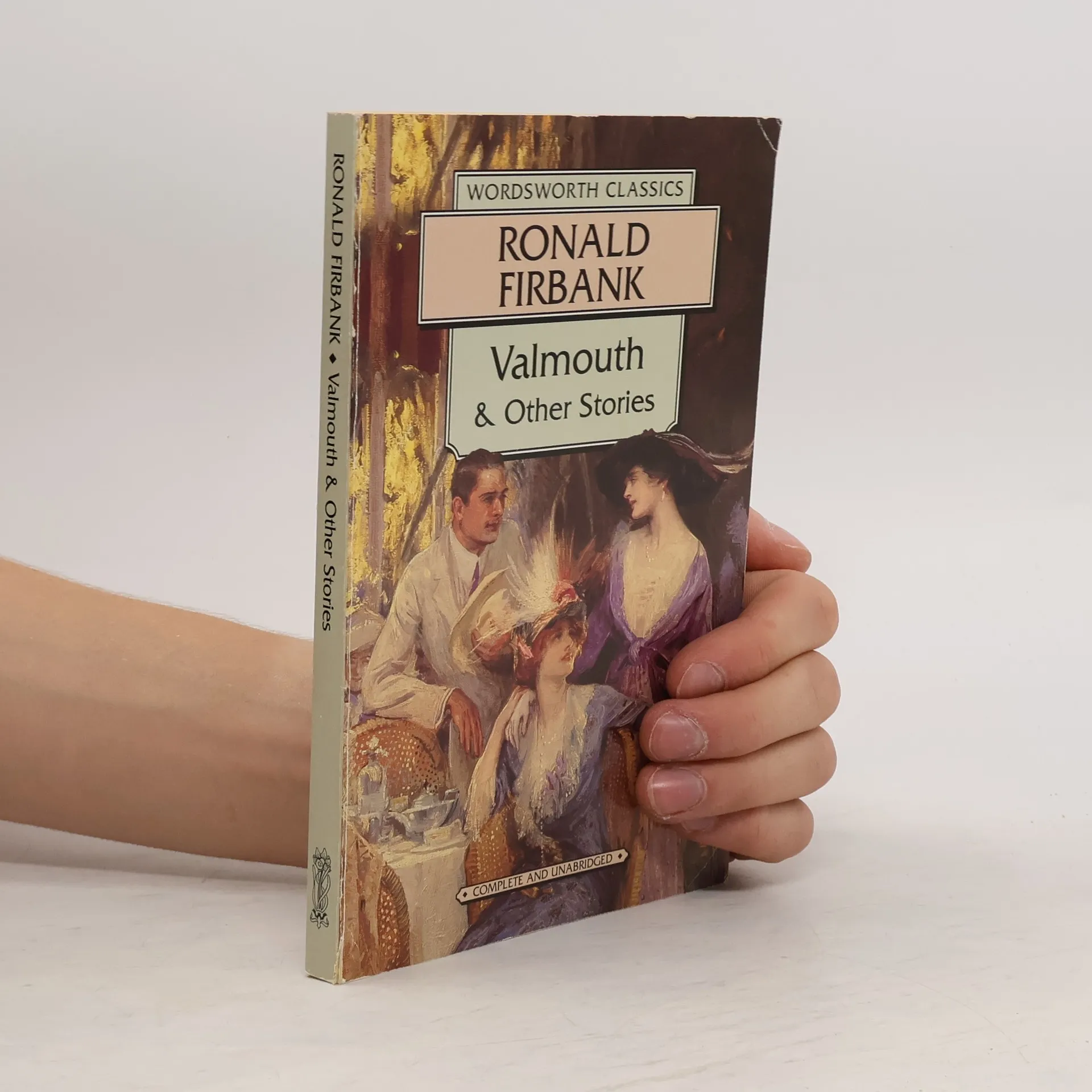
Valmouth is one of Firbank's most dazzling novels. Set in an English seaside health resort where the air promotes extraordinary longevity, Valmouth is dominated by the exotic and manipulative black masseuse, Mrs Yajnavalkya. Unhampered by class or creed, the ubiquitous Yajnavalkya moves between the strata of Valmouth society, bringing relief that is not without elements of eroticism..
The book is a classical work deemed significant throughout history, now preserved in a modern format by Alpha Editions. It has been carefully reformatted and retyped to ensure clarity and readability, moving away from traditional scanned copies. This effort aims to keep the work accessible for present and future generations, highlighting its enduring importance.
The book is a reproduction of a historical work, specifically designed in large print to enhance readability for individuals with impaired vision. Published by Megali, a house dedicated to making historical texts accessible, it aims to preserve the original content while catering to those who benefit from larger text formats.
Valmouth, a southern English coastal resort, has a generous supply of well-furnished and well-connected relics of society. Hare-Hatch House, inhabited by good friends Eulalia Hurstpierpoint and Elizabeth Thoroughfare, is one of the great centres of local social attention. Coming on a visit, Lady Parvula de Panzoust encounters members of several castes there, ranging from the Tooke family who are in service, through the omnipresent exotic masseuse-cum-herbalist Mrs Yajñavalkya, to those of her own status who buzz around the house gossiping and defaming, hinting and declaiming, each other's secret business and hidden predilections always the tasty subject. Indeed, Parvula herself is on something of a private mission of an amatory nature! As the season progresses, the question of who will marry Mrs Thoroughfare's son Dick, just returned from the sea, becomes an absorbing question. Will young Thetis Tooke, single-minded and passionate, recapture his attention permanently? Or will Mrs Yajñavalkya's protégé Niri-Esther steal his favour? The already agitated currents begin to stir forcefully... Valmouth, Ronald Firbank's celebrated fourth novel, was first published in 1919. Its waves of exclamatory dialogue, eccentric description and outrageous characters confirmed his unique position as high-camp chronicler of his age in all its hilarious, sharp-tongued erraticism.
Sarah Sinquier, living with her father and mother, a cathedral canon and his wife, in a town bursting with churches, is champing at the bit. She has a dream: the stage. Her dramatic sense is certainly acute. Shall she simply recite, as her father suggests? Or does life hold more? Throwing off caution, and a few choice treasures into the folds of her cloak for succour, she slips out one misty night for London, City of Love. Thence follow the struggles of an ingénue to gain the notice of the denizens of the theatre, who are themselves vulnerable votaries of fame. Gossip, parties, the Café Royal - the right connection may raise its head at any time. Finally the boards heed her call, and Sarah's caprice is made good. Surely her name is now destined to be known? But the hand of fate moves unexpectedly. . . Caprice, first published in 1917, was Ronald Firbank's third novel. His much-vaunted eccentric concision is here at a high point, as is his exotic treatment of character and breathless conversational camp. These thespian exploits which delight in suggestions of scandal and expose them with audacious wit are the perfect Firbank concern.