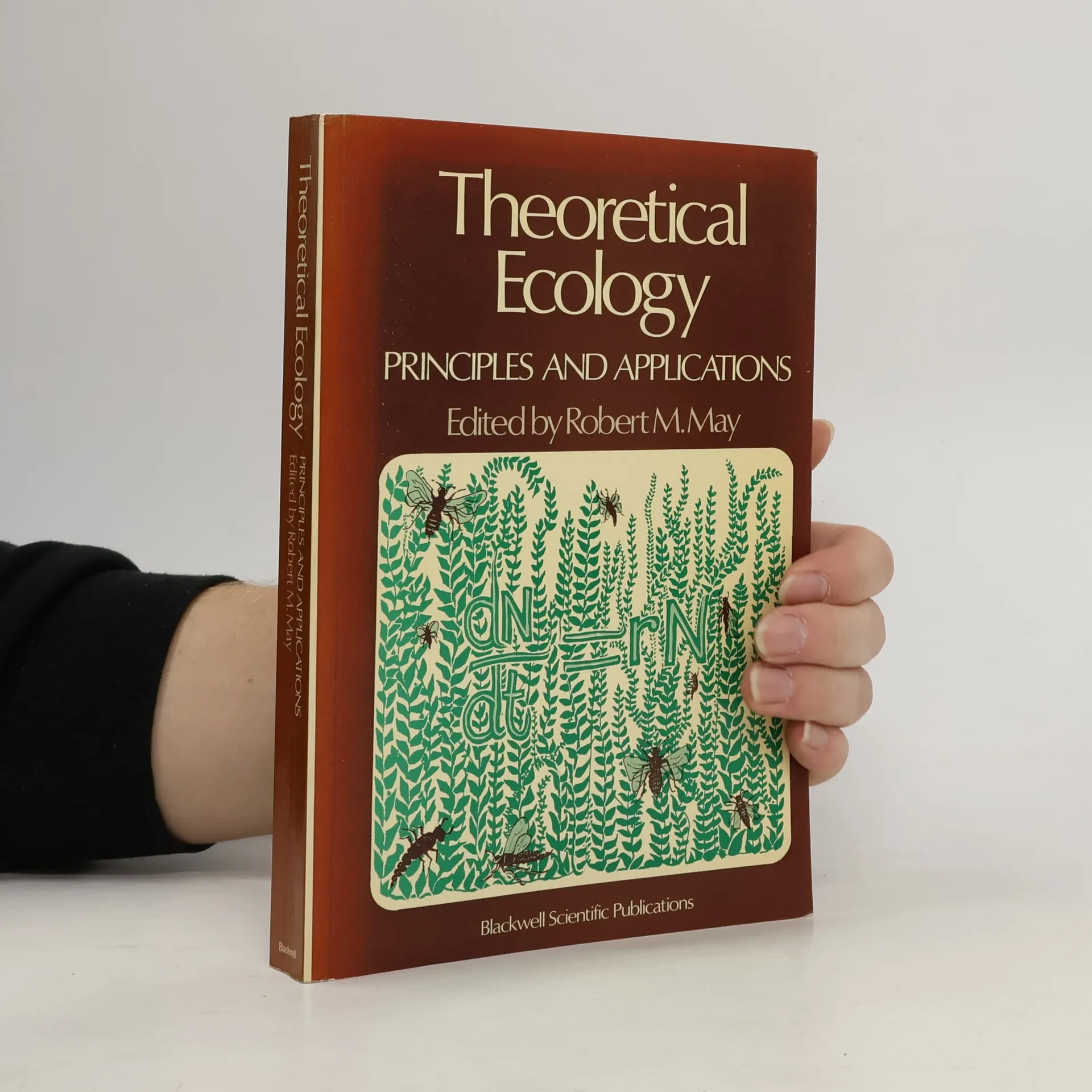
Robert May's influential work has significantly shaped ecological science since its original publication in 1976, marking the transition of ecology from descriptive observations to a field grounded in solid concepts. Much of the novel material from earlier editions is now standard in undergraduate textbooks, highlighting its lasting impact. With a quarter-century since the second edition, a thorough revision is timely. The text offers a concise, current overview of theoretical ecology, linking theory with practical applications. It explores recent advancements in understanding how populations of plants and animals interact and evolve in response to natural and human-induced disturbances. The initial chapters cover fundamental principles of population and community dynamics, while later sections apply these concepts to real-world issues such as fisheries, infectious diseases, food security, climate change, and conservation biology. The book emphasizes unresolved questions that continue to challenge the field. The editors have collaborated with leading scientists and emerging theoretical ecologists, resulting in an accessible, advanced textbook suitable for senior undergraduates, graduate students, and researchers in ecology, mathematical biology, and environmental management. It also appeals to general readers interested in understanding global environmental challenges.
Robert McCredie May Book order (chronological)