Barbarossa, Hitler's invasion of Russia in June 1941, was the largest military operation in history, its aim nothing less than 'a war of extermination' to annihilate Soviet communism, liquidate the Jews and create lebensraum for the so-called German master race. But it led to the destruction of the Third Reich, and was entirely cataclysmic; in six months of warfare no less than six million were killed, wounded or registered as missing in action, and soldiers on both sides committed heinous crimes behind the lines on a scale without parallel in the history of warfare. In Barbarossa, drawing on hitherto unseen archival material - including previously untranslated Russian sources - in his usual gripping style, Jonathan Dimbleby recounts not only the story of the military campaign, but the politics and diplomacy behind this epic clash of global titans. With authority and panache, he charts the crucial decisions made in the world's capitals and the bitter struggles on the front lines, giving vivid insights into the experiences of all players, from the leaders on all sides to the men and women on the ground. Above all, Dimbleby reveals the significance of 1941 - the year in which the Soviet Union destroyed Hitler's chance of realising his demented vision - as the most important struggle in the annals of the twentieth century. The definitive book on Barbarossa, this is a masterwork for the ages.
Jonathan Dimbleby Books
This English writer and filmmaker delves into the heart of distant lands and cultures through his compelling documentaries and books. His work offers a personal and insightful exploration of history and contemporary life, aiming to connect readers and viewers with complex subjects. He excels at revealing the human stories embedded within broader historical contexts. His distinctive approach makes him a significant voice for those seeking to understand the world more deeply.


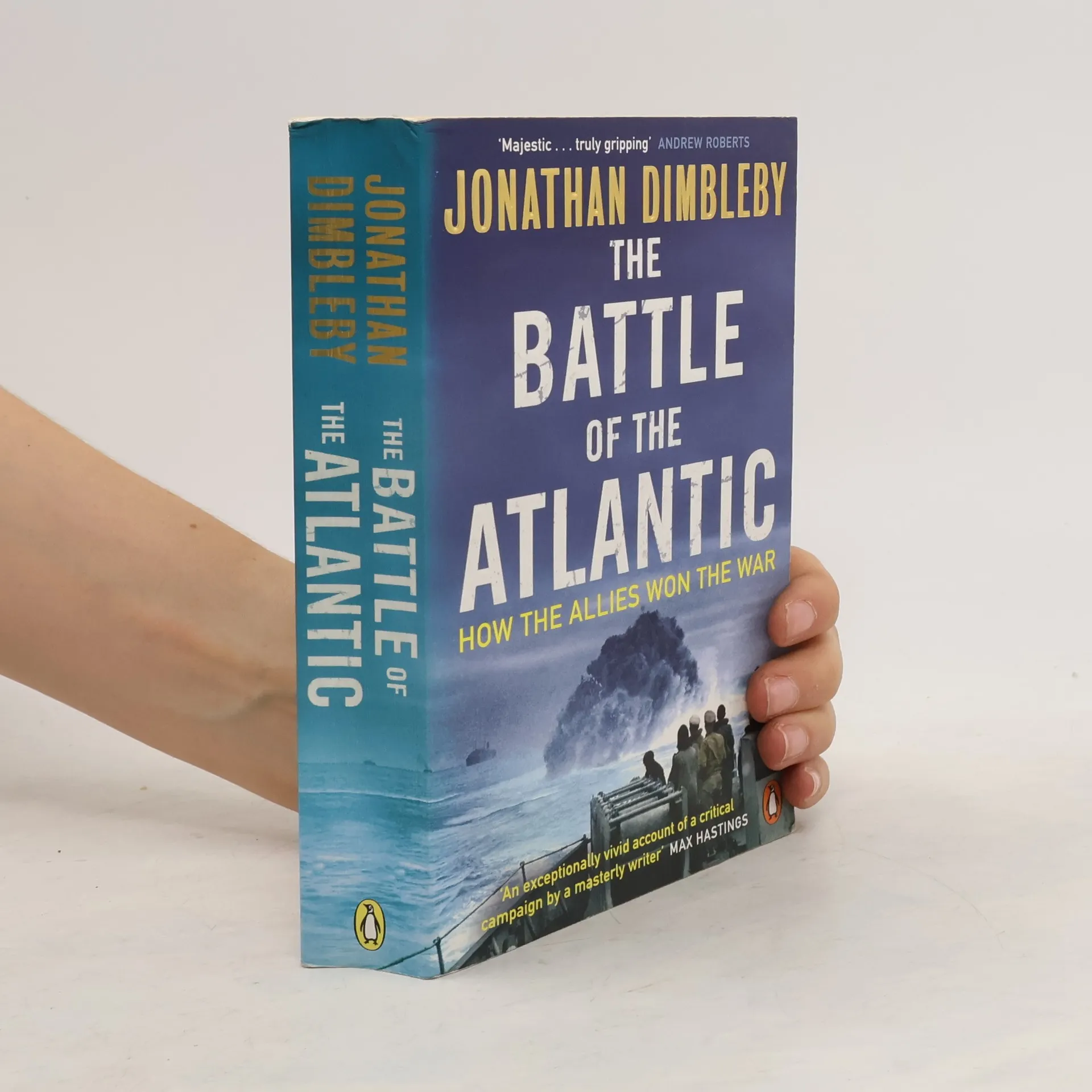
The Battle of the Atlantic
- 560 pages
- 20 hours of reading
'Majestic. Truly gripping' Andrew Roberts The Battle of the Atlantic was the single most important - and longest - campaign of the Second World War. If Britain lost this vital supply route it lost the war. In Jonathan Dimbleby's brilliant and dramatic new account we see how this epic struggle for maritime mastery played out, from the politicians and admirals to the men on and under the sea and their families waiting at home. Filled with haunting and hair-raising stories of chases, ambushes, sinkings, stalkings, disasters and rescues, The Battle of the Atlantic is a monumental work of history as it was lived and fought. 'Recounts the horror and humanity of life on those perilous oceans' Independent 'Dimbleby moves with skill from scene to scene, eavesdropping on the great statesmen like Churchill, the merchant seamen who carried out their orders, the U-boat commanders who tried to sink them and the families of those who lost their lives at sea' Mail on Sunday
The gripping tale of the campaign that determined the outcome of the Second World War. Barbarossa, Hitler's invasion of Russia in June 1941, was the largest military operation in history, its aim nothing less than 'a war of extermination' to annihilate Soviet communism, liquidate the Jews and create lebensraum for the so-called German master race. But it led to the destruction of the Third Reich, and was entirely cataclysmic; in six months of warfare no less than six million were killed, wounded or registered as missing in action, and soldiers on both sides committed heinous crimes behind the lines on a scale without parallel in the history of warfare. In Barbarossa, drawing on hitherto unseen archival material - including previously untranslated Russian sources - in his usual gripping style, Jonathan Dimbleby recounts not only the story of the military campaign, but the politics and diplomacy behind this epic clash of global titans. With authority and panache, he charts the crucial decisions made in the world's capitals and the bitter struggles on the front lines, giving vivid insights into the experiences of all players, from the leaders on all sides to the men and women on the ground. Above all, Dimbleby reveals the significance of 1941 - the year in which the Soviet Union destroyed Hitler's chance of realising his demented vision - as the most important struggle in the annals of the twentieth century. The definitive book on Barbarossa, this is a masterwork for the ages
A unique single-volume history of the road to El Alamein - 'the end of the beginning' - and the bloody battle that followed ...
In July 1997, Hong Kong will ceased to be a British colony and will reverted to the People's Republic of China. Five million people lost their status as British subjects and became citizens of a Special Administrative Region of the PRC. It was always clear that the last five years of British rule would be fraught with uncertainty. For this reason, the appointment of the former Chairman of the Conservative Party, Chris Patten, in June 1992 as the last governor of Hong Kong, was greeted with widespread approval. With rare and priveleged access to the governor and his team, the author provides an insight into events leading up to the handover, including reasons why relations between China and Britain were at their lowest ebb for a generation. The situation is placed in its human and historical context.
The author crosses eight time zones and covers 10,000 miles in an attempt to get to the beating heart of the Russia. This is a personal odyssey and a mesmerizing account of a country undergoing economic, cultural and political change.
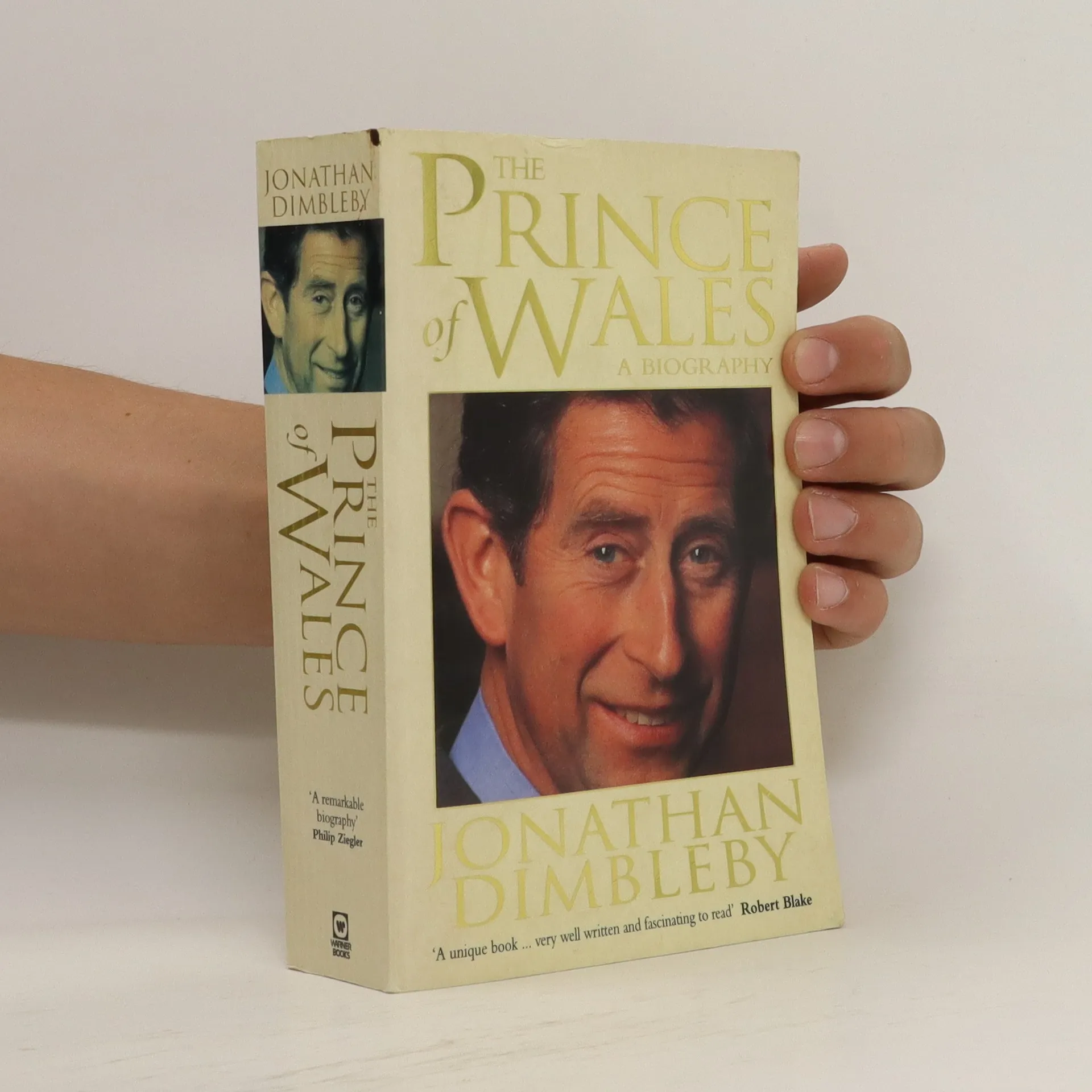
In November Charles, Prince of Wales will be 50 years old and will have been Prince of Wales for 28 of those years. Jonathan Dimbleby's unique portrait provides a searching and objective study of this complex man, exploring his beliefs and values, testing his attitudes and assumptions and illuminating the man behind the myths presented in the media. By drawing on extensive interviews and conversations with the Prince, 'sitting in' on meetings, formal and informal, both at his beloved Highgrove and in London and accompanying him on public and private visits, the author provides an authoritative account of HRH's life, an exclusive portrait of the individual and his work.
A gripping account of the Soviet victories of 1944The year 1944 was the turning point of World War Two, and nowhere was this more evident than on the Eastern Front. For three years, following the onslaught of the German Army during Operation Barbarossa in June 1941, the Red Army had retreated and then eventually held, fighting to a stalemate while the Germans occupied and ravaged large parts of the Soviet Union and its republics. Finally, following the breaking of the German siege of Leningrad in January 1944, Stalin and his generals were able to consider striking back. In June, they launched Operation Bagration , during which more than two million Red Army soldiers began an offensive, pushing west. The results were almost immediate and devastating. Within three weeks, Army Group Centre, the core of the German Army, had lost 28 of its 32 divisions. The ending had begun.Drawing on new sources-some previously untranslated-including accounts from ordinary soldiers and witnesses, Jonathan Dimbleby chronicles this decisive year in what was arguably the most crucial front in the war against Nazi Germany, a front extending 1200 miles. He covers the military, political, and diplomatic aspects in his trademark accessible and evocative style, illuminating the major conflicts as well as the roles played by deception, Partisan fighting, and the war within a war in Ukraine.Endgame 1944 reveals how the Soviet victories enabled Stalin to dictate the terms of the post-war settlement, laying the foundations for the Cold War.
In July 1997, Hong Kong will ceased to be a British colony and reverted to the People's Republic of China. Five million people lost their status as British subjects and became citizens of a Special Administrative Region of the PRC. It was always clear that the last five years of British rule would be fraught with uncertainty. For this reason, the appointment of the former Chairman of the Conservative Party, Chris Patten, in June 1992 as the last governor of Hong Kong, was greeted with widespread approval. With rare and priveleged access to the governor and his team, the author provides an insight into events leading up to the handover, including reasons why relations between China and Britain were at their lowest ebb for a generation. The situation is placed in its human and historical context.
Photographs and interviews help capture the feelings, outlook, and plight of the Palestinians, who have spent frustrating years as refugees caught up in the turbulence of the Middle East