
Explore the latest books of this year!
Bookbot

David Harvey

    October 31, 1935

    David Harvey is a leading social theorist whose work has profoundly shaped modern geography. His extensive essays and books examine global capitalism, particularly its neoliberal form. Harvey's analyses have revitalized discussions on social class and Marxist methods as tools for critiquing contemporary society. His contributions to social and political debate are internationally recognized.

    David Harvey
    A Brief History of Neoliberalism
    The Condition of Postmodernity
    The Anti-Capitalist Chronicles
    A Companion to Marx's Capital. Volume Two
    A Companion to Marx's Grundrisse
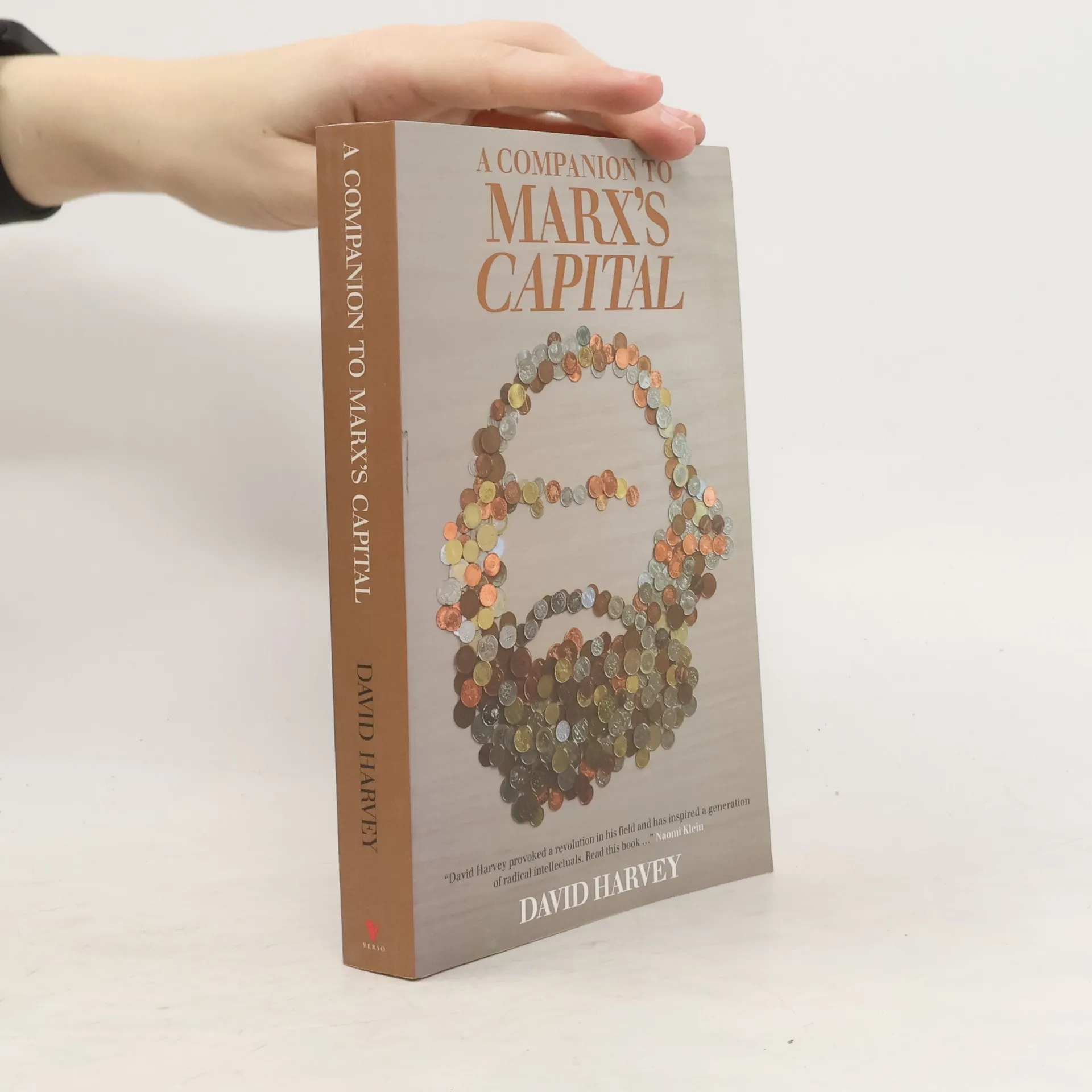
    A companion to Marx's Capital
    • A companion to Marx's Capital

      • 368 pages
      • 13 hours of reading
      4.5(109)Add rating

      “My aim is to get you to read a book by Karl Marx called Capital, Volume 1, and to read it on Marx’s own terms…”The biggest financial crisis since the Great Depression has generated a surge of interest in Marx’s work in the effort to understand the origins of our current predicament. For nearly forty years, David Harvey has written and lectured on Capital, becoming one of the world’s most foremost Marx scholars.Based on his recent lectures, this current volume aims to bring this depth of learning to a broader audience, guiding first-time readers through a fascinating and deeply rewarding text. A Companion to Marx’s Capital offers fresh, original and sometimes critical interpretations of a book that changed the course of history and, as Harvey intimates, may do so again.David Harvey’s video lecture course can be found here: davidharvey.org/reading-capital/
      A companion to Marx's Capital
    • "The biggest financial crisis since the Great Depression shows no sign of coming to a close and Marx's work remains key in understanding the cycles that lead to recession. For nearly forty years, David Harvey has written and lectured on Capital, becoming one of the world's most foremost Marx scholars.Based on his recent lectures, and following the success of his companion to the first volume of Capital, Harvey turns his attention to Volume 2, aiming to bring his depth of learning to a broader audience, guiding first-time readers through a fascinating and hitherto neglected text. Whereas Volume 1 focuses on production, Volume 2 looks at how the circuits of capital, the buying and selling of goods, realize value.This is a must-read for everyone concerned to acquire a fuller understanding of Marx's political economy"-- Provided by publisher

      A Companion to Marx's Capital. Volume Two
    • The Anti-Capitalist Chronicles

      • 240 pages
      • 9 hours of reading
      4.2(93)Add rating

      Amidst waves of economic crises, health crises, class struggle and neo-fascist reaction, few possess the clarity and foresight of world-renowned theorist, David Harvey. Since the publication of his bestselling A Brief History of Neoliberalism, Harvey has been tracking the evolution of the capitalist system as well as tides of radical opposition rising against it. In The Anti-Capitalist Chronicles, Harvey introduces new ways of understanding the crisis of global capitalism and the struggles for a better world. While accounting for violence and disaster, Harvey also chronicles hope and possibility. By way of conversations about neoliberalism, capitalism, globalization, the environment, technology, social movements and crises like COVID-19, he outlines, with characteristic brilliance, how socialist alternatives are being imagined under very difficult circumstances. In understanding the economic, political and social dimensions of the crisis, Harvey’s analysis in The Anti-Capitalist Chronicles will be of strategic importance to anyone wanting to both understand and change the world.

      The Anti-Capitalist Chronicles
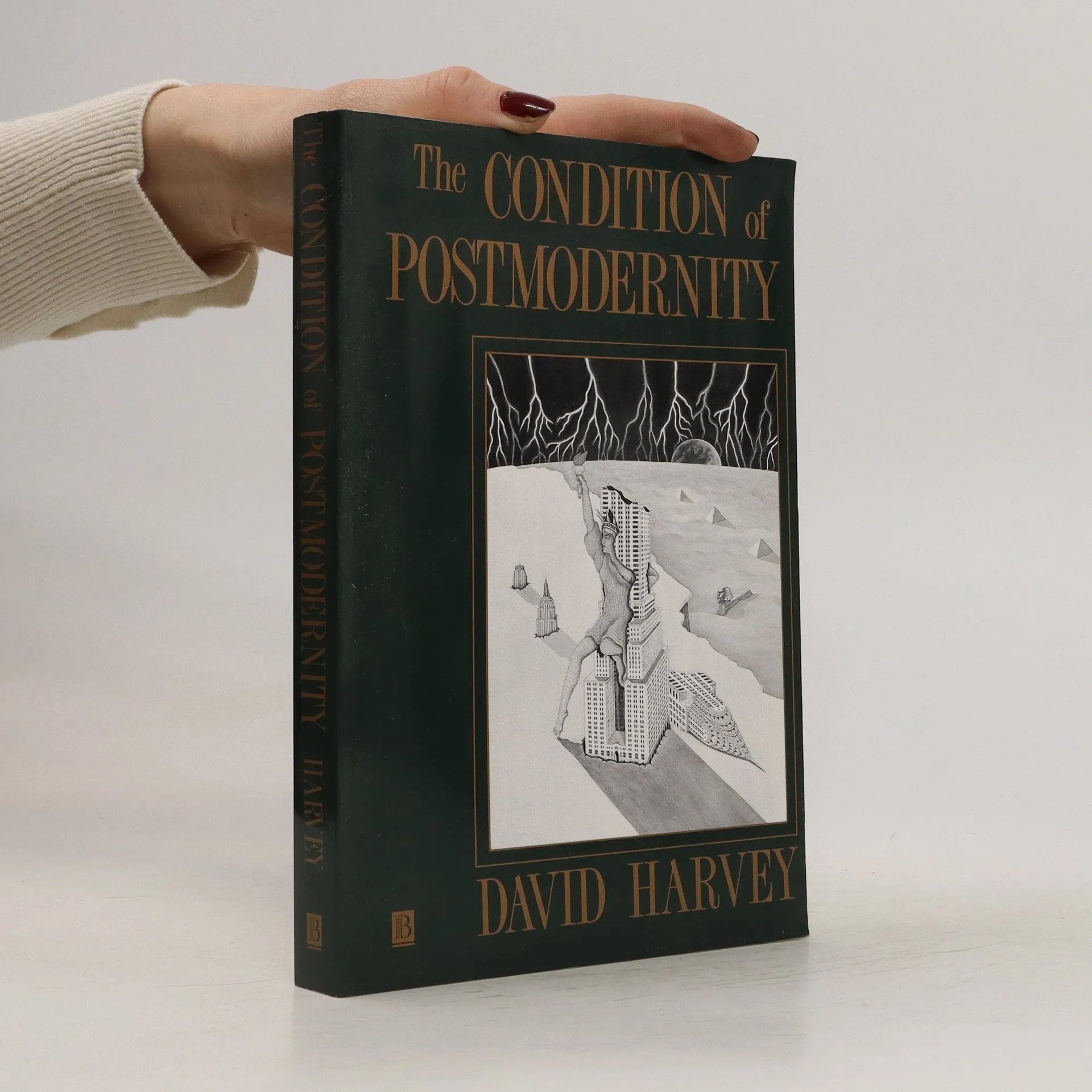
    • The Condition of Postmodernity

      • 378 pages
      • 14 hours of reading
      4.2(2092)Add rating

      In this new book, David Harvey seeks to determine what is meant by the term in its different contexts and to identify how accurate and useful it is as a description of contemporary experience.

      The Condition of Postmodernity
    • A Brief History of Neoliberalism

      • 254 pages
      • 9 hours of reading
      4.2(6216)Add rating

      Neoliberalism - the doctrine that market exchange is an ethic in itself, capable of acting as a guide for all human action - has become dominant in both thought and practice throughout much of the world since 1970 or so. Writing for a wide audience, David Harvey, author of The New Imperialism and The Condition of Postmodernity, here tells the political-economic story of where neoliberalization came from and how it proliferated on the world stage. Through critical engagement with this history, he constructs a framework, not only for analyzing the political and economic dangers that now surround us, but also for assessing the prospects for the more socially just alternatives being advocated by many oppositional movements.

      A Brief History of Neoliberalism
    • Accounting for Business

      • 464 pages
      • 17 hours of reading

      This edition clearly explains accounting information's role in making sound business decisions and focuses upon the aspects of accounting practice which are most relevant to the non-specialist manager.

      Accounting for Business
    • For three centuries the capitalist system has shaped western society, informed its rulers, and conditioned the lives of its people. Has the time come to move beyond it?Using his unrivalled knowledge of the subject, Harvey lays bare the follies of the international financial system, looking at the nature of capitalism, how it works and why sometimes it doesn't. He examines the vast flows of money that surge round the world in daily volumes well in excess of the sum of all its economies. He looks at the cycles of boom and bust in the world's housing and stock markets and shows that periodic episodes of meltdown are not only inevitable in the capitalist system but essential to its survival. The Enigma of Capital is a timely call-to-arms for the end of the capitalism, and makes a compelling case for a new social order that would allow us to live within a system that could be responsible, just and humane

      The Enigma of Capital and the Crises of Capitalism
    • Following on from The Enigma of Capital, the world's leading Marxist thinker explores the hidden workings of capital and reveals the forces that will lead inexorably to the demise of our system.

      Seventeen Contradictions and the End of Capitalism