
Explore the latest books of this year!
Bookbot

Jack Challoner

    January 1, 1950
    Jack Challoner
    Energy
    The Elements
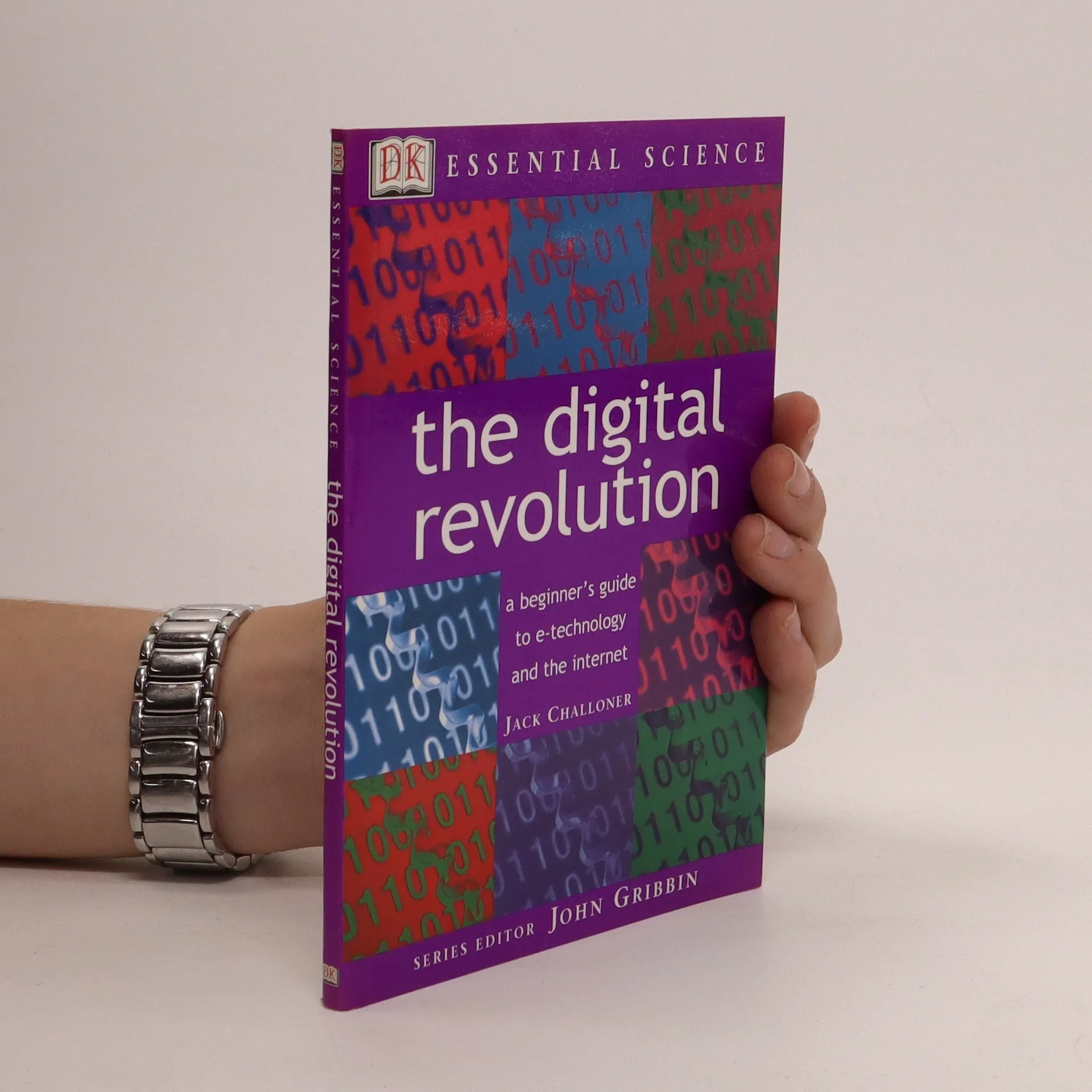
    The Digital Revolution
    1001 Inventions that Changed the World
    The Compact Guide of the Elements
    Water
    • The story of the most abundant substance on Earth, from its origins in the birth of stars billions of years ago to its importance in the living world.Water is so ubiquitous in our lives that it is easy to take for granted. The average American uses ninety gallons of water a day; nearly every liquid we encounter is mostly water--milk, for example, is 87 percent water. Clouds and ice--water in other forms--affect our climate. Water is the most abundant substance on Earth, and the third-most abundant molecule in the universe. In this lavishly illustrated volume, science writer Jack Challoner tells the story of water, from its origins in the birth of stars to its importance in the living world.Water is perhaps the most studied compound in the universe--although mysteries about it remain--and Challoner describes how thinkers from ancient times have approached the subject. He offers a detailed and fascinating look at the structure and behavior of water molecules, explores the physics of water--explaining, among other things, why ice is slippery--and examines the chemistry of water. He investigates photosynthesis and water's role in evolutionary history, and discusses water and weather, reviewing topics that range from snowflake science to climate change. Finally, he considers the possibility of water beyond our own hydrosphere--on other planets, on the Moon, in interstellar space.

      Water
    • The Compact Guide of the Elements

      • 208 pages
      • 8 hours of reading

      What links the Taj Mahal and our skeleton? Calcium. The Eiffel Tower and our blood? Iron. The salt on our chips and the street lamps that guide us home? Sodium. The elements make up everything, and this book is the perfect guide to every one of them.

      The Compact Guide of the Elements
    • This guide is part of a series which introduces a wide range of scientific topics and topical issues affecting our daily lives. This book explains how the Internet and other digital technologies have transformed our world, from the binary code to interactive TV.

      The Digital Revolution
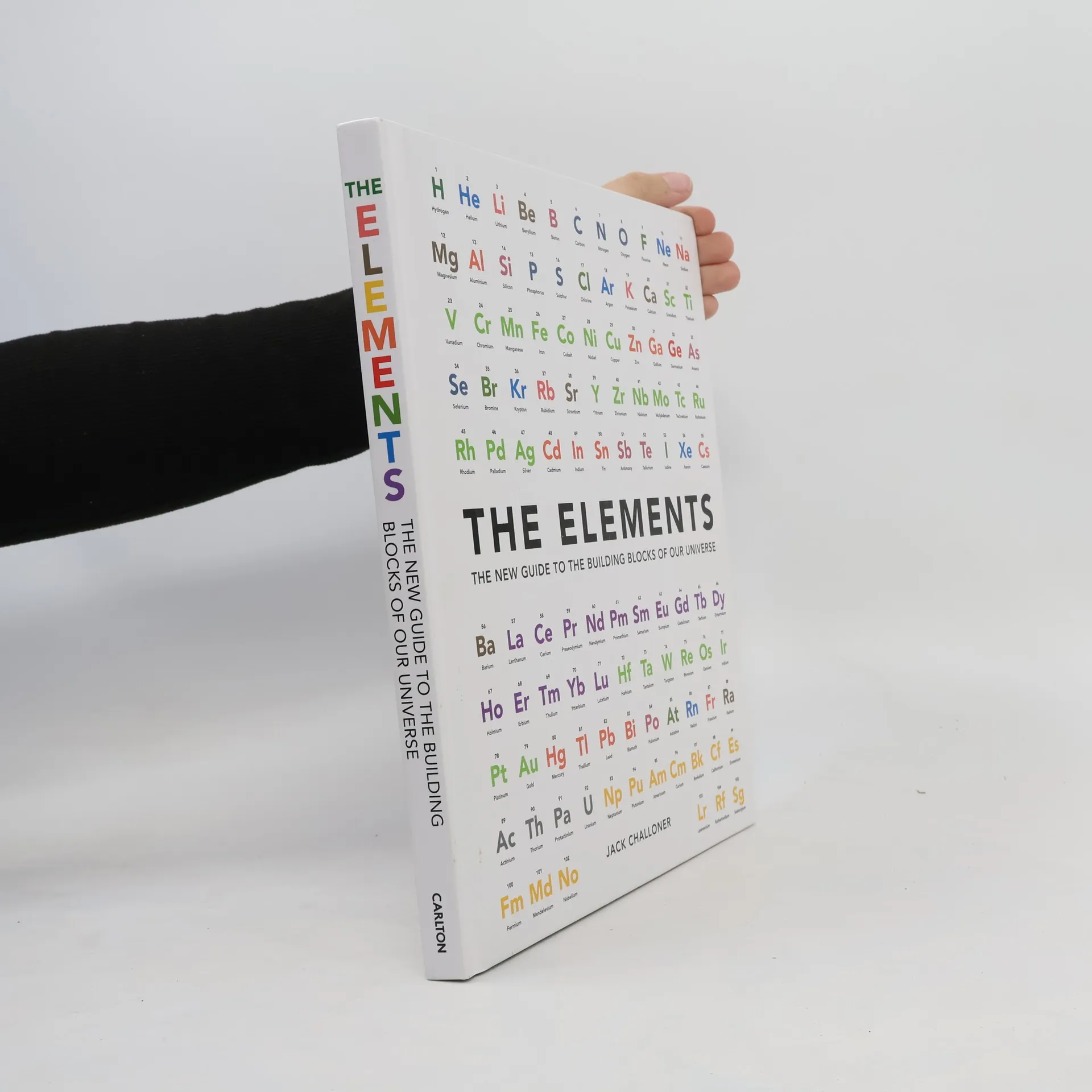
    • The Elements

      The New Guide to the Building Blocks of Our Universe

      • 160 pages
      • 6 hours of reading
      3.9(71)Add rating

      This is an illustrated reference to the elements that make up everything in our universe. General information about the properties, behaviour and occurrence of the elements, their main compounds and their principle uses are given.

      The Elements
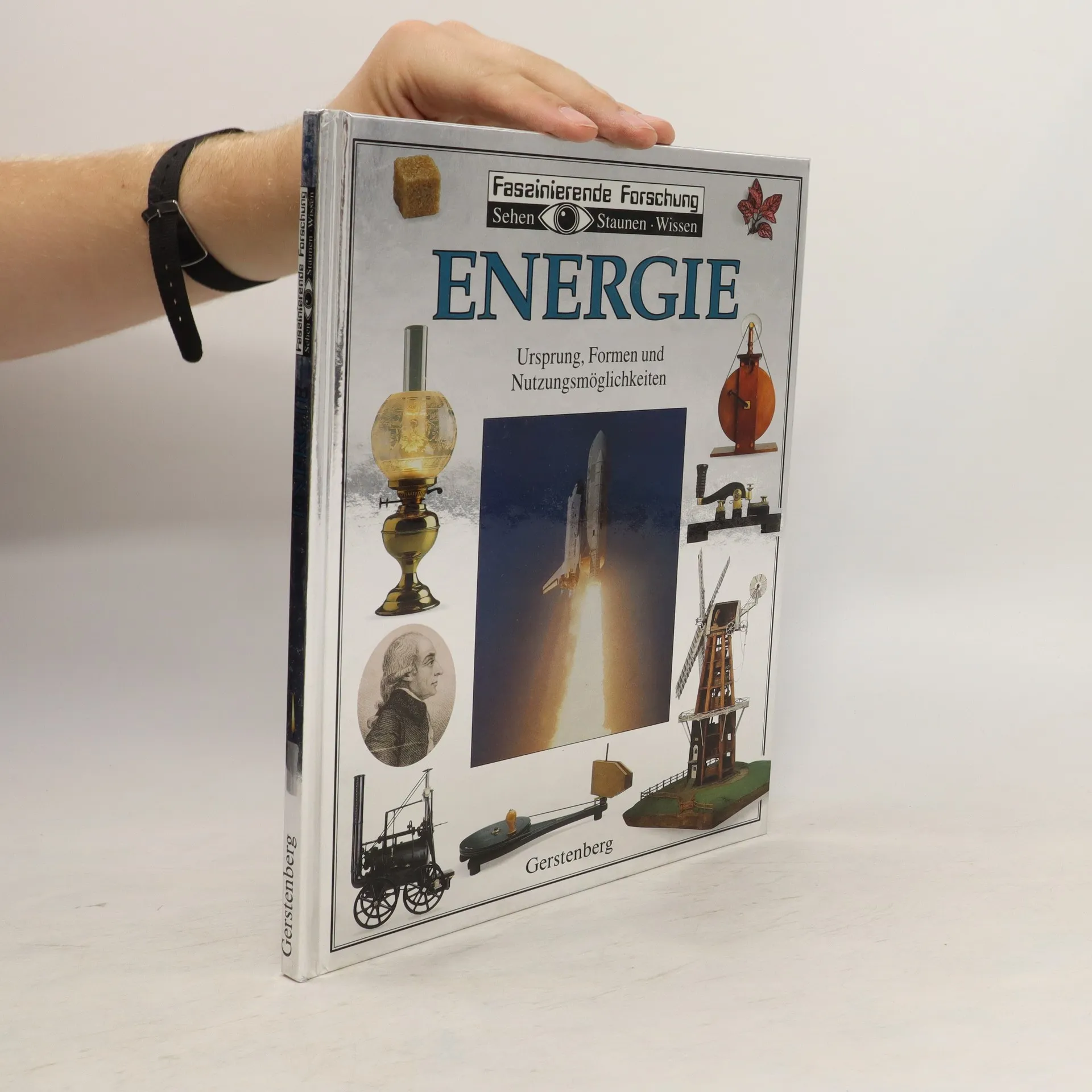
    • Integrating words and pictures, this is a family reference book on energy structured so that the individual themes of each spread make up a complete visual story and a self-contained module. On every spread there is a specially shot colour photograph of objects shown in real-life close-up detail.

      Energy
    • The Little Book of the Elements

      • 192 pages
      • 7 hours of reading

      A guide to the periodic table, listing all the elements' vital stats, and exploring their astonishing histories and usages in an accessible and easy-to- understand way.

      The Little Book of the Elements
    • Seeing Science

      • 272 pages
      • 10 hours of reading

      "We live among patterns of delicate beauty and exquisite chaos that our eyes can't detect; we are surrounded by invisible particles and shifting fields of matter that permeate all of space. Our very cells are intricate molecular machines, and the story of our origins stretches back through an unimaginable amount of time. How can we see the richness of what lies beyond our sensory perception? Scientists have developed visualization tools that can make the invisible visible. This bountifully illustrated book demonstrates the power of images to represent the unseeable, offering stunning visualizations of science that range from the microscopic to the incredibly vast. With more than 200 color images and an engaging text by leading science writer Jack Challoner, Seeing Science explains and illustrates the techniques by which scientists create visualizations of their discoveries. We see the first detection of a black hole as represented by an image from an Xray telescope, get a direct view of DNA through an electron microscope, and much more. Visualizations are also used to make sense of an avalanche of data--concisely presenting information from the 20,000 or so human genes, for example. Scientists represent complex theories in computer models, which take on a curious beauty of their own. And scientists and artists collaborate to create art from science visualizations, with intriguing results"--Provided by publisher

      Seeing Science
    • Le corps humain est un merveilleux ensemble qui recèle bien des surprises. Cet ouvrage rassemble plus de 400 données passionnantes, histoires insolites et statistiques étonnantes sur le corps, relatives à l’anatomie, la physiologie, la médecine, l’histoire et la mythologie.Trouvez la réponse à toutes les questions qui vous intriguent : est-ce qu’un excès de sucre rend les enfants (ou vous-même) hyperactifs ? Quelle utilité ont les fesses (en dehors d’être des coussins confortables) ?Explorez l’univers qui est en vous avec intérêt et étonnement. Saviez-vous que plus de 90 % des cellules qui vivent dans et sur votre corps sont des bactéries ? Que, chaque fois que vous regardez un film, vous en ratez plusieurs minutes ? Ou que votre corps contient pas moins de 70 km de nerfs ?Découvrez les récits étonnants des scientifiques, des médecins ou même des artistes qui ont contribué à notre connaissance du corps humain, et profitez des conseils pratiques pour rester en bonne santé.

      Incroyable Corps Humain