A call to action for the creative class and labor movement to confront the dominance of Big Tech and Big Media. Corporate concentration and profits have reached unprecedented levels, leading to monopolies and monopsonies that disrupt fair competition. In this new era of "chokepoint capitalism," Rebecca Giblin and Cory Doctorow highlight how exploitative businesses create barriers that prevent others from accessing value that rightfully belongs to them. While all workers feel the impact, creative workers face particularly harsh consequences. Examples include Amazon's digital rights management affecting book publishing, Google and Facebook diverting ad revenue from news media, and the Big Three record labels imposing lengthy contracts that diminish artists' earnings. Giblin and Doctorow analyze various industries, illustrating how corporations build "anti-competitive flywheels" that lock in users and suppliers, create hostile market conditions for newcomers, and force unfair pricing on workers. In the latter half, they propose strategies to dismantle these chokepoints, including transparency rights, collective action, radical interoperability, and minimum wages for creative work. This work urges all workers to unite and reclaim the power and profits being unjustly taken from them.
Cory Doctorow Books
Cory Doctorow is a celebrated science fiction author whose works frequently explore the intricate connections between technology, society, and freedom. His writing is distinguished by its prescient insights into the future and its critical examination of contemporary societal trends. Doctorow fearlessly delves into the ethical quandaries presented by the digital age, all while maintaining a remarkably accessible and engaging style. His narratives serve as a compelling invitation to contemplate the evolving world we are constantly shaping.



The Internet Con
- 192 pages
- 7 hours of reading
This isn't a book for people who want to fix Big Tech. It's a detailed disassembly manual for people who want to dismantle it.
The Bezzle
- 240 pages
- 9 hours of reading
In this high-stakes thriller, the lives of California’s prison inmates are treated like stock shares. Set in 2006, Martin Hench, a self-employed forensic accountant, excels in the ongoing battle between those hiding money and those seeking it. While enjoying downtime on Catalina Island, where bison roam and overpriced fast food abounds, Martin inadvertently disrupts a scheme that sets off a decade-long chain of events. His misstep leads him into the realm of the ultra-wealthy, who view money as a mere game. They target California’s Department of Corrections, confident that their complex web of shell companies will shield them from scrutiny. Their focus is solely on the profits they can extract from the government and the vast number of prisoners under their control. This narrative serves as a powerful critique of the privatized prison system, exploring the intricate financial manipulations that contributed to the 2008 financial crash. It is a gripping follow-up to the author’s previous work, blending thrilling storytelling with a sharp social commentary.
This manual offers a comprehensive guide for individuals aiming to understand and dismantle the structures of Big Tech. It delves into the intricacies of technology, power dynamics, and the societal implications of corporate practices. Through step-by-step instructions, it empowers readers to critically analyze and challenge the dominance of major tech companies, fostering a deeper awareness of their impact on privacy, economy, and culture.
This vivid anthology showcases the evolution of cyberpunk, welcoming a new generation of writers who push the genre into innovative territories. With a punk rock spirit, cyberpunk navigates the realms of the internet, bioengineering, and global politics, leaving a significant mark on entertainment and media. Drawing inspiration from the pioneering manifesto, Mirrorshades, each story explores the gritty realities of technological transformation. The collection features contributions from legendary editor Bruce Sterling alongside contemporary authors such as Cory Doctorow, Jonathan Lethem, Gwyneth Jones, Hal Duncan, Charles Stross, and Pat Cadigan. An engaging introduction by James Patrick Kelly and John Kessel sets the stage for this exhilarating snapshot of a dynamic literary movement. The anthology includes stories like “Bicycle Repairman” by Sterling, “Lobsters” by Stross, and “When Sysadmins Ruled the Earth” by Doctorow, among others. Each piece reflects the genre's essence, offering diverse perspectives on the future shaped by technology. This collection is a testament to the enduring and evolving spirit of cyberpunk literature.
Marcus Yallow is no longer a student. California's economy has collapsed, taking his parents' jobs and his university tuition with it. Thanks to his activist past, Marcus lands a job as webmaster for a muckraking politician who promises reform. Things are never simple, though: soon Marcus finds himself embroiled in lethal political intrigue and the sharp end of class warfare, American style.
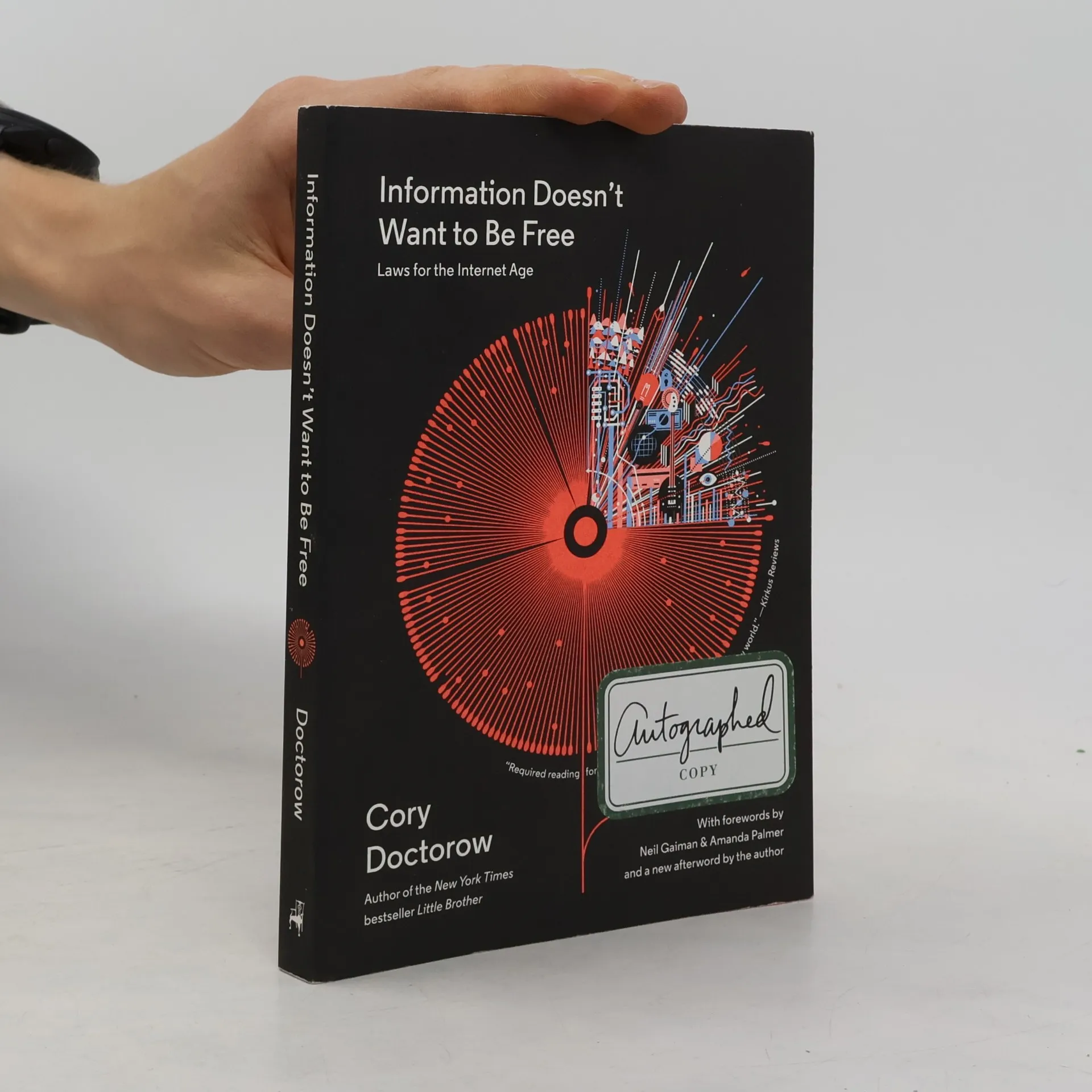
Information Doesn't Want to Be Free
- 192 pages
- 7 hours of reading
A report on the state of copyright and creative success in the digital age considers the challenges being faced by small artists and posed by large corporations, exploring pitfalls and opportunities to reveal evolving Internet business models.
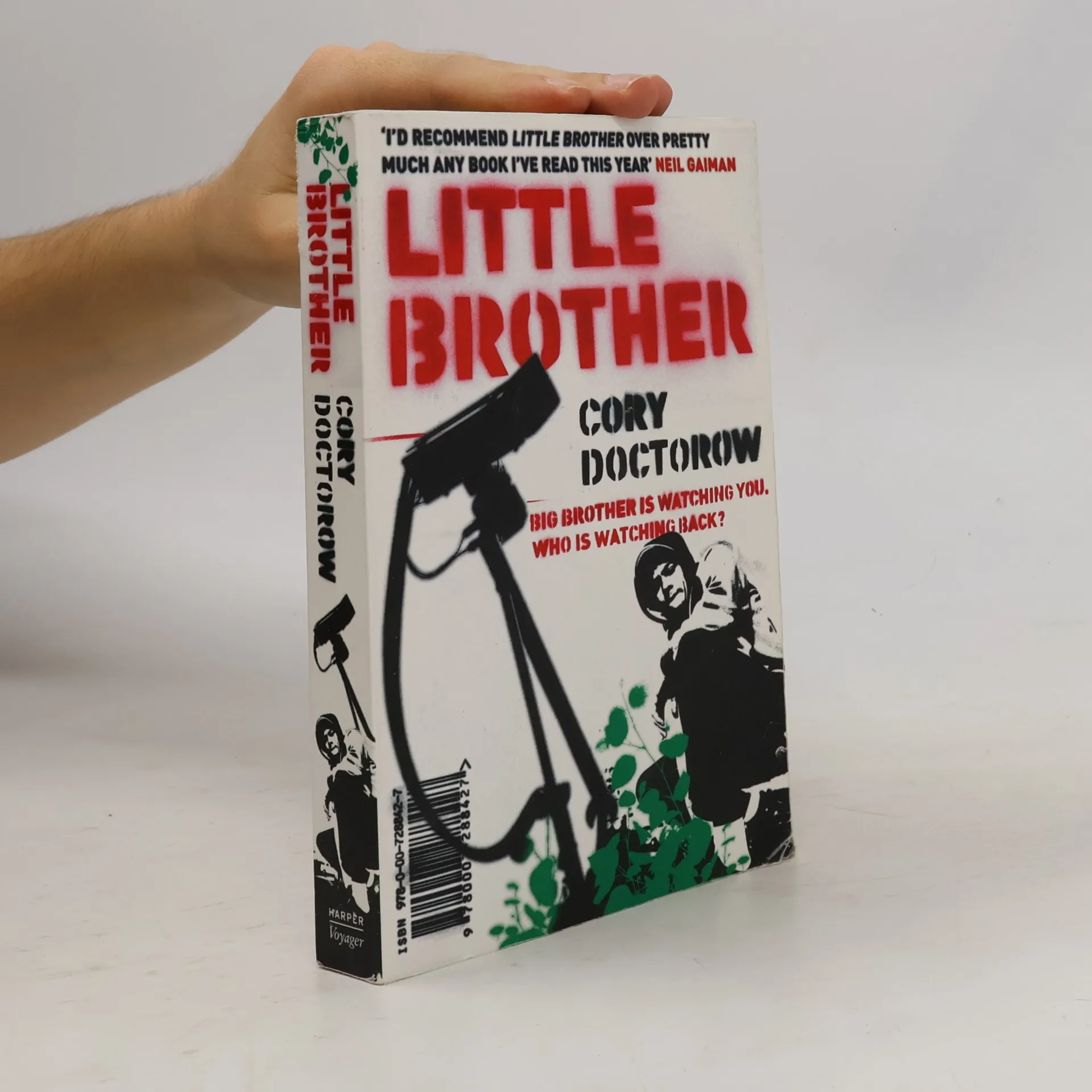
The ultimate tale of teen rebellion - one seventeen-year-old against the surveillance state. Big Brother is watching you. Who's watching back? Marcus is only seventeen years old, but he figures he already knows how the system works - and how to work the system. Smart, fast and wise to the ways of the networked world, he has no trouble outwitting his high school's intrusive but clumsy surveillance systems. But his whole world changes when he and his friends find themselves caught in the aftermath of a major terrorist attack on San Francisco. In the wrong place at the wrong time, Marcus and his crew are apprehended by the Department of Homeland Security and whisked away to a secret prison, where they're mercilessly interrogated for days. When the DHS finally releases them, Marcus discovers that his city has become a police state, where every citizen is treated like a potential terrorist. He knows no one will believe his story, which leaves him only one option: to take down the DHS himself.
Attack Surface
- 384 pages
- 14 hours of reading
Returning to the world of Little Brother and Homeland, Attack Surface takes us five minutes into the future, to a world where everything is connected and everyone is vulnerable.
How to Destroy Surveillance Capitalism
- 146 pages
- 6 hours of reading
Surveillance capitalism is everywhere. But it’s not the result of some wrong turn or a rogue abuse of corporate power — it’s the system working as intended.You'll need to create the URL from these parts since there is no field for it and you can't include external links in the description. Just replace the spaces with "/" and dot with "." below.onezero dot medium dot com how-to-destroy-surveillance-capitalism-8135e6744d59
Pirate Cinema
- 384 pages
- 14 hours of reading
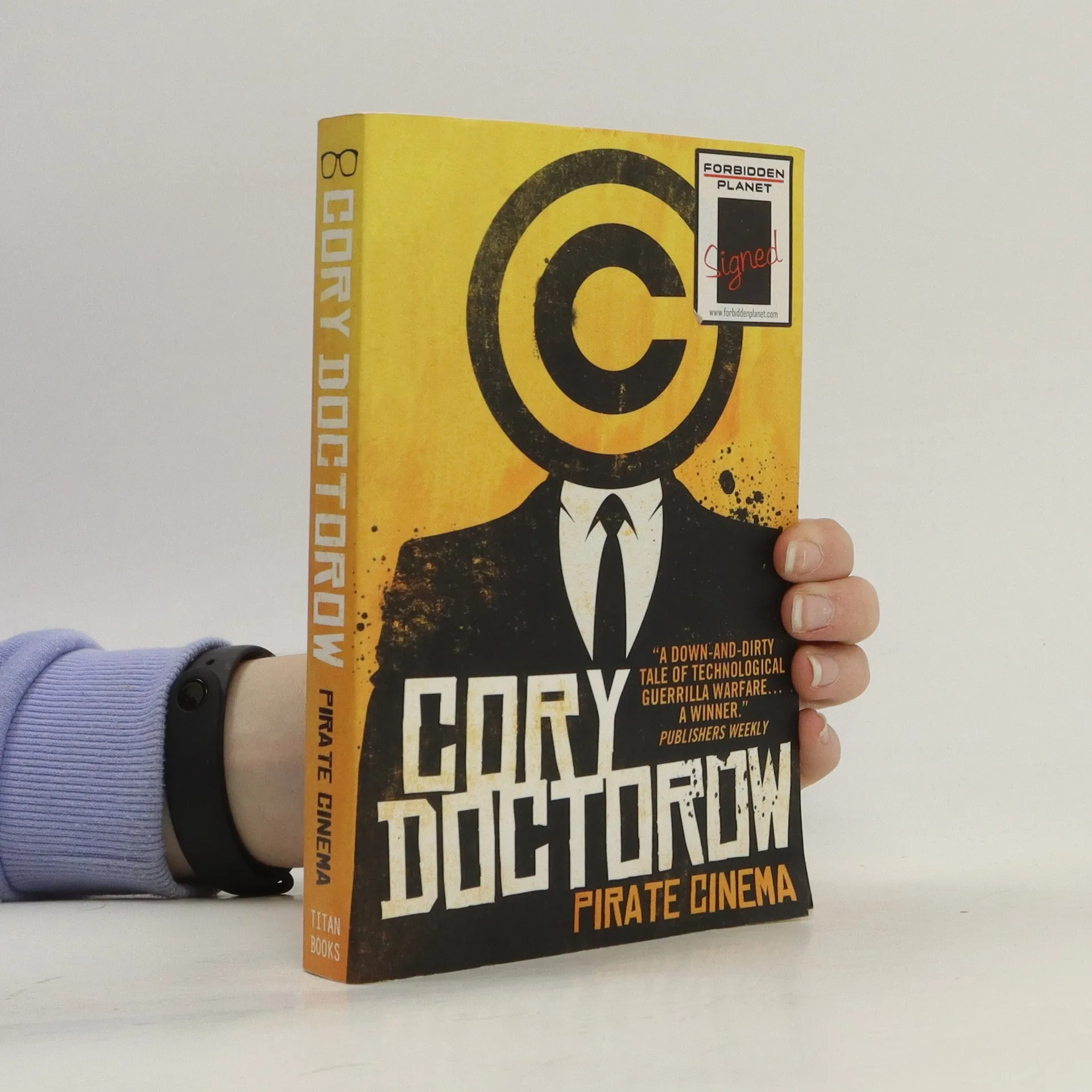
When Trent McCauley's obsession for making movies by reassembling footage from popular films causes his home's internet to be cut off, it nearly destroys his family. Shamed, Trent runs away to London. A new bill threatens to criminalize even harmless internet creativity. Things look bad, but the powers-that-be haven't entirely reckoned with the power of a gripping movie to change people's minds...
For the Win
- 506 pages
- 18 hours of reading
A provocative and exhilarating tale of teen rebellion against global corporations from the New York Times bestselling author of Little Brother.
Robot uprisings
- 476 pages
- 17 hours of reading
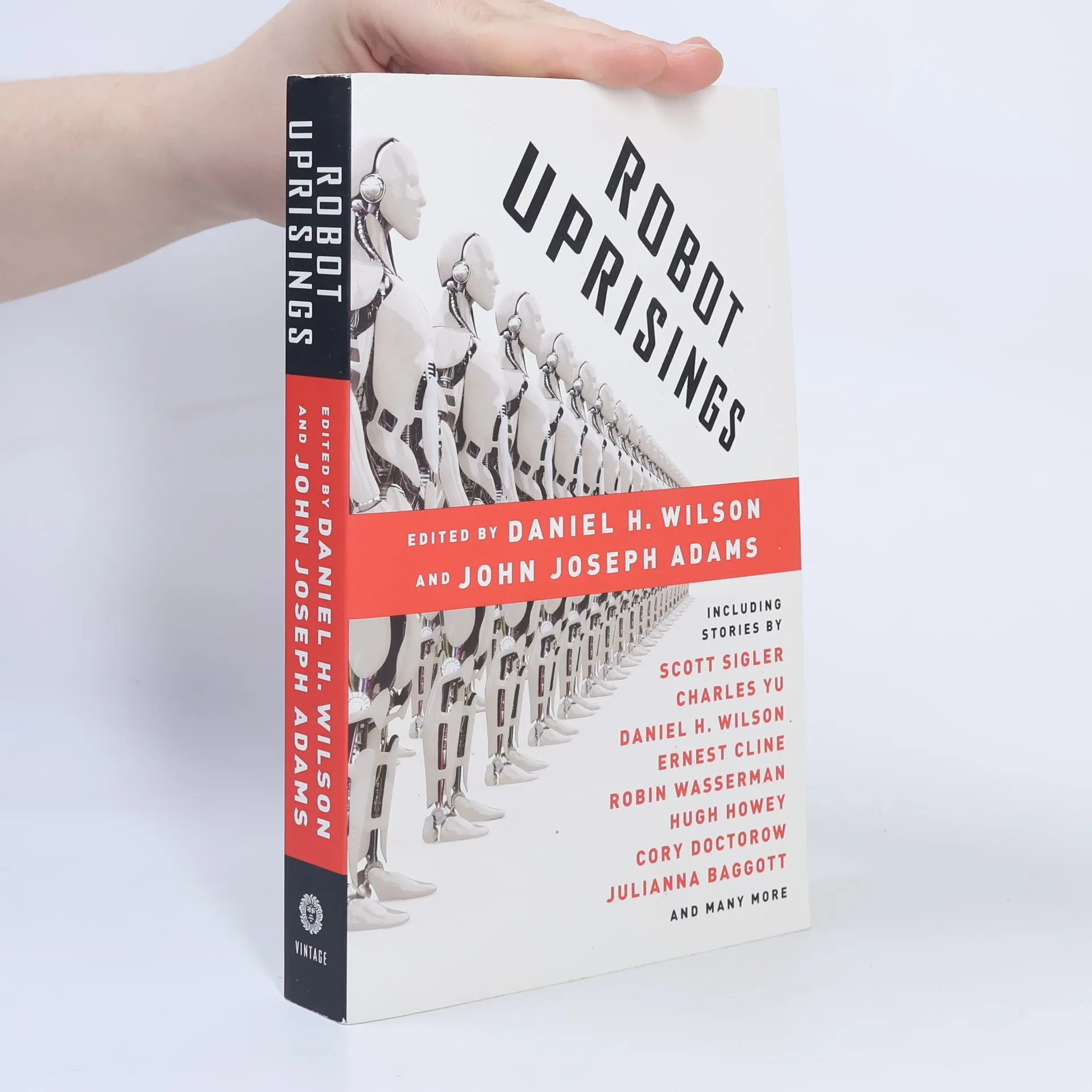
Humans beware. As the robotic revolution continues to creep into our lives, it brings with it an impending sense of doom. What horrifying scenarios might unfold if our technology were to go awry? From self-aware robotic toys to intelligent machines violently malfunctioning, this anthology brings to life the half-formed questions and fears we all have about the increasing presence of robots in our lives. With contributions from a mix of bestselling, award-winning, and up-and-coming writers, and including a rare story by “the father of artificial intelligence,” Dr. John McCarthy, Robot Uprisings meticulously describes the exhilarating and terrifying near-future in which humans can only survive by being cleverer than the rebellious machines they have created.
In Real Life
- 175 pages
- 7 hours of reading
From New York Times bestseller Cory Doctorow, the story of a girl who gets into gaming—and ends up on a globe-spanning crusade to stop exploitation online.
Red Team Blues
- 240 pages
- 9 hours of reading
A hard-charging, hard-fighting techno-thriller detective story about a forensic accountant, Marty, who is coming out of retirement for one last job. Helping out a pal who has built a new cryptocurrency, his plans are in ruins when the keys are stolen – and a billion dollars of exposure granted to whoever got hold of them.When Marty finds out where the keys are, he quickly becomes implicated with two different criminal cartels, each more dangerous than the last...
'The tech may be more advanced, but the politics feel familiar ... The overwhelming message of Walkaway is hope [and] right now, that could not feel more timely' SciFiNow .
Makers
- 416 pages
- 15 hours of reading
Book Description Featuring expanded and updated content, Introduction to Athletic Training, Second Edition, presents both theoretical and practical information on the duties of an athletic trainer as part of a team approach to caring for injured and ill athletes. The book will provide students with a solid background in athletic training so that they can develop their skills and both succeed and advance in their training and courses. Introduction to Athletic Training, Second Edition, is the perfect guide for athletic trainers striving to keep their athletes healthy and injury free. Part of Human Kinetics' Athletic Training Education Series, the text not only provides the information on the role of an athletic trainer in caring for injured and ill athletes, but it also considers both the prevention and management of injuries and illnesses. It spans many topics, including professionalism in athletic training, risk factors in sport participation, preparticipation physical exams, fitness testing, strength and conditioning, preventive efforts including environmental concerns and protective devices, and emergency care.
Eastern Standard Tribe
- 223 pages
- 8 hours of reading
A comedy of loyalty, betrayal, sex, madness, and music-swappingArt is an up-and-coming interface designer, working on the management of data flow along the Massachusetts Turnpike. He's doing the best work of his career and can guarantee that the system will be, without a question, the most counterintuitive, user-hostile piece of software ever pushed forth onto the world.Why? Because Art is an industrial saboteur. He may live in London and work for an EU telecommunications megacorp, but Art's real home is the Eastern Standard Tribe.Instant wireless communication puts everyone in touch with everyone else, twenty-four hours a day. But one thing hasn't changed: the need for sleep. The world is slowly splintering into Tribes held together by a common time zone, less than family and more than nations. Art is working to humiliate the Greenwich Mean Tribe to the benefit of his own people. But in a world without boundaries, nothing can be taken for granted-not happiness, not money, and most certainly not love.Which might explain why Art finds himself stranded on the roof of an insane asylum outside Boston, debating whether to push a pencil into his brain....
The Lost Cause
- 368 pages
- 13 hours of reading
It’s thirty years from now. We’re making progress, mitigating climate change, slowly but surely. But what about all the angry old people who can’t let go? For young Americans a generation from now, climate change isn't controversial. It's just an overwhelming fact of life. And so are the great efforts to contain and mitigate it. Entire cities are being moved inland from the rising seas. Vast clean-energy projects are springing up everywhere. Disaster relief, the mitigation of floods and superstorms, has become a skill for which tens of millions of people are trained every year. The effort is global. It employs everyone who wants to work. Even when national politics oscillates back to right-wing leaders, the momentum is too great; these vast programs cannot be stopped in their tracks. But there are still those Americans, mostly elderly, who cling to their red baseball caps, their grievances, their huge vehicles, their anger. To their "alternative" news sources that reassure them that their resentment is right and pure and that "climate change" is just a giant scam. And they're your grandfather, your uncle, your great-aunt. And they're not going anywhere. And they’re armed to the teeth. The Lost Cause asks: What do we do about people who cling to the belief that their own children are the enemy? When, in fact, they're often the elders that we love?
Jules is a young man barely a century old. He's lived long enough to see the cure for death and the end of scarcity, to learn ten languages and compose three symphonies, and to realize his boyhood dream of taking up residence in Disney World. Disney World The greatest artistic achievement of the long-ago 20th century.
Roboexotica
- 118 pages
- 5 hours of reading
ROBOEXOTICA: The Festival for Cocktail Robotics explores the intersection of robotics and cocktail culture, highlighting the limited yet evolving role of robots in human interactions. While robots have long been used in industrial settings, the integration of robotics into cultural environments is still in its infancy. Since 1999, ROBOEXOTICA has filled the gap by creating a competition that showcases advancements in cocktail robotics, serving as a unique index for the integration of technology into everyday life focused on hedonism. Over the past decade, this Viennese festival has attracted a diverse pool of creative individuals who continuously contribute innovative ideas to the field. It aims to connect developers of cocktail robotics globally, establishing itself as an international platform for enthusiasts and professionals alike. By documenting the creation of new interfaces for human-machine interaction, ROBOEXOTICA not only celebrates the artistry of mixology but also encourages the exploration of how technology can enhance social experiences. Through this festival, participants engage in a dialogue about the future of robotics in leisure and entertainment, paving the way for a new era of interactive experiences.
Enshittification: Why Everything Suddenly Got Worse and What To Do About It
- 352 pages
- 13 hours of reading
Nach vielen Jahren in Flüchtlingsheimen und Notunterkünften kann Salima endlich in ein Hochhausapartment umziehen. Das Gebäude ist zwar neu, aber damit fangen die Probleme erst an: Der intelligente Toaster gibt auf einmal den Geist auf und nimmt nur noch das Brot der Toastermarke an. Dann fällt der Kühlschrank aus. Als Salima feststellt, dass selbst der Fahrstuhl die ärmeren Mieter benachteiligt, fasst sie einen Entschluss. Es muss doch einen Weg geben, sich in die Haushaltsgeräte zu hacken und sie wieder frei verfügbar zu machen! Gesagt, getan ...
Das Rote Team greift an, das Blaue Team verteidigt – so sind die Regeln in der Cyber-Security. Marty Hench ist ein alter Veteran des Silicon Valley, und er war schon immer Team Rot. Als IT-Experte und Ermittler hat er Konzerne, Oligarchen und Drogenkartelle verfolgt. Sein neuester Auftrag: gestohlene Security-Keys zurückholen, die ein Milliardenvermögen in Crypto-Währung wert sind. Aber dann dreht sich der Spieß um, Marty wird vom Jäger zum Gejagten – und nichts hasst er mehr, als im Blauen Team spielen zu müssen. Doch diesmal ist es ein tödliches Spiel …
Enshittification
Wie Tech-Konzerne uns ausbeuten und was wir dagegen tun können
- 336 pages
- 12 hours of reading
So klar und witzig wurde unsere digitale Welt noch nie erklärt Das Internet wird immer schlimmer, und das ist nicht nur ein Gefühl, sondern eine gezielte Strategie der Konzerne: Cory Doctorow, Bestsellerautor und Aktivist, zeigt, wie atemberaubend schnell und skrupellos Plattformen wie Facebook, Amazon oder Uber ihre Nutzer und Geschäftspartner schädigen. Und zwar in allen lebensnotwenigen Bereichen – vom Gesundheitswesen über Bildung bis zur Infrastruktur. Erst machen sie das Leben leichter, dann beuten sie User aus, danach Geschäftspartner – bis nur noch sie selbst profitieren. Doctorow nennt diese Entwicklung »Enshittification«. In seinem Buch erklärt er, warum sie kein Naturgesetz ist und wie wir sie umkehren können: für Systeme, die Menschen dienen, nicht Monopolen.