

Focusing on human behavior through an evolutionary lens, this textbook equips students with essential conceptual tools for studying evolutionary psychology. It emphasizes the application of these concepts to empirical research, enhancing understanding of the human mind. This innovative approach aims to bridge theoretical knowledge and practical research in the field.
David Buss Books
David M. Buss investigates human behavior through an evolutionary lens, focusing on mating strategies and the dynamics of sex differences. His work illuminates the fundamental motivations and psychological mechanisms that shape our social interactions and desires. Buss delves into the complexities of human nature, offering a comprehensive perspective on why we behave as we do, particularly concerning reproduction and social standing. His approach reveals the deep evolutionary roots of our emotions and actions.


Leading evolutionary psychologist David M. Buss provides a unified new theory of sexual conflict and shows how its battles play out in the barroom, the bedroom and the boardroom.
Using a unique organizational framework that emphasizes six domains of knowledge about human nature, Personality Psychology presents an accessible, contemporary look at personality as a collection of interrelated topics and themes. The book focuses on the scientific basis of our knowledge about human nature, supported by research and theory. This adaptation of the successful US text retains the book's strengths while introducing contemporary theories of personality and topics and examples that are key to European readers. Key features New chapter on intelligence Increased coverage of contemporary theories of personality Classic and contemporary international research Inclusion of cognitive topics in personality Boxed features that help you examine the details of a study or concept, apply your knowledge to the real world, and test your understanding through application
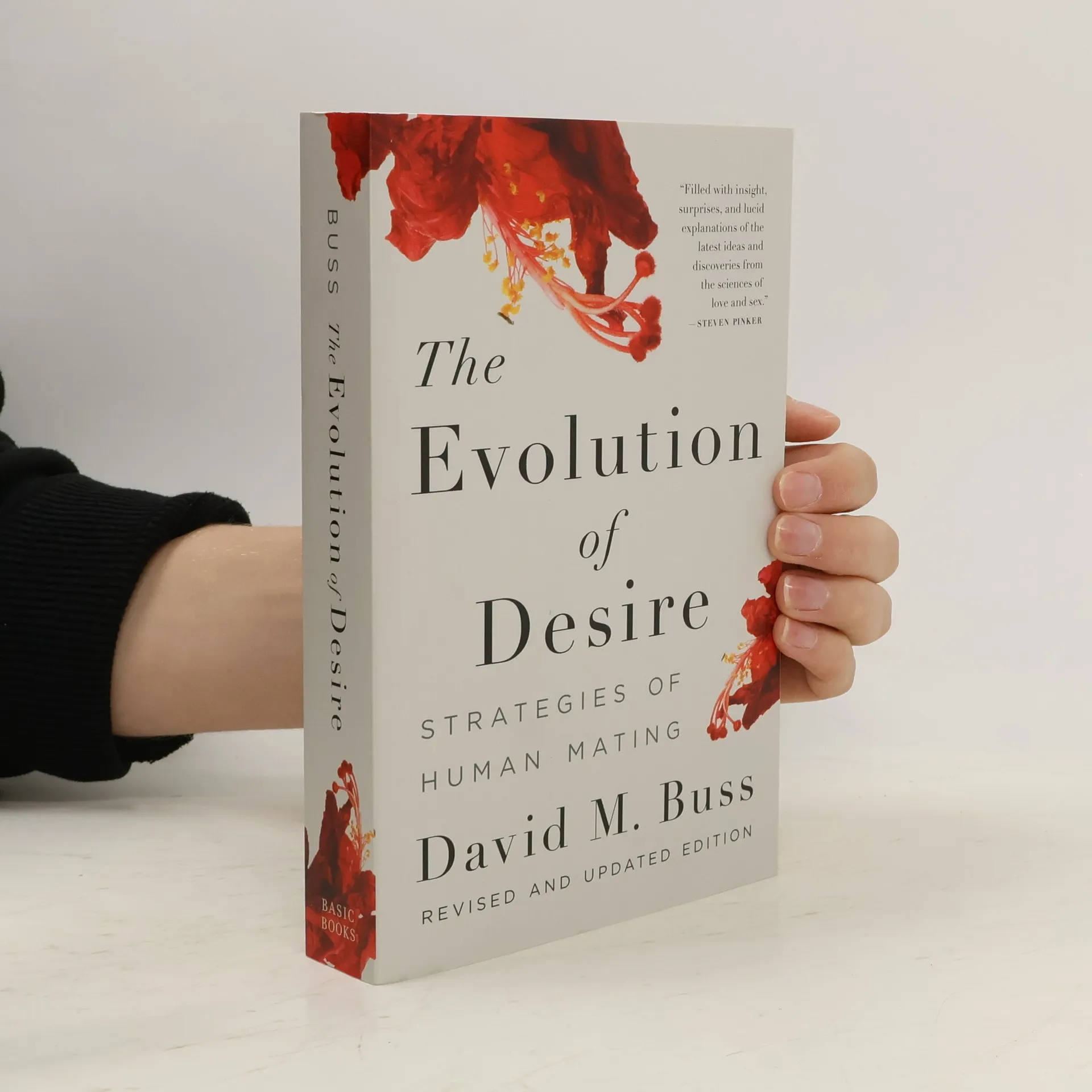
The evolution of desire : strategies of human mating
- 320 pages
- 12 hours of reading
David Buss updates his classic study of the origin of human mating behavior with fascinating new research.
Sexual conflict permeates ancient religions, from injunctions about thy neighbor's wife to the sexual obligations of marriage. It is etched in written laws that dictate who can and cannot have sex with whom. Its manifestations shape our sexual morality, evoking approving accolades or contemptuous condemnation. It produces sexual double standards that flourish even in the most sexually egalitarian cultures on earth. And although every person alive struggles with sexual conflict, most of us see only the tip of the dating deception, a politician's unsavory grab, the slow crumbling of a once-happy marriage, a romantic breakup that turns nasty.Bad Men shows that this "battle of the sexes" is deeper and far more pervasive than anyone has recognized, revealing the hidden roots of sexual conflict -- roots that originated over deep evolutionary time -- which characterise our sexual psychology. Providing novel insights into our minds and behaviours, Bad Men presents a unifying new theory of sexual conflict and offers practical advice for men and women seeking to avoid it.
* Do women have sex simply to reproduce or display their affection?When clinical psychologist Cindy Meston and evolutionary psychologist David Buss joined forces to investigate the underlying sexual motivations of women, what they found astonished them. * Through the voices of real women, Meston and Buss reveal the motivations that guide women's sexual decisionsand explain the deep-seated psychology and biology that often unwittingly drive women's desires sometimes in pursuit of health or pleasure, or sometimes for darker, disturbing reasons that a woman may not fully recognize. * Drawing on more than a thousand intensive interviewsconducted solely for the book, as well as their pioneering research on physiological response and evolutionary emotions,Why Women Have Sexuncovers an amazingly complex and nuanced portrait of female sexuality. They delve into the use of sex as a defensive tactic against a mate's infidelity(protection),as a ploy to boost self-confidence(status),as a barter for gifts or household chores(resource acquisition), or as a cure for a migraine headache(medication). * Why Women Have Sexstands as the richest and deepest psychological understandingof female sexuality yet achieved and promises to inform every woman's (and her partner's) awareness of her relationship to sex and her sexuality.
Evolutionary Psychology
- 456 pages
- 16 hours of reading
Composed of cutting-edge reasearch and featuring an engaging writing style, the author offers compelling scientific answers to the profound human questions regarding love and work. Beginning with a historial introduction, the text logically progresses by discussing adaptive problems humans face and ends with a chapter showing how the new field of evolutionary psychology encompasses all branches of psychology. Each chapter is alive with the subjects that most occupy our minds: sex, mating, getting along, getting ahead, friends, enemies, and social hierarchies. Why is child abuse 40 times more prevalent among step-families than biologically intact families? Why, according to one study, did 75% of men but 0% of women consent to have sex with a complete stranger? Buss explores these intriguing quandaries with his vision of psychology in the new millenium as a new science of the mind. Anyone with an interest in the biological facets of human psychology will find this a fascinating read.
Focusing on the multifaceted nature of human personality, this edition presents a framework based on six domains of knowledge rather than traditional grand theories. These domains—dispositional, biological, intrapsychic, cognitive-experiential, societal and cultural, and adjustment—organize key theories effectively. The text emphasizes the significant roles of culture, gender, and biology, reflecting recent advancements in personality scholarship. This unique approach captures the excitement and complexity of personality psychology, making it a valuable resource for students and scholars alike.
Viele von uns sehen in Mördern krankhafte Außenseiter oder abgebrühte Kriminelle. Doch der renommierte Evolutionspsychologe David Buss hat beunruhigende Neuigkeiten: Die meisten Morde werden von ganz normalen Menschen begangen. Und der Impuls zu töten stellt keineswegs eine Anomalie dar - er ist vielmehr evolutionär im menschlichen Gehirn verankert und wartet nur auf Auslöser, die uns erstaunlich vertraut sind. „Der Mörder in uns“ fußt auf einem jahrelangen Studium von Kriminalarchiven und auf Untersuchungen in der ganzen Welt. Es ist gespickt mit fesselnden, oft erschütternden Berichten über typische Mordfälle und gewährt schockierende und erhellende Einsichten in die Untiefen der menschlichen Seele. Das faszinierende Buch stellt letztlich unser aller Selbstbild radikal infrage.
Personality Psychology
Domains of Knowledge About Human Nature
Personality makes us who we are and influences every aspect of our lives - from how we interact with others, to how we respond in stressful situations. Personality Psychology uses a unique organizational framework to explore the six key domains of knowledge about personality - Dispositional, Biological, Intrapsychic, Cognitive/Experiential, Social/Cultural and Adjustment. This third edition focuses on the scientific basis of current understanding, highlighting contemporary research while also covering classic viewpoints. >Key features: >. Updated chapter on Culture and Personality with an expanded review of international research . Extensively revised chapter on Personality Disorders, covering the DSM-5 and its hybrid model . New and refreshed pedagogy including 'Application boxes', which examine how personality theories and research are used in real-world situations . 'A Closer Look' sections, which explore core topics and influential studies to enhance students' understanding . New and updated Exercises to encourage critical reflection and the application of theory to personal experience . A fully revised chapter on Psychoanalytic Approaches to Personality, including historical perspectives and extended coverage of Object Relations Theory and Ego Psychology >Connect® Psychology is McGraw Hill's digital learning and teaching environment. >Students - You get easy online access to homework, tests and quizzes designed by your instructor. You get immediate feedback on how you're doing, making it the perfect platform to test your knowledge. >Lecturers - Connect® gives you the power to create auto-graded assignments, tests and quizzes online. The detailed visual reporting allows you to easily monitor your students' progress. In addition, you can access key support materials for your teaching, including a testbank and lecture support. >Randy Larsen is the William R. Stuckenberg Professor of Human Values and Moral Development at Washington University in St. Louis. His recent classes include personality psychology and ethics for scientists. >David Buss is Professor of Psychology and Chair of the Individual Differences and Evolutionary Psychology (IDEP) programme at the University of Texas at Austin. >Andreas Wismeijer lectures in personality psychology and a multitude of other courses at Tilburg University and Nyenrode Business University. He is a prolific writer of articles on psychology. >John Song is the interim Head of the School of Applied Social Sciences at De Montfort University, where he has also taught personality, individual differences and research methods as an Associate Professor. >Stéphanie van den Berg is Associate Professor at the University of Twente where she teaches statistics, data science and psychometrics to students in the behavioural sciences. >Bertus Jeronimus teaches courses on personality and individual differences, as well as lifespan development and socialization, at Groningen University. He is Assistant Professor in the Faculty of Behavioural and Social Sciences. Inhaltsverzeichnis 1 Introduction to Personality Psychology 2 Personality Assessment, Measurement and Research Design >Part I: The Dispositional Domain 3 Traits and Trait Taxonomies 4 Measurement Issues in Trait Psychology 5 Personality Dispositions over Time: Stability and Change Part II: The Biological Domain 6 Genetics and Personality 7 Physiological Approaches to Personality 8 Evolutionary Perspectives on Personality Part III: The Intrapsychic Domain 9 Psychoanalytic Approaches to Personality 10 Motives and Personality Part IV: The Cognitive/Experiential Domain 11 Cognitive Topics in Personality 12 Intelligence 13 Emotion and Personality 14 Approaches to the Self >Part V: The Social and Cultural Domain 15 Personality and Social Interaction 16 Sex, Gender and Personality 17 Culture and Personality >Part VI: The Adjustment Domain 18 Stress, Coping, Adjustment and Health 19 Disorders of Personality 20 Summary and Future Directions >