Explore the latest books of this year!
Bookbot

René Guénon

    November 15, 1886 – January 7, 1951

    René Guénon was a French author and intellectual who remains an influential figure in the domain of sacred science, traditional studies, symbolism, and initiation. His work delves into profound spiritual truths and esoteric traditions. Guénon's writings focus on analyzing the principles and metaphysical underpinnings of various spiritual paths, offering readers insight into timeless wisdom. His style is precise, and his thoughts are intended for those seeking a deeper understanding of reality and the spiritual essence of existence.

    René Guénon
    Il re del mondo
    The Esoterism of Dante
    Theosophy. History of a Pseudo-Religion
    The Reign of Quantity & the Signs of the Times
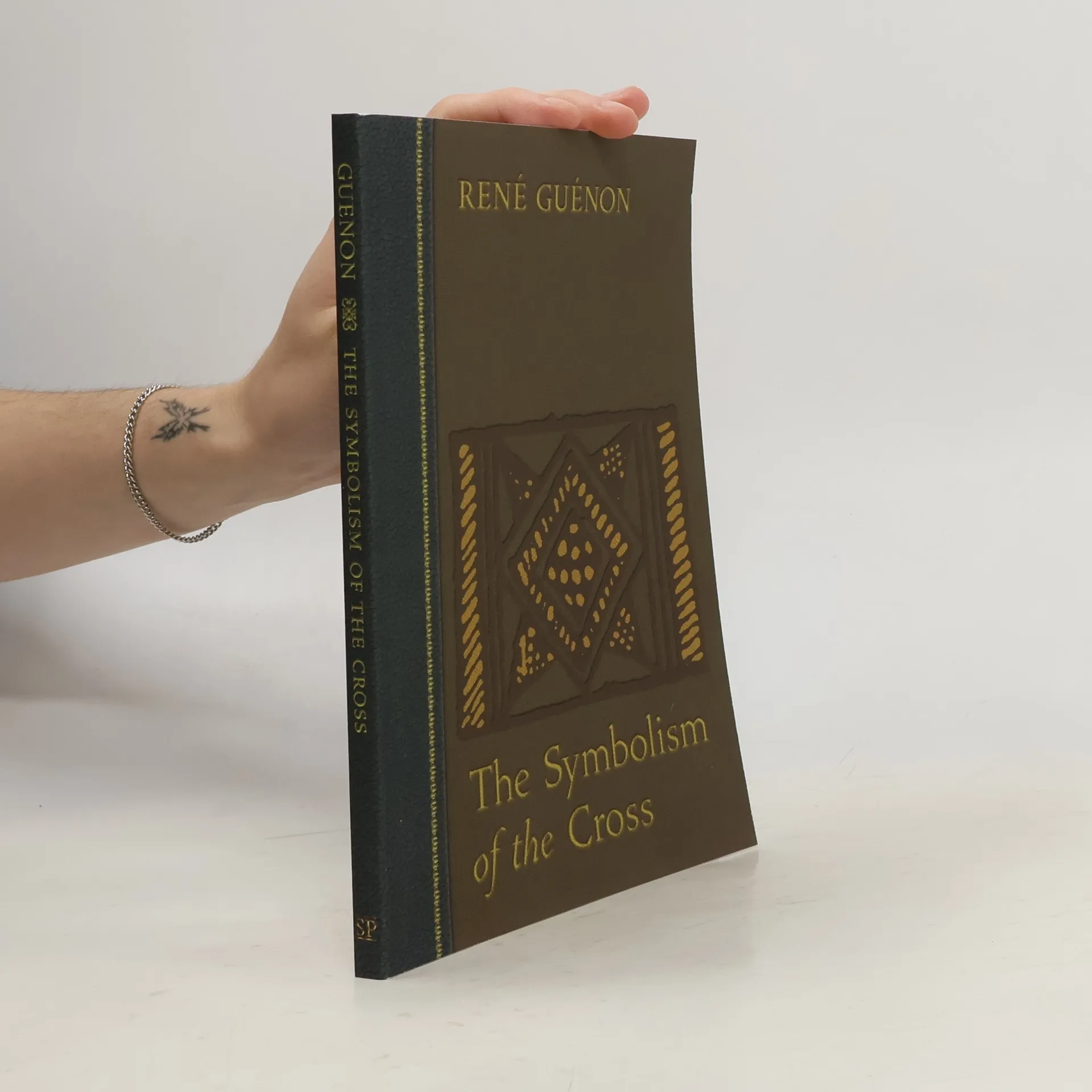
    The Symbolism of the Cross
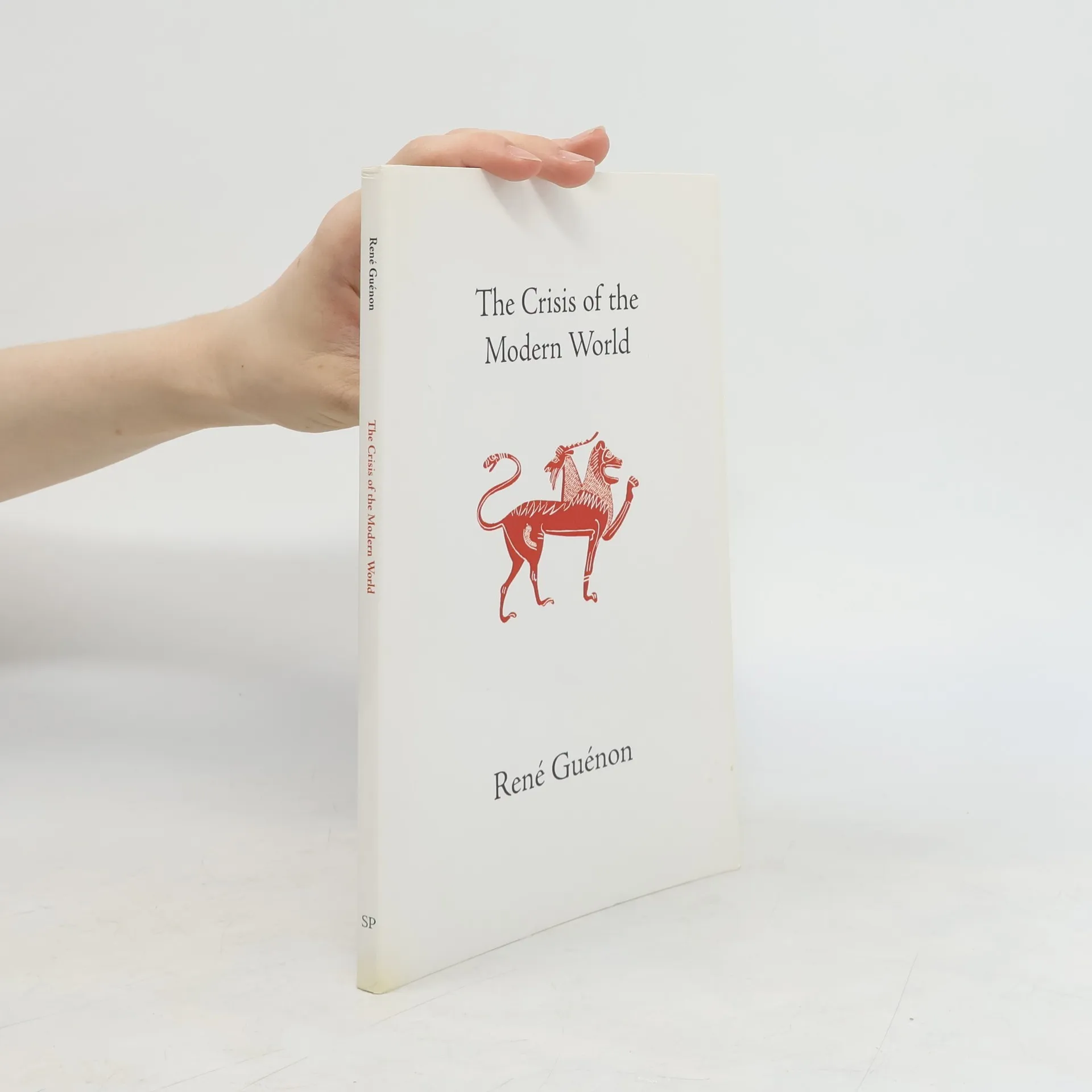
    The Crisis of the Modern World
    • The Crisis of the Modern World

      • 138 pages
      • 5 hours of reading
      4.3(17)Add rating

      "It is no longer news that the Western world is in a crisis, a crisis that has spread far beyond its point of origin and become global in nature. In 1927, René Guénon responded to this crisis with the closest thing he ever wrote to a manifesto and 'call-to-action'. The Crisis of the Modern World was his most direct and complete application of traditional metaphysical principles-particularly that of the 'age of darkness' preceding the end of the present world-to social criticism, surpassed only by The Reign of Quantity and the Signs of the Times, his magnum opus. In the present work Guénon ruthlessly exposes the 'Western deviation': its loss of tradition, its exaltation of action over knowledge, its rampant individualism and general social chaos. His response to these conditions was not 'activist', however, but purely intellectual, envisioning the coming together of Western intellectual leaders capable under favorable circumstances of returning the West to its traditional roots, most likely via the Catholic Church, or, under less favorable ones, of at least preserving the 'seeds' of Tradition for the time to come." --

      The Crisis of the Modern World
    • The Symbolism of the Cross

      • 168 pages
      • 6 hours of reading
      4.4(11)Add rating

      The Symbolism of the Cross is a major doctrinal study of the central symbol of Christianity from the standpoint of the universal metaphysical tradition, the 'perennial philosophy' as it is called in the West. As Guernon points out, the cross is one of the most universal of all symbols and is far from belonging to Christianity alone. Indeed, Christians have sometimes tended to lose sight of its symbolism of its symbolical significance and to regard it as no more than the sign of a historical event. By restoring to the full spiritual value as a symbol, but without in any way detracting from its historical importance for Christianity, Guenon has performed a task of inestimable importance which perhaps only he, with his unrivaled knowledge of the symbolic languages of both East and West, was qualified to perform.
      The Symbolism of the Cross
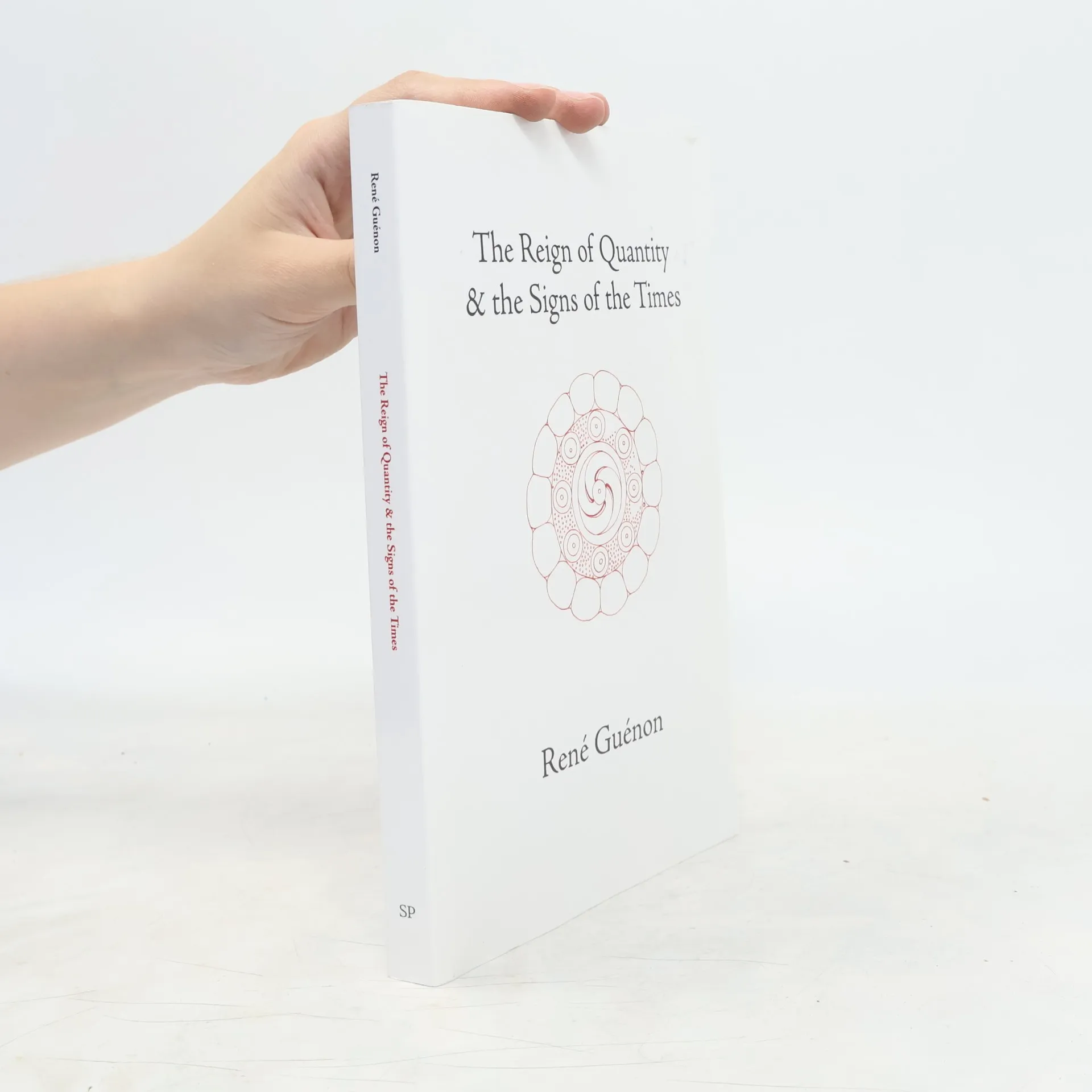
    • The Reign of Quantity gives a concise but comprehensive view of the present state of affairs in the world, as it appears from the point of view of the 'ancient wisdom', formerly common both to the East and to the West, but now almost entirely lost sight of. The author indicates with his fabled clarity and directness the precise nature of the modern deviation, and devotes special attention to the development of modern philosophy and science, and to the part played by them, with their accompanying notions of progress and evolution, in the formation of the industrial and democratic society which we now regard as 'normal'. Guénon sees history as a descent from Form (or Quality) toward Matter (or Quantity); but after the Reign of Quantity-modern materialism and the 'rise of the masses'-Guénon predicts a reign of 'inverted quality' just before the end of the age: the triumph of the 'counter-initiation', the kingdom of Antichrist. This text is considered the magnum opus among Guénon's texts of civilizational criticism, as is Symbols of Sacred Science among his studies on symbols and cosmology, and Man and His Becoming according to the Vedanta among his more purely metaphysical works.

      The Reign of Quantity & the Signs of the Times
    • Theosophy. History of a Pseudo-Religion

      • 352 pages
      • 13 hours of reading
      3.8(50)Add rating

      Many readers of Guénon's later doctrinal works have longed to hear the tale of his earlier entanglement, and disentanglement, from the luxuriant undergrowth of so-called esoteric societies in late nineteenth-century Paris and elsewhere. The present work documents in excoriating detail Guénon's findings on what did, and did not, lie behind the Theosophical Society founded by Madame Blavatsky and Colonel Olcott in 1875. Much further information has of course come to light since this book was written, but it has never been superseded as a fascinating record of the path of a master metaphysician through this maze. A particularly unusual feature is its extensive treatment of the Hermetic Brotherhood of Luxor, which has recently attracted the attention of scholars of the occult.

      Theosophy. History of a Pseudo-Religion
    • The Esoterism of Dante

      • 80 pages
      • 3 hours of reading
      3.9(147)Add rating

      René Guénon (1886-1951) critiques modernity through 26 volumes, highlighting perennial wisdom across diverse cultures. In "The Esoterism of Dante," he explores Dante's initiatic journey and medieval esoterism, while "Insights into Christian Esoterism" examines sacred languages and esoteric themes. His works remain vital for contemporary seekers of spiritual truth.

      The Esoterism of Dante
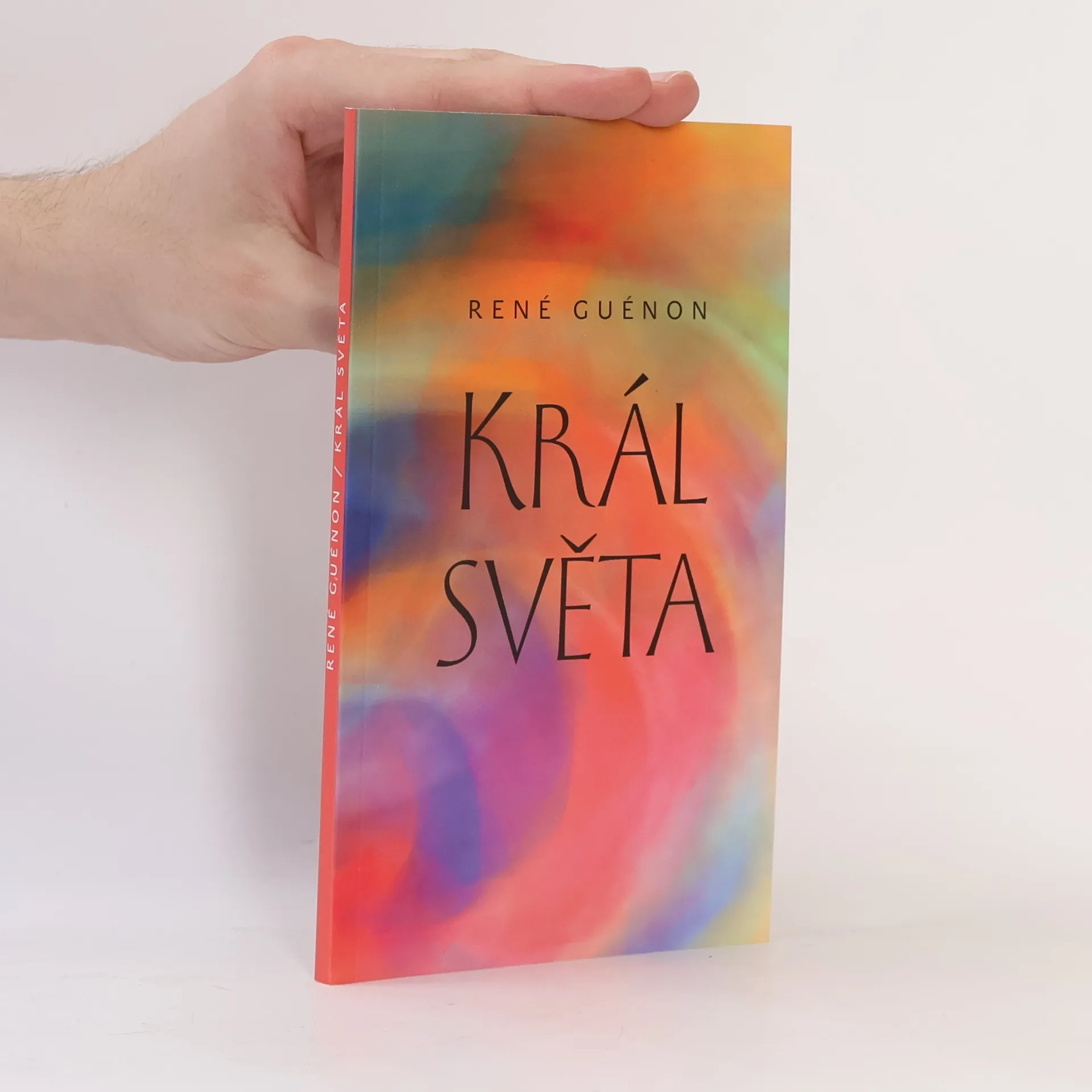
    • RISVOLTO Nel 1924 apparve a Parigi un singolare libro di Ferdinand Ossendowski, dal titolo Bestie, uomini e dèi . Vi si raccontava un avventuroso viaggio nell'Asia centrale, nel corso del quale l'autore affermava di essere venuto in contatto con un centro iniziatico misterioso, situato in un mondo sotterraneo le cui ramificazioni si estendono ovunque: il capo supremo di questo centro era detto Re del Mondo. René Guénon prese spunto da tale pubblicazione per mostrare, in questo breve e splendido libro, come, dietro alle confuse narrazioni di Ossendowski e di altri scrittori, si profilassero dottrine e miti immemoriali, di cui si ritrovavano tracce dal Tibet (con la sua nozione dell' Agarttha , la terra 'inviolabile' ) alla tradizione ebraica (con la figura di Melchisedec e della città di Salem), e così anche nei più antichi testi sanscriti, nel simbolismo del Graal, nelle leggende sull'Atlantide e in tanti altri miti e immagini. A mano a mano che si svelano questi rapporti, siamo colti come da una vertigine: con pochi e sobri gesti Guénon riesce a mettere in contatto tali e così diverse cose che alla fine ci troviamo dinanzi a una sterminata prospettiva, che traversa tutta la storia fino a oggi, dalle origini inattingibili della Tule iperborea fino all'occultamento del centro iniziatico nella nostra 'età nera', il Kali-Yuga . In poche pagine, e tutto per immagini, Guénon disegna dunque la linea della trasmissione della Tradizione primordiale, sicché questo libro potrà valere per molti come introduzione al pensiero di un maestro solitario e indispensabile del nostro tempo. Il Re del Mondo è stato pubblicato per la prima volta nel 1927.

      Il re del mondo