Explore the latest books of this year!
Bookbot

René Girard

    December 25, 1923 – November 4, 2015

    René Girard was a French-born American historian, literary critic, and philosopher of social science whose work belongs to the tradition of anthropological philosophy. His fundamental ideas, developed throughout his career, posit that desire is mimetic, all conflict originates in mimetic rivalry, and the scapegoat mechanism is the foundation of human culture and sacrifice. Girard argued that religion was necessary in human evolution to control the violence arising from mimetic rivalry, and that the Bible reveals these concepts while denouncing the scapegoat mechanism. His extensive work, spanning numerous academic disciplines, continues to inspire discussion and research.

    René Girard
    Violence, the Sacred, and Things Hidden
    The Scapegoat
    Things Hidden Since the Foundation of the World
    Battling to the End
    Deceit, Desire, and the Novel: Self and Other in Literary Structure
    Anorexia and Mimetic Desire
    • Anorexia and Mimetic Desire

      • 112 pages
      • 4 hours of reading

      The book explores the anorexia epidemic through the lens of mimetic desire, suggesting that our deepest desires are often imitated from societal models. Girard critiques the "culture of anorexia" and dissects the competitive nature behind conspicuous non-consumption, blending theoretical insights with relatable observations. His analysis reveals how societal influences shape personal desires, challenging readers to reconsider the motivations behind their choices and the implications of a culture that prizes such behaviors.


      Anorexia and Mimetic Desire
      4.3
    • This study extends beyond the scope of literature into the psychology of much of our contemporary scene, including fashion, advertising, and propaganda techniques. In considering such aspects, the author goes beyond the domain of pure aesthetics and offers an interpretation of some basic cultural problems of our time.

      Deceit, Desire, and the Novel: Self and Other in Literary Structure
      4.3
    • Battling to the End

      • 256 pages
      • 9 hours of reading

      Engages Carl von Clausewitz (1780-1831), the Prussian military theoretician who wrote On War. This title shows us a Clausewitz who is a fascinated witness of history's acceleration. It pushes aside the taboo that prevents us from seeing that the apocalypse has begun.

      Battling to the End
      4.3
    • Things Hidden Since the Foundation of the World presents a highly original global theory of culture. Here, in his greatest work, René Girard explores the function of violence, mimetic desire and the mechanism of the scapegoat, in the history of society and religion. Girard's vision is a brilliant and devastating challenge to conventional views of literature, anthropology, philosophy and psychoanalysis.

      Things Hidden Since the Foundation of the World
      4.3
    • The Scapegoat

      • 232 pages
      • 9 hours of reading

      In 'The Scapegoat', the author audaciously turns to classical mythology, medieval narrative, and the New Testament to explore the scenes behind 'texts of persecution, ' documents that recount collective violence from the standpoint of the persecutor.

      The Scapegoat
      4.2
    • Violence, the Sacred, and Things Hidden

      • 150 pages
      • 6 hours of reading

      Never before translated in English, this 1973 discussion between Rene Girard (1923-2015) and other prominent scholars represents one of the most significant breakthroughs in mimetic theory. The conversation was an opportunity for Girard to debate with his interlocutors the theories he expounded in Violence and the Sacred.

      Violence, the Sacred, and Things Hidden
      4.0
    • "In this ground-breaking work, one of our foremost literary and cultural critics turns to the major figure in English literature, William Shakespeare, and proposes a dramatic new reading of nearly all his plays and poems. The key to A Theater of Envy is Girard's novel reinterpretation of "mimesis." For Girard, people desire objects not for their intrinsic value, but because they are desired by someone else - we mime or imitate their desires. This envy - or "mimetic desire" - he sees as one of the foundations of the human condition".--Back cover

      A Theater of Envy: William Shakespeare
      4.2
    • Violence and the Sacred

      • 352 pages
      • 13 hours of reading

      Violence and the Sacred is Rene Girard's landmark study of human evil. Here Girard explores violence as it is represented and occurs throughout history, literature and myth. Girard's forceful and thought-provoking analyses of Biblical narrative, Greek tragedy and the lynchings and pogroms propagated by contemporary states illustrate his central argument that violence belongs to everyone and is at the heart of the sacred.

      Violence and the Sacred
      4.2
    • The Girard Reader

      • 310 pages
      • 11 hours of reading

      In one volume, an anthology of seminal work of one of the twentieth century's most original thinkers.

      The Girard Reader
      4.1
    • Evolution and Conversion

      • 216 pages
      • 8 hours of reading

      Evolution and Conversion explores the main tenets of René Girard's thought in a series of dialogues. Here, Girard reflects on the evolution of his thought and offers striking new insights on topics such as violence, religion, desire and literature. His long argument is a historical one in which the origin of culture and religion is reunited in the contemporary world by means of a reinterpretation of Christianity and an understanding of the intrinsically violent nature of human beings. He also offers provocative re-readings of Biblical and literary texts and responds to statements by Daniel Dennett and Richard Dawkins. Including an introduction by the authors, this is a revealing text by one of the most original thinkers of our time.

      Evolution and Conversion
      3.9
    • All Desire is a Desire for Being

      • 336 pages
      • 12 hours of reading

      How we are motivated to imitate wanting what others desire—Girard’s theory primed for the social media age.A Penguin ClassicRené Girard eludes easy categories, bridging the fields of literary criticism, anthropology, sociology, history, religion and theology. Influencing such writers as J. M. Coetzee and Milan Kundera, his insight into contagious violence looks ever more prophetic and relevant seven years after his death. In many ways he is the thinker for our modern world of social media and herd behavior. In this newly selected collection of writings, Cynthia L. Haven has created an approachable anthology of his work, addressing Girard's thoughts on the nature of desire, human imitation and rivalry, the causes of conflict and violence, the deep structure of religion and cultural subjects like opera and theatre. Girard spoke in language that was engaging, accessible and often controversial. A long-time friend and colleague, Haven shines a spotlight on his role as a public intellectual and profound theorist, inviting a new generation to his corpus.

      All Desire is a Desire for Being
      4.1
    • 2 Kinds of People

      • 176 pages
      • 7 hours of reading

      2 Kinds of People is the interactive visual personality quiz that's as much fun as a game. It works by showing two illustrations side by side. If you and your partner pick the same one, score it on the foldout wheel in the back, and move to the next.

      2 Kinds of People
      3.9
    • Achever Clausewitz

      • 363 pages
      • 13 hours of reading

      René Girard aborde ici l'oeuvre de Cari von Clausewitz (1780-1831), stratège prussien auteur du De la guerre. Ce traité inachevé a été étudié par de nombreux militaires, hommes politiques ou philosophes. On en a retenu un axiome essentiel : « La guerre est la continuation de la politique par d'autres moyens. » Clausewitz aurait pensé que les gouvernements pouvaient faire taire les armes. Mais le succès de cette formule témoigne d'un refus de voir la nouveauté du traité. Observateur des campagnes napoléoniennes, Clausewitz a compris la nature de la guerre moderne : les termes de « duel », d'« action réciproque » ou de « montée aux extrêmes » désignent un mécanisme implacable, qui s'est depuis imposé comme l'unique loi de l'histoire. Loin de contenir la violence, la politique court derrière la guerre : les moyens guerriers sont devenus des fins. René Girard fait de Clausewitz le témoin fasciné d'une accélération de l'histoire. Hanté par le conflit franco-allemand, ce stratège éclaire, mieux qu'aucun autre, le mouvement qui va détruire l'Europe. "Achever Clausewitz ", c'est lever un tabou : celui qui nous empêchait de voir que l'apocalypse a commencé. Car la violence des hommes, échappant à tout contrôle, menace aujourd'hui la planète entière.

      Achever Clausewitz
      4.8
    • René Girards Buch verteidigt das Christentum als programmatische Überwindung der Gewalt. Der Zentralbegriff aus Girards anthropologischer Theorie der Gewalt ist Mimesis, Nachahmung. Im Fall der Gewaltnachahmung droht eine Eskalation, in der für Girard das Wesen Satans besteht: der Zerfall der Gesellschaft, der Krieg aller gegen alle. Girards Buch zielt auf eine Radikalisierung des christlichen Glaubens, die von den Evangelien selbst vorgedacht wurde. Satan ist die Verkörperung des mimetischen Begehrens, kein verzichtbarer mythologischer Rest.

      Ich sah den Satan vom Himmel fallen wie einen Blitz. Eine kritische Apologie des Christentums.
      5.0
    • René Girard spricht mit Wolfgang Palaver über ›mimetisches Begehren‹, Apokalypse und die Unterscheidung der Religion in rituelle Praxis und Glaubenssätze. Ein Gespräch über die bewegenden Themen unserer Zeit: aktuell, geistreich und anregend. Gleichzeitig eine Einführung in die Gedankenwelt eines der wichtigsten Denker der Gegenwart.

      Gewalt und Religion, Ursache oder Wirkung?
      4.5
    • Je vois Satan tomber comme l'eclair

      • 254 pages
      • 9 hours of reading

      " Merci mon Père de révéler aux petits ce que vous avez dissimulé aux sages et aux intelligents. " Les sages et les intelligents, depuis, se sont bien vengés : à force de concasser les Évangiles, ils en ont fait un petit tas de pièces et de morceaux trop hétéroclites pour signifier quoi que ce soit... Mais ils n'auront pas le dernier mot ! René Girard pense, comme Simone Weil, que les Évangiles sont une théorie de l'homme avant d'être une théorie de Dieu. Une carte des violences où son orgueil et son envie enferment l'humanité. Découvrir cette théorie de l'homme et l'accepter, c'est rendre vie aux grands thèmes évangéliques relatifs au mal, oubliés et évacués par les croyants - de Satan à l'Apocalypse. C'est également ressusciter l'idée de la Bible tout entière comme prophétique du Christ. Ainsi les Évangiles, loin d'être " un mythe semblable à tous les autres ", comme on le répète à l'envi depuis deux siècles, seraient la clef de toute mythologie derrière nous, et, au-devant de nous, de l'histoire inouïe qui nous attend. Dans le dépérissement de toutes les pensées modernes, est-ce que seules les Ecritures Saintes tiendraient debout ?

      Je vois Satan tomber comme l'eclair
      4.2
    • Im Angesicht der Apokalypse

      Clausewitz zu Ende denken

      • 388 pages
      • 14 hours of reading

      Bewaffnete Konflikte, Umweltkatastrophen, Terrorismus und Krieg gegen den Terror: Was uns als stets neuer Ausbruch von Gewalt erschaudern lässt, ist für René Girard Ausdruck eines planetarischen Gesetzes der entfesselten Gewalt, das unsere Zivilisation an die Schwelle zur wirklichen Apokalypse rückt. Der Krieg ist nicht mehr die Fortsetzung der Politik mit anderen Mitteln, die Mittel haben sich verselbstständigt zur Fortsetzung des Krieges ins Unendliche, attestiert Girard in Fortführung des preußischen Militärhistorikers Carl von Clausewitz. Girard begibt sich in diesem Gesprächsbuch mit Benoît Chantre auf eine historische Exkursion durch die deutschfranzösischen Beziehungen, debattiert über die Rolle der Kirche und des Papstes, die Ursachen des globalen Terrorismus und spricht eine eindringliche Warnung aus: »Ein Ende Europas, der abendländischen, ja der ganzen Welt ist möglich. Diese Möglichkeit steht heute sehr real vor uns.«

      Im Angesicht der Apokalypse
      3.0
    • Menschen und Gemeinschaften begehren Objekte nicht um ihrer selbst willen – sondern sie imitieren das Begehren anderer. Durch dieses »mimetische Begehren«, ein Grundkonzept im Denken des Kulturanthropologen und Religionsphilosophen René Girard (1923–2015), entstehen Rivalität und Konflikte. Wie diese zu einem Ende finden, beschreibt Girard mit einem »Sündenbock-Mechanismus«: Die mimetische Vergiftung bewegt sich weg vom Sehnen hin zu einem Opfer, das alle Schuld zu tragen hat – als ob es tatsächlich verantwortlich wäre. Girard gilt als Theoretiker der Stunde: Seine Überlegungen über Konflikte und Ideologien, wie sie das titelgebende Gespräch und sein letzter Essay »Über Krieg und Apokalypse« pointiert zugänglich machen, lassen uns die Entwicklungen der Gegenwart besser verstehen.

      Warum kämpfen wir? Und wie hören wir auf?
    • Der Sündenbock

      • 302 pages
      • 11 hours of reading

      Die Geschichte der Menschheit ist eine Geschichte der Gewalt, der Ausstoßung und Vernichtung von "Sündenböcken" zum Wohle der Gemeinschaft. Girard beschreibt die verschiedenen Mechanismen der Gewaltausübung, analysiert sie und zeit, wie sie durchbrochen werden können

      Der Sündenbock
    • Das Ende der Gewalt

      • 304 pages
      • 11 hours of reading

      Konflikte und Gewaltausbrüche bedrohen die Welt, heute mehr denn. Was löst diese Gewalt aus? Was lässt sie eskalieren, was dämmt sie wieder ein? René Girard analysiert in seinem Standardwerk den Teufelskreis von Gewalt und Gegengewalt. Als Ursache macht er die Aneignung und Nachahmung gewalttätigen Verhaltens aus. Die Klärung dieses Nachahmungstriebs ist für ihn der Schlüssel - zum Verständnis kultureller Errungenschaften ebenso wie von religiösen Ritualen und Opferriten. Sie ist auch der Weg zur Eindämmung von Gewalt. Wie der bewusste Verzicht auf Gewalt und Opfer möglich sein kann, zeigt Girard in Auseinandersetzung und Neuinterpretation der jüdisch-christlichen Tradition. Das Standardwerk erstmals vollständig in deutscher Sprache.

      Das Ende der Gewalt
    • Die verkannte Stimme des Realen

      • 238 pages
      • 9 hours of reading

      So unterschiedlich Theorien über Kulturen auch ausgefallen sind, eines hatten sie oft gemeinsam: das Misstrauen gegenüber dem Begriff des Realen. Girard war es immer unbegreiflich, wie leichtfertig eine solch zentrale Kategorie preisgegeben werden konnte. In einer Reihe von Aufsätzen, die sich mit Nietzsche, der Bibel, Richard Wagner oder Dostojewskij beschäftigen, führt er vor, wie Theorie sich überhaupt erst aus dem Bezug auf das Reale entwickeln kann. Ein gelehrter Außenseiter meldet sich da zu Wort, der der Wirklichkeit gegen die Flüchtigkeit modischer Theorien zu ihrem Recht verhilft.

      Die verkannte Stimme des Realen
    • Figuren des Begehrens

      • 338 pages
      • 12 hours of reading

      Girards meisterhafte Studie zu fünf großen Romanschriftstellern - Cervantes, Flaubert, Stendhal, Proust und Dostojewskij - führt zur Schlussfolgerung, daß alle diese Romane die gleiche Grundstruktur haben. Während die Kritiker meist nur die Unterschiede sehen, legt Girard deren Gemeinsamkeit frei: das nachahmende Begehren. In seiner Studie berührt er dabei grundlegende Fragen der modernen Kultur und wirft auf Gefühle wie „Neid, Eifersucht und ohnmächtigen Haß“ (Stendhal) ebenso ein neues Licht wie auf Fragen der Sexualität (Sadismus und Masochismus), der Soziologie, der Religion, der Mode und der Werbung.

      Figuren des Begehrens
    • René Girard je francúzsko-americký mysliteľ, ktorého výskum presahuje viaceré disciplíny, vrátane literárnej vedy, filozofie, antropológie a teológie. Jeho teória mimetickej túžby a obetného baránka priniesla revolúciu do humanitných vied. Ústredným pojmom jeho myslenia je násilie a to, ako sa ľudské spoločenstvo s ním vyrovnáva. V napätých situáciách nasmeruje násilie na obetného baránka, ktorého usmrtí, aby obnovilo mier. Obetovanie ako základný náboženský rituál chráni spoločenstvo pred ničivým násilím a je zakladajúcim prvkom inštitúcií a kultúry. Girard tiež priniesol originálny pohľad na mytológiu a Bibliu, pričom túto časť svojho výskumu považuje za kľúčový objav. Jeho interpretácia evanjelií posunula kresťanstvo do centra antropológie, čo vyvolalo kritiku v intelektuálnych a vedeckých kruhoch. Girard patrí medzi najoriginálnejších mysliteľov 20. storočia. Kniha rozhovorov Pôvod kultúry je jeho vedeckou autobiografiou, v ktorej objasňuje zdroje, vývoj a perspektívy svojho myslenia na základe svojich životných skúseností.

      Pôvod kultúry: Rozhovory s Pierpaolom Antolellom a Joaom Cezarom de Castro Rocha
      4.7
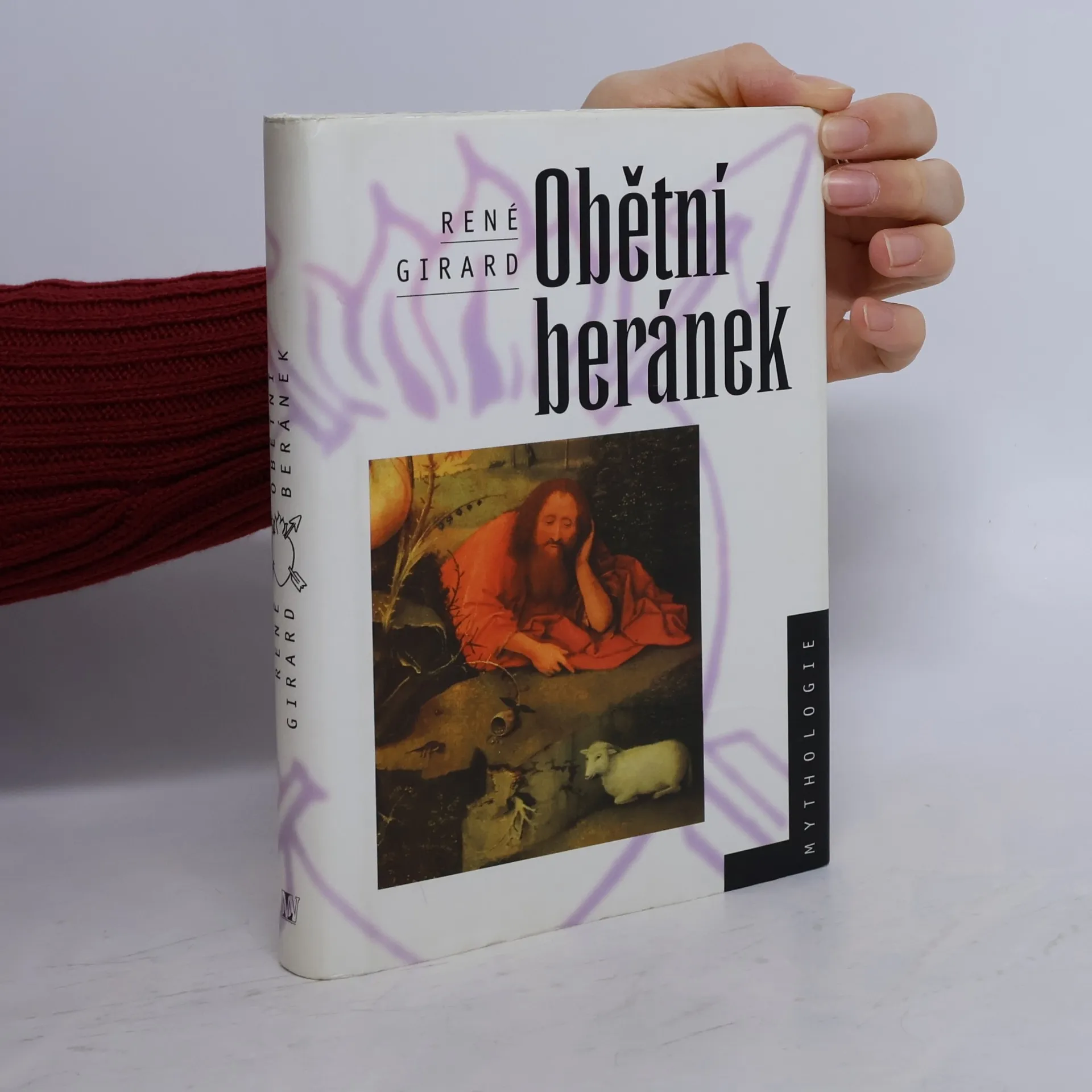
    • René Girard vychází z toho, že v okamžiku, kdy je společnost v krizi nebo je ohrožena, kdy se na ni sesunou pohromy – epidemie, zemětřesení, sucho, politická nestabilita atp. – vzniká chaotická situace, padají pravidla, kterými se soužití řídí, mizí veškeré rozlišování, jakékoli rozdíly. Beztvará masa se neptá po příčinách, ale hledá viníka, aby se mohla znovu identifikovat – tím viníkem je někdo cizí, kdo se od ní odlišuje, kdo je poznamenaný jako Oidipús (kulhá, má jedno oko nebo hrb atp.). Tím, že se masa vrhá na toho odlišného, kolektivní vraždou na něm vybíjí své pudy, znovu se stmeluje, vrací se k původnímu pravidelnému chodu. Viník – obětní beránek – se tak stává jejím zachráncem, kolektivní vražda se nyní mění na mučednickou smrt. Oběť se stává spasitelem a tak je v zástupných rituálech uctívána. Autor při dešifrování různorodých mýtů ale i biblických témat odhaluje právě tento mechanismus opakovaného perzekučního násilí a nanejvýš aktuálně přispívá k pochopení naší vlastní situace ve světě posedlém neustálou modernizací a inovací – bludném kruhu bez identity a diferenciace.

      Obětní beránek
      4.3
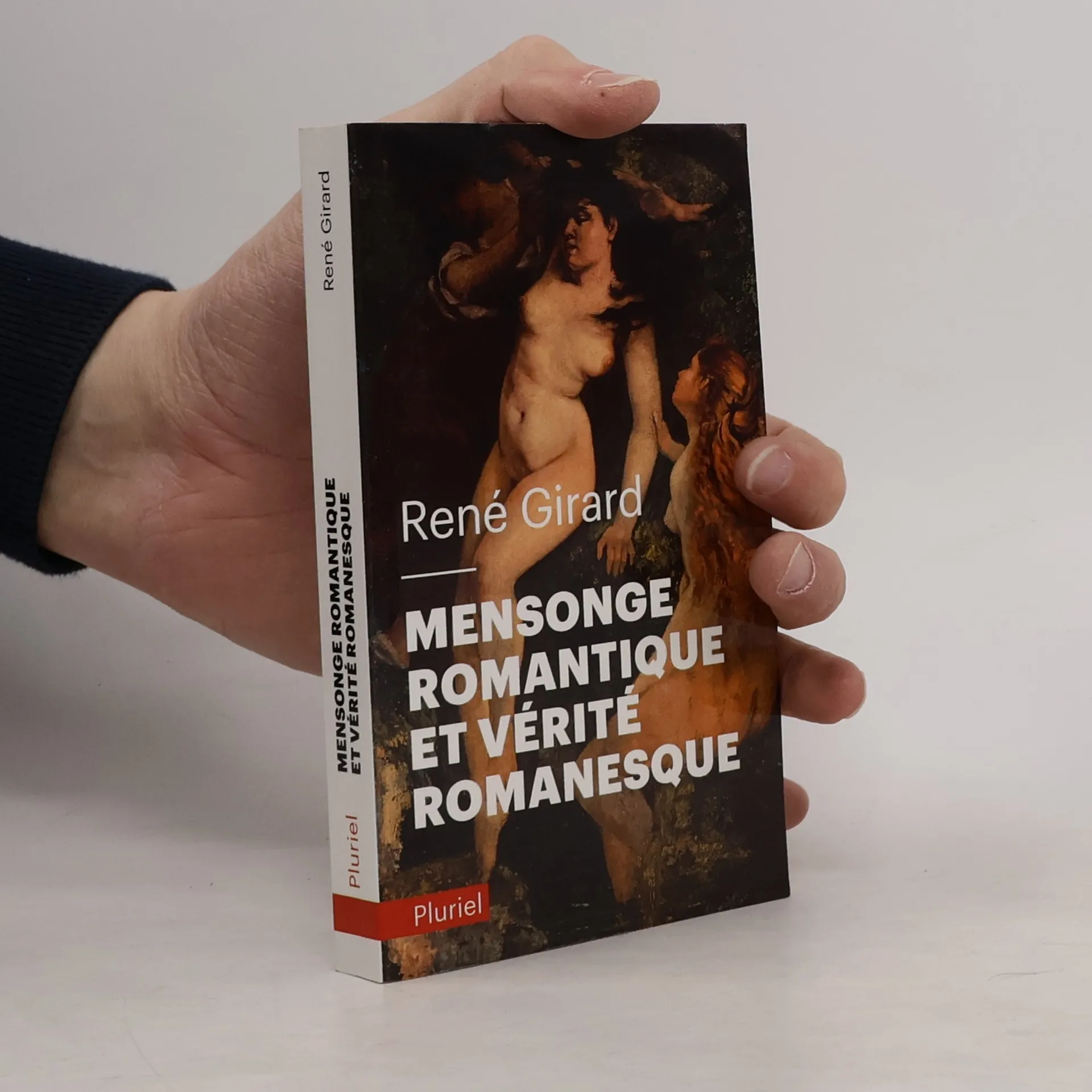
    • Studie francouzského esejisty vychází z románového díla Cervantesova, Stendhalova, Flaubertova, Proustova a Dostojevského a pokouší se o kritiku tzv. nevlastní, zprostředkované touhy, tj. touhy, která nabyla čisté podoby v romantismu a poromantických literárních hnutích až po existencialismus a„nový román“. Z této zprostředkované touhy vysvětluje jevy jako „marnivost“, „snobismus“, „sadomasochismus“, také však celé životní prostředí člověka 19. a první poloviny 20. století. Práce na rozhraní studie a eseje, která se snaží ukázat, jak literatura přerůstá do života.

      Lež romantismu a pravda románu
      4.2