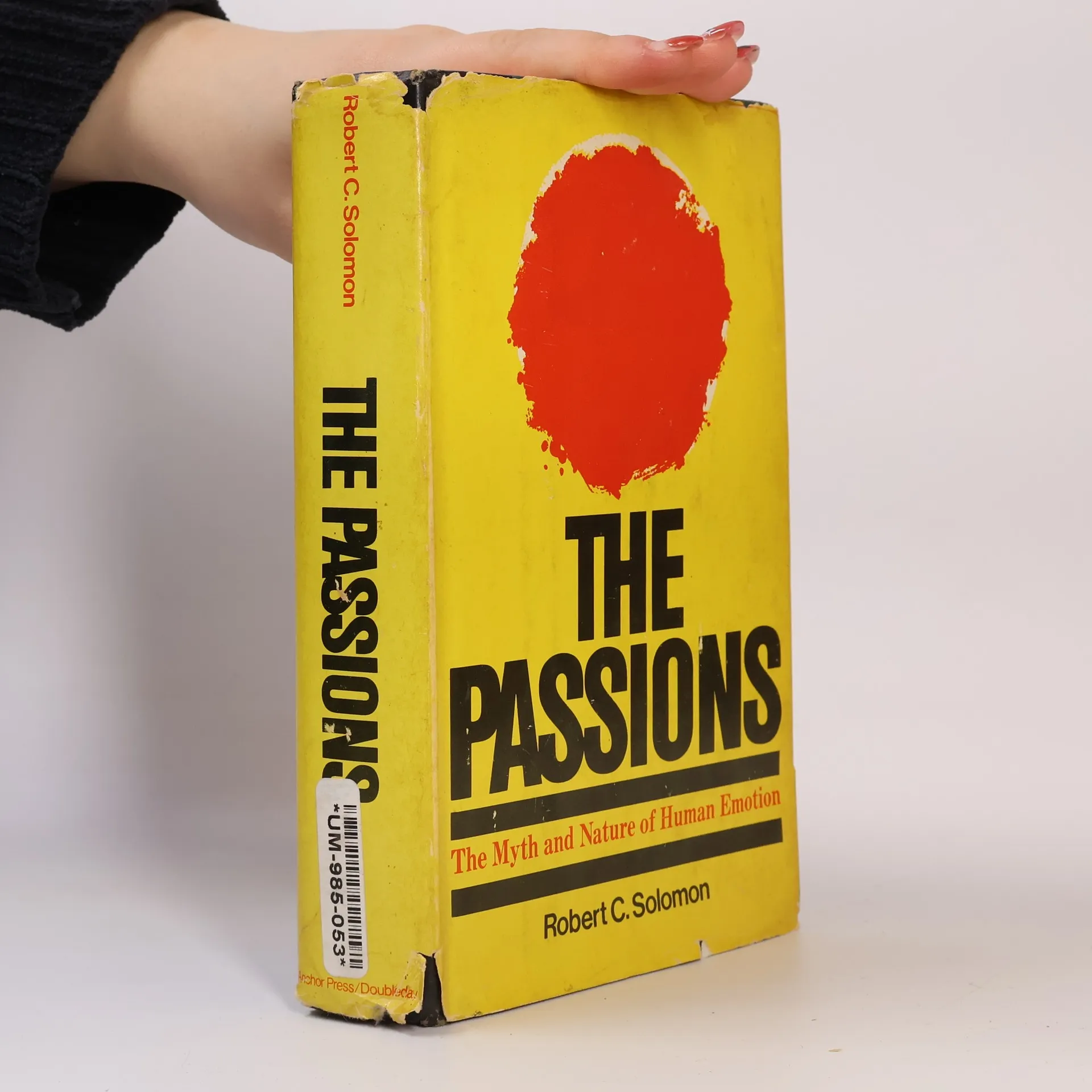
The Passions by Robert Solomon is a defense of the view that our passions constitute our world and our Selves, and that, since our passions are rational, we are in control of them, we are responsible for them, and we can change them. Contents Reason and the Passions Reason Versus the Passions The Meaning of Life The New Romanticism Passions and the Meanings in Life My World and Reality Subjectivity Reflection and Innocence The Point Philosophical Background Subjectivity Surrealism Self and Others The New Romanticism The Myth of the Passions Physiology Feelings and Behavior A Subjective Theory of the Passions What Is to Be Done? Life as the Problem Life Is Cheap in Casablanca A Genealogy of the Absurd Camuss Myth The Metaphysics of the Absurd Absurd Reasoning The Passions of Sisyphus The Logic of Emotion The Emotional Register Whos Self-deception Self-overcoming
Robert C. Solomon Books
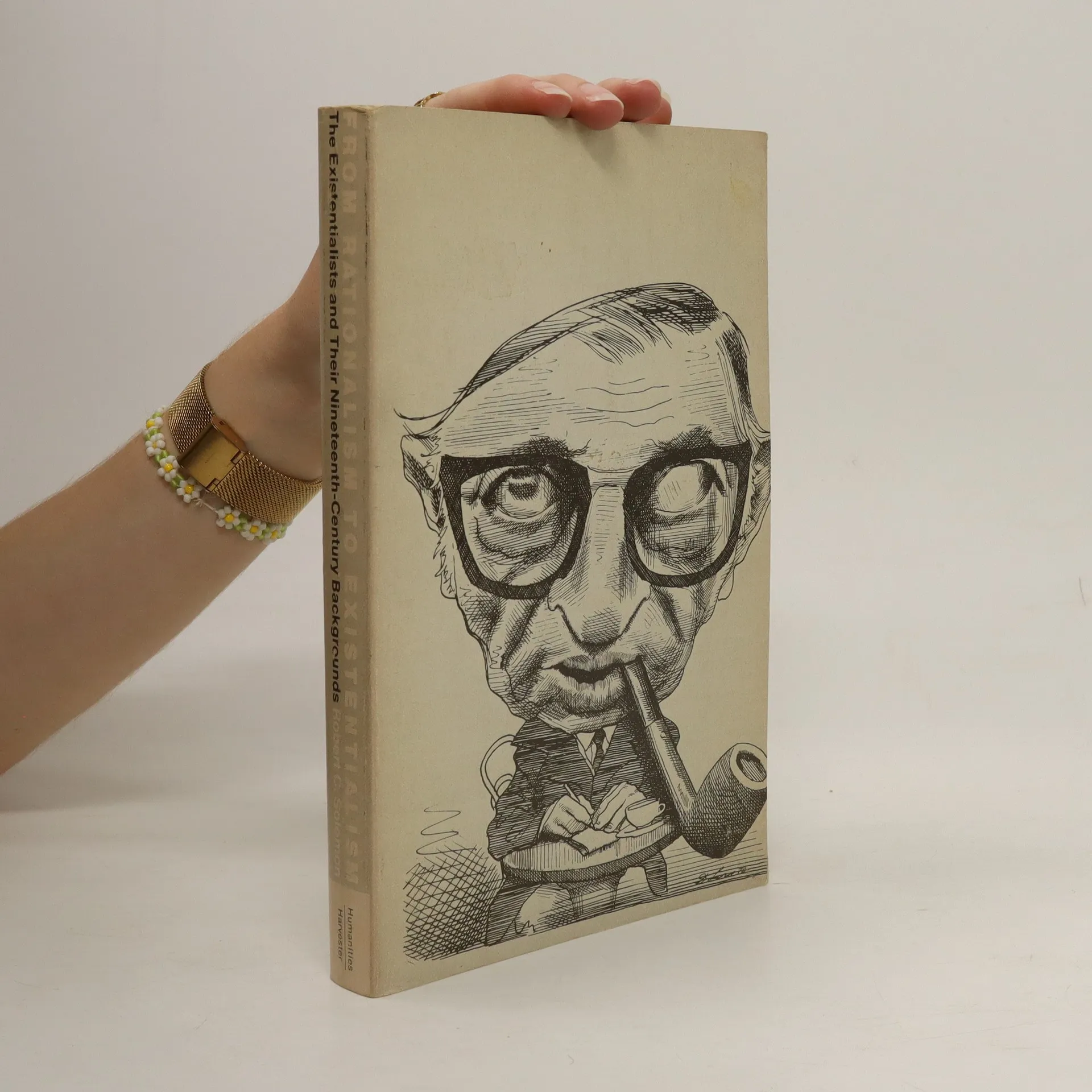
Robert C. Solomon delved deeply into continental philosophy, particularly the 19th and 20th centuries. His work focused on themes like ethics and the philosophy of emotions, developing a cognitivist theory of emotions that views them as rationally appraisable and revisable. Solomon explored the concept of love, arguing that romantic love is a cultural construct rather than a universal state. His lectures, often on Nietzsche and existentialism, emphasized personal reflection and the embrace of life's full spectrum.



No descriptive material is available for this title.
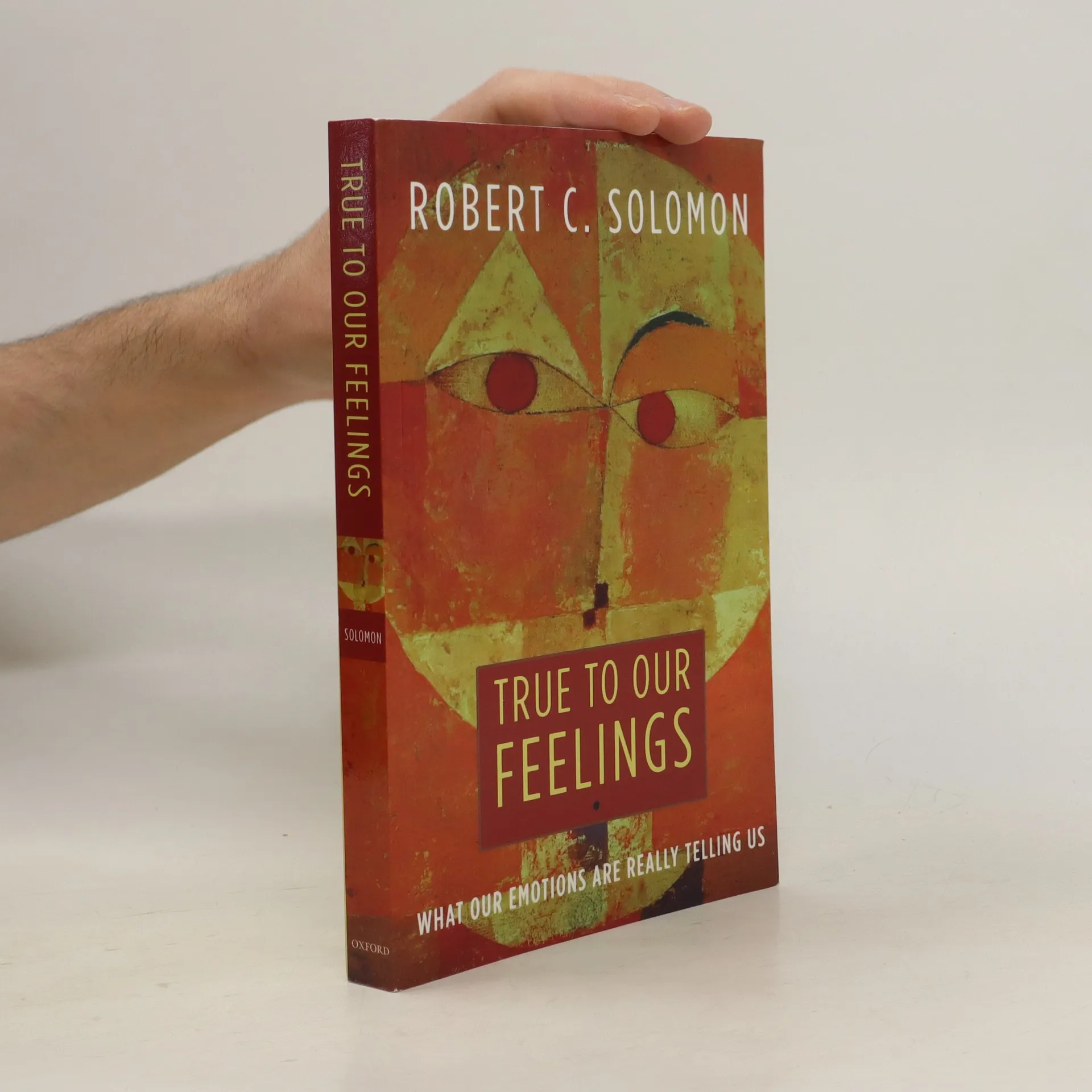
True to Our Feelings
- 286 pages
- 11 hours of reading
Solomon illuminates the rich life of the emotions--what they are and how theygive meaning to life. He shows that emotions are all essential to values, andto living happily, healthily, and well.
Ethics. A Brief Introduction
- 146 pages
- 6 hours of reading
Book by Solomon, Robert C.
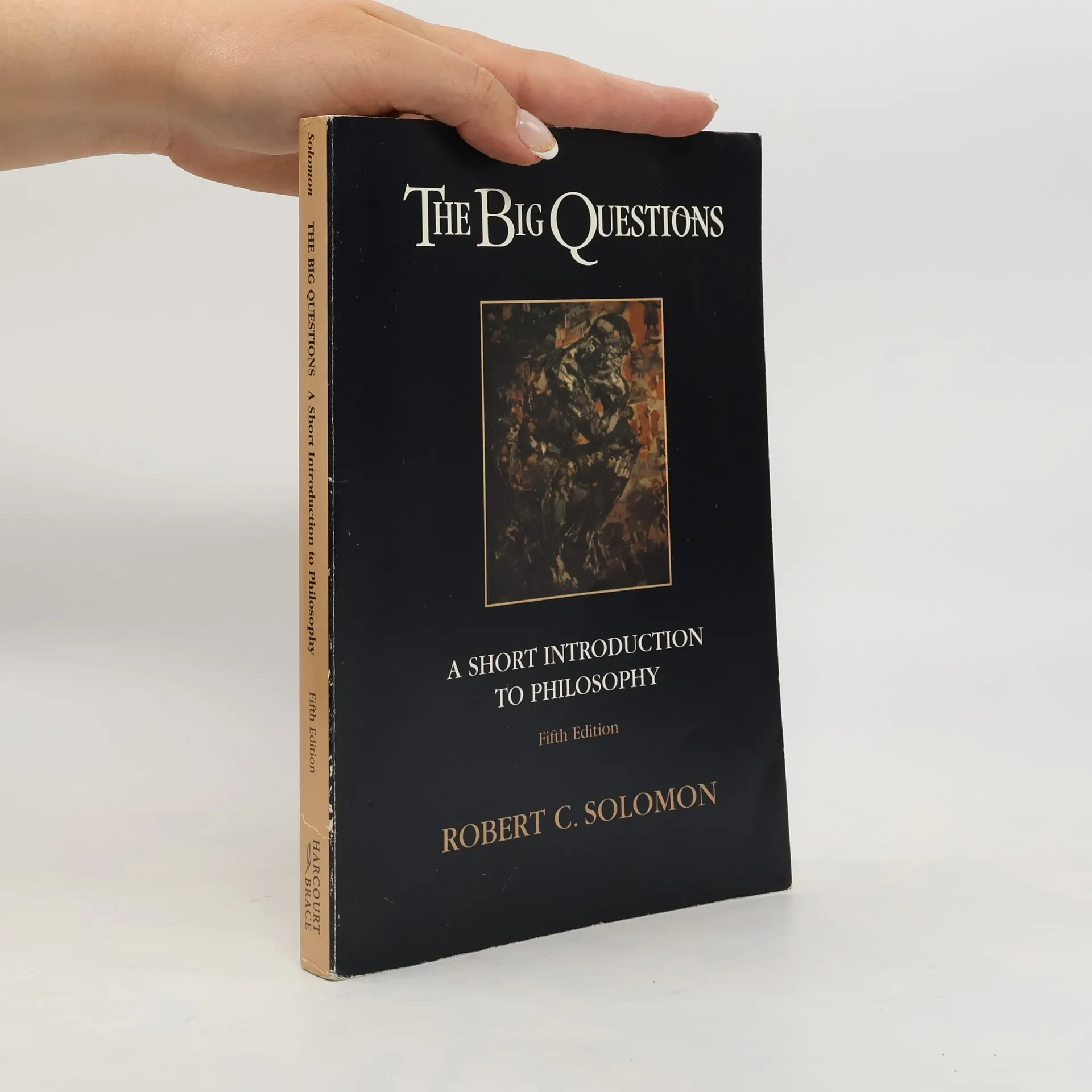
Written by a well-known and respected scholar, this best-selling Introduction to Philosophy text has a student-friendly style and organization. Topics are arranged under big questions (see contents) with each chapter's discussion of the selected big question self-contained so instructors can choose which, and in what order, topics are presented. The writing style is concise and accessible, and coverage is comprehensive without being intimidating.
What Nietzsche really said
- 288 pages
- 11 hours of reading
"What Nietzsche Really Said gives us a lucid overview - both informative and entertaining - of perhaps the most widely read and least understood philosopher in history." "In this analysis, Nietzsche scholars Robert C. Solomon and Kathleen M. Higgins get to the heart of Nietzsche's philosophy, from his ideas on "the will to power" to his attack on religion and morality and his infamous Ubermensch (superman)."--BOOK JACKET.
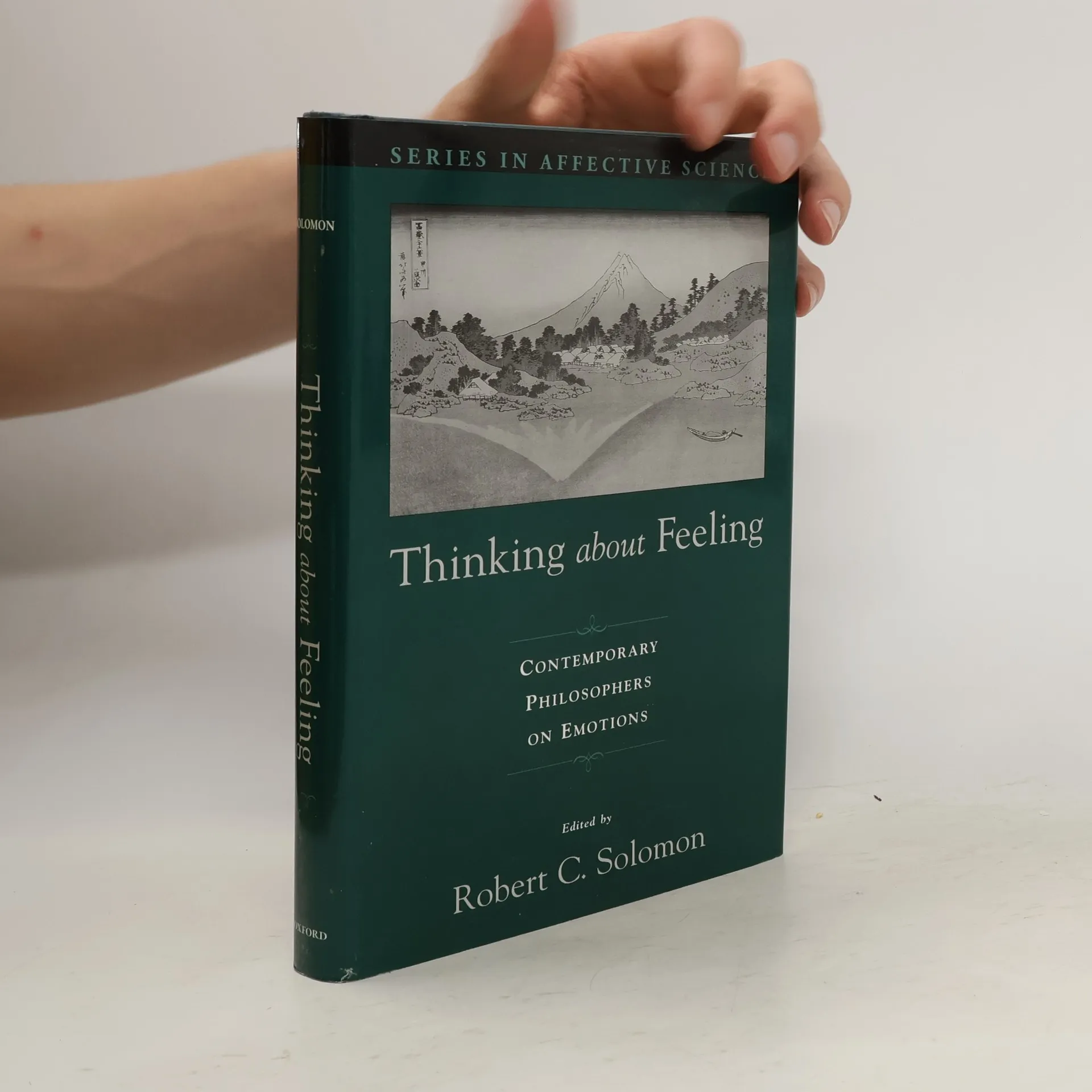
Thinking about Feeling
- 308 pages
- 11 hours of reading
The author brings together what he regards as some of the best Anglo-American philosophers now writing on the philosophy of emotion. He has solicited chapters from those philosophers who have already distinguished themselves and have interdisciplinary interests, particularly in the social sciences
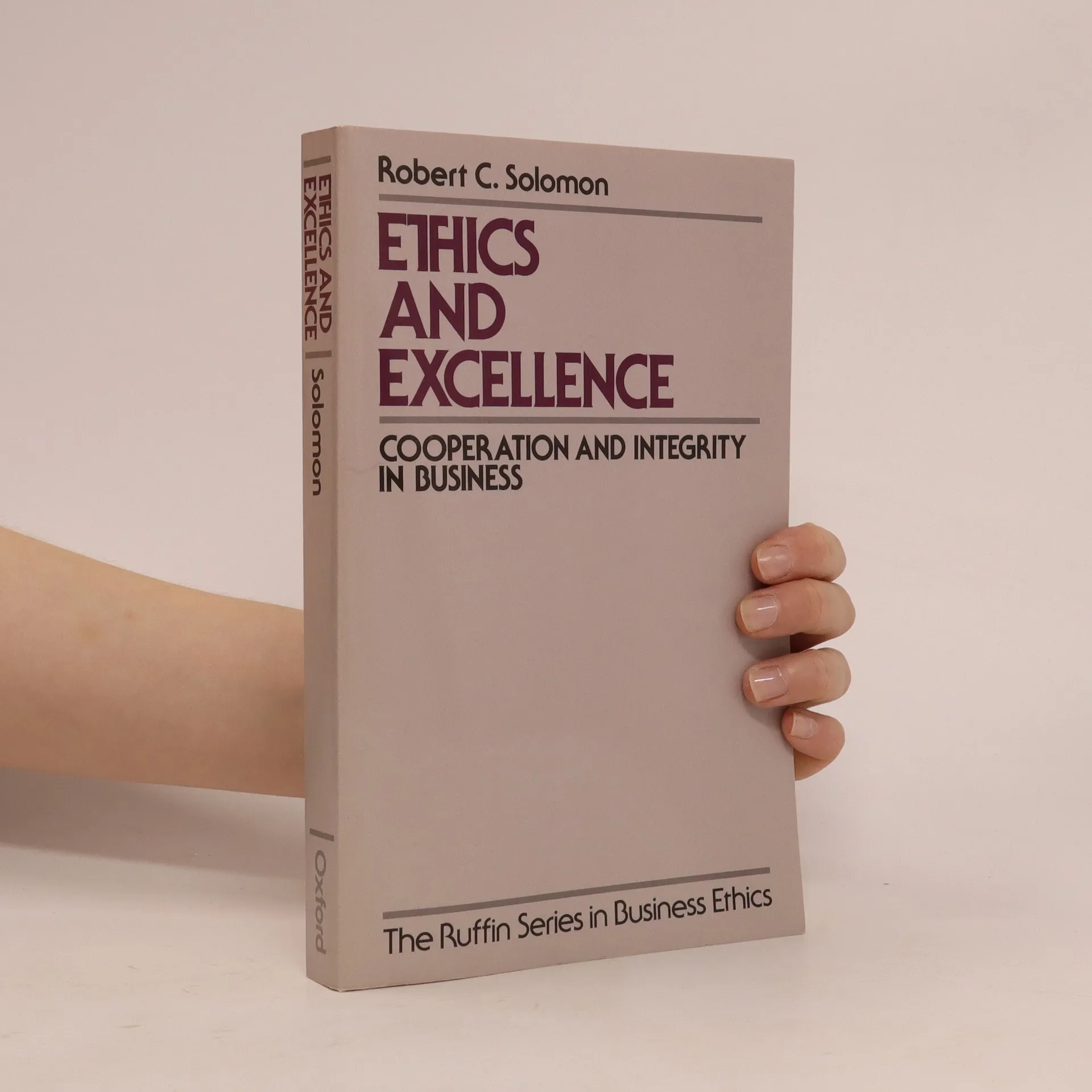
In Ethics and Excellence, renowned scholar Robert C. Solomon asserts that capitalism requires not only capital but character as well, and that the free enterprise system should be defined by its best, and not its more irresponsible, examples.
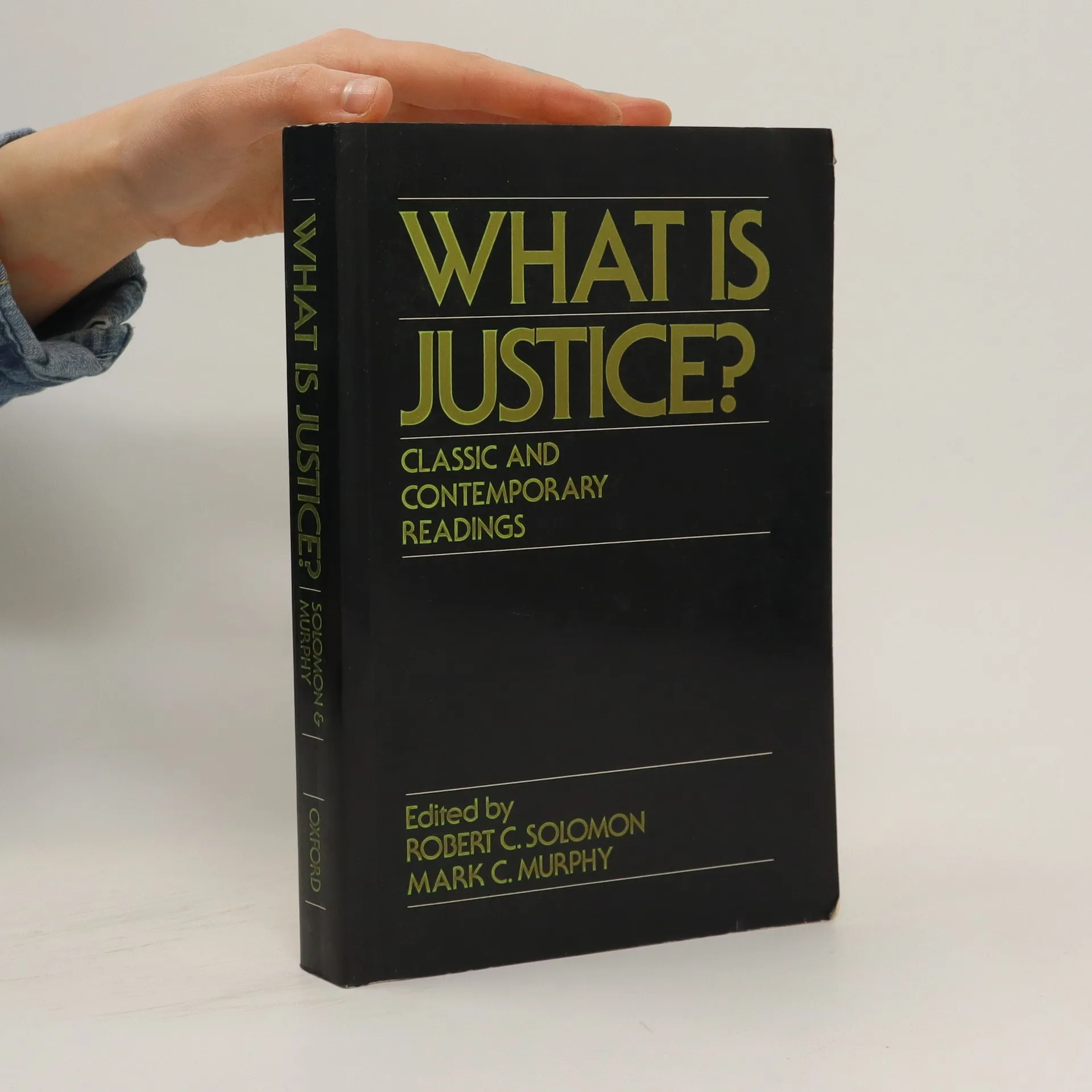
What is Justice?
- 394 pages
- 14 hours of reading
This volume brings together substantial excerpts from important historical texts, representative examples of the work of John Rawls, and selections from more recent writings that relate to the judicial system.
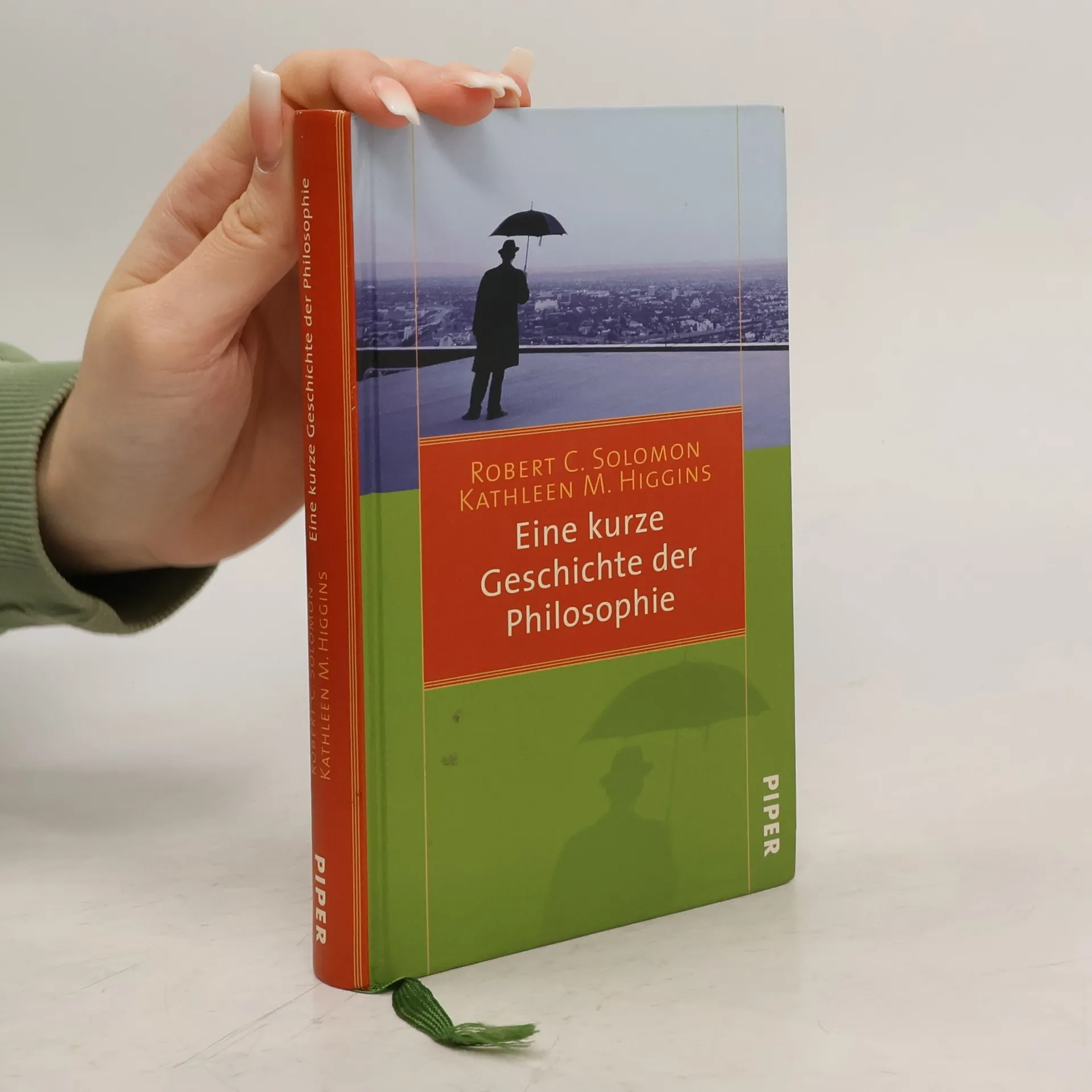
Eine kurze Geschichte der Philosophie
- 243 pages
- 9 hours of reading
Ob Buddha, Konfuzius, Sokrates oder Descartes, Spinoza, Kant, Hegel, Marx und Simone de Beauvoir: Für diese und viele andere bedeutende Philosophen war die Liebe zur Weisheit die Mitte ihres Lebens. Sie haben mit ihren Ideen das Denken und die Geschichte der Menschheit beeinflußt. Robert C. Solomon und Kathleen M. Higgins erzählen von den großen Zusammenhängen und lassen die Unterschiede und Ähnlichkeiten im Denken der wichtigsten Philosophen deutlich werden. Ein informativer und erfrischender Reiseführer durch mehr als dreitausend Jahre Weltphilosophie.
Ein kleines Buch über große Fragen Indem Robert C. Solomon nach dem Selbst und dem Selbstbewusstsein, nach Wahrheit und Wissen, Freiheit, Glück und Moral fragt, führt er uns anhand von ganz konkreten Beispielen sehr anschaulich vor Augen, dass wir Philosophie auch in unserem Alltag erleben und leben können. Die Philosophie ist ein Gespräch mit einer dreitausendjährigen Geschichte. Robert C. Solomon macht den Leser mit der Kunst des Philosophierens vertraut, indem er von diesem großen Gespräch erzählt und dabei zu eigenen Gedanken und Ideen anregt. Gleichsam im Spaziergang durch die Geschichte der Philosophie lässt er die wichtigsten europäischen, aber auch chinesischen, indischen und antiken Denker zu Wort kommen und bietet so einen hervorragenden Einstieg in grundlegende philosophische Fragen, Begriffe und Lebensweisen. Amüsant und tiefgründig zugleich liest sich dieses Buch als eine Aufforderung, vor der Philosophie und ihren größten Köpfen nicht in Ehrfurcht zu erstarren, sondern seinem eigenen Verstand zu vertrauen und selbst nach Antworten auf die existenziellen Fragen des Lebens zu suchen. Aus dem Inhalt: Das klassische Erbe der Philosophie Gott, Natur und Spiritualität Die Philosophie, das Glück und die Bedeutung des Lebens › Eine knappe und zugleich unterhaltsame Einführung in die Philosophie › Äußerst geschenkfähig und in bibliophiler Ausstattung
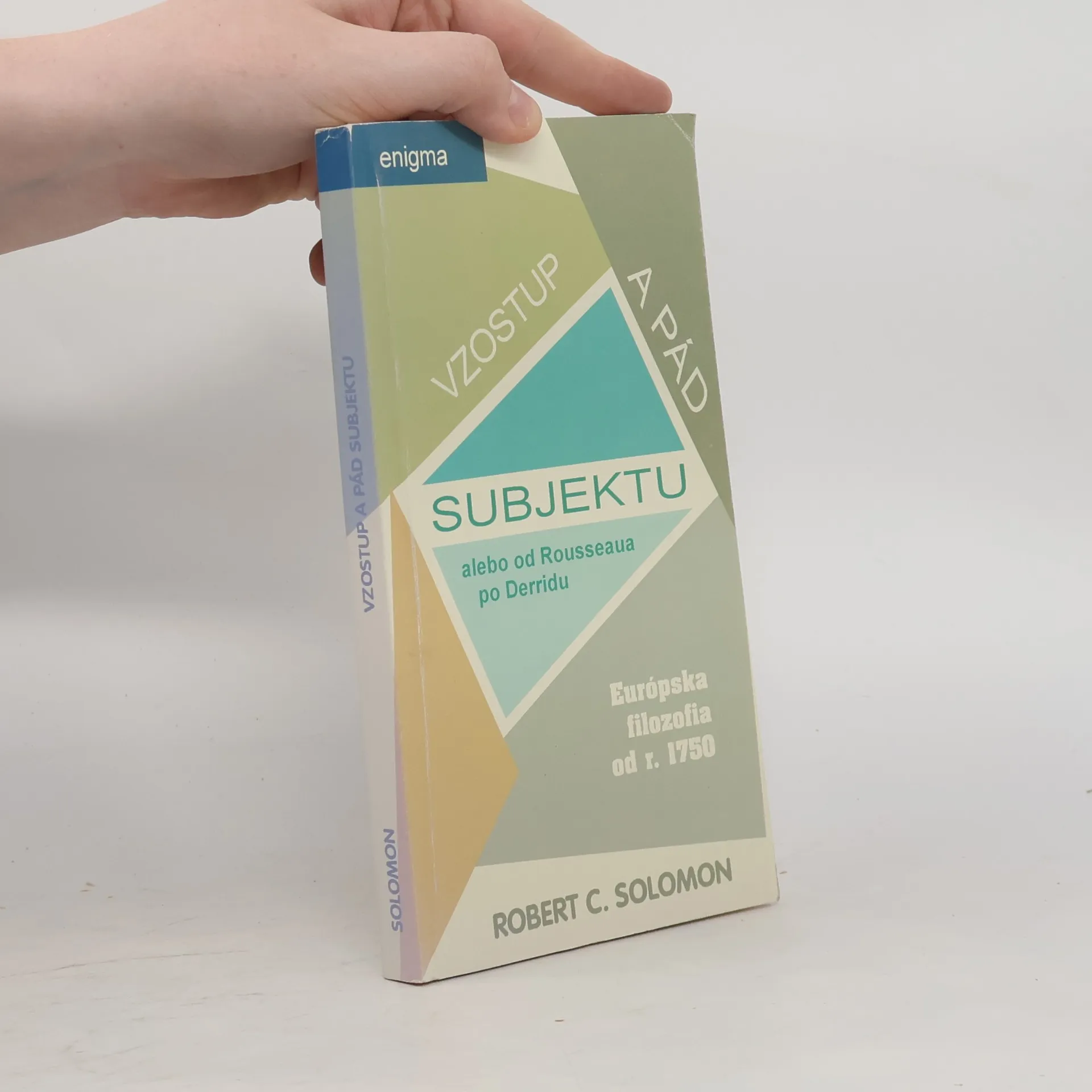
Vzostup a pád subjektu alebo od Rousseaua po Derridu. Európska filozofia od r. 1750
- 217 pages
- 8 hours of reading
Autor rozpráva príbeh - príbeh európskej (kontinentálnej) filozofie za ostatných takmer 250 rokov. Nie je to vôbec príbeh úzko akademický, katedrový. Jeho hlavnou postavou je subjekt, ktorý vznikol a rozvíjal sa v hlavách filozofov s transcendentálnymi nárokmi na absolútne poznanie, či premenu a ovládnutie sveta. Prof. Solomon nás s prenikavou jasnosťou sprevádza jeho peripetiami počnúc tým, čo si uvedomil Rousseau na potulkách v lesoch St. Germain, až po "smrť subjektu" u Foucaulta a Derridu, a umožňuje nám tak pochopiť rozhodujúcu fázu modernej filozofie i jej súčasné vyústenie do tzv. postmodernizmu.