

Robert Bresson, renowned for his films like *Pickpocket* and *A Man Escaped*, was a pivotal figure in French cinema, known for his distinctive approach. He preferred nonprofessional actors, rejected advancements like Cinerama, and critiqued capitalism's impact on film. *Bresson on Bresson* compiles significant interviews from his forty-year career, showcasing the coherence and exploratory nature of his work. Each chapter focuses on one of his fourteen films, discussing literary adaptation, sound design, and his influential treatise, *Notes on the Cinematograph*. Bresson’s reflections are marked by insightful mantras, such as “Sound...invented silence in cinema” and “It’s the film that...gives life to the characters.” His integrity and originality garnered respect from contemporaries like Jean-Luc Godard and Jacques Rivette. While his films exhibit meticulous thought, these interviews reveal his deep faith in intuition—both his own and that of the audience, which he believed is primed to feel before fully understanding. This belief underscores the profound connection he sought to establish through his art.
Robert Bresson Books
Robert Bresson was a French filmmaker celebrated for his spiritual, ascetic, and aesthetic style, significantly contributing to the art of cinema and influencing the rise of French New Wave. His approach to filmmaking was often deemed the most highly regarded French filmmaker after Jean Renoir. Bresson's influence was so profound that Jean-Luc Godard once described him, stating, 'Robert Bresson is French cinema, as Dostoevsky is the Russian novel and Mozart is the German music.' His work is characterized by deep introspection and a unique narrative approach.

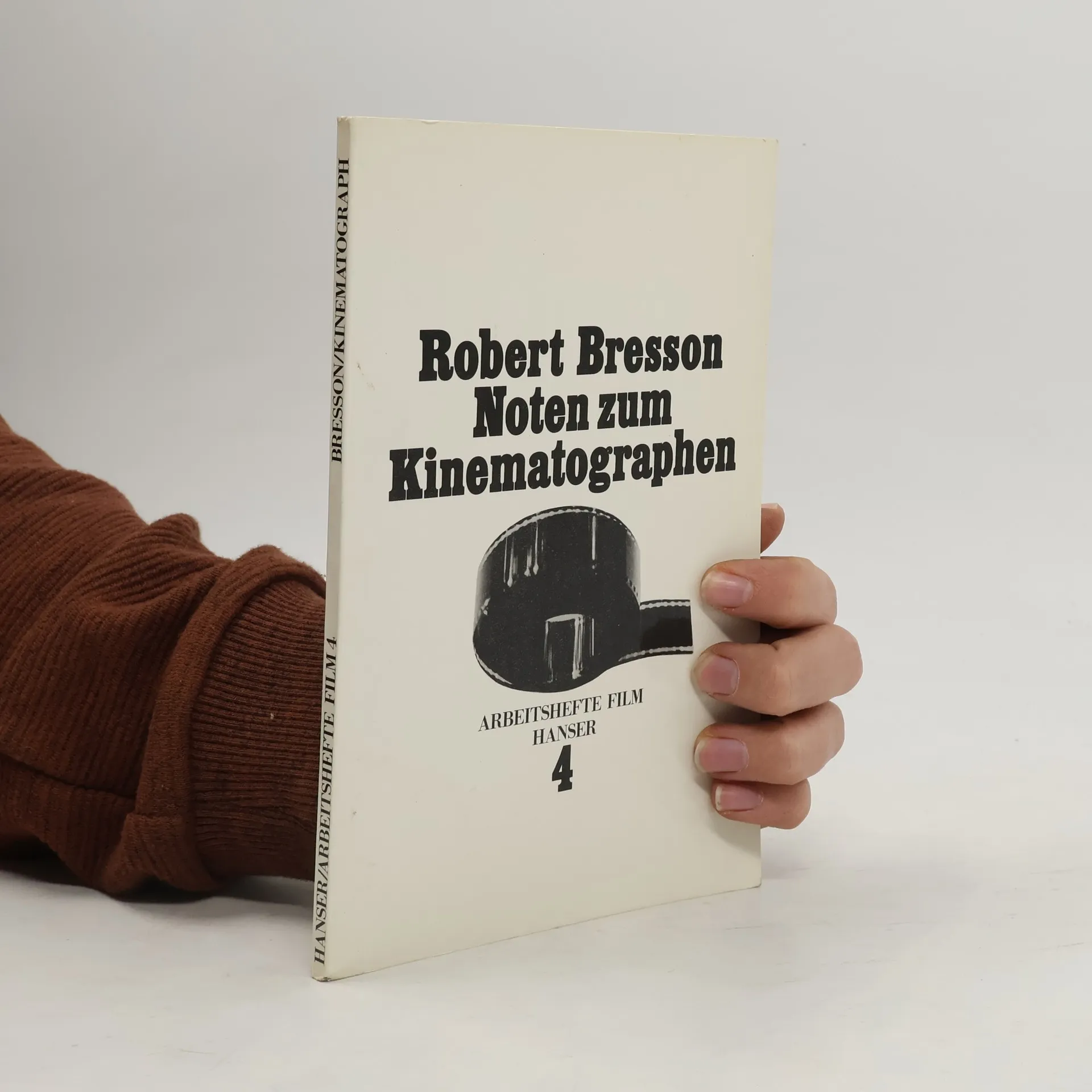

Notes On The Cinematograph
- 128 pages
- 5 hours of reading
The French film director Robert Bresson was one of the great artists of the twentieth century and among the most radical, original, and radiant stylists of any time. He worked with nonprofessional actors—models, as he called them—and deployed a starkly limited but hypnotic array of sounds and images to produce such classic works as A Man Escaped, Pickpocket, Diary of a Country Priest, and Lancelot of the Lake. From the beginning to the end of his career, Bresson dedicated himself to making movies in which nothing is superfluous and everything is always at stake. Notes on the Cinematograph distills the essence of Bresson’s theory and practice as a filmmaker and artist. He discusses the fundamental differences between theater and film; parses the deep grammar of silence, music, and noise; and affirms the mysterious power of the image to unlock the human soul. This book, indispensable for admirers of this great director and for students of the cinema, will also prove an inspiration, much like Rilke’s Letters to a Young Poet, for anyone who responds to the claims of the imagination at its most searching and rigorous.
Noten zum Kinematographen
- 81 pages
- 3 hours of reading