
Explore the latest books of this year!
Bookbot

Alain-Fournier

    October 3, 1886 – September 22, 1914

    Alain-Fournier, born Henri-Alban Fournier, is celebrated for a single, enduring novel that has become a cornerstone of French literature. His work delves into themes of lost innocence, nostalgic yearning, and the pursuit of an idealized world, often drawing from deeply personal experiences. Though he interacted with prominent literary figures of his era, his promising career and life were tragically cut short by World War I. Nevertheless, his singular novel left an indelible mark, continuing to captivate readers with its exploration of youthful enchantment and the ephemeral nature of dreams.

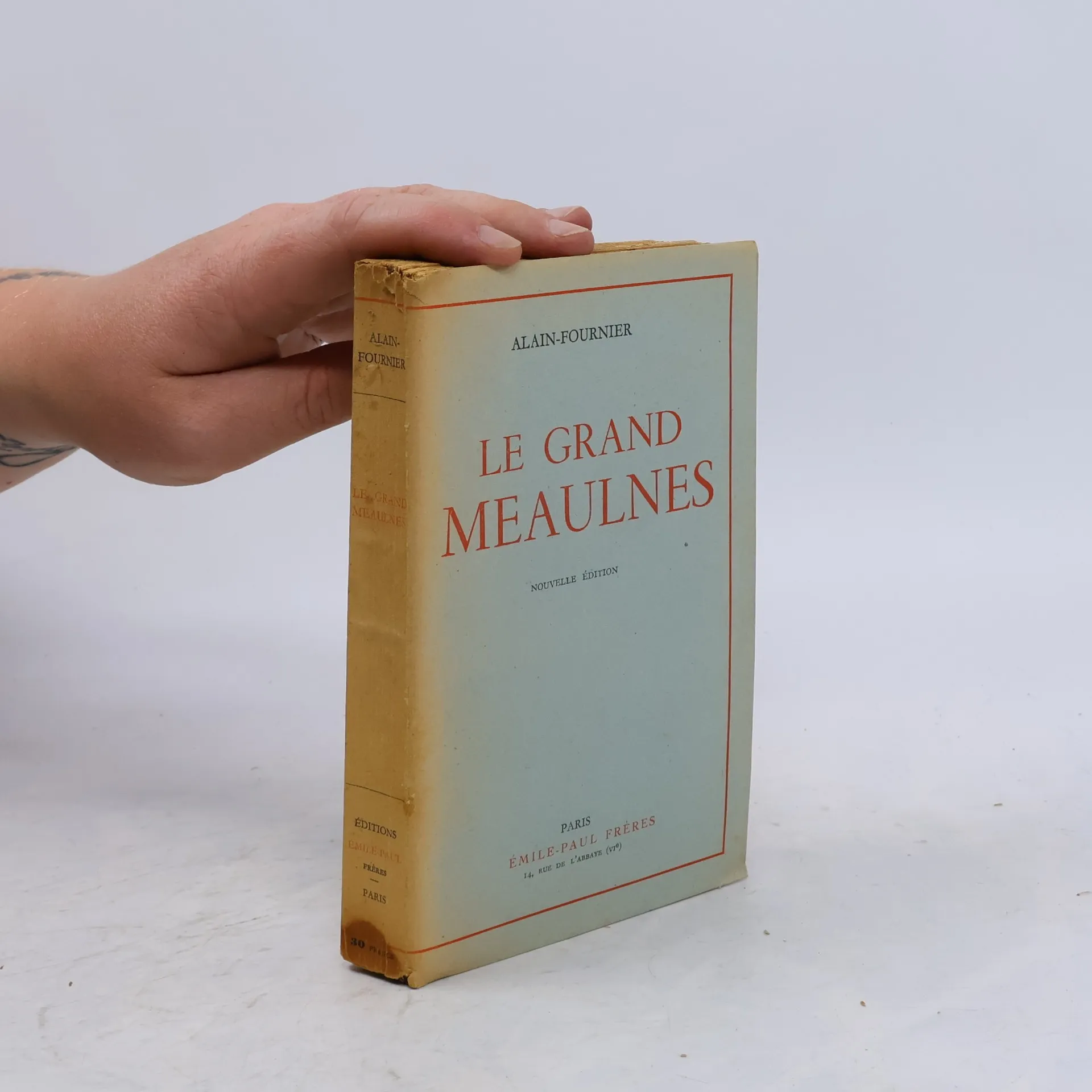
    Le Grand Maeules
    Mein großer Freund Augustin
    Jugendbildnis
    Une amitié d'autrefois
    El gran Meaulnes
    The Lost Estate (Le Grand Meaulnes)
    • When Meaulnes first arrives at the local school in Sologne, everyone is captivated by his good looks, daring and charisma. But when Meaulnes disappears for several days, and returns with tales of a strange party at a mysterious house - and his love for the beautiful girl hidden within it, Yvonne de Galais - his life has been changed forever.

      The Lost Estate (Le Grand Meaulnes)
    • “Le Grand Meaulnes” is the only novel published by Alain-Fournier in 1913 when he was twenty-seven years old. A year later he was killed in the First World War. It tells the story of the arrival of a young Augustin Meaulnes at a village school in Sainte-Agathe in France. He boards with the head-master’s family, and the narrator of the book is the head-master’s son, François Seurel. It is a portrayal of adolescence when the imagination of childhood begins to embrace the realities of the adult world. What happens belongs to the two spheres, and is told here years later by François. Into it he pours his nostalgia for what is gone, regret for what was lost, and his memories of his fellow student and companion, Augustin Meaulnes, and the beautiful Yvonne de Galais. In this unique translation Jennifer Hashmi has adhered to the narrative poetic style of the original, and has respected Alain-Fournier’s frequent use of the ellipse which hints at more than he can say, and allows readers to intuit the rest. Thus the mysterious haunting quality of the novel is preserved. Students should find this translation most helpful in in that it carries with it not only the meaning of the text but also the atmosphere and emotion of the original work. However, whether student or not, this is a novel which has captivated readers for nearly a century as it presents the apparently everyday world through the eyes of François the dreamer, and Meaulnes the adventurer, both seeking the ultimate happiness they believe is waiting for all who dare. Cover Image “Le Grand Meaulnes était myope” by francis ledoux under Creative Commons License.

      El gran Meaulnes
    • Réunit la correspondance de deux amis : Alain-Fournier et Jacques Rivière. Leurs échanges fournissent un tableau vivant du monde qui les entoure des richesses foisonnantes de leur époque.

      Une amitié d'autrefois
    • "Il piccolo immenso gioiello lasciato da Alain-Fournier ha cristallizzato per generazioni di lettori la poesia misteriosa della giovinezza. E un romanzo che ben presto sgattaiola via dalle reti delle letture critiche, si sottrae alle analisi e diventa qualcosa di più, qualcosa d'altro, come lo sono diventati Siddharta o Il giovane Holden o Sulla strada. E uno di quei casi in cui l'esperienza stessa della lettura prolunga, amplifica, sdoppia la suggestione dell'opera: ricordiamo i pomeriggi in cui sottolineavamo paragrafi di Hesse fumando sul letto, ricordiamo il corridoio del liceo dove seduti per terra leggevamo Holden ed eravamo Holden, ricordiamo il sacco a pelo dentro al quale, sul ponte della nave, leggevamo una copia di Sulla strada incartapecorita dalla salsedine, ricordiamo l'estate gialla e immobile di calore in cui leggevamo Meaulnes e sentivamo palpitare in noi la sua irrequietezza. Questa capacità di riecheggiare forte, di trovare la muta sintonia con una sensibilità acuminata, è la vera profonda grandezza del romanzo, che non sta nell'intreccio (...), ma in una sorta di finissima eppure possente costruzione mitica di cui vogliamo cogliere tre motivi chiave: l'infanzia, l'avventura, il meraviglioso." (Dalla Postfazione di Yasmina Melaouah)

      Universale Economica Feltrinelli / Classici: Il grande Meaulnes