
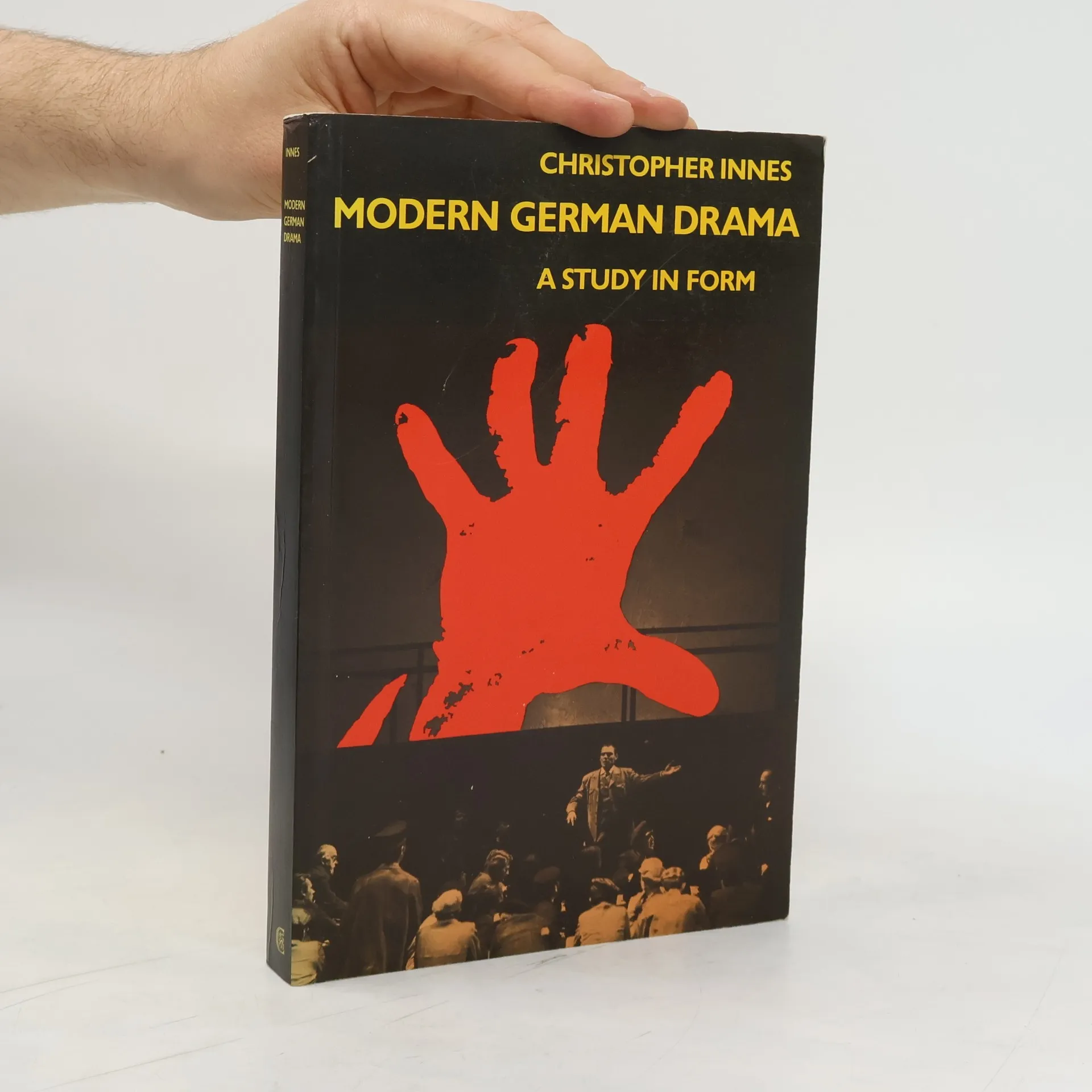
In this impressively wide-ranging study of all drama written in German in the period 1945–1977, Christopher Innes' aims are to identify the concerns and perceptions of dramatists working in a specific and unique social context and period and to analyse the major theatrical forms they developed or adapted to express their experience, to trace the writers' literary antecedents, their 'tradition' and to explore the critical issues raised by each stylistic innovation. Professor Innes has organized his discussion around the main forms of theatre - epic, documentary, absurdist and more traditional forms. Redefining these conceptual labels as he progresses, he analyses, in a critical and informed way, the work on the page and the stage of all the major playwrights. This study, which is complemented by photographs of key productions and accompanied by translations for all quotations, will be of particular interest to teachers and students of drama and German, as well as to a wider theatre-going public.
This is the first one-volume analysis of British drama, from 1890–1990, covering the most dynamic and exciting period in its history since Shakespeare. Starting with George Bernard Shaw, Christopher Innes traces the evolution of modernism from the close of the nineteenth century right up to the present. The unparalleled breadth of this critical study shows patterns of development in naturalistic social drama, comedy, poetic drama, and feminist theatre. This provides a coherent theoretical frame for understanding individual writers and their work. The book gives detailed discussions of all the major dramatists; analysis of over 200 plays; information on the social and political context; facts about first productions and critical reception; a comprehensive chronology, and illustrations from seminal productions. The wide focus, unique coverage, and wealth of detail make this book an invaluable guide for students, theatre-goers, and theatre historians alike.
Konstantin Stanislavsky (1863-1938) was one of the most prominent and
innovative directors of modern theatre, and his system and related practices
continue to be studied and used in universities and in theatres. This book
explores the extraordinary political contexts in which he resisted
authoritarian pressures and developed his life's work.
Konstantin Stanisławski (1863-1938) był jednym z najbardziej nowatorskich i
wpływowych reżyserów nowoczesnego teatru, a jego system i związane z nim
praktyki pozostają przedmiotem studiów i ważną częścią warsztatu wielu
aktorów, reżyserów i studentów. W swej książce Stanisławski na nowo Maria
Shevtsova rzuca nowe światło na niezwykłe życie Konstantina Stanisławskiego,
prezentując rosyjskie źródła archiwalne, zapisy prób, partytury i szkice. W
swoim kompleksowym studium badaczka odkrywa na nowo mało znane aspekty
nowatorskiego teatru Stanisławskiego i jego ścisłe zespolenie ze sztukami
wizualnymi, tańcem i operą. Wskazuje na fundamentalne znaczenie rosyjskiego
prawosławia dla światopoglądu reżysera, który legł u podstaw zintegrowanego
systemu i celów przyjętych dla sześciu laboratoryjnych studiów badawczych,
które Stanisławski założył bądź nad którymi sprawował opiekę. Badaczka skupi
się na osiągnięciach Stanisławskiego na tle złożonych i historycznie ze sobą
splecionych kontekstów politycznych, kulturowych i teatralnych carskiej Rosji,
rewolucji 1917 roku, niestabilnych lat dwudziestych i stalinowskich lat
trzydziestych. Przez całe życie jak zresztą sama o tym pisze zajmowała się
teatrem dzisiejszym (wśród wielu innych książek monografie Lwa Dodina i
Roberta Wilsona), więc rzecz o Stanisławskim stanowi w jej dorobku pewien
ewenement. Maria Shevtsova jest jednak osobą szczególnie do tego autorstwa
predysponowaną; nie tylko ze względu na znakomite wykształcenie, ale i na to,
że sama jest osobą dwu kultur, na styku których zabłysła kiedyś gwiazda
Stanisławskiego: rozumie i Rosję, i Zachód. Naturalnie widzi więc to, czego
obydwie te strony nie rozumieją w sobie nawzajem. Widzi nieporozumienia i
zniekształcenia, po obu stronach umie wskazać zarówno krzywe, jak i mętne
lustra; zna szczególne dla obydwu stron uprzedzenia, pychy i przemilczenia. Z
tej perspektywy snuje swoją opowieść bo właśnie chce opowiedzieć o
Stanisławskim na nowo. Na nowo czyli odrzucić zwały wiedzy pozornej,
pochopnych sądów, wynikających z uprzedzeń czy nieświadomości; wykorzystać
wiedzę zdobytą w czasie długich posiedzeń w archiwach, w miarę jak te archiwa
się otwierały. Rzucić trochę światła na te strony życia i dorobku Konstantina
Siergiejewicza, które do tej pory z różnych przyczyn zostawiano w cieniu i o
niczym nie przesądzać; raczej pokazać, jak wiele jeszcze nie wiemy. Tomasz
Kubikowski, fragment Przedmowy do wydania polskiego