
Explore the latest books of this year!
Bookbot

James Rizzitano

    Modern Chess Opening Repertoire for White
    1001 Deadly Chess Puzzles
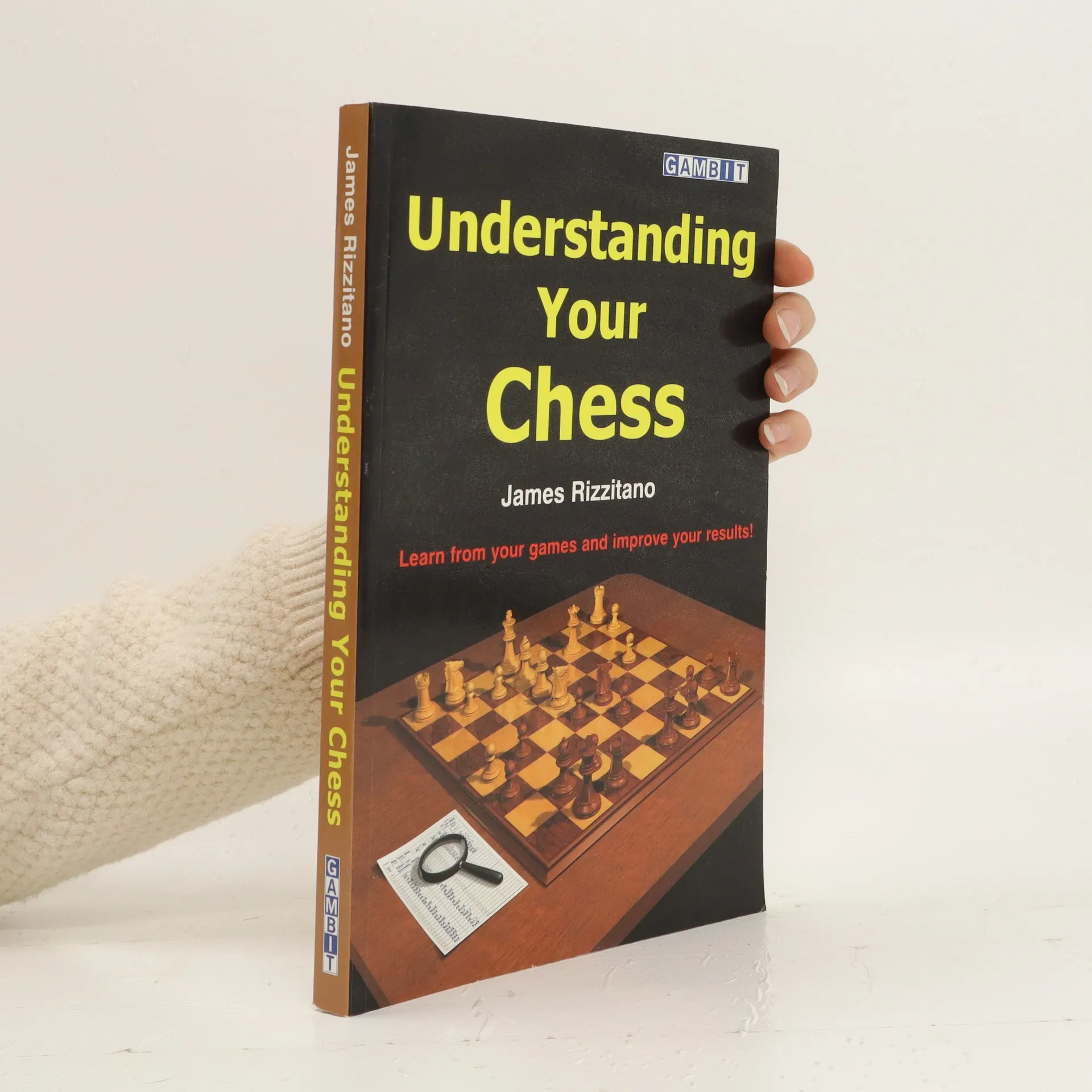
    Understanding your chess
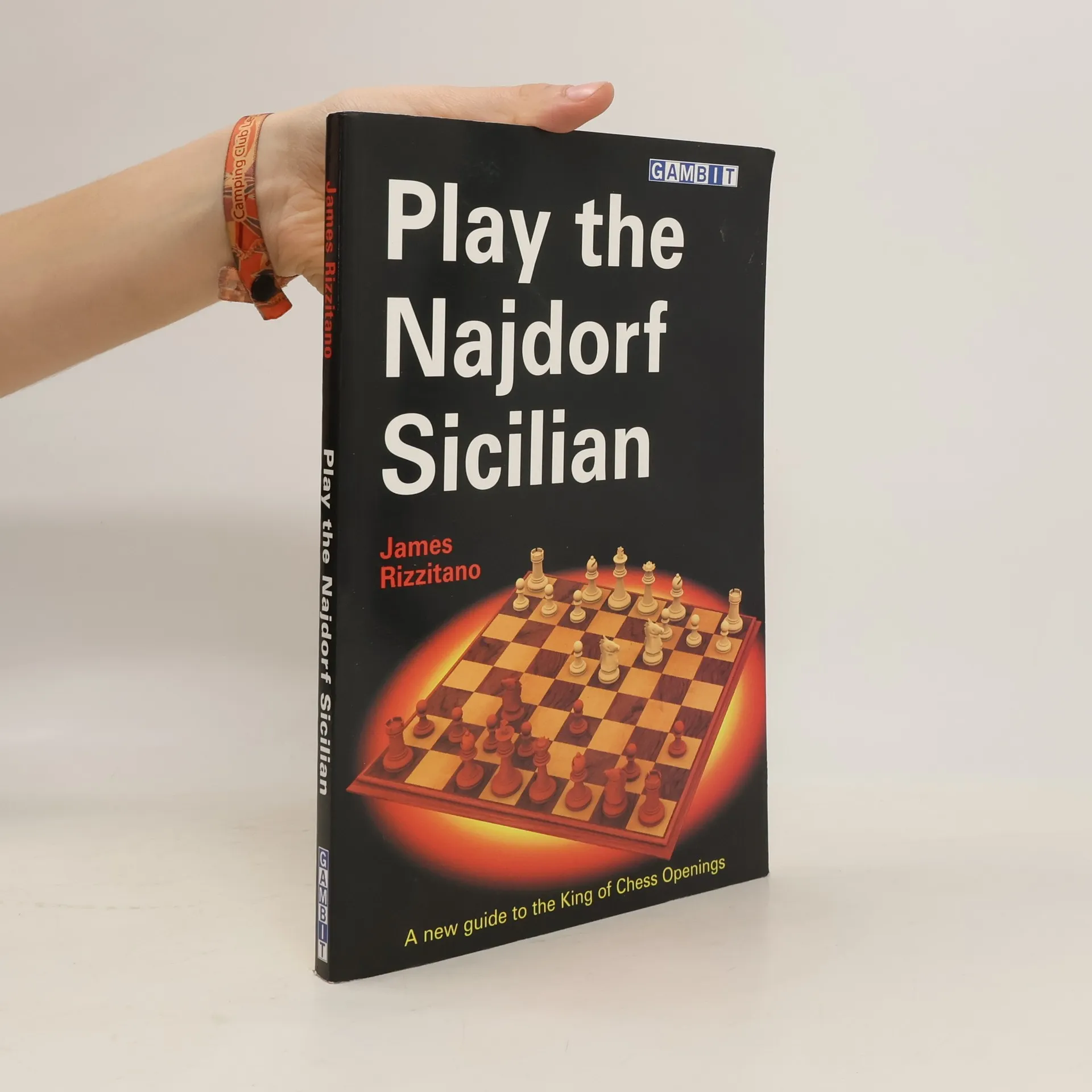
    Play the Najdorf Sicilian
    • Play the Najdorf Sicilian

      • 143 pages
      • 6 hours of reading

      The Najdorf Sicilian has a unique place amongst chess for several decades it has been regarded by the top grandmasters as the best way for Black to play soundly for a win against 1 e4. It was a particular favourite of World Champions Bobby Fischer and Garry Kasparov, and plays a vital role in the repertoires of current top players such as Viswanathan Anand and Veselin Topalov.Black's stance is totally uncompromising. He accepts no organic weaknesses and stays flexible, ready to counterpunch in any part of the board. White has no safe or easy option. On the other hand, he does have a vast array of extremely dangerous attacking options, such as the old 6 Bg5 main line, which can lead to the Poisoned Pawn, a variation that has undergone much development in the 21st century. The current main line is 6 Be3, intending the English Attack. But given the Najdorf's importance, White has tried almost everything imaginable in the search for an advantage, with considerable bodies of theory evolving for lines that contain merely a drop of poison.In the ever-changing Najdorf landscape, it is easy to lose sight of the strategic backbone that underpins the Najdorf. In this book, James Rizzitano, a battle-hardened Sicilian warrior, distils the most important ideas and themes from current practice to provide an ideal guide for those looking to succeed as White or Black in the Najdorf in the modern scientific era.

      Play the Najdorf Sicilian
    • Understanding your chess

      • 192 pages
      • 7 hours of reading

      James Rizzitano, an experienced international master, has reassessed games from the whole of his career, and in this book presents the lessons from them that will be most relevant to club and tournament players. A common problem for the typical weekend competitor or club player is that his time available for studying chess is very limited. What should he study? Grandmasters from Botvinnik to Yermolinsky have stressed the importance of reviewing and annotating your own games. Rizzitano shows how by doing that you can gain a greater understanding of your strengths and weaknesses, and drawing upon his own experiences, explains how to shape your approach to chess to make the most of your own abilities. Major topics --Developing a reliable and coherent opening repertoire--The importance of understanding opening theory rather than simply memorizing it--Theoretical finding your own and facing the opponent's--Opening selection depending upon the nature of the game and event--Risk management and "playing for a win"--Competing successfully against higher-rated opposition--Accumulating small a safe method when the opponent plays for a draw--The power of the lighting a fire and keeping it burning The book contains more than 60 deeply annotated games.

      Understanding your chess
    • 1001 Deadly Chess Puzzles

      • 304 pages
      • 11 hours of reading

      This book emphasizes hands-on learning through problem-solving, focusing on tactics and decision-making skills. It presents various scenarios that challenge readers to think critically and develop strategic approaches. By engaging with practical exercises, readers enhance their ability to navigate complex situations effectively, making it a valuable resource for those looking to improve their analytical and strategic thinking capabilities.

      1001 Deadly Chess Puzzles
    • "James Rizzitano's goal in this book is to provide you with a one-volume, theoretically sound, dynamic opening repertoire beginning with 1 e4. Studying the choices of the current top players, he identifies these secrets of their success: Play openings where you have a relatively safe king. Take the bishop-pair in a semi-open position if it is offered to you. Avoid creating unnecessary weaknesses in your own position. Accept questionable gambits and material sacrifices. Absorb any space advantage conceded by the opponent. His choice of lines to recommend is based on these principles, and supported by detailed work with the current top computer engines. While serious work on chess openings confirms the basic truth that White can't simply force a large advantage from the start position, we can greatly narrow Black's path to safety, and tilt the practical struggle in our favour. To have a chance of half a point, our opponents will need to solve difficult tactical and strategic problems deep into the middlegame. The main lines recommended are: Giuoco Piano (via Bishop's Opening move-order); Modern Advance Caro-Kann; Tarrasch French; Rossolimo and Moscow Sicilians, and 2...e6 3 c3; Traditional main lines vs Scandinavian and Alekhine; Tricky piece-play options against the Pirc and Modern" -- Publisher

      Modern Chess Opening Repertoire for White