
Explore the latest books of this year!
Bookbot

Mieke Bal

    March 14, 1946

    Mieke Bal is a Dutch literary theorist and cultural and art historian whose work spans from biblical and classical antiquity to contemporary art and literature. She champions an interdisciplinary approach she terms 'cultural analysis,' bridging the humanities and social sciences. Beyond her extensive theoretical publications, Bal is also a video artist, creating internationally exhibited documentaries on migration and theoretical fictions. Her work consistently integrates academic inquiry with artistic practice, extending into her role as an independent curator.

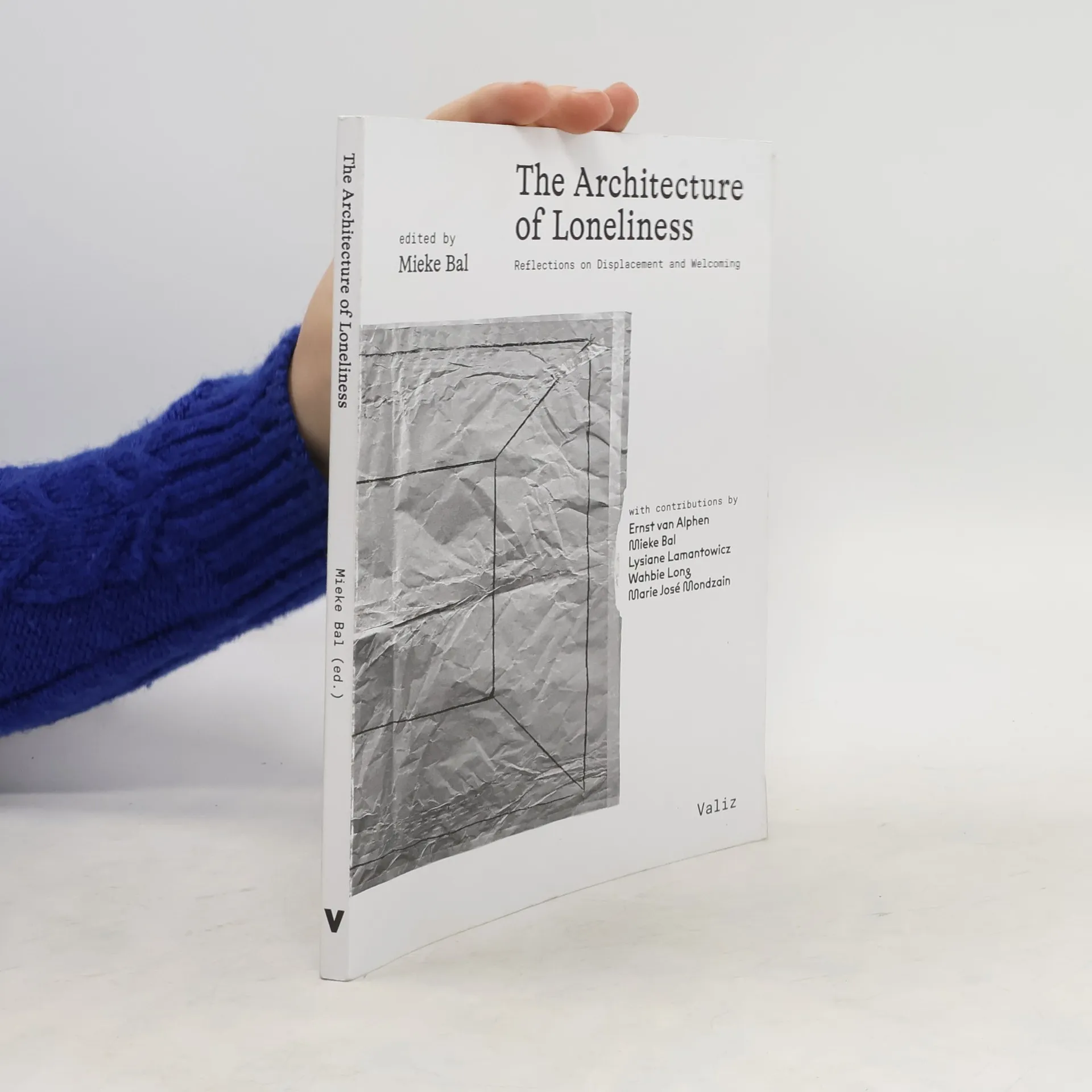
    The Architecture of Loneliness
    Point of Theory
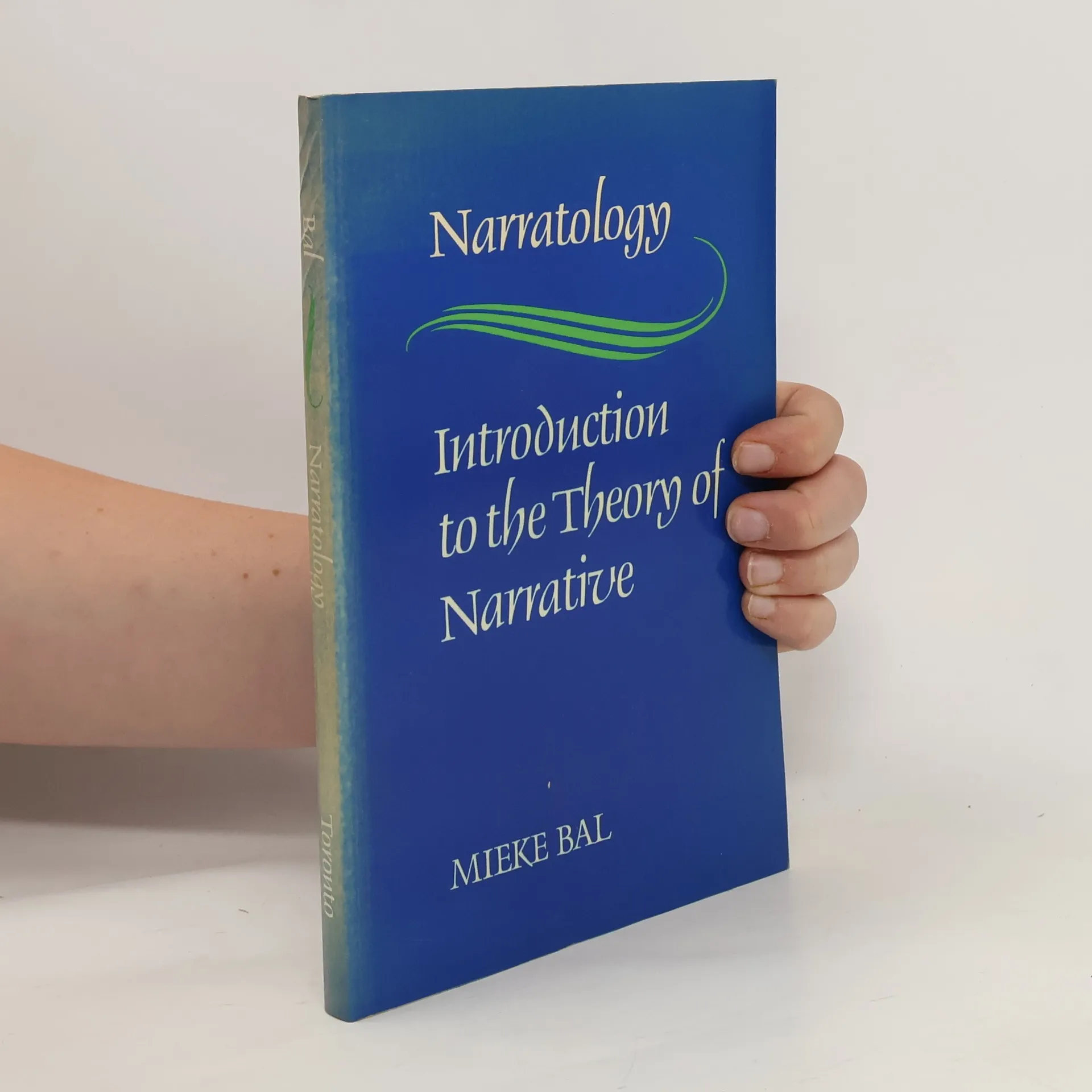
    Narratology
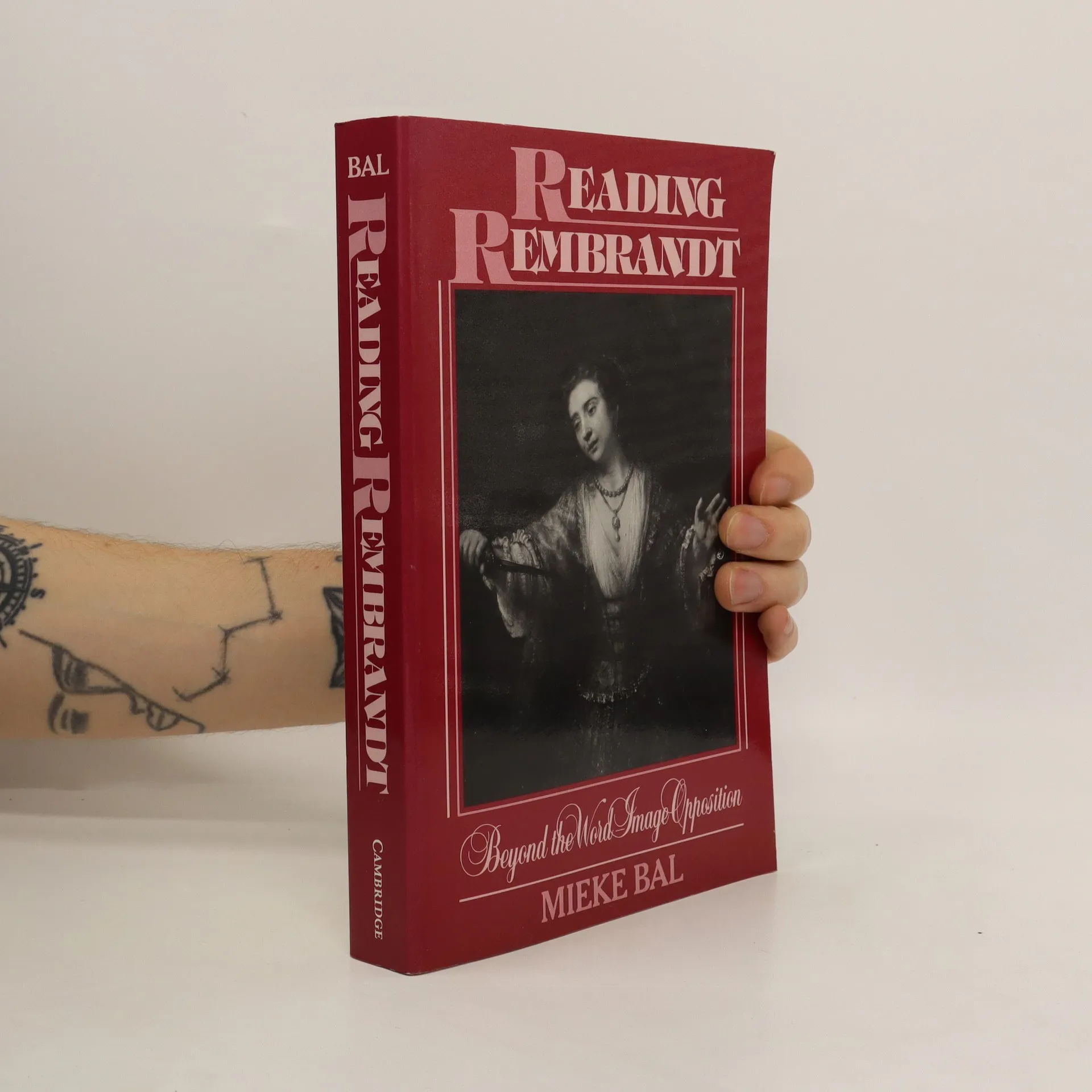
    Reading Rembrandt : Beyond the Word Image Opposition
    Laura Knight
    Exhibition-ism
    • In Exhibition-ism, theorist and artist Mieke Bal develops the idea that exhibiting is a significant form of the contemporary.In an exhibition, visitors are in the actual company of artworks that can perform. This essay considers recent shows of Bal's own video work, and is framed by observations on contemporary sculpture's response to classics of the form. Looking at art as process, Bal makes the case that the being-together-in-time of an exhibition visit encourages and, if the curation is well thought-out, can heighten the sense of the contemporaneity—art being more capable of this than anything else.

      Exhibition-ism
    • Laura Knight

      • 224 pages
      • 8 hours of reading
      4.3(13)Add rating

      A major survey of Dame Laura Knight, first female Royal Academician and popular British artist of the 20th century.Laura Knight (1877–1970) was one of the most famous and popular English artists of the twentieth century. She was the first woman to have a solo exhibition at the Royal Academy of Arts, in 1965. In the following decades her realist style of painting fell out of fashion and her work become largely overlooked. A new generation has rediscovered her work, finding a contemporary resonance in her depictions of women at work, of people from marginalized communities and her contributions as a war artist.This beautifully illustrated book, which accompanies a major exhibition at MK Gallery, provides an overview of Knight's illustrious from her training at Nottingham Art School at the age of 13 and her time in North Yorkshire and Cornwall, to her visits to traveller communities and a segregated American hospital. It also features her circus, ballet and theatre scenes, paintings of women during the war and her late paintings of nature.The selection of over 160 works combines celebrated paintings with less known graphic and design works, including ceramics, jewellery and costumes that reflect the artist's enduring interest in the everyday activities of people from all walks of life.

      Laura Knight
    • Reading Rembrandt: Beyond the Word Image Opposition explores the potential for interdisciplinary methodology between literature and visual art. In a series of close analyses of works by Rembrandt works whose attribution is still challenged, but can still be considered within the context of this study-and texts related to those works, Mieke Bal questions the traditional boundaries between literary and visual analysis. Bal also studies Rembrandt's complex handling of gender and the representation of women in Rembrandt's painting. Although Reading Rembrandt's methods originate outside the history of art, it demonstrates nonetheless the author's sensitivity to the visual aspect of Rembrandt's work. The works by Rembrandt gain in depth and interest, but an original perspective of the role of visuality in our culture emerges, which ultimately has consequences for our views of gender, the artist, and the act of reading.
      Reading Rembrandt : Beyond the Word Image Opposition
    • Narratology

      Introduction to the Theory of Narrative

      • 164 pages
      • 6 hours of reading
      3.5(42)Add rating

      Since its first publication in English in 1985, Mieke Bal's Narratology has become a classic introduction to the major elements comprising a comprehensive theory of narrative texts. In this second edition, Professor Bal broadens the spectrum of her theoretical model, updating the chapters on literary narrative and adding new examples from outside the field of literary studies. Some specific additions include discussions on dialogue in narrative, translation as transformation (including intermedia translation), intertextuality, interdiscursivity, and the place of the subject in narratology. Two new chapters, one on visualization and visual narrative with examples from art and film and the other an examination of anthropological views of narrative, lead Bal to conclude with a re-evaluation of narratology in light of its applications outside the realm of the literary.

      Narratology
    • Point of Theory

      Practices of Cultural Analysis

      • 336 pages
      • 12 hours of reading

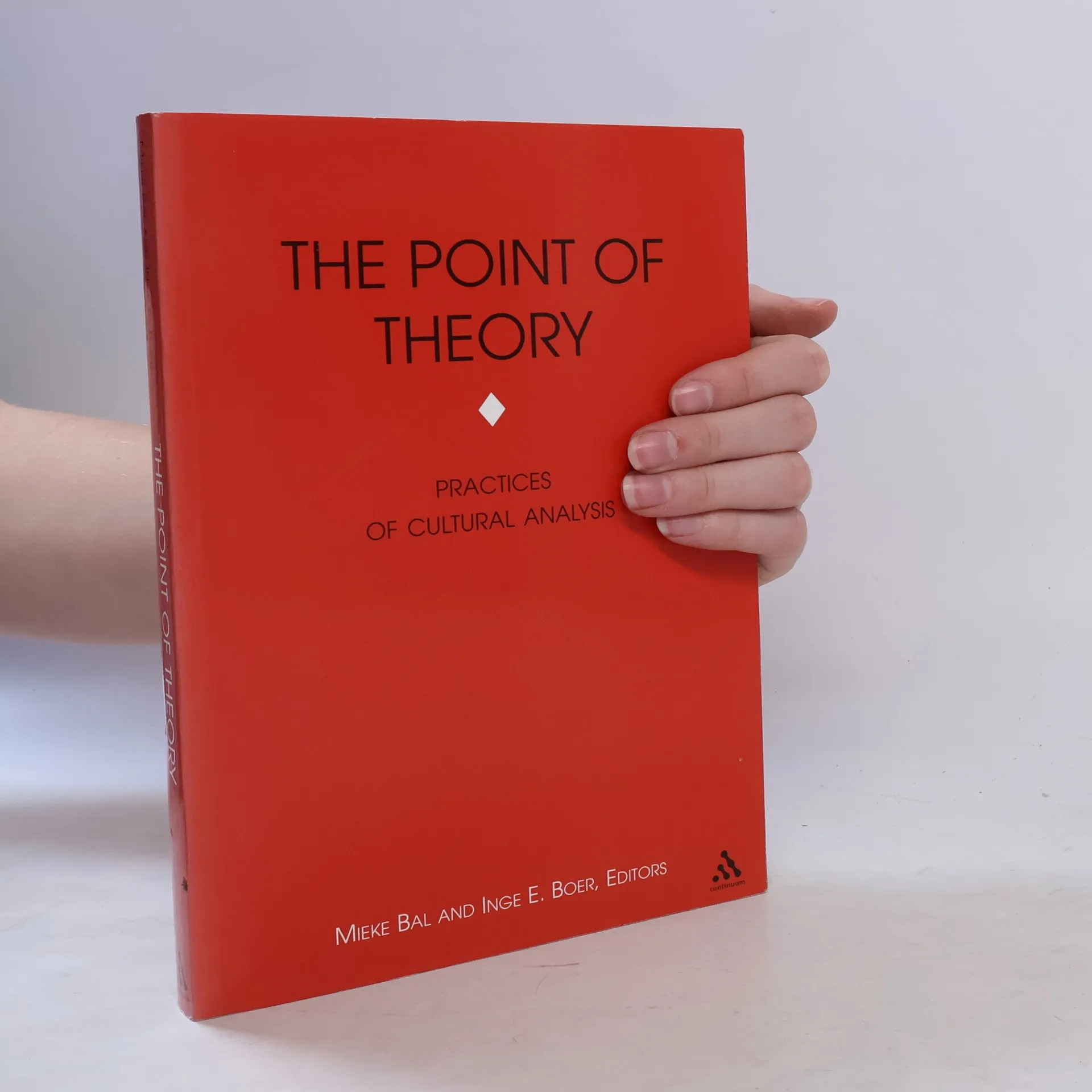
      What is the point of bringing reflexive discourse called theory to bear on such diverse subjects as the Statue of Liberty, the dTcor of Freud's study, a fifteenth-century triptych and contemporary science, on Kant and postmodern literature, Indian traditions and the voice of a soprano? The Point of Theory works to reintegrate theory and theorizing into a culture disturbed by "anti-theorism" and political "in-correctness." In this book, twenty-two cultural theorists seek to make the workings of culture understandable.

      Point of Theory
    • Narratology in Practice

      • 256 pages
      • 9 hours of reading

      Narratology in Practice draws on various cultural domains to explain the ways in which theory illuminates the presence of narrative.

      Narratology in Practice
    • In this rich, highly illustrated book, Mieke Bal takes us on a journey through the range of her work, using the concept of image-thinking as a point of connection between cultural analysis and artistic practice. Sharing a lifetime of experience of writing about art, making films and installations, as well as curating exhibitions, she shows us how these may be brought into dialogue with insights from theory. Bal teaches us how to think with images, but also how to write and think – as artists and writers – about our own creative work. This is Mieke Bal at her most personal and her best.

      Image-Thinking
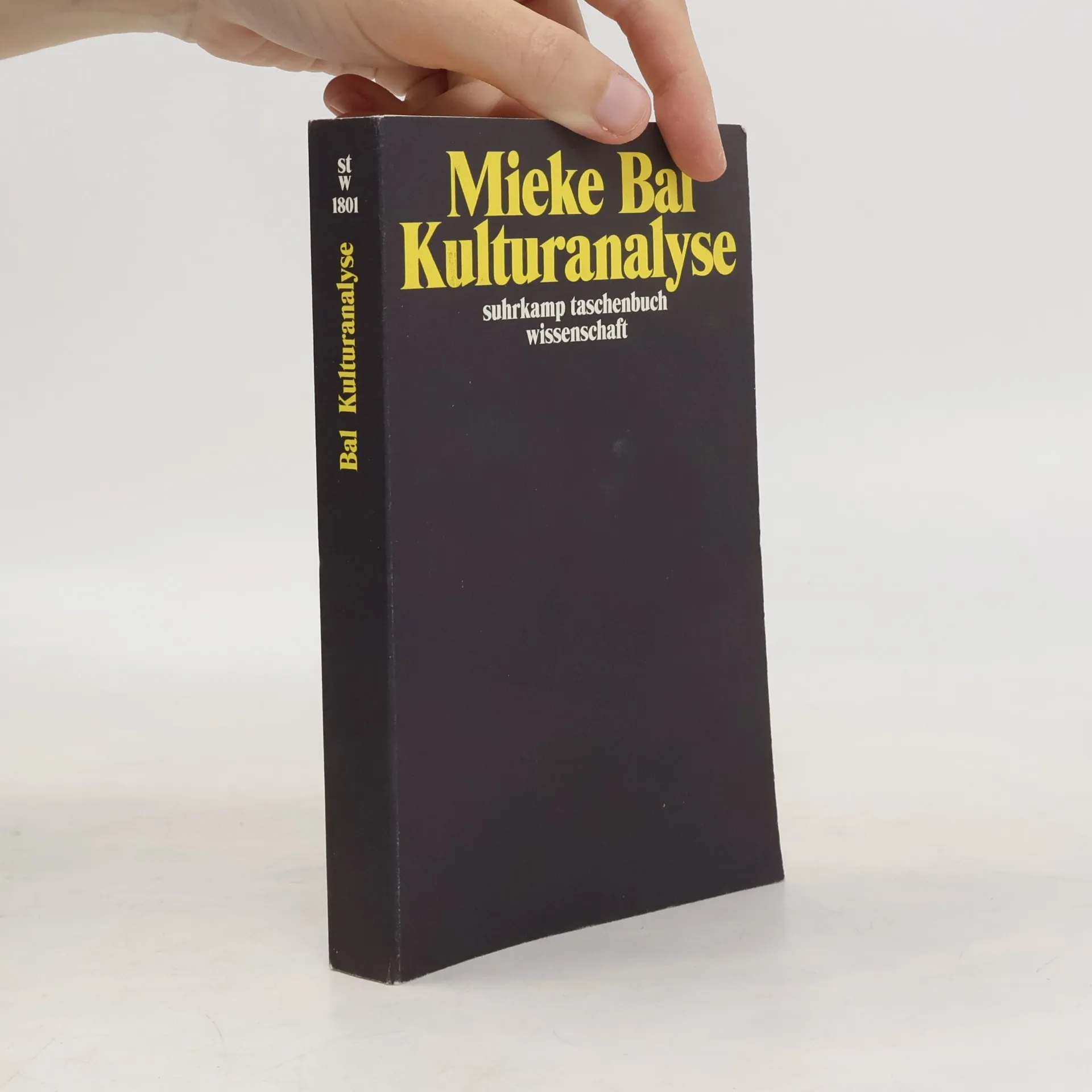
    • Kulturanalyse

      • 400 pages
      • 14 hours of reading

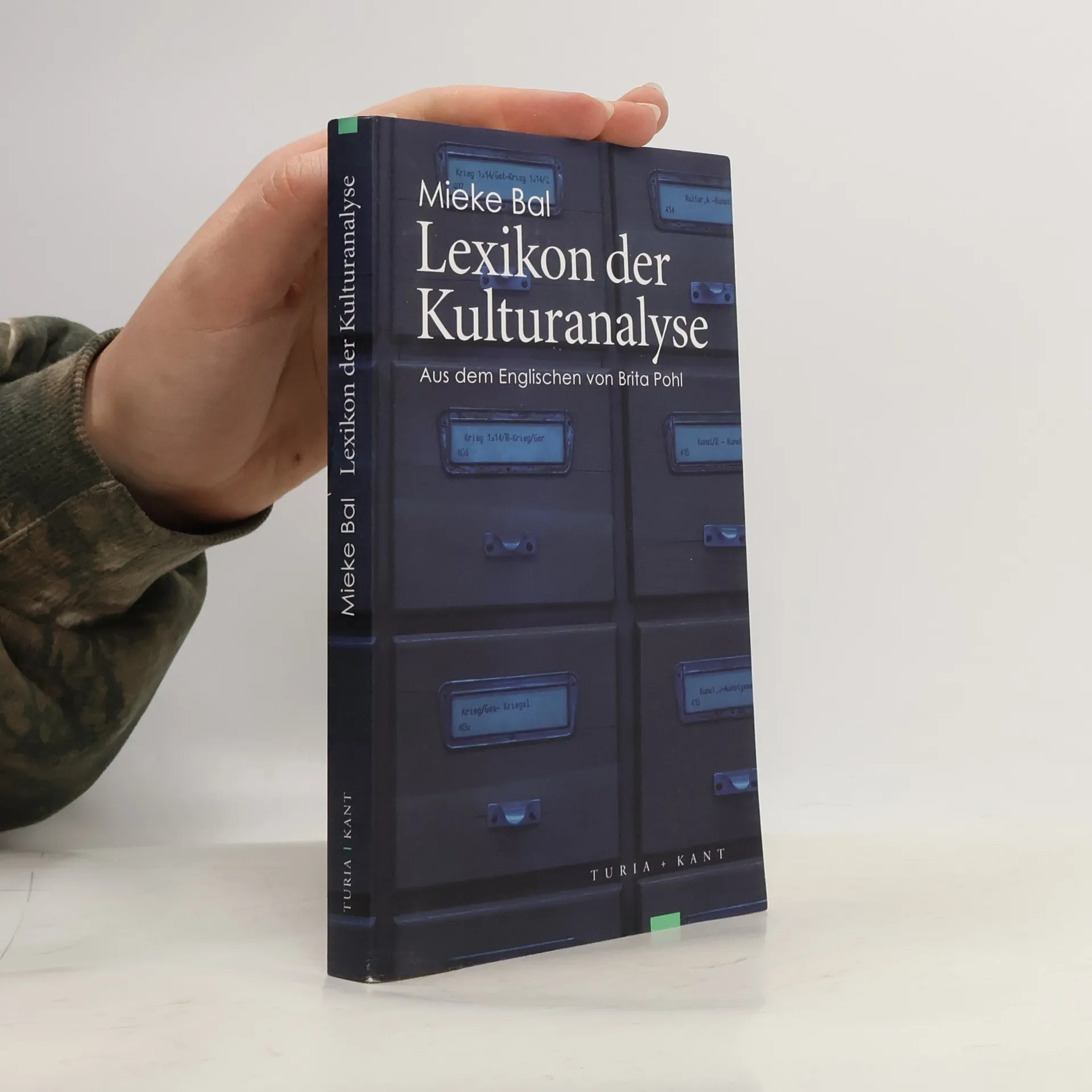
      Auch wenn die Kulturwissenschaften gemeinhin als neue Leitwissenschaft innerhalb der Geisteswissenschaften ausgerufen werden, so fehlt es ihnen doch nach wie vor an einer klaren theoretischen Profilierung und an einem fest umrissenen Forschungsfeld. Mieke Bal sucht mit ihrer an dekonstruktivistische wie an ideologiekritische Positionen anschließenden Kulturanalyse dieses Dilemma der cultural studies zu überwinden. Sie schlägt einen entscheidenden Wechsel in der Orientierung vor: den Einsatz von Konzepten als Theorien en miniature, die sie jeweils in enger Verzahnung mit den zu analysierenden Gegenständen entwickelt und klar definiert. Der vorliegende Band, der von Mieke Bal zusammengestellt worden ist, versammelt, neben grundlegenden theoretischen überlegungen, eine Reihe ebenso prägnanter wie weitreichender Einzelanalysen. Sie spannen den Bogen von einer Narratologie des Sammelns über die Semiotik des Ausstellens als eines Exponierens von Argumenten bis zu einer photographischen Lektüre Prousts oder einer ›widersinnigen‹ Geschichte des Barock. Gemeinsam ist diesen Aufsätzen, die hier zum Teil erstmals veröffentlicht werden, nicht nur der Anspruch, die strikte Trennung zwischen Wort und Bild aufzuheben, sondern auch das Plädoyer für eine Erneuerung der Geisteswissenschaften.

      Kulturanalyse
    • "Up into the unknown" is the phrase the architects Colin Fournier and Peter Cook came up with for the futuristic architecture of the Kunsthaus Graz. To this day, this is to be understood as an invitation to explore the limits of the imagination and to test alternative ideas and utopias in a laboratory for art. Since 2003, the Kunsthaus has been an institution without a collection. Today it claims to be a museum. With its architecture of hybrid spaces, site-specific invitations to confrontation and the mission to be a production site for contemporary art, the Kunsthaus Graz is a space and place of potentiality and otherness. Blueprint for a Museum is to be understood as a draft for a museum, a blueprint that simultaneously reflects abstract categories of the institution and resonates with concrete programme concepts. The publication thus follows the idea of experimentation that the Kunsthaus Graz has embodied since its foundation.

      Blueprint