

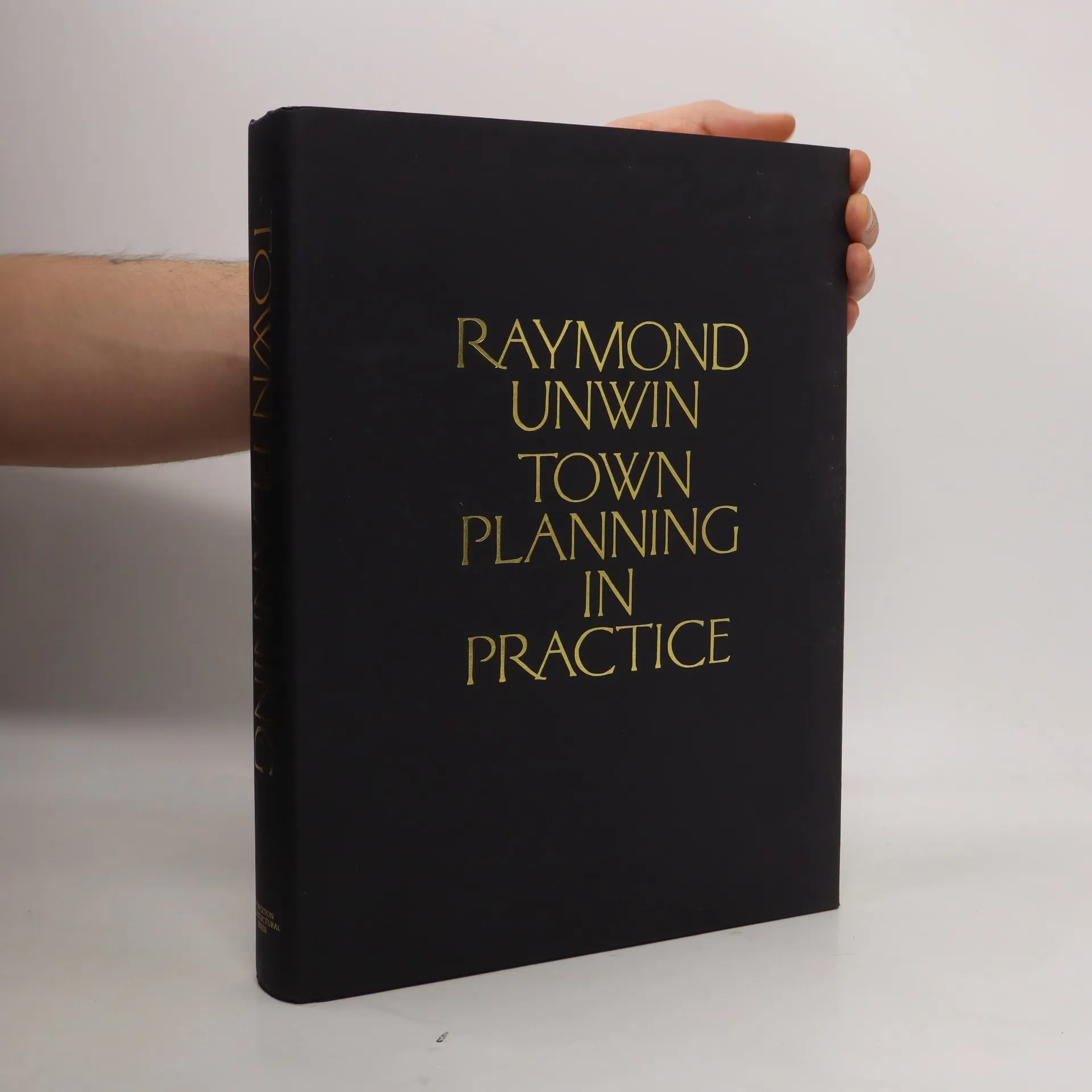
Town Planning in Practice
- 456 pages
- 16 hours of reading
First published in 1909, Raymond Unwin's Town Planning in An Introduction to the Art of Designing Cities and Suburbs is an extraordinary compendium of images and theories on urban design. As a member of the generation of planners following Camillo Sitte and preceding the emergence of the modern planners of the 1920s, Unwin considered planning a design-based discipline rather than a purely technical one. He believed that artistic and practical criteria were mutually supportive and carried this out in his work by creating plans that represented a unity of art, science, and technology.Unwin is perhaps the greatest figure of the Garden City movement, which has had a tremendous impact on planning in both Europe and the United States. Although Town Planning has become the bible of neo-traditionalist planners, this book is not a nostalgic view of past planning ideas; rather, it is a useful, forward-looking book that holds valuable lessons for today's planners.Its insightful critical analyses of many towns throughout Europe and the United States are accompanied by photographs, plans, drawings, and six foldout maps. This reprint of Town Planning in Practice includes a new preface by Andres Duany and an introduction by Walter Creese.