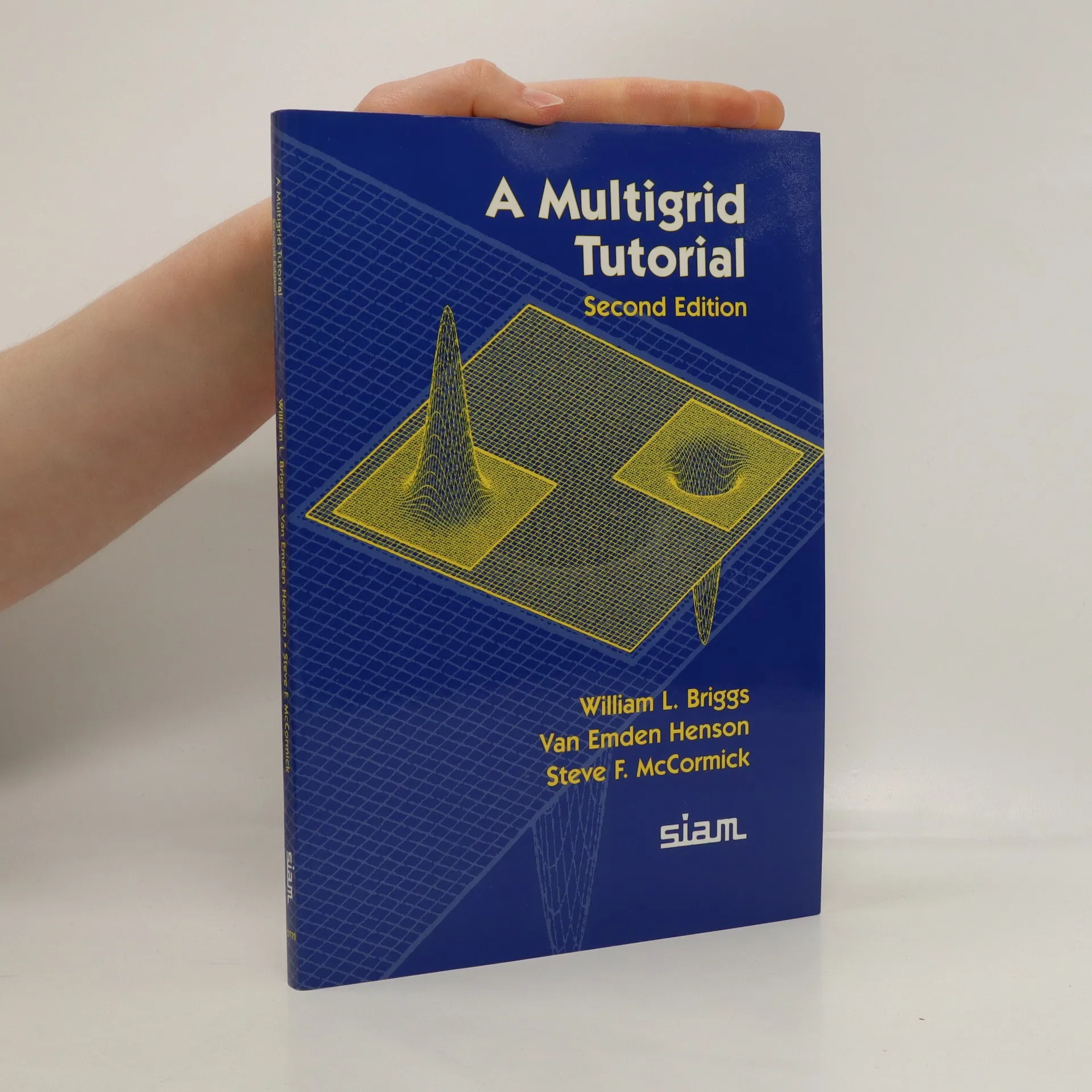
This second edition of the popular A Multigrid Tutorial preserves the introductory spirit of the first edition while roughly doubling the amount of material covered. The topics of the first edition have been enhanced with additional discussion, new numerical experiments, and improved figures. New topics in the second edition include nonlinear equations, Neumann boundary conditions, variable mesh and variable coefficient problems, anisotropic problems, algebraic multigrid (AMG), adaptive methods, and finite elements. This introductory book is ideally suited as a companion textbook for graduate numerical analysis courses. It is written for computational mathematicians, engineers, and other scientists interested in learning about multigrid.
William L. Briggs Books


If you identify as an expert, professional, bureaucrat, educator, or belong to the educated classes, you may be surprised to learn that much of what you believe is incorrect. This assertion applies particularly to the majority, who often hold false views on significant issues. For instance, many educated individuals mistakenly believe that science can answer every question, that correcting wrongs is always right, or that crowds possess wisdom. They may also think that a consensus among academics validates their beliefs, that personal offense impacts truth, or that defining oneself by sexual desire is logical. Furthermore, voting does not inherently determine right from wrong, and democracy is not always desirable. The existence of God is also a contentious topic. This book delves into these misconceptions, systematically proving that the majority, likely including you, are mistaken about these ideas. Each chapter addresses common fallacies and errors in thinking, highlighting the human tendency towards irrationality. History shows that certain fallacies persist across time, influenced by cultural trends and societal pressures. The text introduces memorable nicknames for prevalent fallacies of our era, such as the Controversial Fallacy, Non-Fallacy Fallacy, and Wisdom of Crowds Fallacy, among others. These fallacies demonstrate the complexity of truth and error, revealing the enduring nature of flawed reasoning.
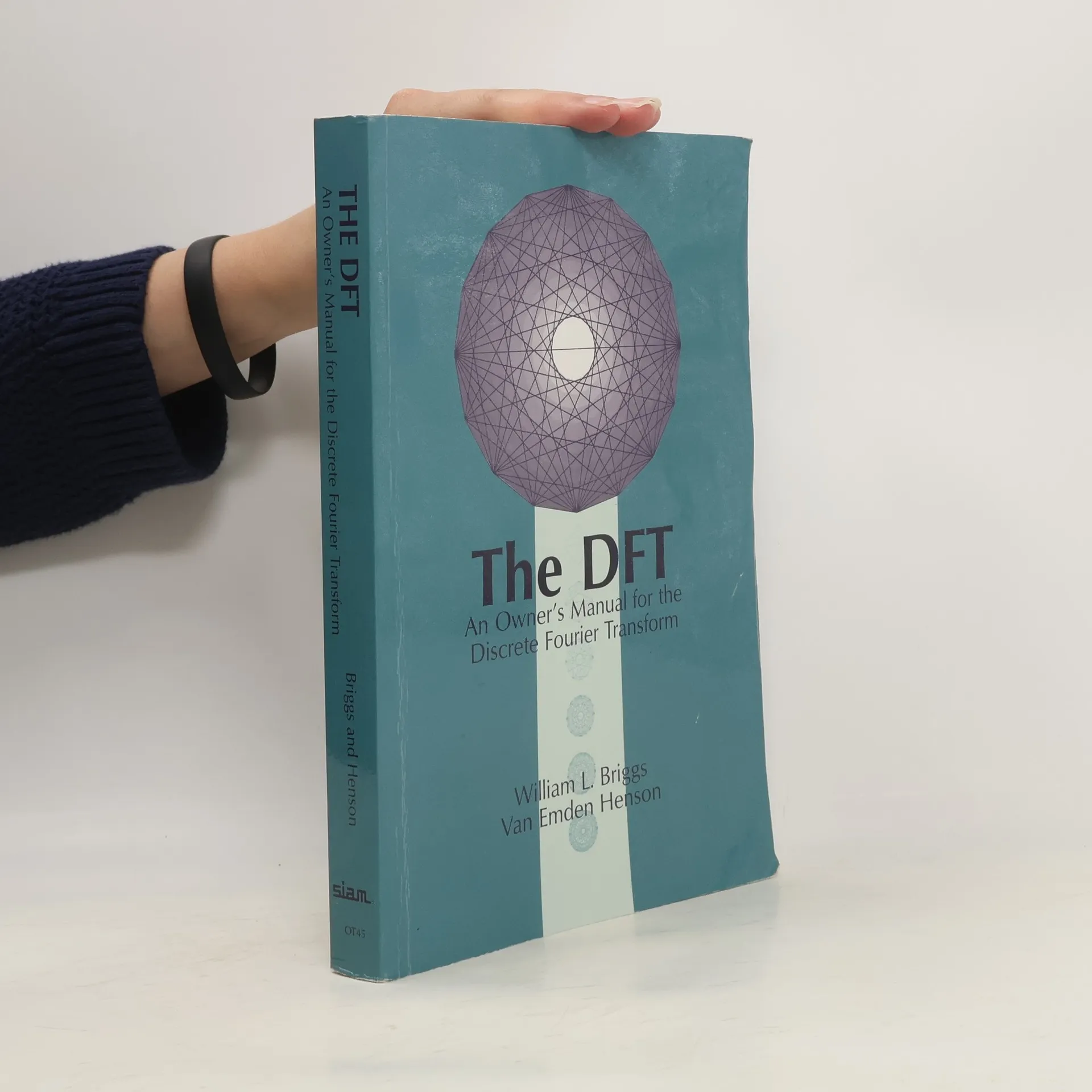
Just as a prism separates white light into its component bands of colored light, so the discrete Fourier transform (DFT) is used to separate a signal into its constituent frequencies. Just as a pair of sunglasses reduces the glare of white light, permitting only the softer green light to pass, so the DFT may be used to modify a signal to achieve a desired effect. In fact, by analyzing the component frequencies of a signal or any system, the DFT can be used in an astonishing variety of problems. Among the applications of the DFT are digital signal processing, oil and gas exploration, medical imaging, aircraft and spacecraft guidance, and the solution of differential equations of physics and engineering. The An Owner's Manual for the Discrete Fourier Transform explores both the practical and theoretical aspects of the DFT, one of the most widely used tools in science and engineering.
As the sun rises on China and sets on America, the world holds its breath.
Cauldron of Anxiety, A - Capitalism in the twenty-first century
- 192 pages
- 7 hours of reading
Capitalism has passed its use-by-date, but a better, saner world is possible.