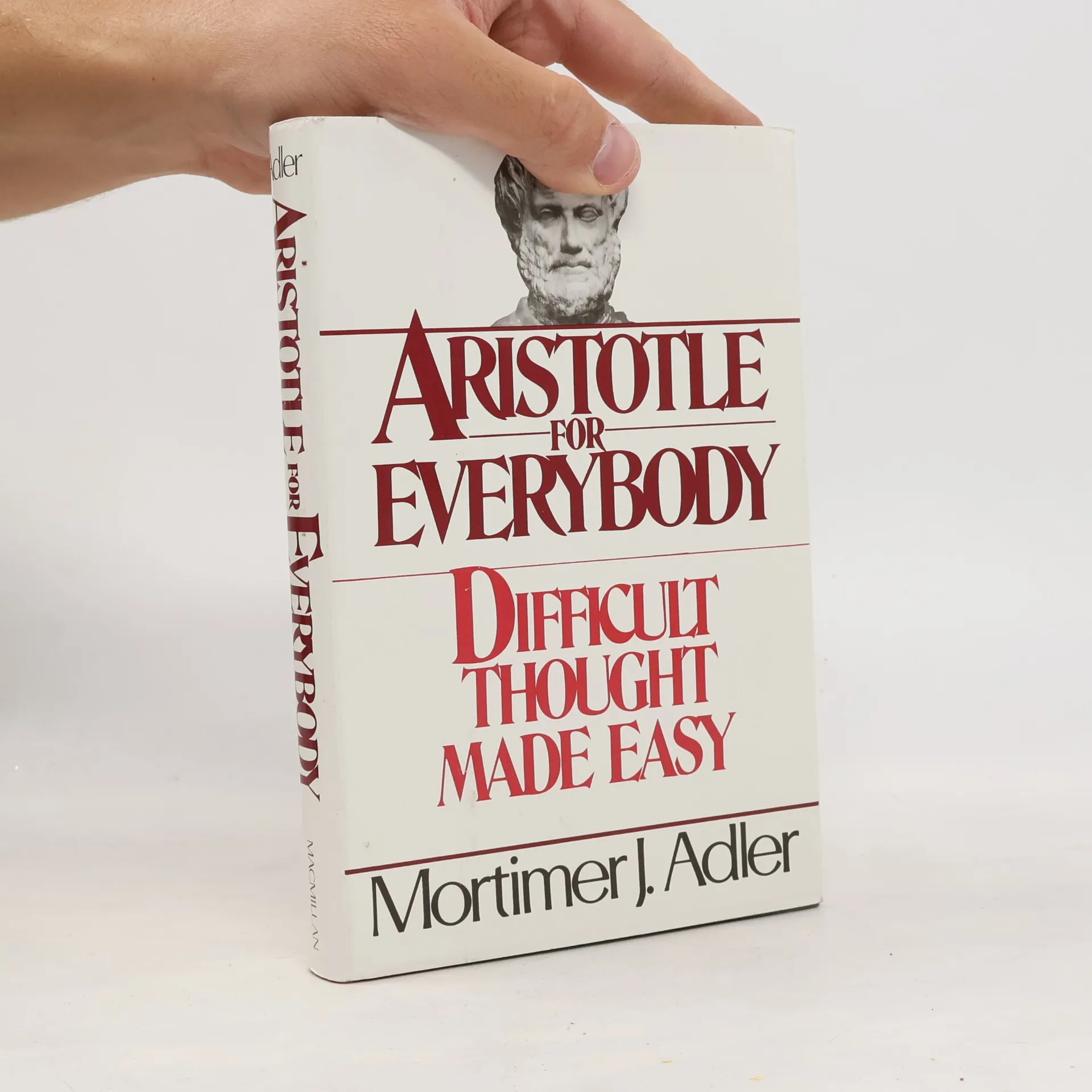
Aristoteles (384–322 v. Chr.) lehrte Alexander den Großen die Logik und durch seine philosophischen Werke jeden Philosophen seither, von Mark Aurel über Thomas von Aquin bis zu Mortimer J. Adler. Jetzt lehrt Adler – einst Vorstandsvorsitzender der renommierten Encyclopedia Britannica – die Welt die aristotelische Logik, indem er Aristoteles’ Erkenntnisse in einer aktuellen, wunderbar verständlichen Weise präsentiert. Er bringt Aristoteles’ Werk auf eine alltägliche, für jeden verständliche Ebene – »to go«, wie auf einen schnellen Kaffee mit Aristoteles. Indem er die Leser ermutigt, selbst philosophisch zu denken, bietet Adler uns einen einzigartigen Weg zu persönlichen Einsichten und zum Verständnis der grandiosen aristotelischen Philosophie, wie der Unterschied zwischen Wünschen und Bedürfnissen, der richtige Weg zum Glück und der richtige Plan für ein gutes Leben.
Mortimer Adler Book order (chronological)
Mortimer Adler was an American educator and philosopher who dedicated himself to making complex ideas accessible to a broad audience. His work drew from Aristotelian and Thomistic thought, yet was written in a style intended for readers beyond academia. Adler aimed to equip people with the tools for better reading and understanding of challenging texts, thereby elevating their intellectual engagement. His lifelong mission was to bridge philosophy and everyday life, inspiring profound thought in the general reader.



The Capitalist Manifesto
- 288 pages
- 11 hours of reading
Book by Kelso, Louis O.
Saint Thomas and the Gentiles, Under the Auspices of the Aristotelian Society of Marquette University
- 130 pages
- 5 hours of reading
Recognized for its cultural significance, this work contributes to the foundational knowledge of civilization. It has been chosen by scholars for its importance, highlighting its relevance in understanding historical and societal contexts.
"Investigates the art of reading by examining each aspect of reading, problems encountered, and tells how to combat them."--]cProvided by publisher
Drawing on his extensive knowledge of Western literature, philosophy, and history, Adler considers what is meant by democracy, law, emotion, language, truth, and other abstract concepts in light of more than two millennia of Western civilization. 15 photos.
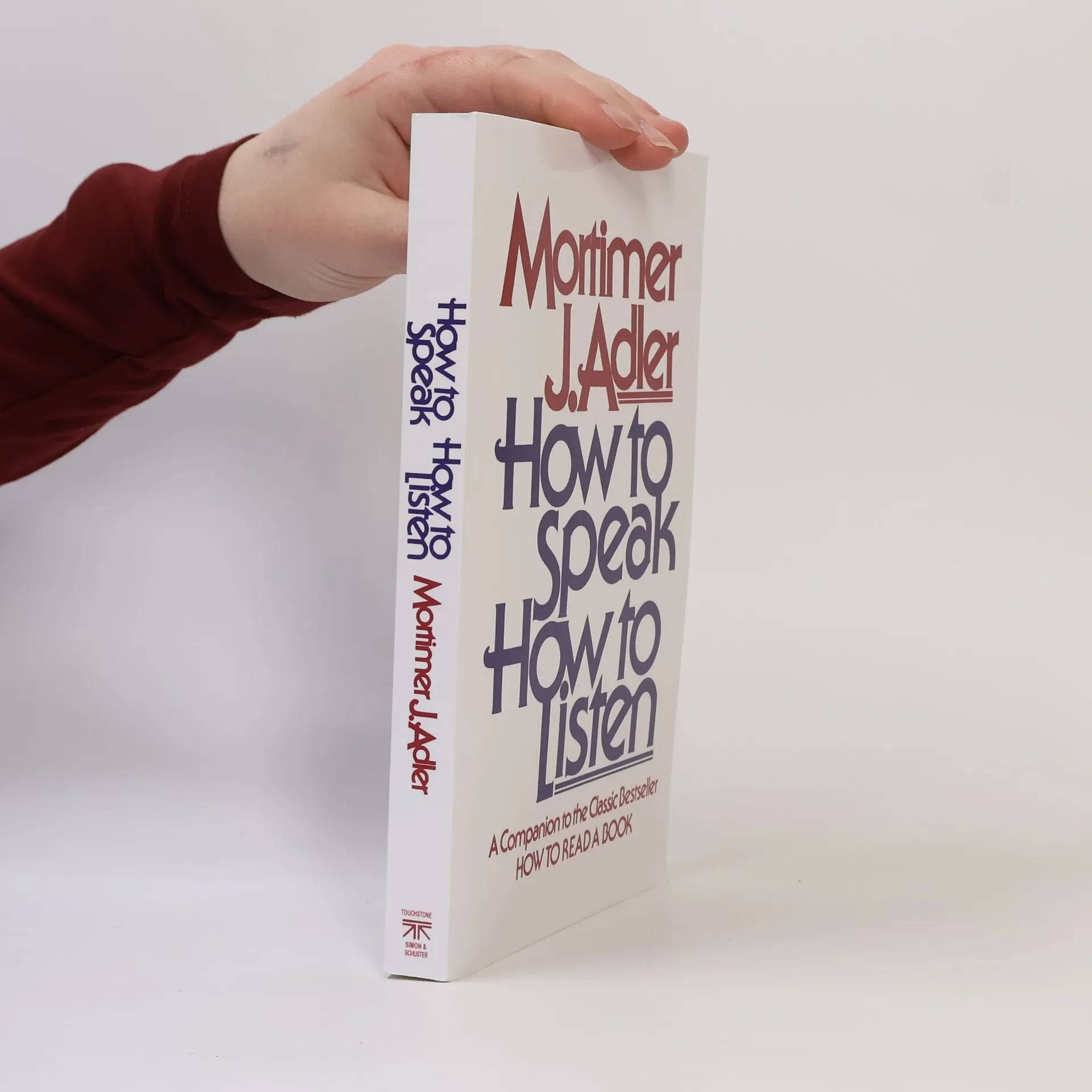
How to Speak. How to Listen
- 288 pages
- 11 hours of reading
Drawing on decades of experience as an educator and philosopher, Mortimer J. Adler gives a short course in effective communication, invaluable for salespeople, negotiators, teachers, and families seeking better communication among themselves.
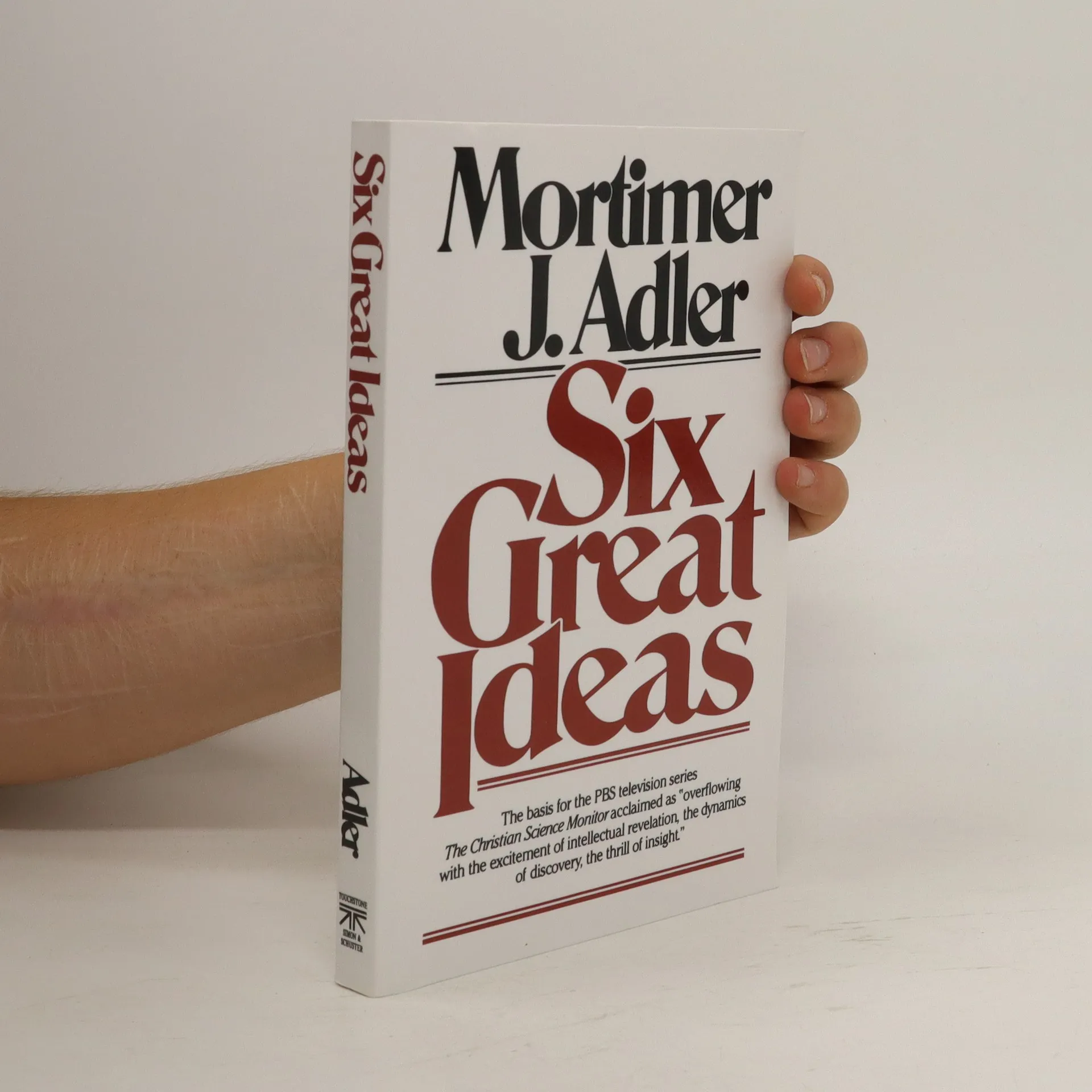
Six Great Ideas
- 256 pages
- 9 hours of reading
Each summer, Mortimer J. Adler conducts a seminar at the Aspen Institute in Colorado. At the 1981 seminar, leaders from the worlds of business, literature, education, and the arts joined him in an in-depth consideration of the six great ideas that are the subject of this book: Truth, Goodness, and Beauty - the ideas we judge by; and Liberty, Equality and Justice - the ideas we act on. The group discussions and conversations between Dr. Adler and journalist Bill Moyers were filmed for broadcast on public television, and thousands of people followed their exploration of these important ideas. Discarding the out-worn and off-putting jargon of academia, Dr. Adler dispels the myth that philosophy is the exclusive province of the specialist. He argues that "philosophy is everybody's business," and that a better understanding of these fundamental concepts is essential if we are to cope with the political, moral, and social issues that confront us daily.
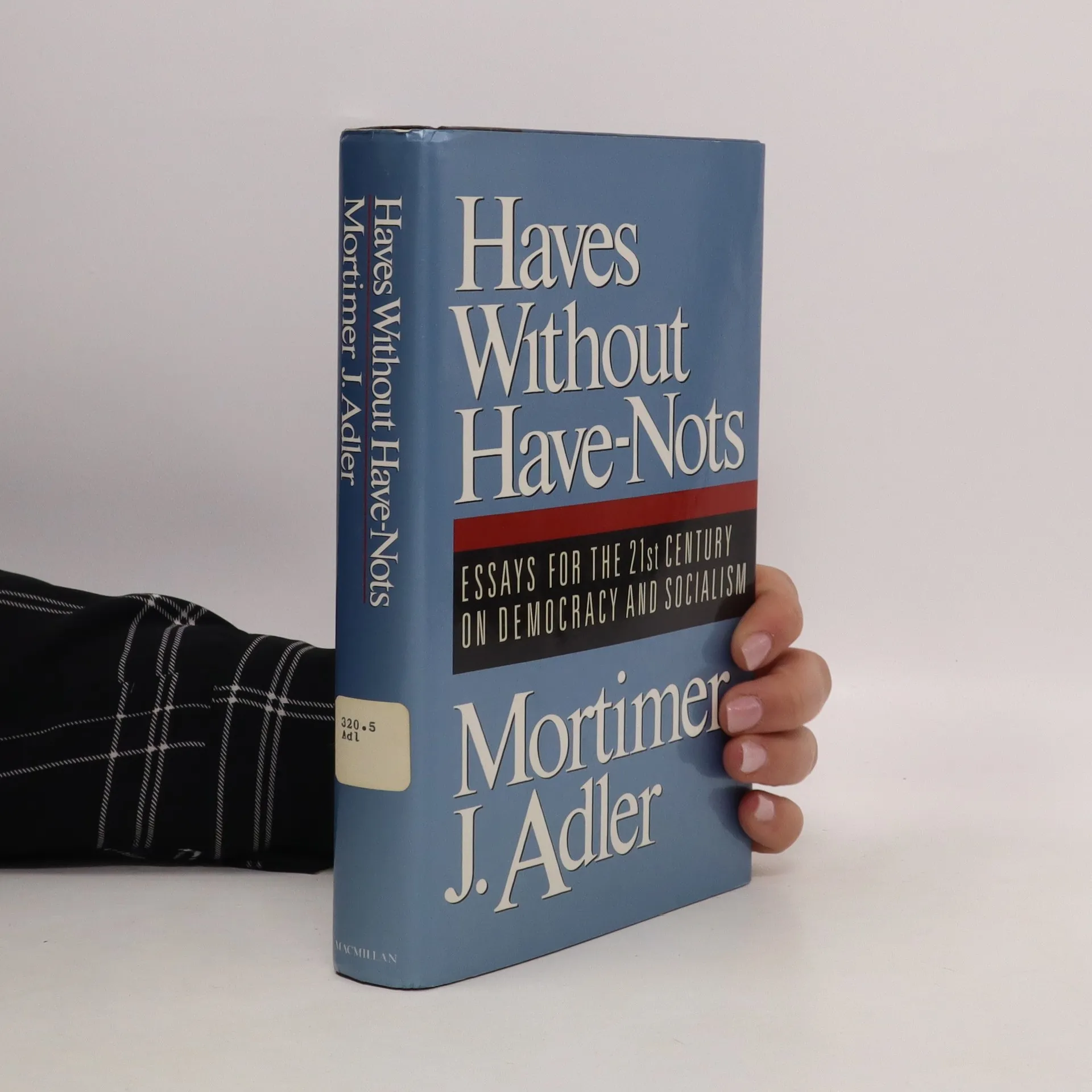
Haves Without Have-Nots
- 337 pages
- 12 hours of reading
Mortimer J. Adler's Haves Without Have-Nots is a compilation of six essays revolving around a unifying theme: the convergence of capitalism and socialism in a politically and economically democratic world society, the likes of which has never been seen until now, as the 20th century draws to a close.
The Great Ideas, Vol. 2
A Syntopicon of Great Books of the Western World
54 volume series of the Great Books, published by Britannica.1. The great conversation / by R.M. Hutchins 2-3. The great ideas 4. The Iliad of Homer. The Odyssey 5. Aeschylus. Sophocles. Euripides. Aristophanes 6. Herodotus. Thucydides 7. Plato 8-9. Aristotle 10. Hippocrates. Galen 11. Euclid. Archimedes. Appollonius of Perga. Nicomachus 12. Lucretius. Epictetus. Marcus Aurelius 13. Virgil 14. Plutarch 15. Tacitus 16. Ptolemy. Copernicus. Kepler 17. Plotinus 18. Augustine 19-20. Thomas Aquinas 21. Dante 22. Chaucer 23. Machiavelli. Hobbes 24. Rabelais 25. Montaigne 26-27. Shakespeare 28. Gilbert. Galileo. Harvey 29. Cervantes 30. Francis Bacon 31. Descartes. Spinoza 32. John Milton 33. Pascal 34. Newton. Huygens 35. Locke. Berkeley. Hume 36. Swift. Sterne 37. Henry Fielding 38. Montesquieu. Rousseau 39. Adam Smith 40-41. Gibbon 42. Kant 43. American state papers. The Federalist. J.S. Mill 44. Boswell 45. Lavoisier. Fourier. Faraday 46. Hegel 47. Goethe 48. Melville 49. Darwin 50. Marx 51. Tolstoy 52. Dostoevsky 53. William James 54. Freud.
Popularisering en actualisering van enkele ideeën van de Griekse filosoof (384-322 voor Chr.).
"Adler traces 'in the simplest language and with occasional modern analogues, the logic and growth of Aristotle's basic doctrines.'" Publ Wkly "Aristotle taught logic to Alexander the Great and, by virtue of his philosophical works, to every philosopher since, from Marcus Aurelius, to Thomas Aquinas, to Mortimer J. Adler. Now Aler instructs the world in the 'uncommon common sense' of Aristotelian logic, presenting Aristotle's understandings in a current, delightfully lucid way ... Adler offers us a unique path to personal insights and understanding of intangibles, such as the difference between wants and needs, the proper way to pursue happiness, and the right plan for a good life."