

A soldier's eye view of Vietnam's fiercest close-quarters battle upon its 50th anniversary Khe Sanh's Hill Fights of 1967--as experienced by co-author Bobby Maras and told in this hour-by-hour, day-by-day account--were carnage on the ground, much of it hand-to-hand fighting in the dark. Thanks to the brave Marines of the 9th and 3rd, Khe Sanh survived the first concentrated attack by the North Vietnamese to invade the South. After the Hill Fights, American forces pulled back and held out against constant enemy shelling and frequent attacks until the siege was broken. Combining Maras' personal experiences with the war's bigger picture, Blood in the Hills honors the heroic actions of our soldiers and shows how Khe Sanh was microcosm of the entire Vietnam War.
Charles W. Sasser Books
Charles W. Sasser is an author whose writing is deeply informed by a life of extraordinary experiences. A veteran of naval service and U.S. Army Special Forces, he served as a combat correspondent and was wounded in action, experiences that lend a potent authenticity to his narratives. His background also includes extensive work as a police detective, further shaping his distinctive voice. Sasser's prose often explores themes of courage, adventure, and resilience, drawing from a vast well of global travels and challenging pursuits. He crafts compelling stories that resonate with a raw, genuine quality, capturing the essence of individuals tested by extreme circumstances.



One Shot One Kill
- 260 pages
- 10 hours of reading
They are the lone wolves of the battlefield. Tracking the enemy, lying in wait for the target to appear—then they shoot to kill. Armed with an unerring eye, infinite patience and a mastery of camouflage, combat snipers stalk the enemy with only one goal... In World War II, Korea, Vietnam, and Beirut, American snipers honed the art of delivering a single deadly shot from nowhere—and devastating enemy morale. They met the enemy on his own turf, picking off officers, unwary soldiers, and even other snipers from extraordinary distances of up to 1 ½ miles. Now, these uncommon men tell their stories: of the emotions felt when a man's face came into their crosshairs and they pulled the trigger, of the nerve-wracking hours and days of waiting, motionless, for the enemy, of the primal savagery of a sniper duel. Often trained haphazardly in wartime, and forgotten in times of peace, combat snipers were officially recognized after the Vietnam War, when the Marine Corps became the first military branch to start a full-time sniper school. One Shot-One Kill is their powerful record of desperate trials and proud victories.
Arctic Homestead
- 320 pages
- 12 hours of reading
In 1973, Norma Cobb, her husband Lester, and the their five children, the oldest of whom was nine-years-old and the youngest, twins, barely one, pulled up stakes in the Lower Forty-eight and headed north to Alaska to follow a pioneer dream of claiming land under the Homestead Act. The only land available lay north of Fairbanks near the Arctic Circle where grizzlies outnumbered humans twenty to one. In addition to fierce winters and predatory animals, the Alaskan frontier drew the more unsavory elements of society's fringes. From the beginning, the Cobbs found themselves pitted in a life or death feud with unscrupulous neighbors who would rob from new settlers, attempt to burn them out, shoot them, and jump their claim.The Cobbs were chechakos, tenderfeet, in a lost land that consumed even toughened settlers. Everything, including their "civilized" past, conspired to defeat them. They constructed a cabin and the first snow collapsed the roof. They built too close to the creek and spring breakup threatened to flood them out. Bears prowled the nearby woods, stalking the children, and Lester Cobb would leave for months at a time in search of work.But through it all, they survived on the strength of Norma Cobb---a woman whose love for her family knew no bounds and whose courage in the face of mortal danger is an inspiration to us all. Arctic Homestead is her story.
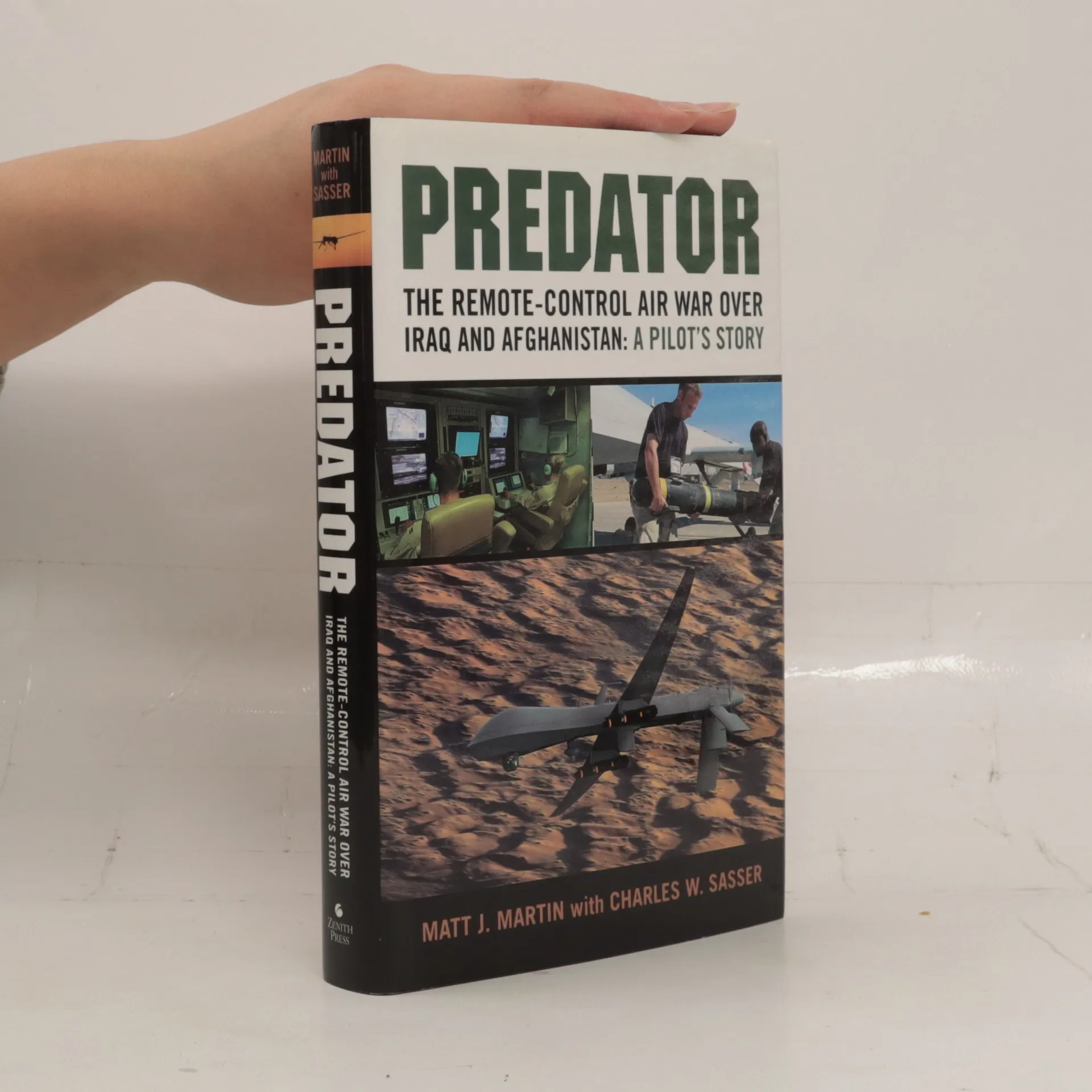
Predator : the Remote-control Air War Over Iraq and Afghanistan
- 310 pages
- 11 hours of reading
The Nintendo generation has taken to the battlefields of Iraq and Afghanistan where remotely controlled aircraft are killing America¹s enemies and saving American lives. Matt J. Martin is considered a "top gun" in the world of unmanned aerial vehicles (UAVs). For nearly four years, he has flown hundreds of missions on two warfronts in a new kind of combat that, until recently, was largely classified Top Secret. He and his fellow Predator pilots have been actively involved in virtually every facet of the War on Terror in Iraq and Afghanistan: tracking Osama bin Laden; capturing top al-Qaeda leader al-Zarqawi; fighting with the U.S. Marines in Fallujah; and rescuing aid workers kidnapped in Afghanistan by the Taliban. This is Matt J. Martin's story and that of his aircraft, the 27-foot long Predator.