By reconstructing the biographies of religious objects (relics, banners,
public texts, coverings for the Ka'ba), this study recovers the premodern
visual culture of Islamic Egypt and Syria. It follows the shifting meanings
attached to objects of devotion, exploring the indeterminacy that seems to
haunt them.
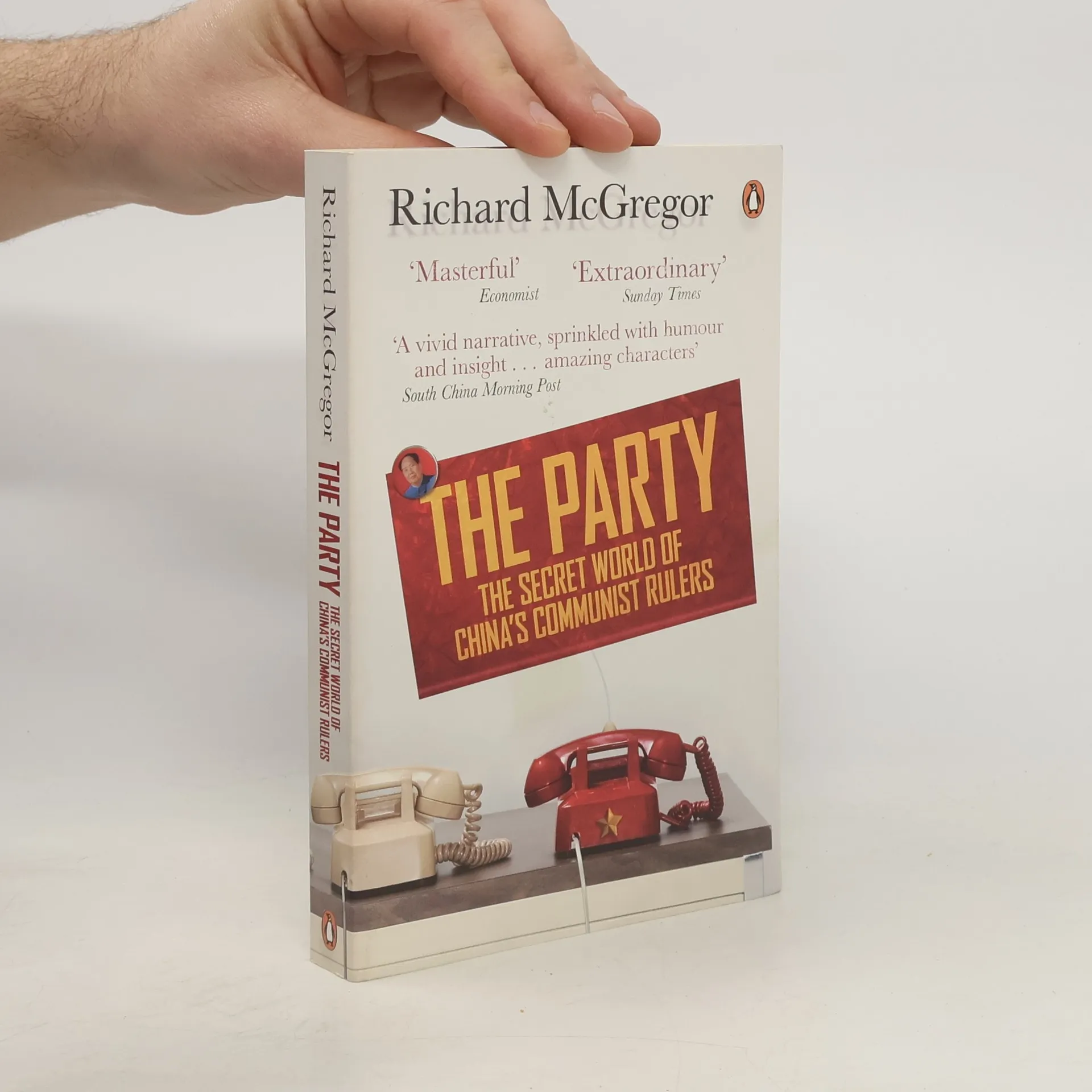
'Superb . . . an essential, riveting guide to how the rising power really works' Jonathan Fenby 'Marvellous . . . should be read by anyone doing business with or just trying to understand China' Bill Emmott China's Communist Party is the largest, most powerful political machine in the world. Here, for the first time, Richard McGregor delves deeply into its inner sanctum, revealing how this secretive cabal keeps control of every aspect of the country - its military and media, legal system and businesses, even its religious organizations. How has the Party merged Marx, Mao and the market to create a global superpower? And what does this mean for the world? 'A book that is as informative as it is entertaining . . . China has been transformed. The system that takes the credit is brilliantly described by McGregor' Chris Patten, Financial Times 'With details never published before . . . this book has come at the right moment' Michael Sheridan, Sunday Times 'McGregor has done the world a service with his fascinating new book' Peter Hartcher, Sydney Morning Herald 'A lively and penetrating account of a party that . . . has clung to secrecy as an inviolable principle' Andrew Higgins, Washington Post 'If you read only one book about China this year, it should be this one. And if you do not read this book, you probably do not understand China today' Arthur Kroeber, China Economic Quarterly
Xi Jinping has transformed China at home and abroad with a speed and aggression that few foresaw when he came to power in 2012. Finally, he is meeting resistance, both at home among disgruntled officials and disillusioned technocrats, and abroad from an emerging coalition of Western nations that seem determined to resist China’s geopolitical and high-tech expansion. With the United States and China at loggerheads, Richard McGregor outlines how the world came to be split in two.
This investigation reveals the pivotal role of China's Communist Party in the nation's remarkable rise as a global superpower and its rivalry with the United States. Over the past three decades, China has experienced unprecedented political and economic growth, akin to the Industrial Revolution in the West. Central to this transformation is the Communist Party, a powerful organization with over seventy-three million members. It exerts control over every facet of governance, from major cities to remote villages, and influences official religions, the media, and the military. The Party oversees substantial state-owned enterprises and manages the appointment of senior executives in government companies, many of which rank among the Fortune 500.
Richard McGregor's exploration provides an unprecedented look into the inner workings of the Communist Party, illustrating how it governs the courts, media, and military while keeping corruption allegations internal. Despite its global influence, the Party remains secretive and unaccountable, operating outside the law and answerable only to its internal mechanisms. As the world's sole geopolitical rival to the U.S., it harbors a deep skepticism toward the West. McGregor's account offers a compelling portrait of the Communist Party's power, its control over China, and its implications for the future.