

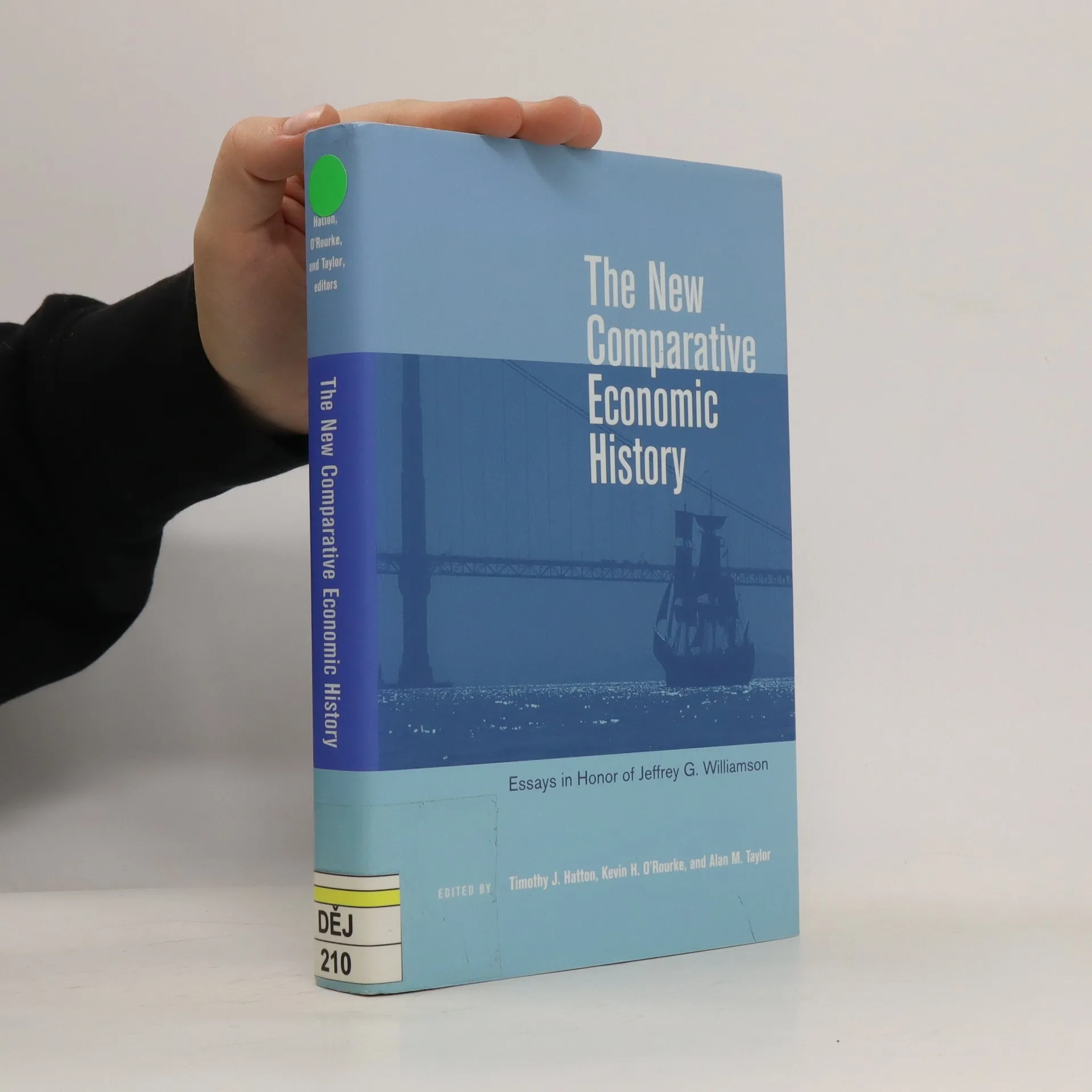
Essays by internationally prominent economists examine long run cross-country economic trends from the perspective of New Comparative Economic History, an approach pioneered by Harvard economist Jeffrey G. Williamson. The innovative approach to economic history known as the New Comparative Economic History represents a distinct change in the way that many economic historians view their role, do their work, and interact with the broader economics profession. The New Comparative Economic History reflects a belief that economic processes can best be understood by systematically comparing experiences across time, regions, and, above all, countries. It is motivated by current questions that are not nation specific--the sources of economic growth, the importance of institutions, and the impact of globalization--and focuses on long-run trends rather than short-run ups and downs in economic activity. The essays in this volume offer a New Economic Comparative History perspective on a range of topics and are written in honor of Jeffrey G. Williamson, the most distinguished and influential scholar in the field. The contributors, prominent American and European economists, consider such topics as migration, education, and wage convergence; democracy and protectionism in the nineteenth century; trade and immigration policies in labor-scarce economies; and the effect of institutions on European productivity and jobs.
Kevin H. O. Rourke Books
Kevin O'Rourke holds the Chichele Professorship of Economic History at Oxford and is a Fellow of All Souls College. He previously served as Research Director of the Centre for Economic Policy Research, overseeing a network of 1100 researchers across European universities. His academic standing is further recognized by his memberships in the Royal Irish Academy and the British Academy.


Power and plenty : trade, war, and the world economy in the second millennium
- 648 pages
- 23 hours of reading
International trade has shaped the modern world. This book examines the successive waves of globalization and 'deglobalization' that have occurred during the past thousand years, looking at the technological and political causes behind these long-term trends.
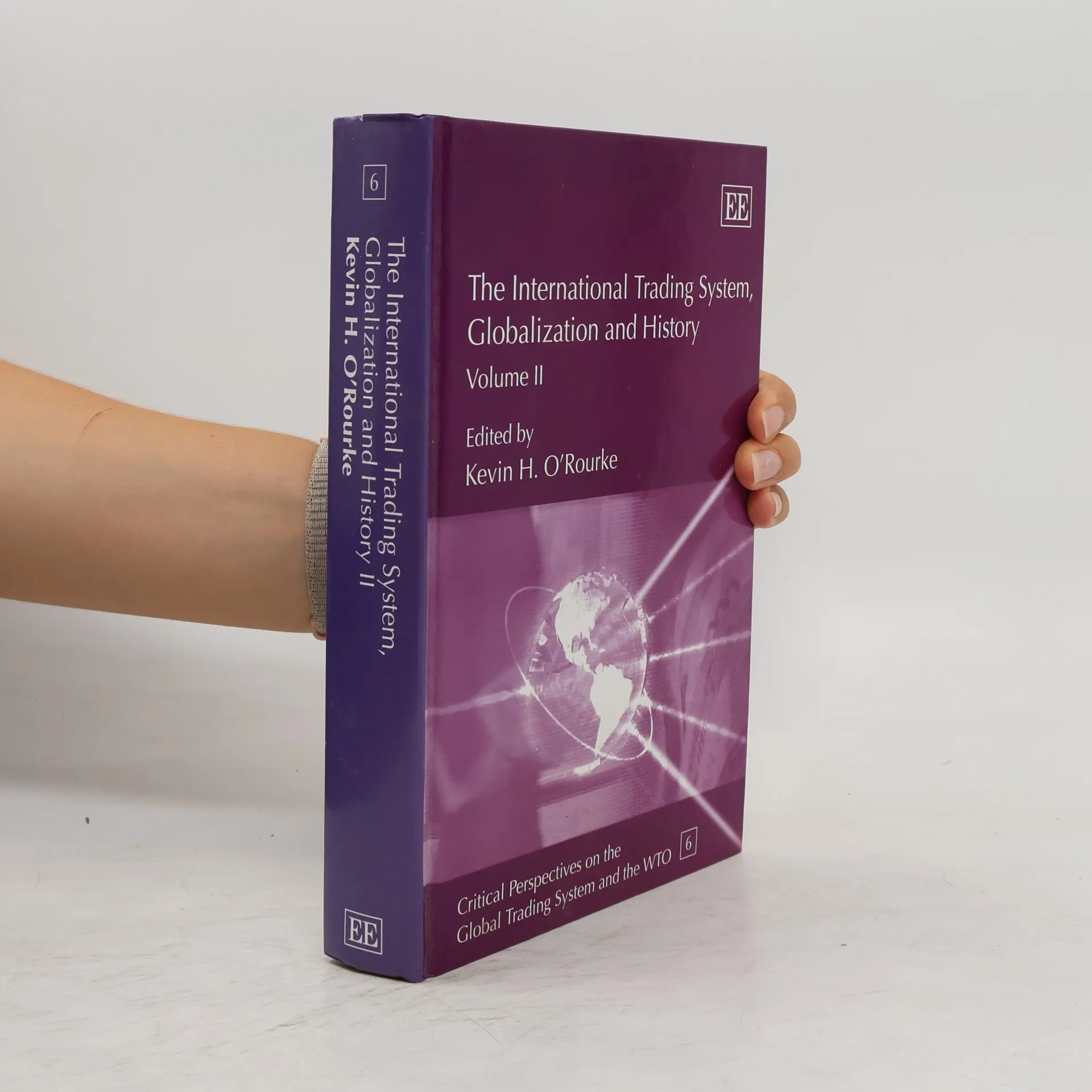
The International Trading System, Globalization and History
- 960 pages
- 34 hours of reading
The establishment of a multilateral international trading regime is one of the great achievements of post-1945 international diplomacy. The focus of this collection is the history of the international trading system over the past two centuries. Volume I includes an overview of the subject area as well as sections considering the effects of war and peace, the late nineteenth-century backlash, and contemporary views of interwar disintegration. Volume II looks at the issues of hegemony, non-discrimination and reciprocity. It also covers customs unions, preferential trading agreements, trade wars and trade rivalry. This comprehensive two-volume set will be an invaluable source of reference on the origins of globalization.