


This is a fitting centenary celebration of the Sierra Club, founded in 1892 by 27 Californians whose interest lay in wilderness recreation and the protection of the state's mountains. Today the club has 650,000 members concerned about environmental matters worldwide. Tom Turner of the club's legal defense fund gives a lively history of the organization and its ongoing struggle to preserve America's natural heritage. He recalls John Muir, David Brower, the Wilderness Act of 1964, and confrontations with James Watt and the Reagan Administration. The text is accompanied by works of major photographers, such as Ansel Adams, Eliot Porter, Galen Rowell, and Kathleen Norris Cook. ISBN 0-8109-3820-0: $49.50
Frederick Turner Books


In his stirring biography, Frederick Turner, the distinguished writer and cultural historian, captures the legendary scale of the life of an American icon. Immigrant, inventor, botanist, and founder of the conservation movement, John Muir (1838-1914) truly led those of his time-and now ours-to rediscover the natural beauty of this land. From his harsh childhood in Scotland and on a Wisconsin pioneer farm, to his rugged, solitary explorations all over America and especially in the Sierras, to his passionate battle, in person and in his writings, to save and celebrate our wilderness, Muir was a heroic figure. Turner's biography is every bit as monumental and inspiring as its subject.
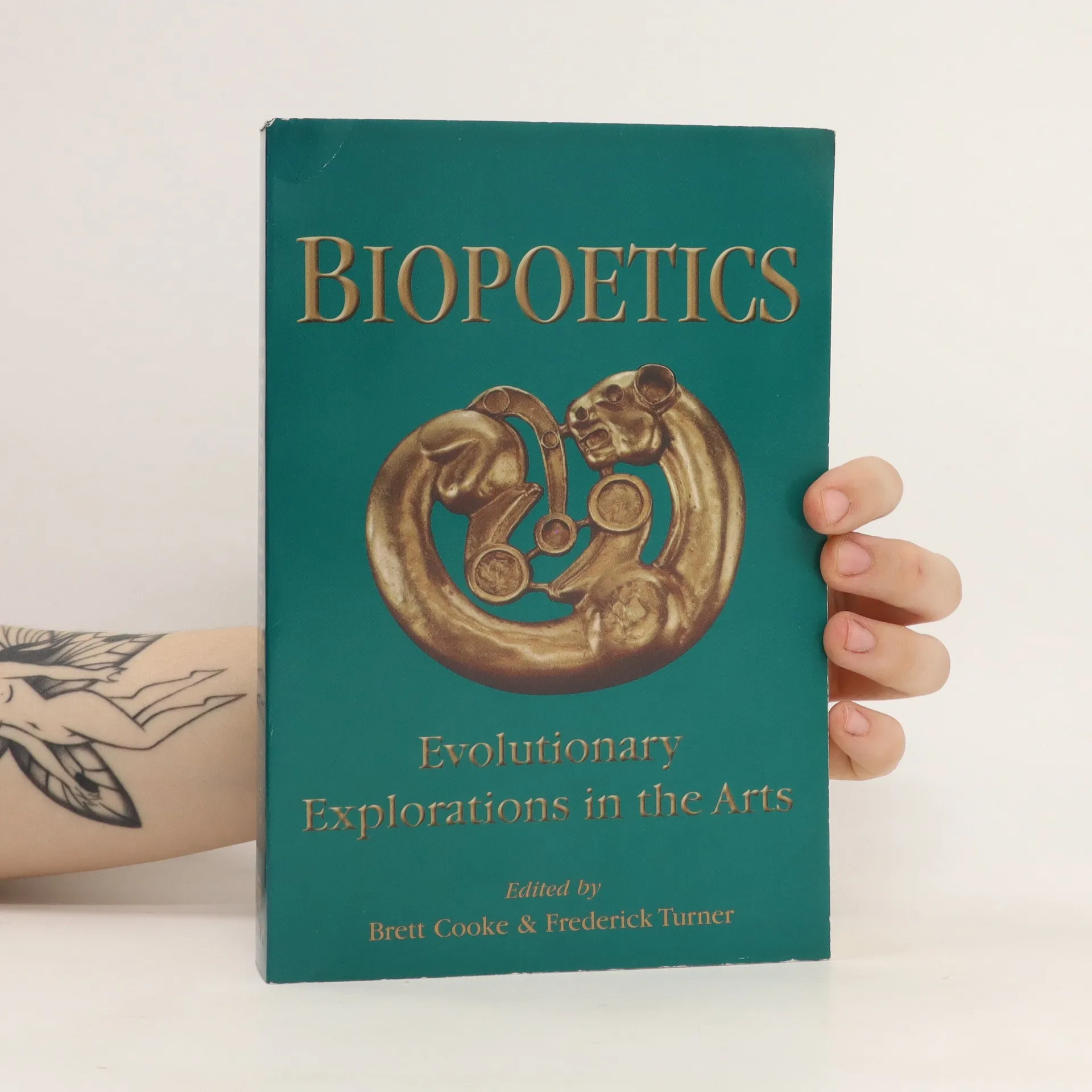
Biopoetics : evolutionary explorations in the arts
- 466 pages
- 17 hours of reading
Hadean Eclogues
- 112 pages
- 4 hours of reading
Exploring the intersection of poetry and science, Frederick Turner presents a vision of a new poetic form that respects the beliefs and intellect of both believers and skeptics. Through Hadean Eclogues, he challenges conventional boundaries by proposing that poetry can authentically reflect reality while honoring the rich tapestry of history, myth, and ritual. Turner's work invites readers to engage deeply with the complexities of existence, bridging the gap between artistic expression and scientific understanding.
Through the lenses of Shotokan Karate and biomedicine, sensei and biomedical scientist Alex W. Tong shows readers how body, mind, and spirit can be developed through martial arts practice. Through the practice of martial arts, a person can realize their full potential--not only in body, but in mind and spirit. The Science and Philosophy of Martial Arts shows readers how. Author, sensei, and biomedical scientist Alex W. Tong delves into the physical, mental, and spiritual components of martial arts and integrates contemporary sports psychology, kinesiology, and neuroscience into a nuanced and illuminating understanding of what martial arts practice can be. Structured into three sections, Tong discusses: The Mind: The dao of martial arts, mental tranquility, contemporary neuroscience, and warming up the brain The Body: Posture and stance, breathing in martial arts, and the physics of mastery and effort The Spirit: Soul, spirit, and moving zen; nature and manifestations of the spirit Each section includes observations on martial arts origins, physiology, and tangible results on martial arts training. Blending traditional and contemporary approaches, knowledge, and research, The Science and Philosophy of Martial Arts builds a vision of practice that elevates physical performance, awareness, decisiveness, and strength of spirit.
Rutgers professor Tiger explores the human trait of believing in hope and improvement.