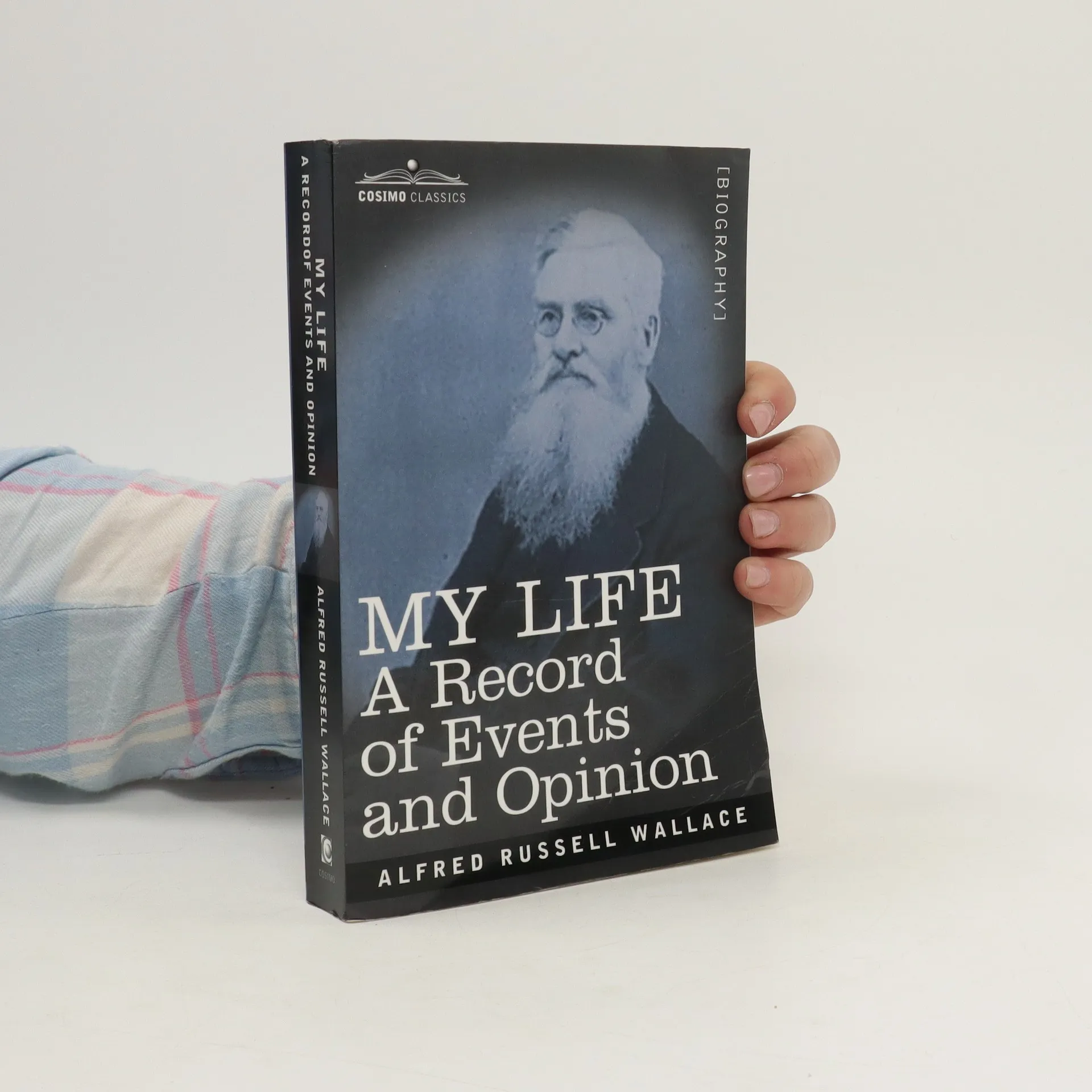
"Author of the curious The Wonderful Century, British biologist and explorer ALFRED RUSSEL WALLACE (18231913) here brings to readers a review of his own life. Discover: the studies that led him on exotic exploits, like his journeys through the Amazon River basin and the Malay archipelago researching plant and animal species; the radical social views that brought him much infamy at home, such as his refusal to believe that evolution, theories of which he developed in parallel with Darwin, could account for human endeavors such as mathematics and art. Spiritualist, creative thinker, and adventurer, Wallace led a singular life detailed with humor and humility in this autobiography. History buffs and those who are interested in the major scientific figures of the 19th century will love getting to know this influential scientist."
Alfred Russell Wallace Books
This British naturalist and explorer is renowned for independently proposing the theory of natural selection, which prompted Charles Darwin to publish his own findings. Wallace's extensive fieldwork in the Amazon basin and the Malay Archipelago led to his identification of the Wallace Line, a biogeographical boundary, solidifying his status as the "father of biogeography." Beyond co-discovering natural selection, he contributed to evolutionary theory with concepts like warning coloration and the Wallace effect, proposing how natural selection fosters speciation. Wallace was also a visionary, advocating for spiritualism, critiquing social injustice, and serving as one of the first scientists to raise concerns about environmental impacts.