

Explore the latest books of this year!
Bookbot

Clare Carlisle

    Kierkegaard's Philosophy of Becoming: Movements and Positions
    On Habit
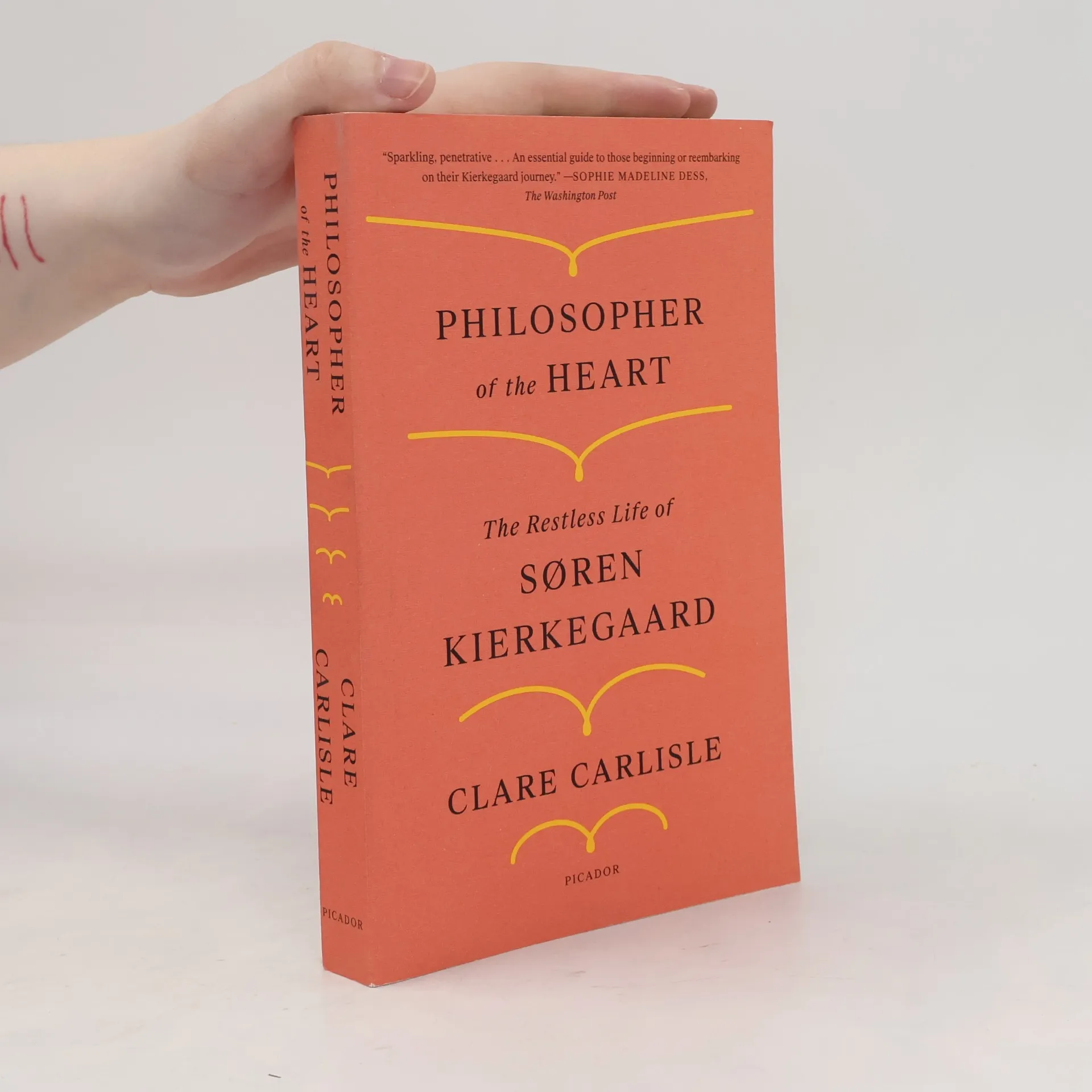
    Philosopher of the heart : the restless life of Søren Kierkegaard
    The Marriage Question
    The Marriage Question: George Eliot´s Double Life
    Spinoza's Religion
    • Spinoza's Religion

      • 288 pages
      • 11 hours of reading
      4.6(62)Add rating

      "Spinoza is widely regarded as either a God-forsaking atheist or a God-intoxicated pantheist, but Clare Carlisle says that he was neither. In Spinoza's Religion, she sets out a bold interpretation of Spinoza through a lucid new reading of his masterpiece, the Ethics. Putting the question of religion centre-stage but refusing to convert Spinozism to Christianity, Carlisle reveals that "being in God" unites Spinoza's metaphysics and ethics. Spinoza's Religion unfolds a powerful, inclusive philosophical vision for the modern age--one that is grounded in a profound questioning of how to live a joyful, fully human life. Like Spinoza himself, the Ethics doesn't fit into any ready-made religious category. But Carlisle shows how it wrestles with the question of religion in strikingly original ways, responding both critically and constructively to the diverse, broadly Christian context in which Spinoza lived and worked. Philosophy itself, as Spinoza practiced it, became a spiritual endeavor that expressed his devotion to a truthful, virtuous way of life. Offering startling new insights into Spinoza's famously enigmatic ideas about eternal life and the intellectual love of God, Carlisle uncovers a Spinozist religion that integrates self-knowledge, desire, practice, and embodied ethical life to reach toward our 'highest happiness'--to rest in God. Seen through Carlisle's eyes, the Ethics prompts us to rethink not only Spinoza but also religion itself."-- Provided by publisher

      Spinoza's Religion
    • A Times, Telegraph, TLS and Prospect Book of the Year 'The best book I've read on George Eliot' John Carey, Sunday TimesAn exceptional new biography that shows how George Eliot wrestled with the question of marriage, in art and lifeWhen she was in her mid-thirties, Marian Evans transformed herself into George Eliot - an author celebrated for her genius as soon as she published her debut novel. During those years she also found her life partner, George Lewes - writer, philosopher and married father of three. After 'eloping' to Berlin in 1854 they lived together for twenty-four years: Eliot asked people to call her 'Mrs Lewes' and dedicated each novel to her 'Husband'. Though they could not legally marry, she felt herself initiated into the 'great experience' of marriage - 'this double life, which helps me to feel and think with double strength'. The relationship scandalized her contemporaries yet she grew immeasurably within it. Living at once inside and outside marriage, Eliot could experience this form of life - so familiar yet also so perplexing - from both sides.In The Marriage Question Clare Carlisle reveals Eliot to be not only a great artist but a brilliant philosopher who probes the tensions and complexities of a shared life. Through the immense ambition and dark marriage plots of her novels we see Eliot wrestling - in art and in life - with themes of desire and sacrifice, motherhood and creativity, trust and disillusion, destiny and chance. Reading them afresh, Carlisle's searching new biography explores how marriage questions grow and change, and joins Eliot in her struggle to marry thought and feeling.

      The Marriage Question: George Eliot´s Double Life
    • When she was in her mid-thirties, Marian Evans transformed herself into George Eliot - an author celebrated for her genius as soon as she published her debut novel. During those years she also found her life partner, George Lewes - writer, philosopher and married father of three. After 'eloping' to Berlin in 1854 they lived together for twenty-four years- Eliot asked people to call her 'Mrs Lewes' and dedicated each novel to her 'Husband'. Though they could not legally marry, she felt herself initiated into the 'great experience' of marriage - 'this double life, which helps me to feel and think with double strength'. The relationship scandalized her contemporaries yet she grew immeasurably within it. Living at once inside and outside marriage, Eliot could experience this form of life - so familiar yet also so perplexing - from both sides. In The Marriage Question Clare Carlisle reveals Eliot to be not only a great artist but a brilliant philosopher who probes the tensions and complexities of a shared life. Through the immense ambition and dark marriage plots of her novels we see Eliot wrestling - in art and in life - with themes of desire and sacrifice, motherhood and creativity, trust and disillusion, destiny and chance. Reading them afresh, Carlisle's searching new biography explores how marriage questions grow and change, and joins Eliot in her struggle to marry thought and feeling.

      The Marriage Question
    • Soren Kierkegaard, one of the most passionate and challenging of modern philosophers, is now celebrated as the father of existentialism - yet his contemporaries described him as a philosopher of the heart. Over about a decade in the 1840s and 1850s, writings poured from his pen analysing love and suffering, courage and anxiety, religious longing and defiance, and forging a new philosophical style rooted in the inward drama of being human. As Christianity seemed to sleepwalk through a changing world, Kierkegaard dazzlingly revealed its spiritual power while exposing the poverty of official religion. His restless creativity was spurred on by his own failures: his relationship with the young woman whom he promised to marry, then left to devote himself to writing, haunted him throughout his life. Though tormented by the pressures of celebrity, he deliberately lived amidst the crowds in Copenhagen, known by everyone but, he felt, understood by no one. When he collapsed exhausted at the age of 42, he was still pursuing the question of existence: how to be a human being in this world?

      Philosopher of the heart : the restless life of Søren Kierkegaard
    • On Habit

      • 168 pages
      • 6 hours of reading
      3.9(19)Add rating

      Exploring the nature of habit, the book delves into whether habits constrain creativity or provide freedom. It questions the role of habitual practices in religious faith and philosophical inquiry. Through the lens of notable thinkers like Luther, Spinoza, Kant, Kierkegaard, and Bergson, the author critiques the implications of habit on human thought and behavior, prompting readers to reconsider the balance between routine and creativity in their lives.

      On Habit
    • Kierkegaard's concept of "repetition" marks a pivotal shift in existentialist thought, emphasizing individual life's dynamic nature over static knowledge. Clare Carlisle delves into the theme of movement in Kierkegaard's 1843 works, including Either/Or, Repetition, and Fear and Trembling, offering a fresh interpretation of his religious and philosophical insights. She addresses Kierkegaard's critique of stagnation in Hegelian philosophy and his quest for authentic existence, examining how personal journeys and transformations contribute to self-identity and truth.

      Kierkegaard's Philosophy of Becoming: Movements and Positions