

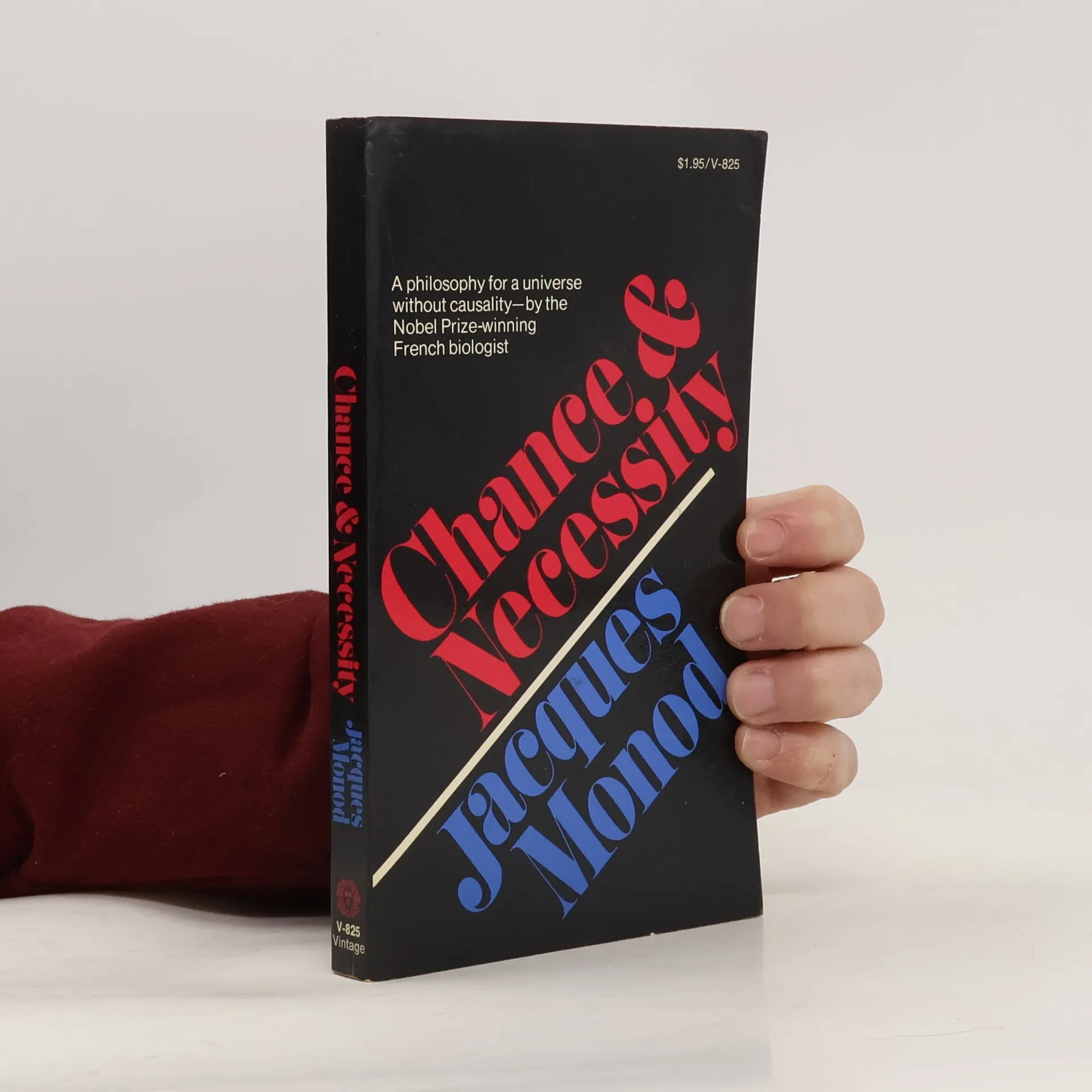
This radical work by Nobel laureate Monod represents a significant intellectual milestone. It serves as a philosophical statement aimed at dismantling the animist view of humanity that has influenced Western thought from primitive cultures to dialectical materialism. Monod's argument is grounded in modern biology, which demonstrates that humans are the result of chance genetic mutations. Employing the rigorous logic of a scientist, he utilizes contemporary understanding of genetic structure to propose a new perspective on human existence. He asserts that objective scientific knowledge, regarded as the only reliable form of understanding, refutes the notions of destiny or evolutionary purpose found in traditional philosophies. Monod believes that the persistence of these ideas contributes to the growing schizophrenia of a world that embraces scientific advancements while ignoring their moral consequences. He critiques figures such as Plato, Hegel, Bergson, Teilhard de Chardin, Spencer, and Marx as "animist" thinkers and advocates for a new ethic that differentiates between objective knowledge and values. This ethic of knowledge, he argues, may help alleviate our profound spiritual malaise and avert the impending darkness he foresees.
Austryn Wainhouse Books
Austryn Wainhouse was an American author, publisher, and translator, particularly of French works. He is best known for his English translations of the Marquis de Sade. His work offers a unique lens into French literature and thought.
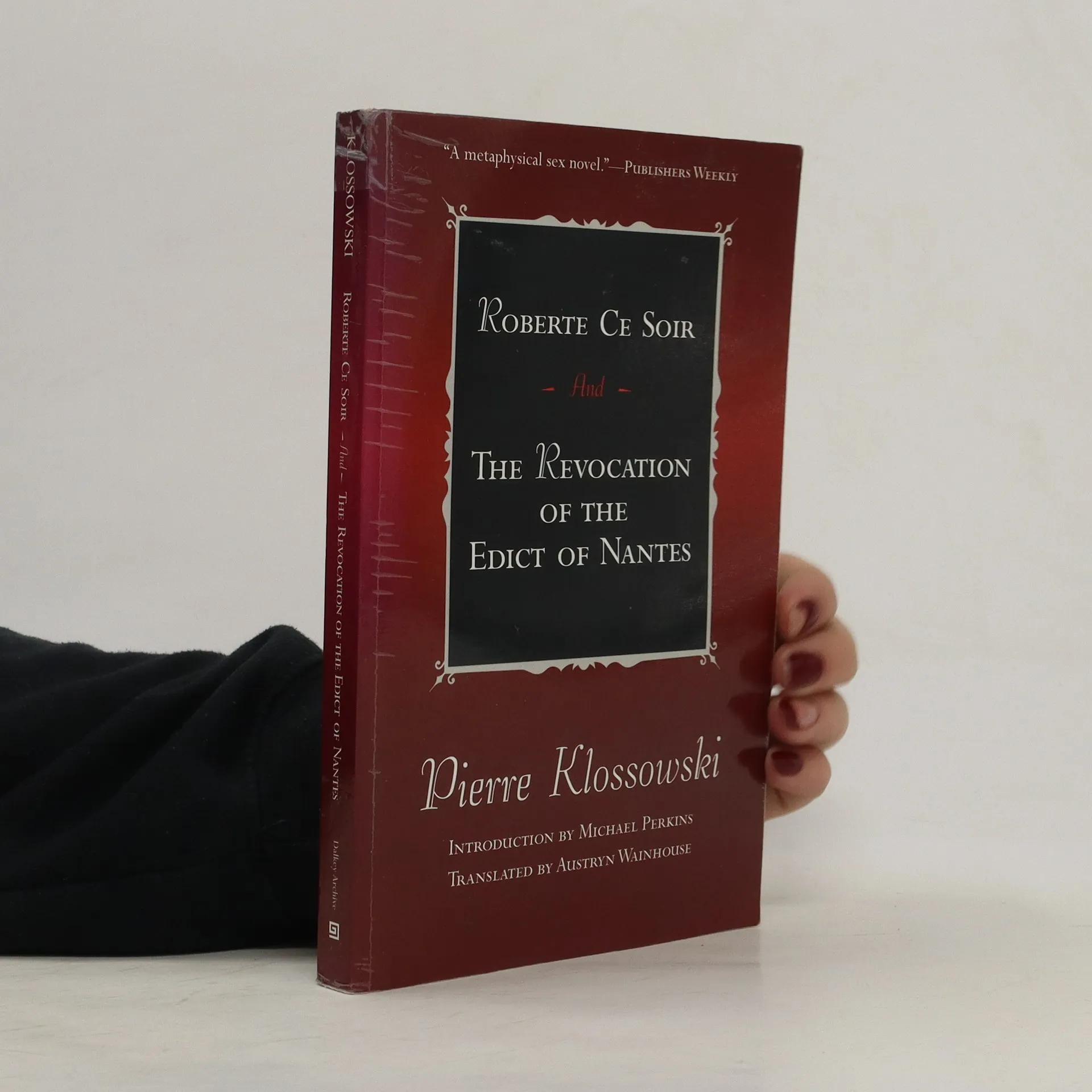
Together these two novels comprise the most fascinating, obsessive, and erotic works of contemporary French fiction. Like the works of Georges Bataille, and those of the Marquis de Sade before him, Klossowski's fiction explores the connections between the mind and the body through a lens of sexuality. Both of these novels feature Octave, an elderly cleric; his striking young wife Roberte; and their nephew, Antoine in a series of sexual situations. But Klossowski's books are about theology as well, and this merging of the sexual with the religious makes this book one of the most painstakingly baroque and intellectual novels of our time.
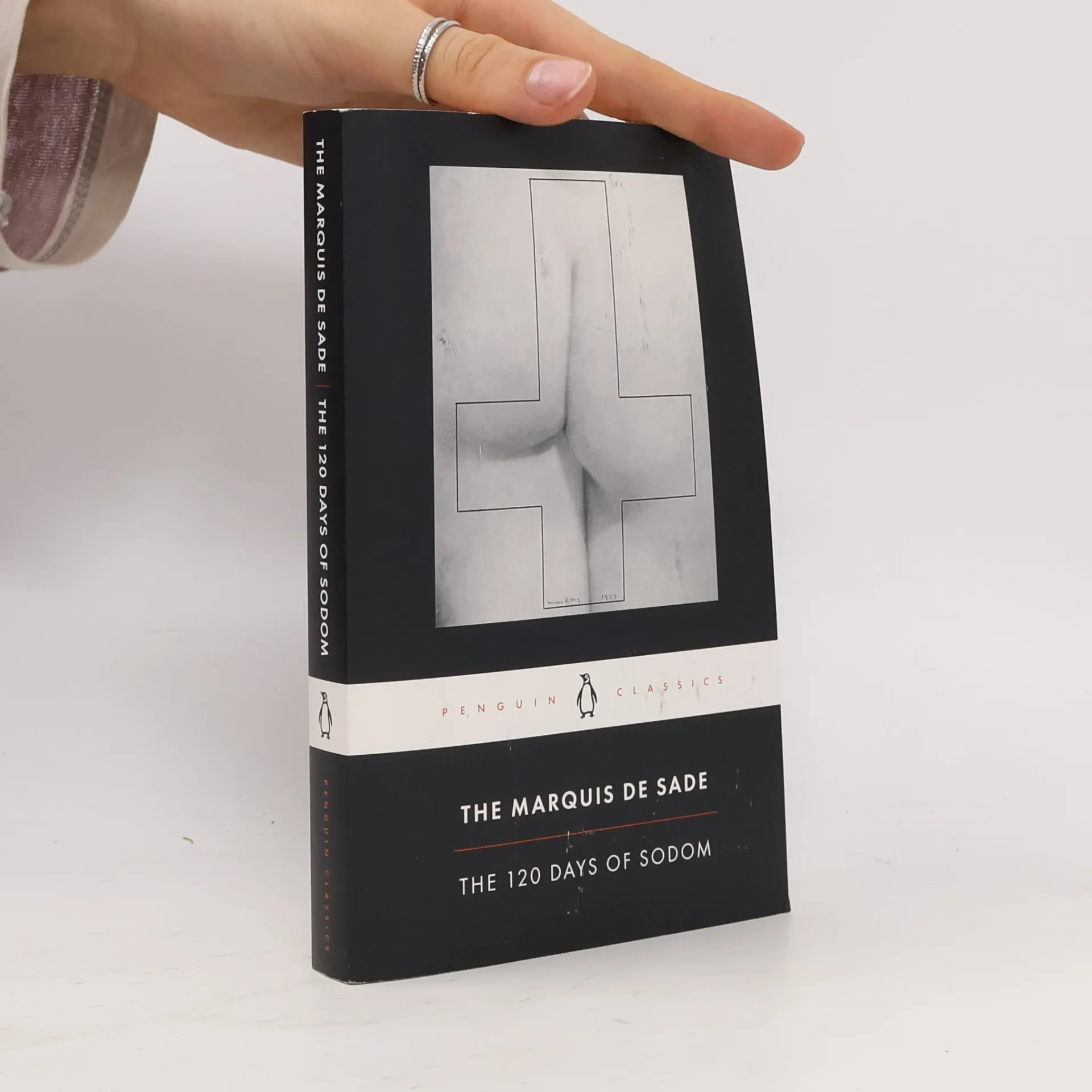
The 120 Days of Sodom
- 464 pages
- 17 hours of reading
A new translation of Sade’s most notorious, shocking, and influential novel. Winner of the 2017 Scott Moncrieff Prize This distressing but hugely important text has influenced countless individuals throughout history: Flaubert and Baudelaire both read Sade; the surrealists were obsessed with him; film-makers like Pasolini saw parallels with twentieth-century history in his writings; and feminists such as Andrea Dworkin and Angela Carter clashed over him. This new translation brings Sade's provocative novel into Penguin Classics for the first time, and will reignite the debate around this most controversial of writers. For more than seventy years, Penguin has been the leading publisher of classic literature in the English-speaking world. With more than 1,700 titles, Penguin Classics represents a global bookshelf of the best works throughout history and across genres and disciplines. Readers trust the series to provide authoritative texts enhanced by introductions and notes by distinguished scholars and contemporary authors, as well as up-to-date translations by award-winning translators.
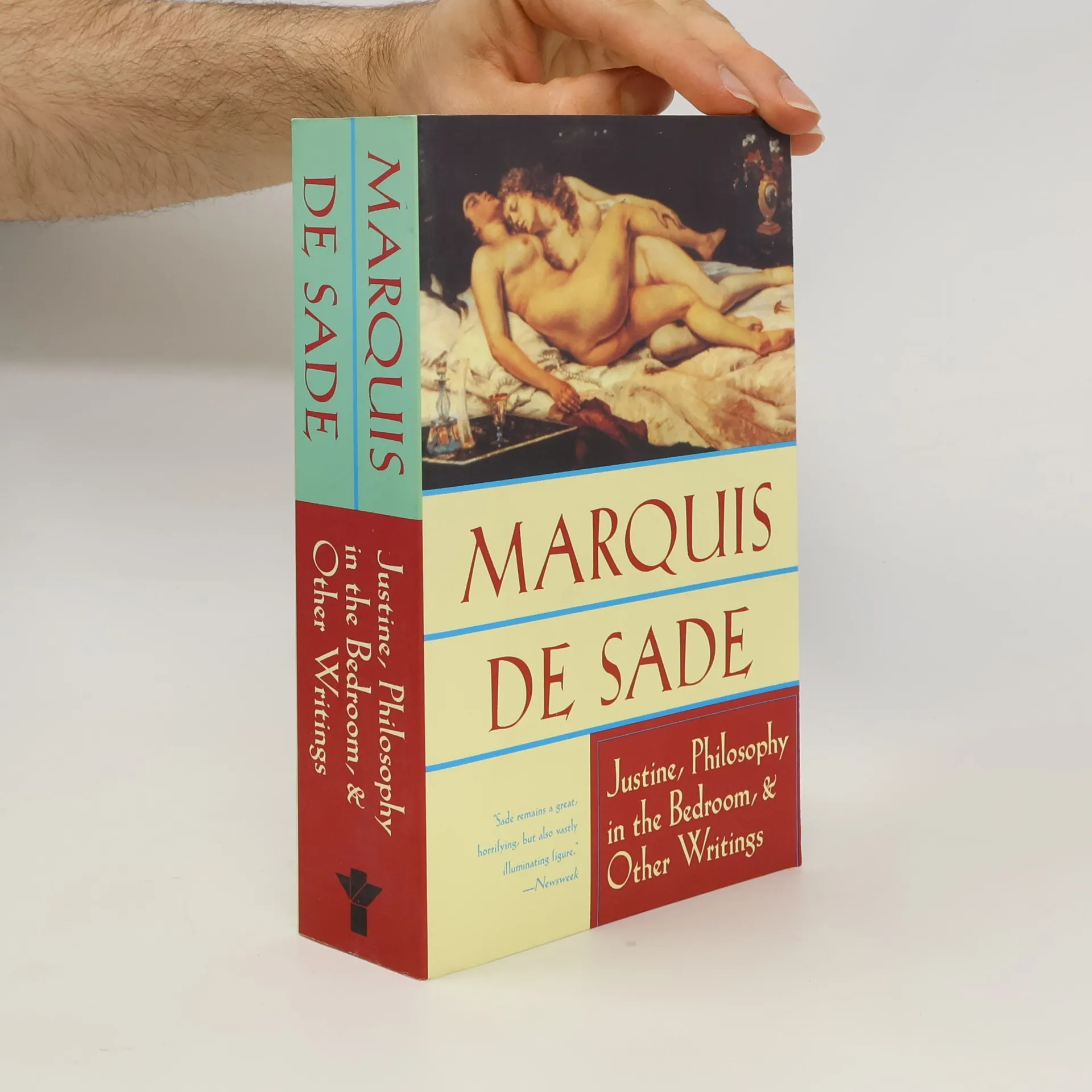
Justine, Philosophy in the Bedroom, and Other Writings
- 784 pages
- 28 hours of reading
No other writer has so scandalized proper society as the Marquis de Sade, but despite the deliberate destruction of over three-quarters of his work, Sade remains a major figure in the history of ideas. His influence on some of the greatest minds of the last century—from Baudelaire and Swinburne to Nietzsche, Dostoyevsky and Kafka—is indisputable. This volume contains Philosophy in the Bedroom, a major novel that presents the clearest summation of his political philosophy; Eugénie de Franval, a novella widely considered to be a masterpiece of eighteenth-century French literature; and the only authentic and complete American edition of his most famous work, Justine. This literary portrait of Sade is completed by one of his earliest philosophical efforts, Dialogue between a Priest and a Dying Man, a selection of his letters, a fifty-page chronology of his life, two important essays on Sade, and a bibliography of his work.