Benjamin Labatut delves into the compelling and often unsettling realms of science and human understanding in his writing. His works explore the dark and uncharted territories of scientific discovery, where genius meets madness and the boundaries of reality blur. Labatut possesses a distinctive style that blends factual accounts with an evocative, almost horror-like atmosphere, drawing readers into captivating narratives about the pursuit of knowledge. His writing offers a bold reflection on the nature of discovery and its profound implications for humanity.
In seinem neuen Roman "MANIAC" stellt Bestsellerautor Benjamín Labatut die Fragen zur zukünftigen Rolle der KI in unserer Gesellschaft. Er verknüpft das Schicksal von John von Neumann, einem Pionier der KI, mit Paul Ehrenfest, einem Physiker, und thematisiert den Wettkampf zwischen Mensch und Maschine im Go-Spiel.
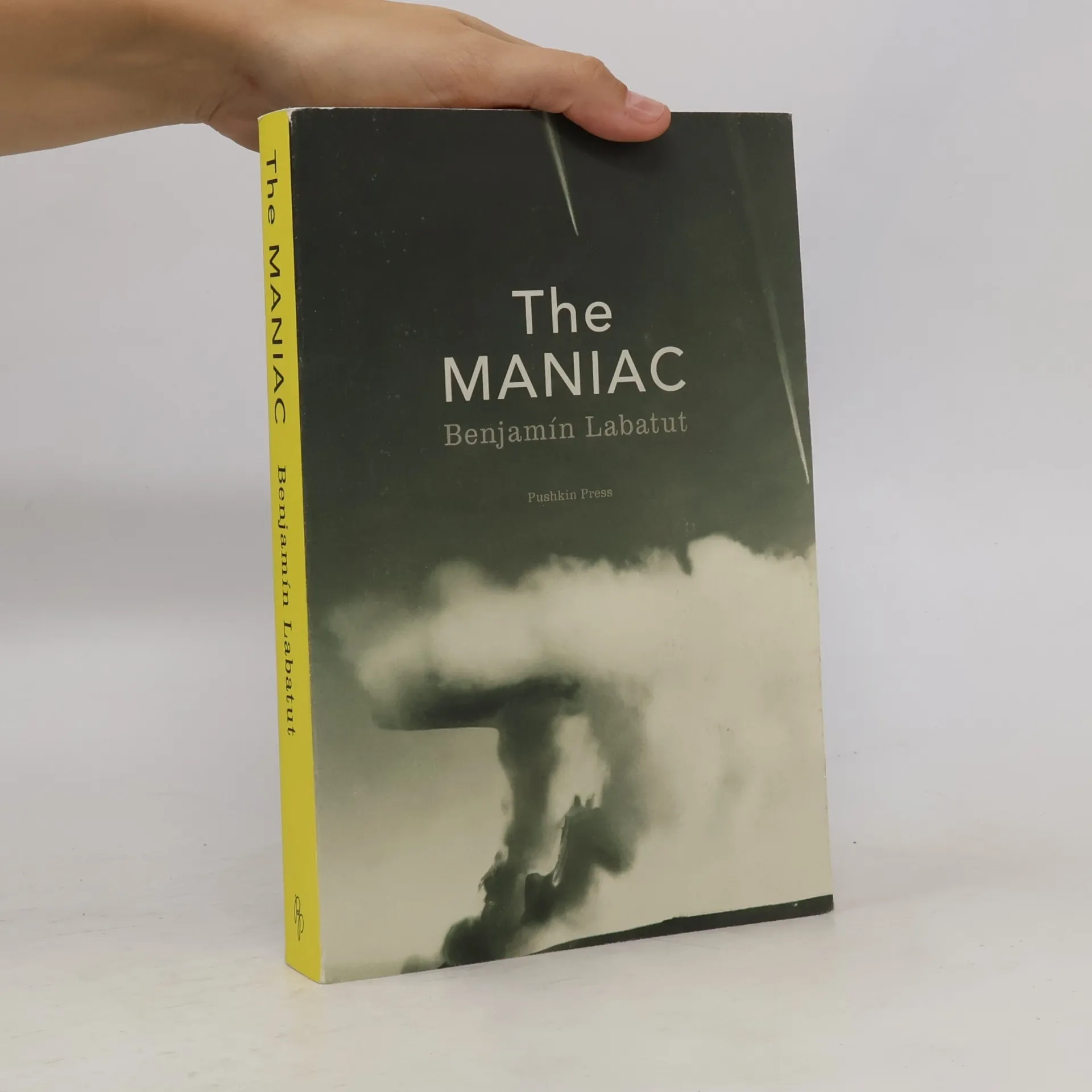
From one of contemporary literature’s most exciting new voices comes a haunting story centered on the Hungarian polymath John von Neumann, exploring the profound impact of his legacy on the dreams and nightmares of the twentieth century and the emerging age of AI. Benjamín Labatut’s electrifying narrative captivates readers, following the lives of mathematicians and physicists who ventured into strange, often perilous realms of science. In this ambitious work, Labatut presents von Neumann, a prodigious talent whose brilliance instilled both awe and fear, as he revolutionized various fields—inventing game theory, the first programmable computer, and pioneering AI and digital life. Through a chorus of voices—family, friends, colleagues, and rivals—Labatut illustrates the evolution of von Neumann's unmatched intellect and the far-reaching consequences of his work.
The narrative unfolds as a literary triptych, beginning with Paul Ehrenfest, an Austrian physicist and friend of Einstein, who succumbed to despair over the tyrannical forces of science and technology. It culminates a century later in the historic match between South Korean Go Master Lee Sedol and the AI program AlphaGo, embodying the essence of von Neumann's unfinished project: creating a self-reproducing machine capable of evolving beyond human understanding. This work confronts us with the deepest questions we face as a species, blending beauty with a powerful momen
When We Cease to Understand the World shows us great minds striking out into dangerous, uncharted terrain. Fritz Haber, Alexander Grothendieck, Werner Heisenberg, Erwin Schrödinger: these are among the luminaries into whose troubled minds we are thrust as they grapple with the most profound questions of existence. They have strokes of unparalleled genius, they alienate friends and lovers, they descend into isolated states of madness. Some of their discoveries revolutionise our world for the better; others pave the way to chaos and unimaginable suffering. The lines are never clear. With breakneck pace and wondrous detail, Benjamín Labatut uses the imaginative resources of fiction to break open the stories of scientists and mathematicians who expanded our notions of the possible. -- From publisher's website