

This reprint of a classic work from 1857 offers readers a chance to explore the themes and ideas that shaped its time. The book retains the original text, providing an authentic glimpse into the historical context and cultural nuances of the era. It serves as a valuable resource for those interested in literature's evolution and the societal issues reflected in 19th-century writings.
George Chapman Book order (chronological)
January 1, 1559 – May 12, 1634
George Chapman was an English dramatist, translator, and poet whose work showcases the influence of Stoicism. As a classical scholar, he displayed a profound engagement with ancient heritage, evident in both his poetry and plays. His stylistic approach anticipated the Metaphysical Poets of the 17th century, while his translations of Homer's epics stand as monumental achievements in English translation. Chapman's legacy lies in his masterful handling of classical themes and his distinctive literary voice.

A translation of Homer's poem of war which is a magnificent testimony to the power of the Iliad. This volume retells the story of Achilles, the great warrior, and his terrible wrath before the walls of besieged Troy, and the destruction it wreaks on both Greeks and Trojans.
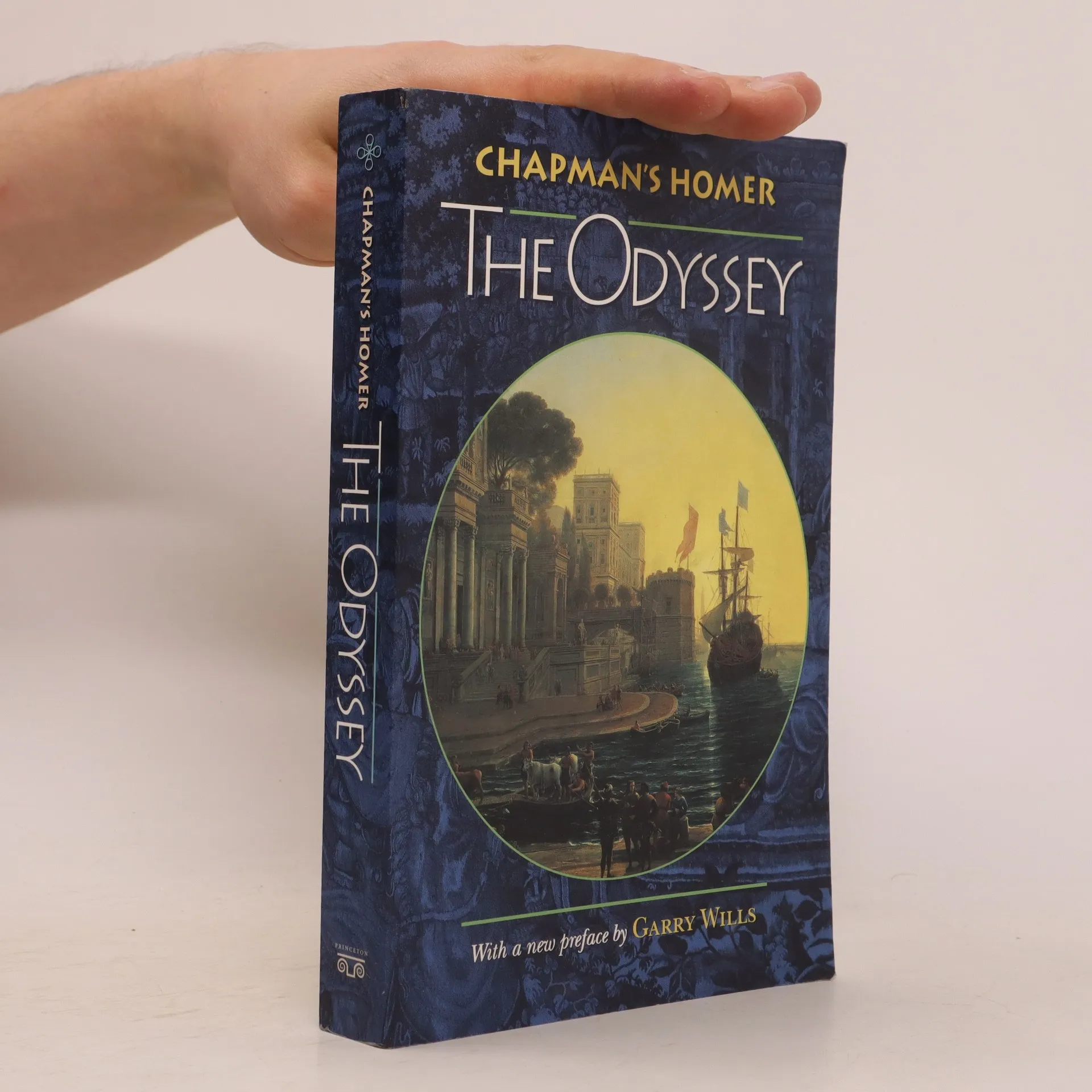
Chapman's Homer. The Odyssey
- 532 pages
- 19 hours of reading
George Chapman's translations of Homer are among the most famous in the English language. Keats immortalized the work of the Renaissance dramatist and poet in the sonnet "On First Looking into Chapman's Homer." Swinburne praised the translations for their "romantic and sometimes barbaric grandeur," their "freshness, strength, and inextinguishable fire." The great critic George Saintsbury (1845-1933) wrote: "For more than two centuries they were the resort of all who, unable to read Greek, wished to know what Greek was. Chapman is far nearer Homer than any modern translator in any modern language." This volume presents the original text of Chapman's translation of the Odyssey (1614-15), making only a small number of modifications to punctuation and wording where they might confuse the modern reader. The editor, Allardyce Nicoll, provides an introduction, textual notes, a glossary, and a commentary. Garry Wills's preface to the Odyssey explores how Chapman's less strained meter lets him achieve more delicate poetic effects as compared to the Iliad. Wills also examines Chapman's "fine touch" in translating "the warm and human sense of comedy" in the Odyssey. Oft of one wide expanse had I been told That deep-browed Homer ruled as his demesne; Yet did I never breathe its pure serene Till I heard Chapman speak out loud and bold. --John Keats
Operationen am Aetherleib
- 116 pages
- 5 hours of reading
Healing Hands
- 216 pages
- 8 hours of reading
This is an account of how the author, facing possible blindness, consulted the medium, George Chapman. Chapman was purported to be controlled by a famous consultant surgeon, Willliam Lang, who died in 1937. To Hutton's astonishment, he was cured, and Hutton decided to investigate further.