

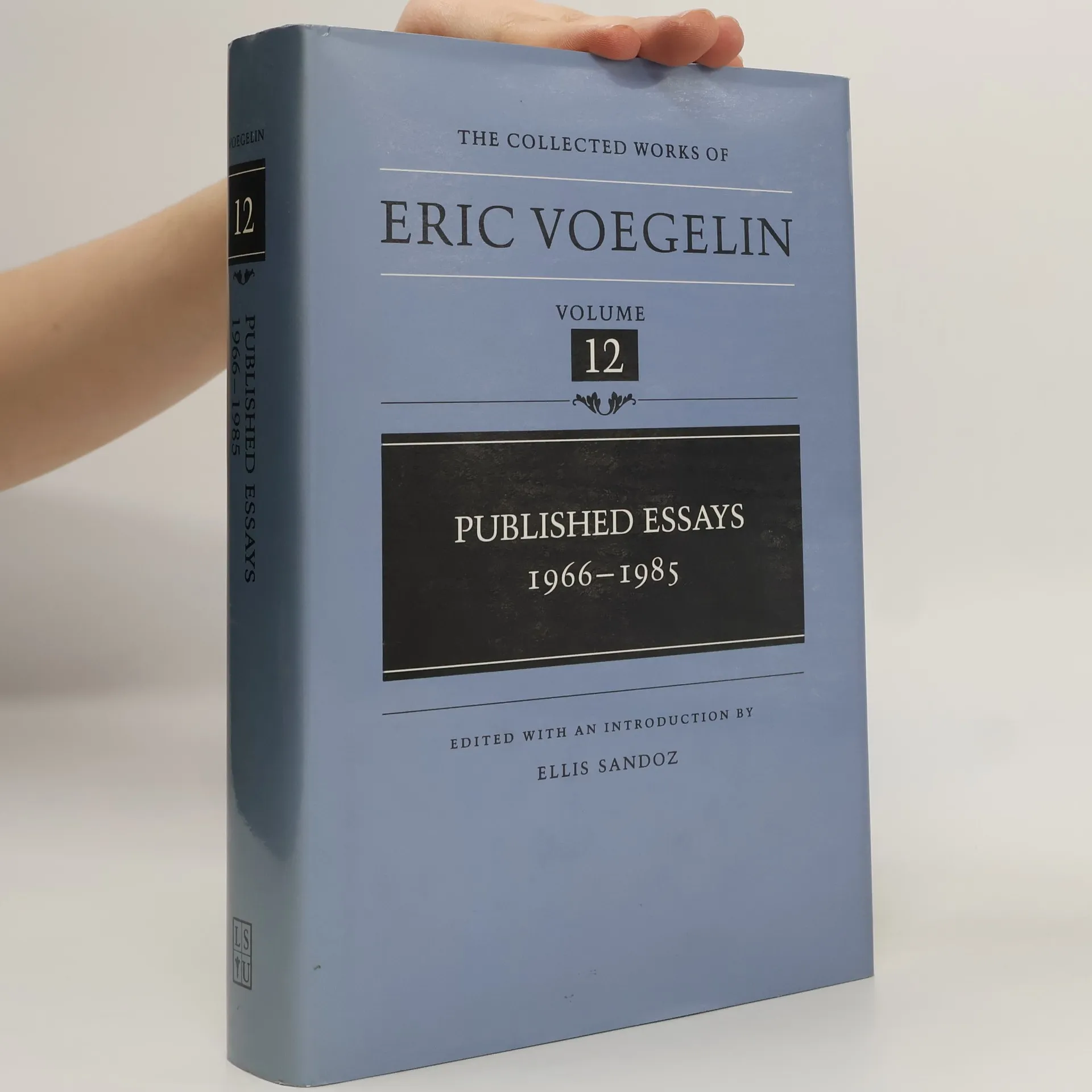
Published Essays, 1966-1985 includes some of the most trenchant and compelling of Eric Voegelin's work and is an indispensable companion to his
Ellis Sandoz Books
January 1, 1931 – January 1, 2023
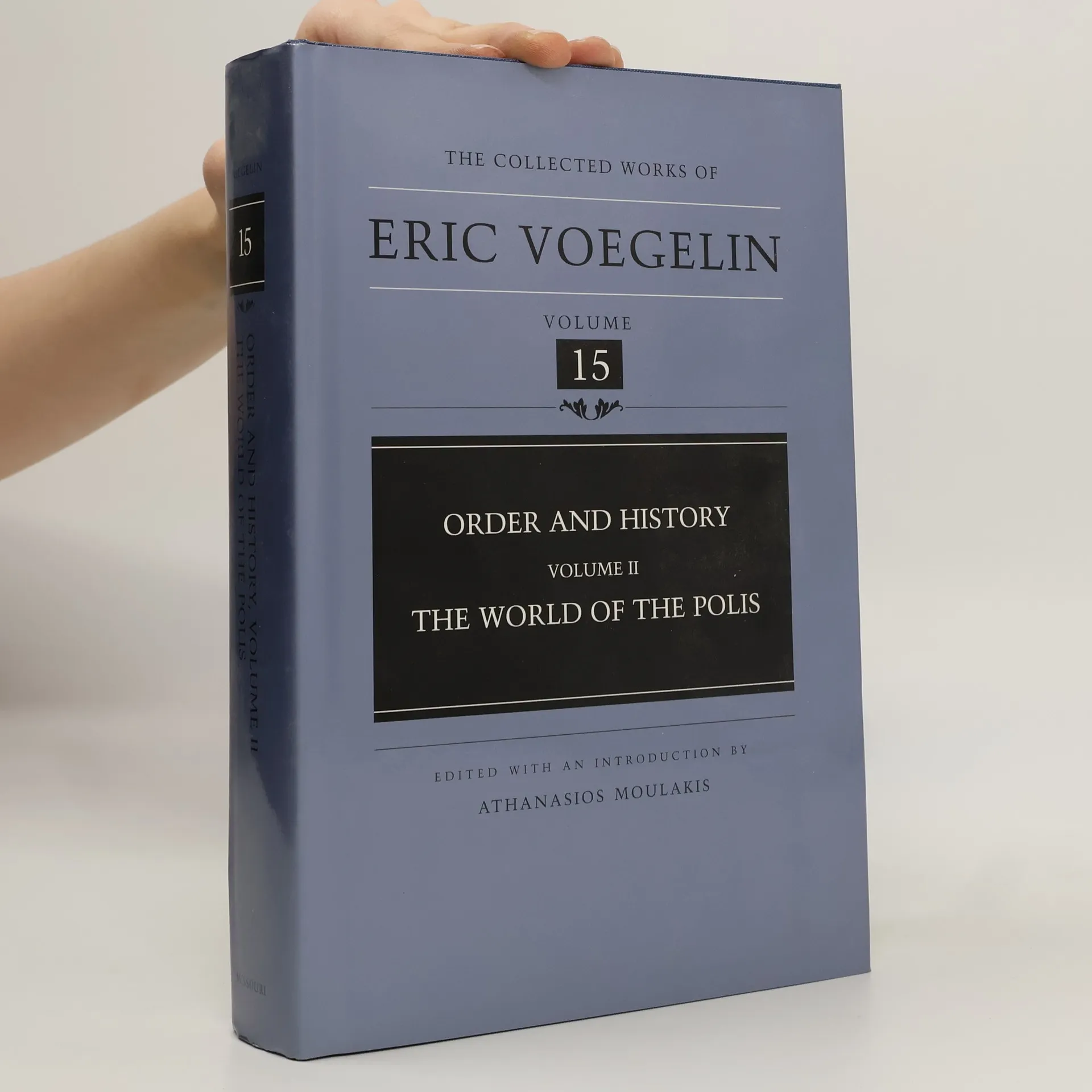
The Collected Works of Eric Voegelin - 15: Order and History
The World of the Polis
- 488 pages
- 18 hours of reading
Esta obra explora a antiga simbolização grega da realidade humana. Conduzindo os leitores desde as origens da cultura grega nas civilizações da Creta pré-homérica pela Ilíada e pela Odisséia, passando por Hesíodo e pelo surgimento da filosoia com os pré-socráticos Parmênides e Heráclito.
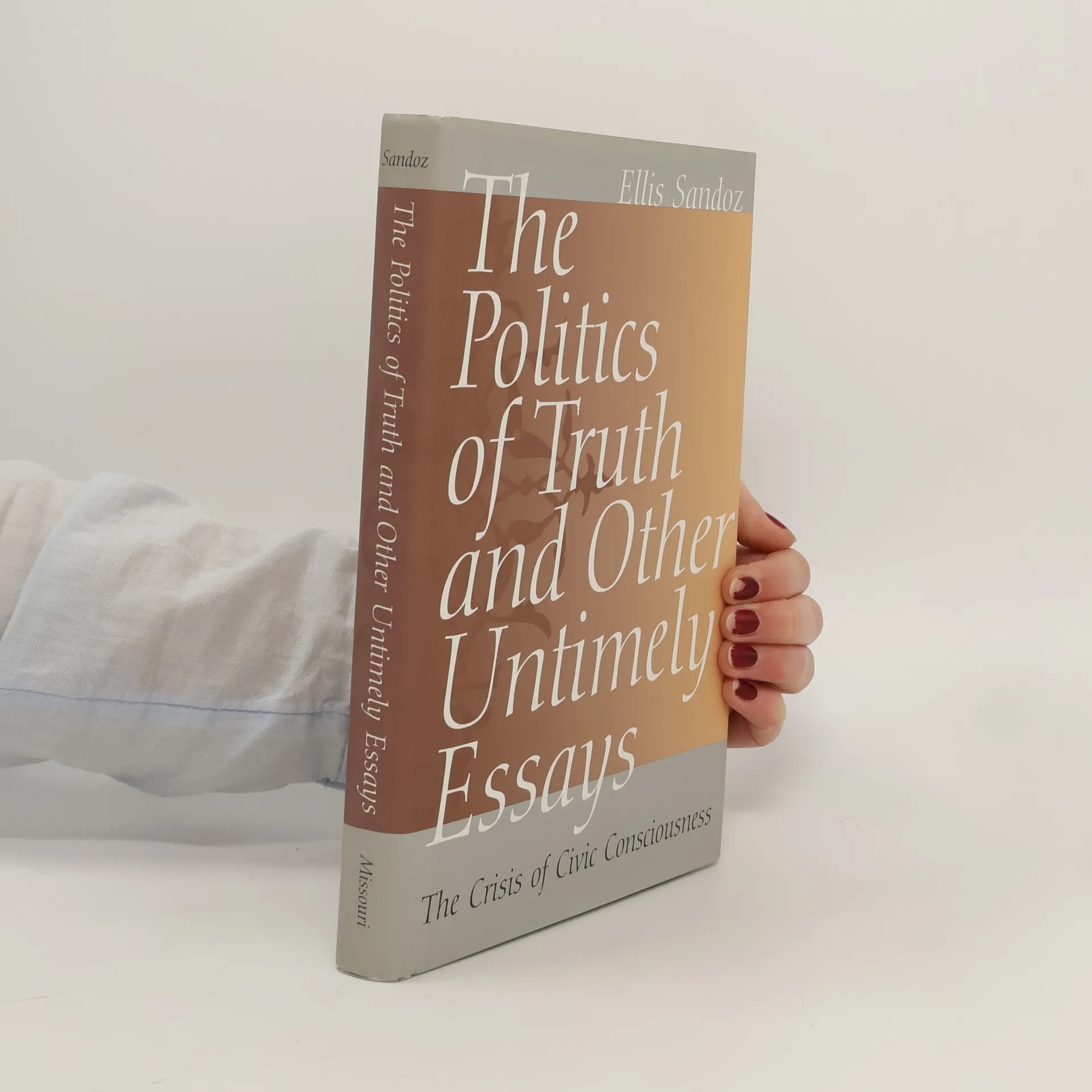
The Politics of Truth and Other Untimely Essays
The Crisis of Civic Consciousness
- 235 pages
- 9 hours of reading
This collection of studies delves into the historical and theoretical foundations of personal liberty and free government, analyzing the current crisis of civic consciousness threatening both. It addresses pressing issues in contemporary political philosophy and constitutional theory, particularly in light of the aspirations for liberty following the collapse of the Soviet empire and the subsequent challenges faced by free governments in America and other democracies. While each essay stands independently, they share a thematic unity centered on whether the fall of communism signifies a pivotal moment in world history. The essays examine the struggles of East Central European nations to achieve free government and personal liberty, identifying the preconditions necessary for liberty and focusing on the institutionalization terms established during the American founding. Key discussions revolve around American political thought, particularly the Declaration of Independence and the Constitution, highlighting the jurisprudential and common law influences on the American tradition and the role of religion in the political experiment. The author explores the alliance of philosophers, statesmen, and evangelists that fostered communities united by faith and mutual respect, which was crucial for establishing freedom under law. The ongoing tension between religion and natural law is acknowledged as a constant in the quest for freedom,
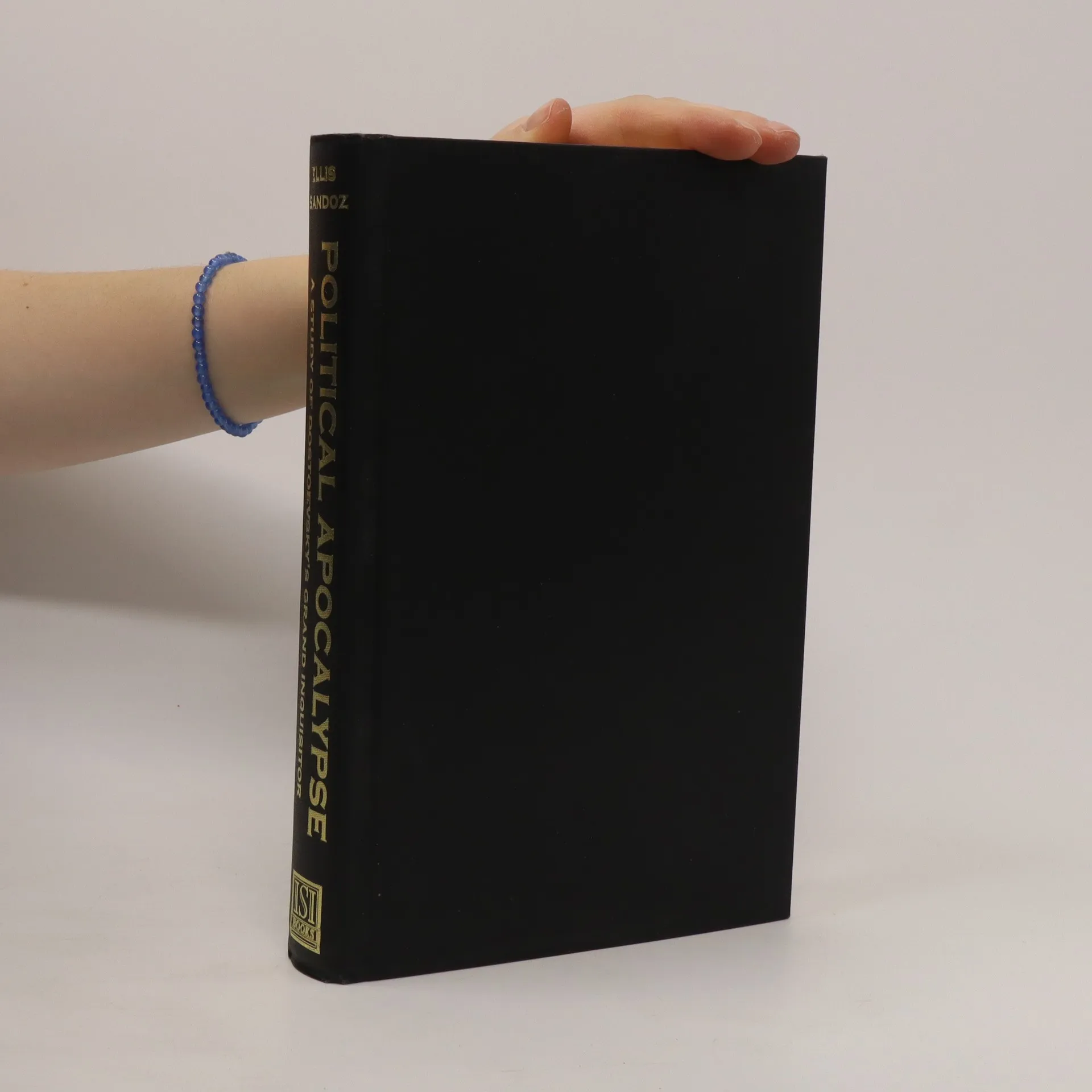
In this expertly crated book, Ellis Sandoz gives a thoughtful account of Dostoevsky’s “Legend of the Grand Inquisitor.” Sandoz pulls apart the Legend, giving it context and meaning in relation to The Brothers Karamazov, the novel in which the Legend appears, and to history. Sandoz’s keen sense for the author’s intent is seamlessly interwoven with Dostoevsky’s own correspondence and a comprehensive exploration of the political, theological, and philosophical atmosphere of pre-revolutionary Russia.Dostoevsky has often been regarded as a prophet for foretelling the rise of totalitarian socialism in Russia. In 1879, desperately concerned for the future of his country, Dostoevsky declared, “a second tower of Babel stands in the place of the high ideals created by Christ. The sublime Christian view of human nature sinks down to the view of an animal herd and, under the banner of social love, shows entirely unconcealed its contempt for mankind.” Atheism and the coercive ideals of materialist socialism had nearly captured the minds and hearts of his countrymen. Dostoevsky believed that the whole of Russia’s future lay, consequently, with the Orthodox Church. Without that model of Christian love, Russia would surely fall into the hands of a government that had little regard for the men it would rule.