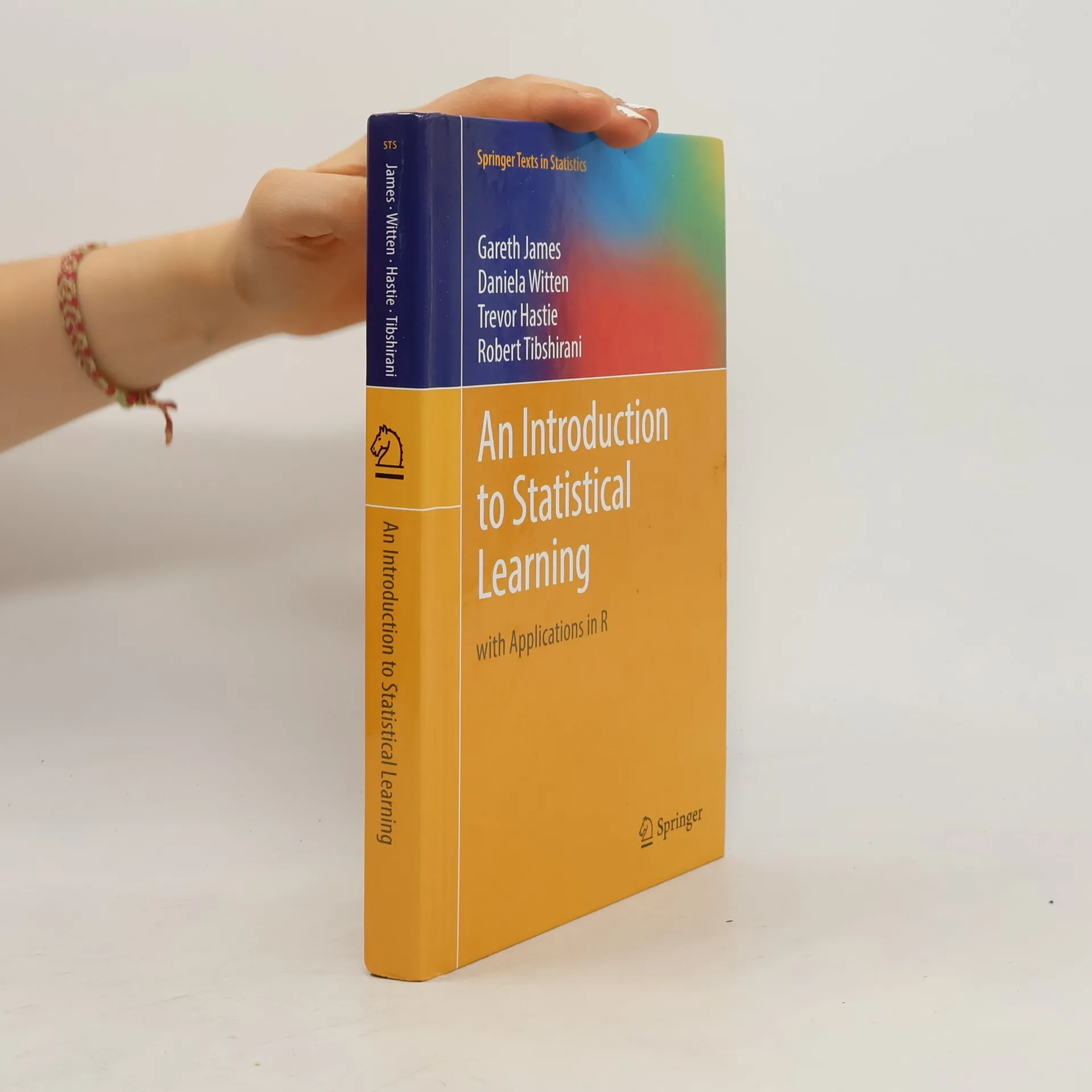
This book presents key modeling and prediction techniques, along with relevant applications. Topics include linear regression, classification, resampling methods, shrinkage approaches, tree-based methods, support vector machines, and clustering.
This book provides a comprehensive overview of statistical learning techniques, focusing on concepts and applications rather than theoretical complexities. It covers essential topics such as regression, classification, and resampling methods, making it accessible for beginners. Real-world examples and practical exercises enhance understanding, while the inclusion of R programming helps readers implement the methods discussed. Ideal for students and professionals alike, it serves as a valuable resource for those looking to deepen their knowledge in data analysis and machine learning.
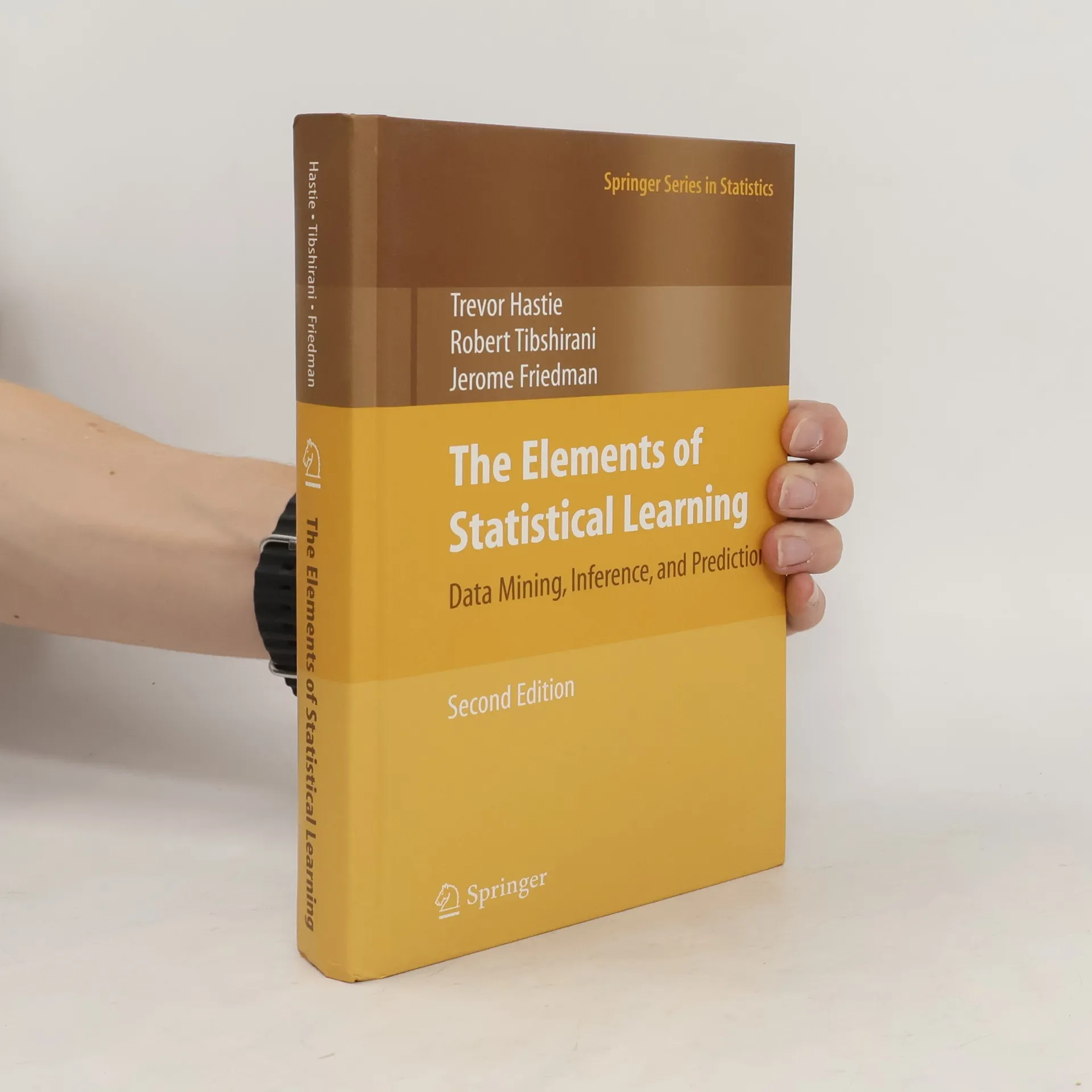
In the past decade, the surge in computation and information technology has generated vast amounts of data across various fields, including medicine, biology, finance, and marketing. This challenge has prompted the development of new statistical tools and the emergence of areas like data mining, machine learning, and bioinformatics. While these tools share common foundations, they often use different terminologies. This book presents key concepts in these domains within a unified framework, focusing on ideas rather than mathematical complexities. It includes numerous examples and colorful graphics, making it a valuable resource for statisticians and anyone interested in data mining in science or industry. The content covers a wide range of topics, from supervised to unsupervised learning, including neural networks, support vector machines, classification trees, and boosting. This new edition introduces several topics absent from the original, such as graphical models, random forests, ensemble methods, least angle regression, non-negative matrix factorization, and spectral clustering. Additionally, it addresses methods for "wide" data scenarios, including multiple testing and false discovery rates.
Focusing on the challenges posed by big data, this book explores how the sparsity assumption can help extract meaningful patterns from extensive datasets, even when the number of features exceeds observations. It delves into various techniques, including the lasso for linear regression, generalized penalties, and numerical optimization methods. Additionally, it covers statistical inference for lasso models, sparse multivariate analysis, graphical models, and compressed sensing, providing a comprehensive guide to modern data analysis techniques.