
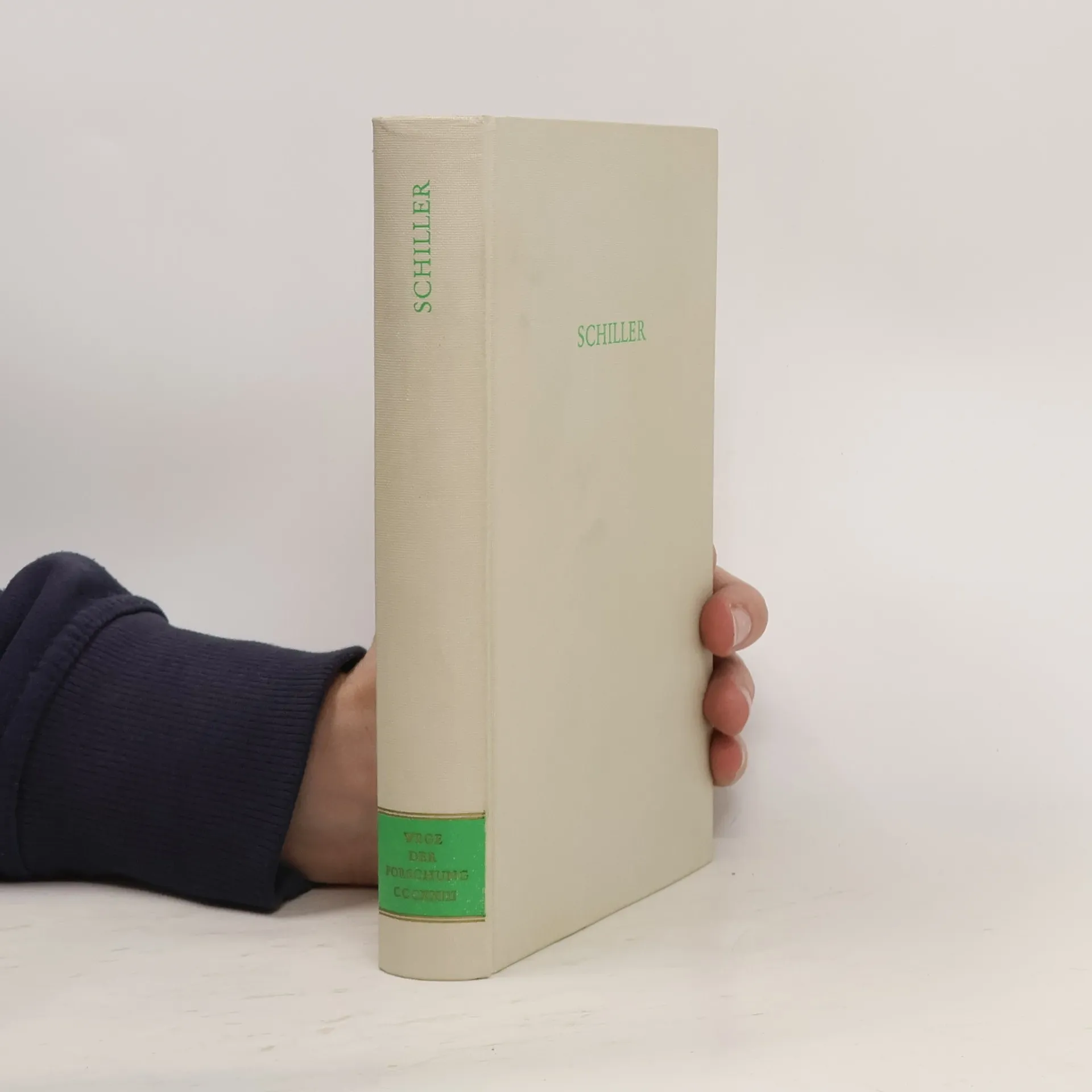




Können wir die Kultur überwinden, um wieder in den ursprünglichen Zustand natürlicher Ganzheitlichkeit zu gelangen? In seiner 1795 entstandenen dichtungstheoretischen Abhandlung untersucht Schiller diese Frage an zwei Dichtertypen: dem naiven und dem sentimentalischen Dichter. Während der eine die Natur, Ursprung und Ziel aller Poesie, noch nachahmend abbilden kann, bleibt dem modernen Dichter nur, sie in ihrer Fremdheit reflektierend zu idealisieren. Der Text folgt der Schiller Nationalausgabe, ein umfangreicher Anhang mit Anmerkungen, einer Darstellung der Entstehungsgeschichte, einem ausführlichen Kommentar zu den Hauptaspekten der Abhandlung und Literaturhinweisen liefert alle relevanten Informationen zum Verständnis.
Klaus L. Berghahn Book order (chronological)


On the Aesthetic Education of Man
- 96 pages
- 4 hours of reading
Friedrich Schiller's exploration of aesthetics in "On the Aesthetic Education of Man" is framed as a series of letters reflecting on the impact of art on society. Disillusioned by the violent turn of the French Revolution, Schiller critiques Kantian philosophy and examines the tension between human pleasure and rationality. He posits that a deeper understanding of aesthetics can harmonize these conflicting drives, ultimately enhancing moral character. This edition is crafted on premium acid-free paper, emphasizing its enduring value.
Responsibility and commitment
- 315 pages
- 12 hours of reading
With a few exceptions the essays in this volume are versions of papers presented at a conference on «Responsibility and Commitment: The Ethics of Cultural Mediation,» which occurred at the University of Wisconsin-Madison in March of 1995. Held in honor of Jost Hermand, whose sixty-fifth birthday we were celebrating, the conference brought together Jost's friends and students to discuss issues central to his intellectual concerns. The title and themes of the conference were selected to characterize and to highlight Jost's contributions to intellectual life here and abroad. In dieser Festschrift für Jost Hermand versuchen Kollegen und Schüler, sein umfangreiches und vielfältiges Gesamtwerk auf eine amerikanisch-deutsche Formel zu bringen, die seiner Rolle als Kulturvermittler entspricht. Jost Hermands Arbeiten zeichnen sich nicht nur durch ein universelles Wissen aus, sondern vor allem durch ein Engagement, das kulturelle Erbe durch eingreifendes Schreiben zu vermitteln. Sein wissenschaftliches Ethos zielt sowohl auf eine sachgerechte Aneignung der kulturellen Vergangenheit als auch auf deren gegenwärtige Bedeutung. Als moderner Intellektueller sieht er seine Verantwortung als Lehrer gerade darin, Kultur kritisch zu vermitteln und sein Publikum an die gesellschaftliche Relevanz von Kultur zu erinnern.
A History of German Literary Criticism, 1730-1980
- 479 pages
- 17 hours of reading
First published in Germany in 1985, Geschichte der deutschen Literaturkritik was quickly recognized as the most original and comprehensive study to date of a proud critical tradition including such giants as Lessing, Goethe, and Heine. Now translated into English, it will serve as a model for a new approach to literary history in America and elsewhere, one emphasizing the connections of criticism with other public discourse. The editor, Peter Uwe Hohendahl, has provided an introduction and a chapter, "Literary Criticism in the Epoch of Liberalism,"translated by Jeffrey S. Librett. Filling in the history of German criticism from the Enlightenment to the present are Klaus L. Berghahn of the University of Wisconsin, "From Classicist to Classical Literary Criticism, 1730-1806," translated by John R. Blazek; Jochen Schulte-Sasse, University of Minnesota, "The Concept of Literary Criticism in Romanticism"; Russell A. Berman, Stanford University, "Literary Criticism from Empire to Dictatorship, 1870-1933,"; translated by Simon Srebrny; and Bernhard Zimmerman, University of Tübingen, "Developments in German Literary Criticism from 1933 to the Present," translated by Franz Blaha.
Literarische Utopien von Morus bis zur Gegenwart
- 308 pages
- 11 hours of reading