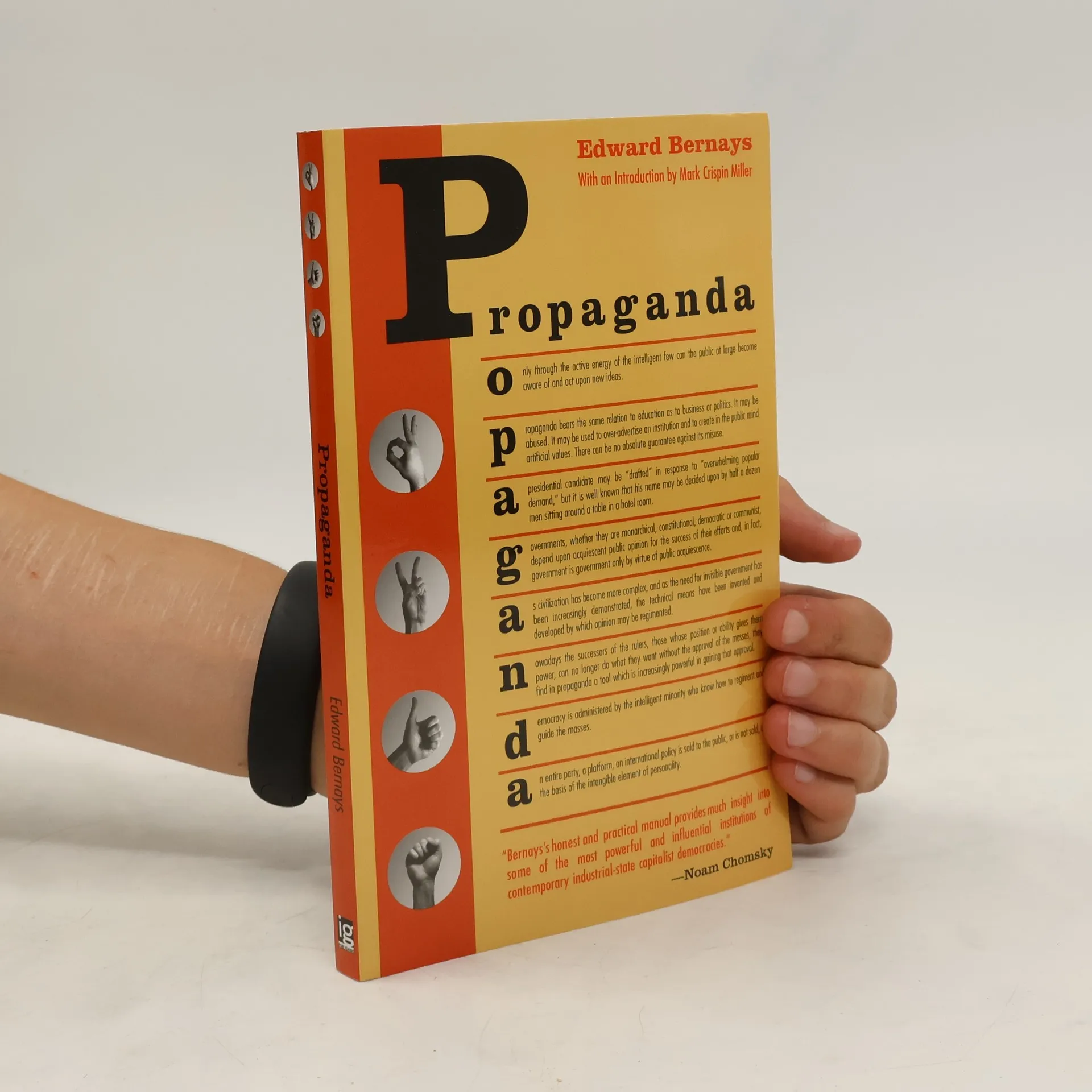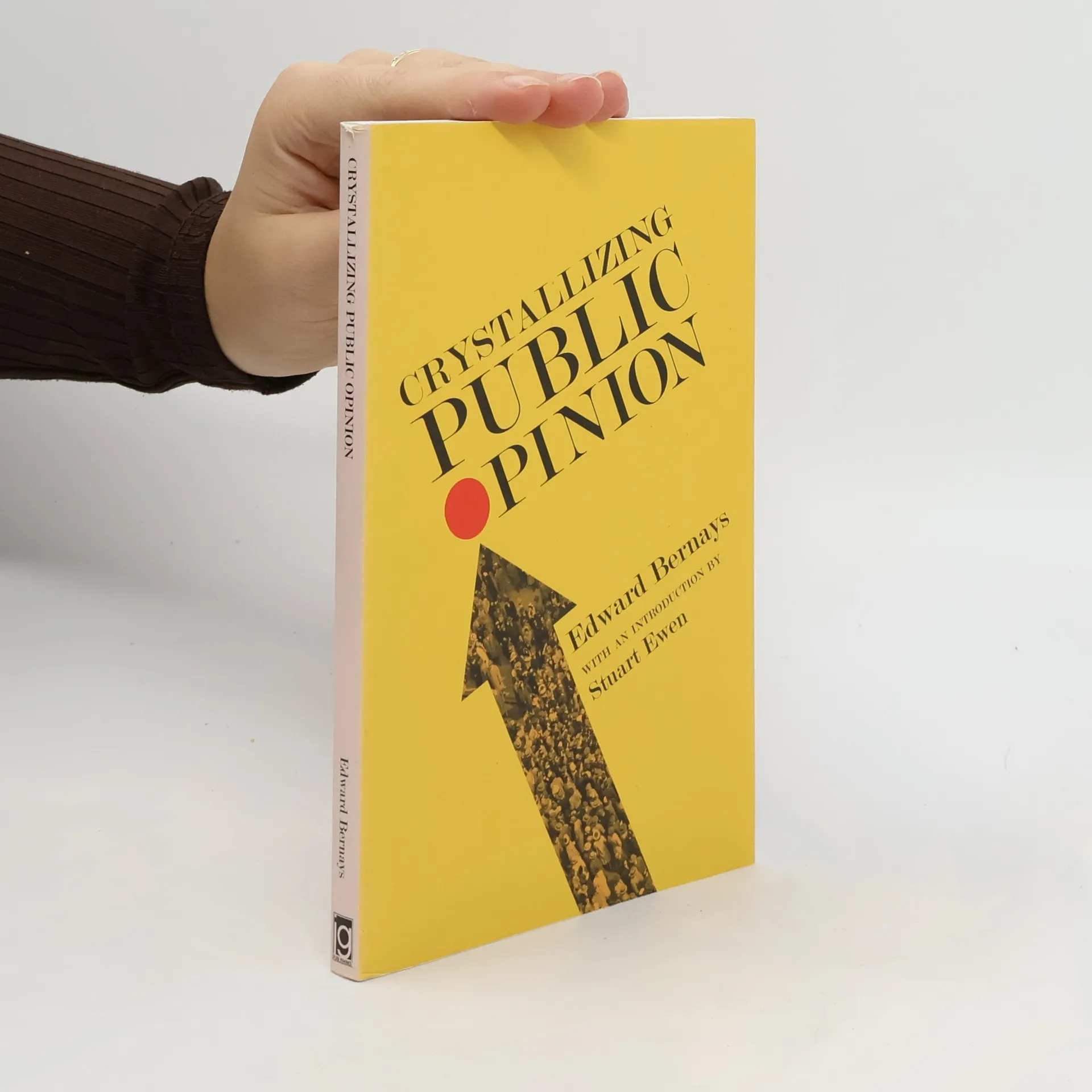
You may not know Edward Bernays, but Edward Bernays knows YOU. As the era of mass media unfolded after the first World War, many people became interested in the new opportunities for mass manipulation. Bernays made a study of the different ways to use propaganda. "Crystallizing Public Opinion" was his first book on how to manipulate the masses.
Edward L. Bernays Books
This author is a pioneer in the field of public relations and propaganda. Their work focuses on the art of shaping public opinion and influencing collective behavior. Their approach is considered a foundational element of modern communication.


The Edward Bernays Reader
- 296 pages
- 11 hours of reading
Nicknamed “the father of public relations,” Edward Bernays (1891–1995) was a pioneer in the fields of propaganda and PR. Combining theories on crowd psychology with the psychoanalytical ideas of his uncle, Sigmund Freud, Bernays elucidated how corporations and politicians could manipulate public opinion. His seminal 1928 book, Propaganda laid out how propaganda could be used to regiment the collective mind in a variety of areas, including government, politics, art, science and education, while his 1923 classic, Crystallizing Public Opinion, set down the principles that business and government have used to influence public attitudes over the past century.The Edward Bernays From Propaganda to the Engineering of Consent, is the first comprehensive volume of the writings of this influential and controversial figure. In addition to featuring extended excerpts from Crystallizing Public Opinion and Propaganda, this book also includes the full text of Bernays’ classic 1947 essay, “The Engineering of Consent,” on the application of scientific principles and practices to the task of getting people to support ideas and programs, as well as extensive selections of his other writings on subjects including education, war propaganda, and polling. Taken together, the material in this book offers the most complete look to date at the work of a man whose ideas are considered the single most important influence on modern propaganda, public relations, and spin.
Publicist Edward L. Bernays offers here the kind of advice individuals and a variety of organizations sought from him on a professional basis during more than four decades. With such knowledge, every intelligent person can carry on his or her activities more effectively. This book provides know-why as well know-how. Bernays explains the underlying philosophy of public relations and the PR methods and practices to be applied in specific cases. He presents broad approaches and solutions as they were successfully carried out in his long professional career. Public relations is not publicity, press agentry, promotion, advertising, or a bag of tricks, but a continuing process of social integration. It is a field of adjusting private and public interest. Everyone engaged in any public activity, and every student of human behavior and society, will find in this book a challenge and opportunity to further both the public interest and their own interest.
"A seminal work on how public opinion is created and shaped, Edward Bernays's 1923 classic Crystallizing Public Opinion set down the principles that corporations and government have used to influence public attitudes over the past century. A primer on the then new profession of "public relations counsel," Crystallizing elucidates the "instruments and techniques" that PR professionals use to mold public opinion on behalf of their client's interests. By adapting the ideas that Bernays put forth in this book, governments and advertisers have been able to "regiment the mind like the military regiments the body." The first ever book ever written about the public relations industry, this all-new edition of Crystallizing Public Opinion features an introduction by Stuart Ewen, author of PR! A Social History of Spin, All Consuming Images: On the Politics of Style in Contemporary Culture, and Captains of Consciousness: Advertising and the Social Roots of the Consumer Culture."--Back cover
Edward Bernays' 1923 classic Crystallizing Public Opinion set down the principles that corporations and governments have used to influence public attitudes over the past century.
Propaganda
- 168 pages
- 6 hours of reading
Reprint of a seminal 1928 work from the father of public relations and modern political spin
PROPAGANDA
A Master Spin Doctor Convinces the World That Dogsh*t Tastes Better Than Candy
- 142 pages
- 5 hours of reading
The book explores Edward Bernays' connection to a powerful Jesuit network and his relationship with his uncle, Sigmund Freud. It delves into how Freud's influence shaped Bernays' personality, particularly emphasizing his narcissistic traits and tendency to boast. The narrative highlights the complexities of Bernays' character as he navigates the realms of manipulation and public relations, showcasing the interplay between familial ties and personal ambition.