

Explore the latest books of this year!
Bookbot

Robert Kershaw

    Robert Kershaw is a military historian whose work delves into the intricacies of warfare and strategic operations. Drawing from extensive experience in active service, including roles within NATO and deployments to regions like Northern Ireland, the Gulf War, and Bosnia, he offers a unique perspective on the realities of conflict. Kershaw's writing is characterized by its detailed analysis of tactics, logistics, and the human element of military engagement. His contributions are recognized for their authenticity and precise rendering of historical military events.

    The Fury of Battle
    War Without Garlands
    Dunkirchen 1940
    Never Surrender
    Landing on the Edge of Eternity: Twenty-Four Hours at Omaha Beach
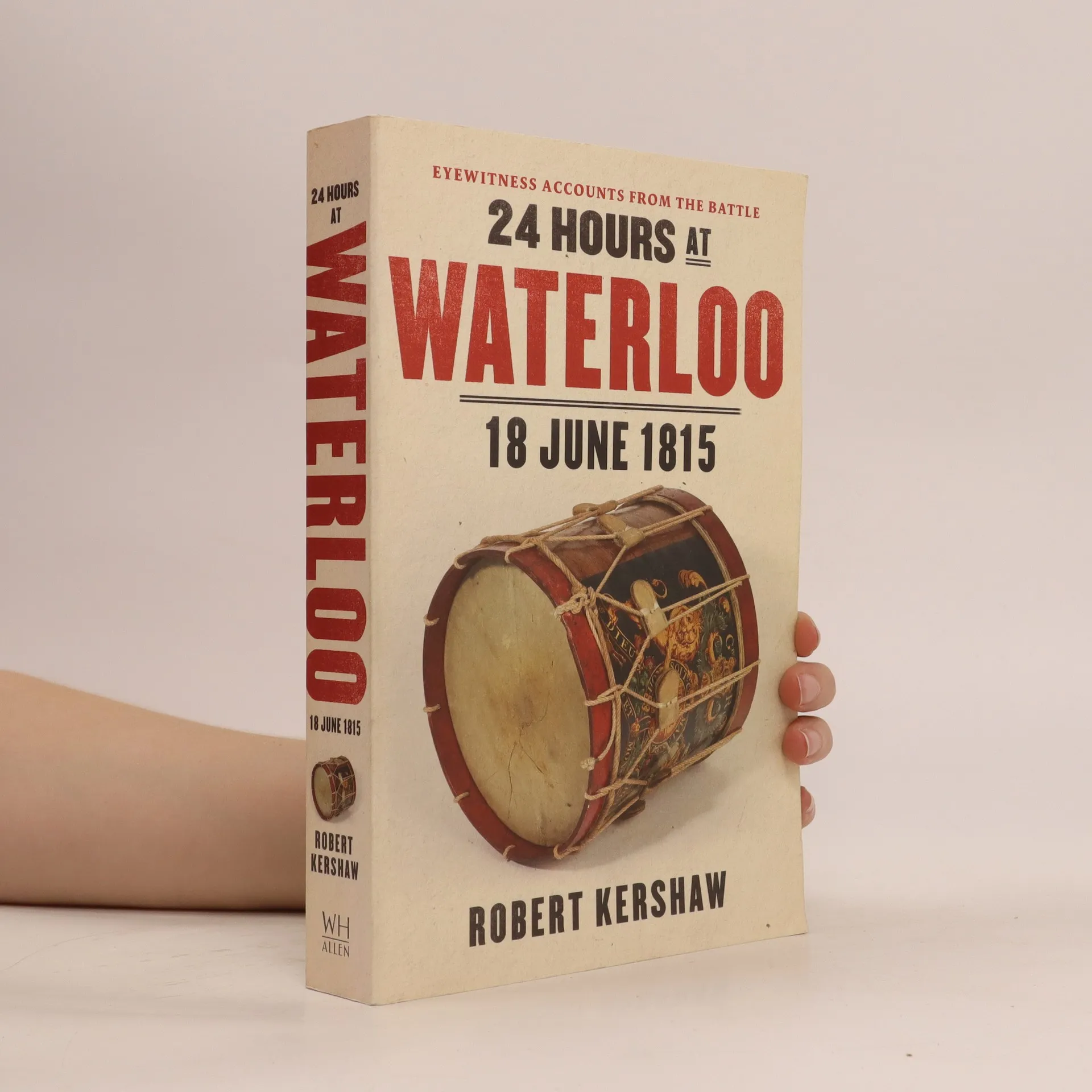
    24 hours at Waterloo. 18 June 1815
    • 24 hours at Waterloo. 18 June 1815

      • 448 pages
      • 16 hours of reading

      One of the lancers rode by and stabbed me in the back with his lance. I then turned, lying face upward, and a foot soldier stabbed me with his sword as he walked by. Immediately after, another soldier, with his firelock and bayonet, plunged into me, exclaiming, "SacrU nom de Dieu!" The brutal battle of Waterloo was a pivotal moment in history, defining Europe's future in a single day. In March 1815, the Allies declared war on Napoleon following his escape from exile, reigniting the threat to imperial rule. By June 18, 1815, after suffering losses at Quatre-Bras, Wellington's army retreated to Waterloo, ten miles south of Brussels, to block Napoleon's advance to the capital. This marked the Allies' final stand. Acclaimed military historian Robert Kershaw provides an intimate, hour-by-hour account, resurrecting the human stories at the heart of the fighting. Drawing on his deep understanding of military strategy, Kershaw immerses readers in the battle, alongside the soldiers on the mud-splattered ground. He masterfully weaves together meticulously researched eyewitness accounts, diaries, and letters—many previously unpublished—offering unparalleled authenticity. Vivid images of the men and women involved emerge, as the voices of sergeants, exhausted foot soldiers, boy ensigns, captains, and cavalry troopers resonate, capturing the tense atmosphere as Europe's fate hangs by a thread.

      24 hours at Waterloo. 18 June 1815
    • The transformation of Normandy's Plage d'Or coast into a fortified stronghold during World War II is a gripping tale of military strategy and historical significance. Initially known for its peaceful villages, the area became the site of intense preparation for the D-Day invasion, as German forces fortified Omaha Beach with bunkers, barbed wire, and mines, dubbing it "the Devil's Garden." This dramatic shift highlights the stark contrast between its serene past and the deadly battleground it became.

      Landing on the Edge of Eternity: Twenty-Four Hours at Omaha Beach
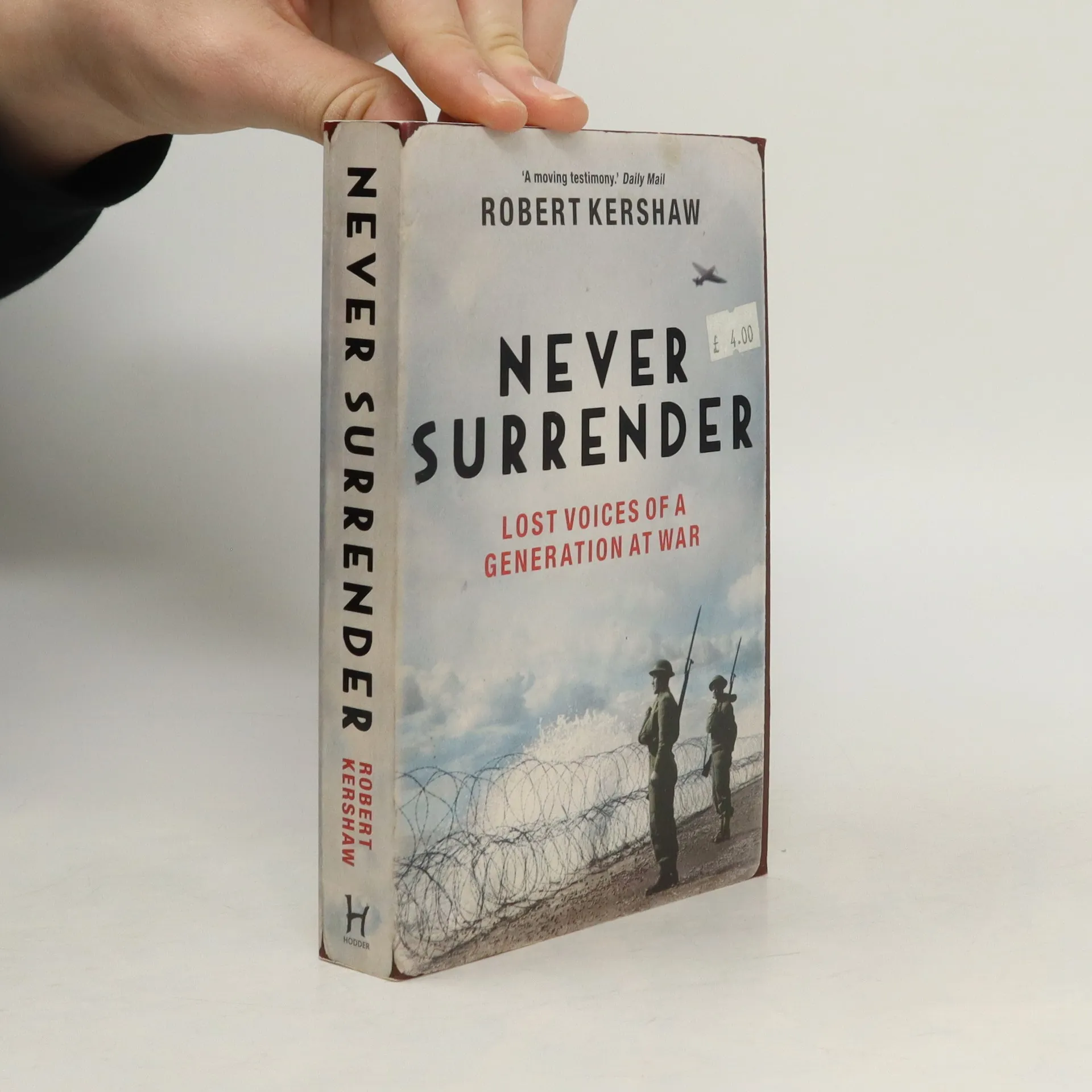
    • Never Surrender

      • 384 pages
      • 14 hours of reading

      In Never Surrender Robert Kershaw captures the authentic voices of the ordinary heroes of the Second World War, from the soldiers fighting abroad to those battling on the home front, and creates an extraordinary portrait of a generation fighting for survival. Beginning with first-hand accounts of the reaction to Chamberlain's declaration of war in 1939, Kershaw portrays the many aspects of war through the words of those who were there, from the sailors of the little ships of Dunkirk to German soldiers preparing for Operation 'Sea Lion'. He takes us from the nightly horrors of the Blitz to battles in the limitless desert of North Africa, and from jungle war in Burma to Lancaster bombers over Germany and the beaches of Normandy. Featuring new interviews with veterans and civilians from Britain, the Commonwealth and Germany as well as diaries, letters, and first-hand accounts, this is a testimony to the remarkable men and women who lived through the Second World War - whose refusal to surrender changed them, and Britain, forever.

      Never Surrender
    • Using revelatory new material on an event which changed the tide of World War II, Robert Kershaw’s ground-breaking history explores the Battle of Dunkirk from the German perspective.

      Dunkirchen 1940
    • In the spring of 1941, having abandoned his plans to invade Great Britain, Hitler turned the might of his military forces on to Stalin's Soviet Russia. The German army quickly advanced far into Russian territory as the Soviet forces suffered defeat after defeat. With brutality and savagery displayed on both sides, the Eastern front was a campaign in which no quarter was given. Although Hitler's decision to launch 'Barbarossa' was one of the crucial turning points of the war, at first the early successes of the German army pointed to the continuing triumph of the Nazi state. As time wore on, however, the Eastern front became a byword for death for the Germans. In War without Garlands, Robert Kershaw examines the campaign largely through the eyes of the German forces who were sent to fight and die for Hitler's grandiose plans. He draws on German war diaries, post-combat reports and secret SS files. This original material, much of which has never before been published in English, sheds new light on operation 'Barbarossa', including the extent to which the German soldiers were genuinely surprised at the decision to attack Russia, given the well-publicised non-aggression pact. 'Barbarossa' was a brutal, ideologically driven campaign which decided the outcome of World War II. This seminal account will be required reading for all historians of World War II and all those interested in the course of the war.

      War Without Garlands
    • The Fury of Battle

      • 416 pages
      • 15 hours of reading

      New B-format paperback edition. A unique description of what the D-Day landings were like, combining the detail of Antony Beevor with the human insights of Stephen Ambrose, including the experiences of French and Germans in the fighting.

      The Fury of Battle
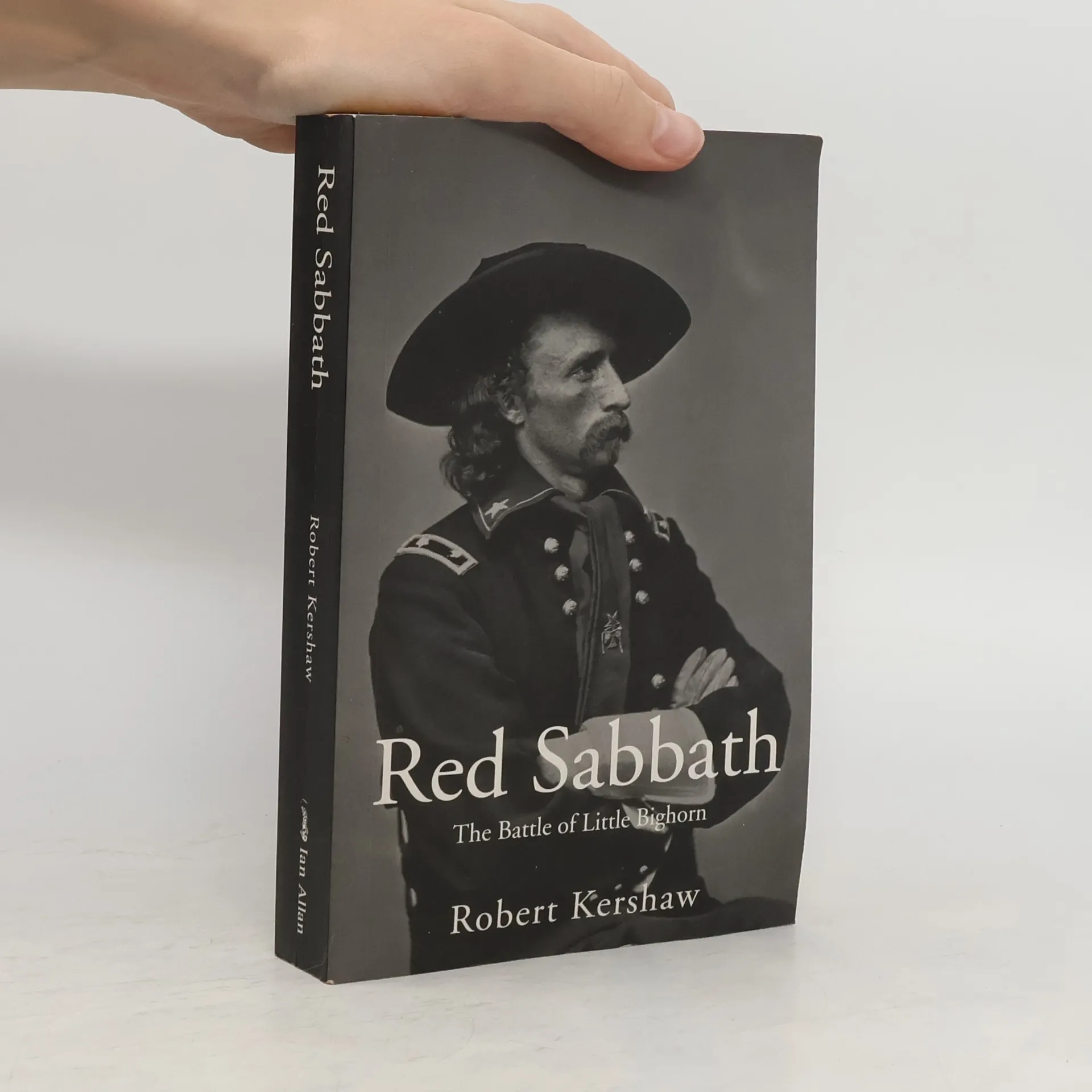
    • Red Sabbath

      The Battle of Little Bighorn

      • 340 pages
      • 12 hours of reading

      here are few battles in the sometimes bloody history of the expansion of the United States in North American during the Indian Wars that are more famous than Little Bighorn. The romantic view of Custer's last stand against marauding hordes of Indians has achieved iconic status but the reality was somewhat different, as recent research has shown. The Battle of Little Bighorn was the culmination of a process of attrition between the Native Americans and European settlers. On 25 June 1876 this clash of cultures was settled by force of arms as the 7th Cavalry under Custer came upon a huge Indian camp by the Little Bighorn River. The resulting battle was the stuff of legends, but legends based on misconception and hearsay - no members of the 7th Cavalry survived to tell their tale and the Indians recorded their triumph in pictographs and oral memory, long undeciphered by historians. In Red Sabbath, military historian Robert Kershaw analyses the causes of Custer's defeat from the standpoint of a professional soldier, and examines the multitude of factors that lay behind this setback of a modern US Army's campaign against an unsophisticated foe. Bringing a forensic examination to the subject, this new view of the battle will be required reading for all those with an interest in the military history of the USA and of the career of that most famous of historical figures, General Custer. Drawing evidence from a wide range of sources, including contemporary reports of the battle, personal analysis of the battlefield and the most recent archaeological investigations, Kershaw explores the background to the battle and its results. His analysis debunks many of the myths about Custer's abilities as a military commander and previous generalizations of this savage encounter, providing a unique insight into the Battle of Little Bighorn.

      Red Sabbath
    • Borodino Field 1812 & 1941

      • 336 pages
      • 12 hours of reading

      The gripping account of two momentous battles fought in the same location - 129 years apart

      Borodino Field 1812 & 1941
    • From the critically acclaimed author of Dünkirchen 1940, this is a groundbreaking history of the epic three-day battle for Hill 107 that changed the course of the war in the Mediterranean. In this remarkable history, we discover each of the individuals whose actions determined the outcome of the battle for Hill 107, the key event that decided the campaign to capture the vitally strategic island of Crete in May 1941. All the events are narrated through the filter of these eyewitnesses. The Allied perspective is from the summit of Hill 107. We experience the fear and the adrenalin of a lowly platoon commander, Lieutenant Ed McAra, perilously positioned at the top of the hill, alongside the combat stress and command fatigue of the battalion commander, Lieutenant Colonel Leslie Andew. In contrast, the German view is looking up from below as they cling to the slopes while simultaneous dazzled by the morning glare and decimated by defensive fire. We join the regimental doctor, Dr Heinrich Neumann, as he assumes command of one battalion and leads a daring nighttime charge towards the summit. The Hill details what was felt, heard or seen throughout the battle for both attacker and defender. Drawing upon original combat reports, diary entries, letters and interviews, the battle is brought vividly to life. The narrative reads like a Shakespearean tragedy, the soldiers revealing their stories in and around the shadows of Hill 107.

      The Hill
    • Operacja „Market-Garden” i bitwa pod Arnhem z zupełnie nowej perspektywy! 17 września 1944 roku porucznik Joseph Enthammer, oficer artylerii Wehrmachtu, spoglądając w kierunku Oosterbeeku, ujrzał coś, co wydało mu się białymi płatkami śniegu wiszącymi w powietrzu. „Nie może być”, zdumiał się. „We wrześniu nie pada śnieg!”. Rzekome płatki śniegu były w istocie brytyjskimi spadochroniarzami. Enthammer oglądał początek operacji „Market-Garden” ? ogromnej ofensywy alianckich sił powietrznodesantowych. Miała ona otworzyć drogę, wiodącą holenderskimi mostami do serca III Rzeszy. Lekko uzbrojonym, ale doskonale wyszkolonym, agresywnym i doświadczonym żołnierzom amerykańskim, brytyjskim i polskim Niemcy przeciwstawili naprędce sformowane oddziały. Do dyspozycji mieli bezładną zbieraninę ocalałych jednostek z równie bezładnego odwrotu z Francji. Teoretycznie skazani byli na klęskę, a jednak zadali przeciwnikowi mocny i niespodziewany cios. Ostatecznie operacja „Market- Garden” zakończyła się bolesną porażką aliantów. Tym bardziej dotkliwą, że zadały ją oddziały słabe, przetrzebione, czy też – jak cała 1. Armia Spadochronowa generała Studenta – jeszcze kilkanaście dni wcześniej istniejące głównie na papierze. Robert Kershaw przedstawia losy „Market-Garden” z perspektywy odmiennej niż zwykle, na ogół ignorowanej lub spychanej na drugi plan – z perspektywy niemieckiej. Dzięki temu We wrześniu nie pada śnieg to lektura oryginalna, wręcz obowiązkowa dla każdego, kto poznał już przebieg tej ogromnej operacji desantowej oczami aliantów. Wspaniała praca ? opracowanie wielkiej wagi dla współczesnych historyków. Pozwala na zupełnie nową ocenę tamtych zmagań. Gen. dyw. John Frost, dowódca wojsk alianckich podczas walk pod Arnhem Nikt przedtem nie zapytał Niemców dlaczego cała ta operacja zakończyła się tragicznie. To, co powiedzieli Kershawowi, zmienia nasze rozumienie tamtych zdarzeń „Sunday Telegraph” Ta znakomita książka stanowi wielki wkład nie tylko w badania nad „Market-Garden” i nad działaniami w północno-zachodniej Europie. Porusza także wiele wciąż ważkich zagadnień ogólnowojskowych. „British Army Review” Robert Kershaw jako absolwent historii na Reading University, w 1972 roku wstąpił do Pułku Spadochronowego (Parachute Regiment), by ostatecznie trafić do dowództwa jego 10. Batalionu. Szkolił się w niemieckiej Akademii Sztabu Generalnego i spędził dwa lata w niemieckiej Bundeswerze jako instruktor piechoty i wojsk powietrznodesantowych. Służbę w wojsku zakończył w stopniu pułkownika w 2006 roku. Jego ostatnim miejscem pracy był pion wywiadu przy kwaterze Głównej NATO w Brukseli. Od 2006 roku poświęcił się całkowicie pisaniu o historii militarnej. Występuje także w roli konsultanta wojskowego.

      We wrześniu nie pada śnieg