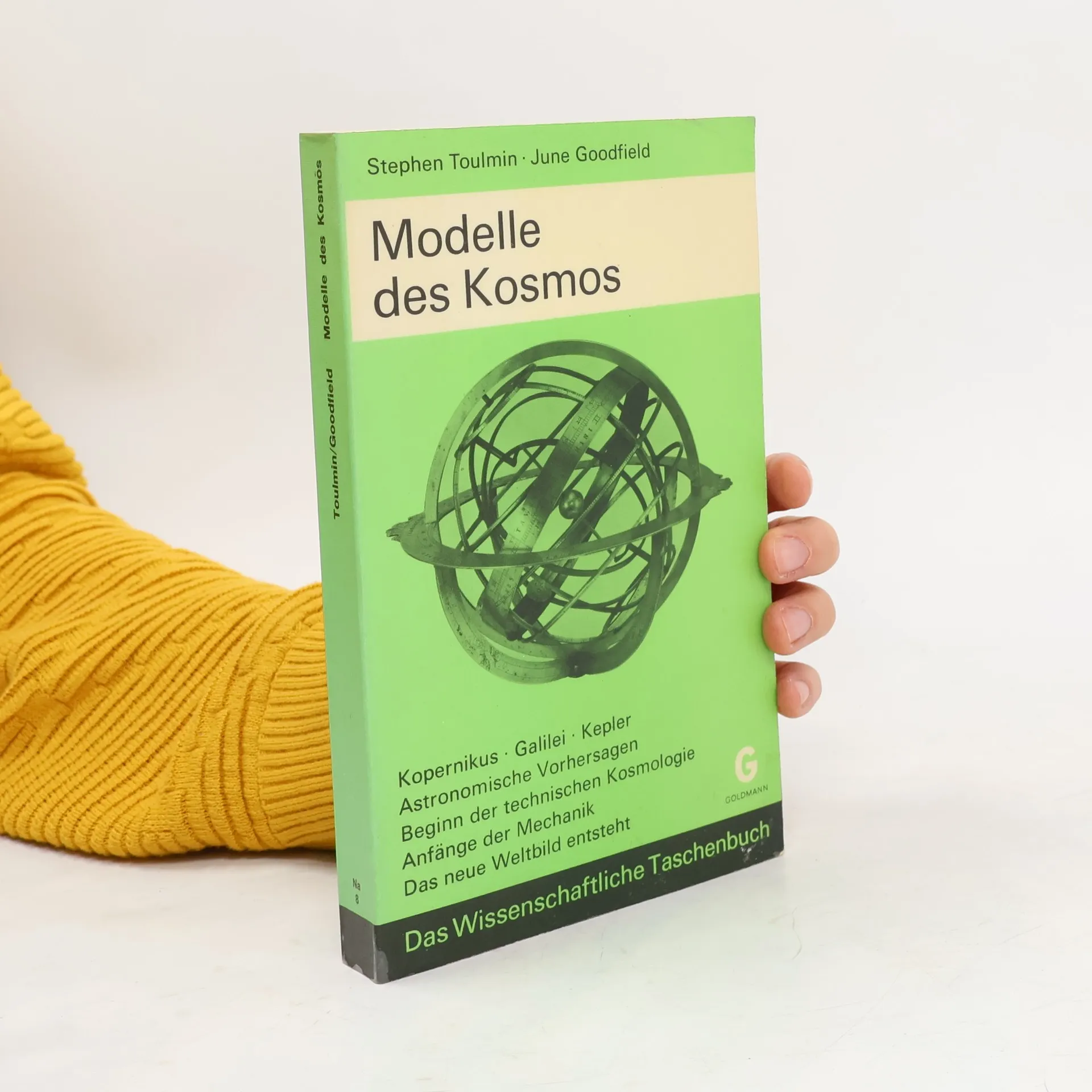
One of three companion volumes that form an introduction to the central ideas
of the modern natural sciences, this book is a source for those who have no
technical knowledge of the subject of astronomy and dynamics.
In the seventeenth century, a vision arose which was to captivate the Western imagination for the next three hundred years: the vision of Cosmopolis, a society as rationally ordered as the Newtonian view of nature. While fueling extraordinary advances in all fields of human endeavor, this vision perpetuated a hidden yet persistent agenda: the delusion that human nature and society could be fitted into precise and manageable rational categories. Stephen Toulmin confronts that agenda—its illusions and its consequences for our present and future world. "By showing how different the last three centuries would have been if Montaigne, rather than Descartes, had been taken as a starting point, Toulmin helps destroy the illusion that the Cartesian quest for certainty is intrinsic to the nature of science or philosophy."—Richard M. Rorty, University of Virginia "[Toulmin] has now tackled perhaps his most ambitious theme of all. . . . His aim is nothing less than to lay before us an account of both the origins and the prospects of our distinctively modern world. By charting the evolution of modernity, he hopes to show us what intellectual posture we ought to adopt as we confront the coming millennium."—Quentin Skinner, New York Review of Books
Die zentrale These der Kritik der kollektiven Vernunft – nämlich: in der Wissenschaft wie in der Philosophie hat die ausschließliche Beschäftigung mit logischer Systematizität verheerende Folgen für historisches Verstehen und rationale Kritik gezeitigt - ist im Kern bereits in Toulmins 1958 erschienenem Buch The Uses of Argument enthalten. Toulmins seitherige Studien, vor allem über die Entwicklung des wissenschaftlichen Denkens, lassen die Entfaltung dieser These zu einem neuen epistemischen Selbstporträt werden. Das heißt: so wie Plato, Descartes, Locke oder Kant die Fragen, Konzepte und Gemeinplätze ihrer Zeit in ihre Philosophie integrier haben, so versucht Toulmin auf der Grundlage des heute erreichten Standes der Wissenschaften die Fähigkeiten, Prozesse und Aktivitäten neu zu erklären, kraft derer der Mensch die Natur erkennt und umgekehrt die Natur für den Menschen erkennbar wird.
A central theme throughout the impressive series of philosophical books and articles Stephen Toulmin has published since 1948 is the way in which assertions and opinions concerning all sorts of topics, brought up in everyday life or in academic research, can be rationally justified. Is there one universal system of norms, by which all sorts of arguments in all sorts of fields must be judged, or must each sort of argument be judged according to its own norms? In The Uses of Argument (1958) Toulmin sets out his views on these questions for the first time. In spite of initial criticisms from logicians and fellow philosophers, The Uses of Argument has been an enduring source of inspiration and discussion to students of argumentation from all kinds of disciplinary background for more than forty years
This is a remarkable book about a man (perhaps the most important and original philosopher of our age), a society (the corrupt Austro-Hungarian Empire on the eve of dissolution), and a city (Vienna, with its fin-de siecle gaiety and corrosive melancholy). The central figure in this study of a crumbling society that gave birth to the modern world is Wittgenstein, the brilliant and gifted young thinker. With others, including Freud, Viktor Adler, and Arnold Schoenberg, he forged his ideas in a classical revolt against the stuffy, doomed, and moralistic lives of the old regime. As a portrait of Wittgenstein, the book is superbly realized; it is even better as a portrait of the age, with dazzling and unusual parallels to our own confused society. Allan Janik and Stephen Toulmin have acted on a striking premise: an understanding of prewar Vienna, Wittgenstein s native city, will make it easier to comprehend both his work and our own problems .This is an independent work containing much that is challenging, new, and useful. New York Times Book Review."