

"The journey begins in 1959, as a young monk named Tsung Tsai escapes the Red Army troops that destroy his monastery, and flees alone three thousand miles across a China swept by chaos and famine. Hidden under his peasant jacket he carries a book of poetry and his monk's certificate, either of which means death if discovered. His mission: to carry on the teachings of his Ch'an Buddhist master, Shiuh Deng, who was too old to leave with his disciple.". "Nearly forty years later Tsung Tsai travels with his skeptical friend Crane back to his birthplace at the edge of the Gobi Desert. China is stirring with spiritual renewal, and Tsung Tsai is determined to find Shiuh Deng's grave and build a shrine in his honor. The two men reenter a lost world of belief and superstition nearly extinguished by history. As their search culminates in a torturous climb to a remote mountain cave, it becomes clear that this seemingly quixotic quest may cost Tsung Tsai's life."--BOOK JACKET.
George Crane Books
This author delves into the profound human experience through a literary voice shaped by extensive global travel and a deep appreciation for art and history. His work navigates themes of identity, cultural exploration, and the search for meaning, capturing the essence of the places and people encountered. Through a compelling narrative style and insightful observations, he invites readers on journeys that transcend geographical boundaries to touch upon universal truths. His ability to weave personal reflection with a broad perspective makes his writing uniquely resonant.

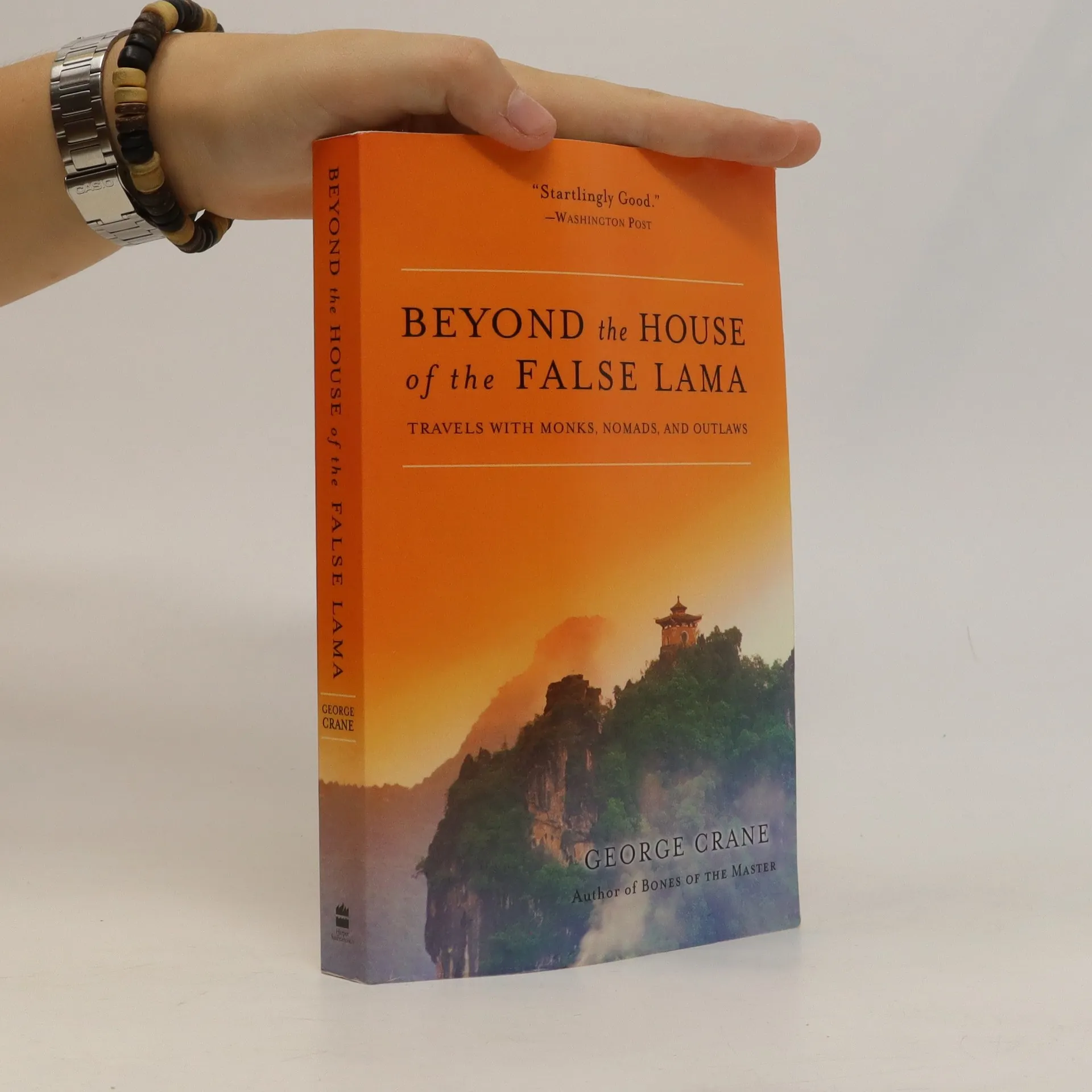

Beyond the House of the False Lama
- 320 pages
- 12 hours of reading
Beyond the House of the Lama, now in paperback, traces Crane's adventures as a writer, wanderer, and anarchic but still failing student of Zen. It begins in 1996 at the edge of the Gobi Desert in Inner Mongolia, where he and his teacher and friend, Zen Master Tsung Tsai, are forced by a sandstorm to end their quest to find the lost temple at Two Wolf Mountain. It continues with a harrowing, near disastrous attempt to deliver a ratty, 58 foot ferrous cement sailboat to Granada. Setting sail from Key Largo into the heart of hurricane season, with a crew of eccentrics and outlaws, led by the infamous Captain Bananas. They run with a disintegrating sailboat into the perfect squall. The tale ends in the winter of 2003, when after weeks of desert travel, Crane and his companions–––the nomad Jumaand and the young, beautiful Mongol girl Oka, his bed mate and bodyguard–––stand beneath the remote cliffs of Delgaz Khaan in Outer Mongolia's South Gobi. Here, Crane, after burying his long dead father, sets out on a new quest, looking to find what the nomads call Windhorse, "the beginning of the wind," but finds what every nomad knows, that every road is more a direction than a destination.
Die Höhle des Meisters
- 334 pages
- 12 hours of reading