

Egon Matzner Book order (chronological)


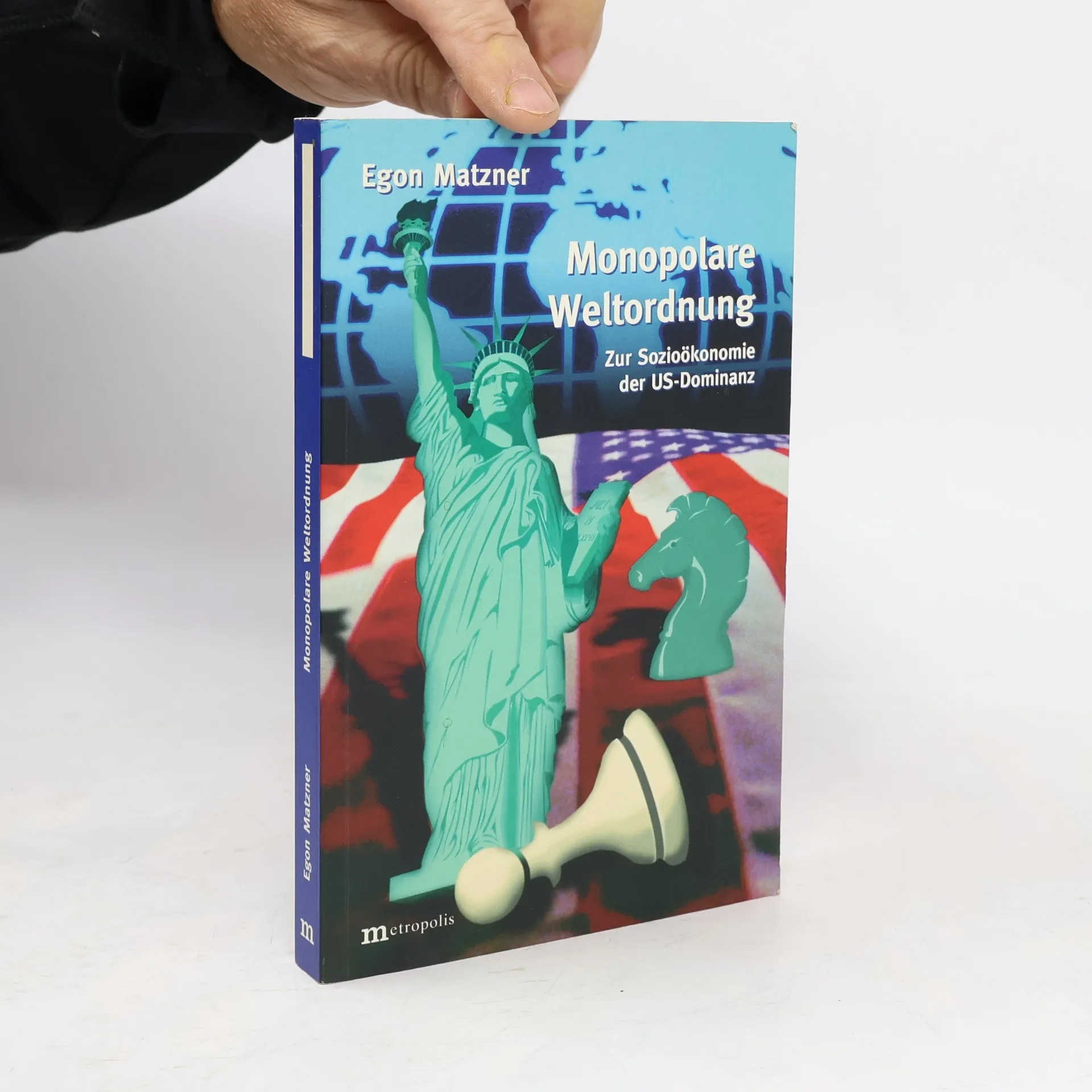



Das Ende der Sowjetunion hat die soziale Dynamik weltweit verändert. Die USA, als Sieger im Systemwettbewerb, sind nicht mehr durch andere Mächte eingeschränkt, und ihre Wirtschaftsdoktrin, der „Washington-Consensus“, wird global durchgesetzt. Diese mediale Hegemonie wird durch Plattformen wie CNN, MTV, Hollywood und Coca Cola unterstützt. Das Buch behandelt zentrale Fragen: Warum musste die kommunistische Planwirtschaft scheitern? Mit dem Wegfall der Systemkonkurrenz in demokratischen Marktgesellschaften schwand der Anreiz, soziale Probleme wie Arbeitslosigkeit und Armut politisch anzugehen. Zudem wird untersucht, warum die Marktwirtschaft in Ostdeutschland und den Nachfolgestaaten der Sowjetunion oft nur unter großen Verlusten eingeführt werden konnte und wie ein besserer Übergang hätte gelingen können. Die globale Geltung des „Washington-Consensus“ wird als Bedrohung für die Entwicklung in armen und reichen Ländern betrachtet. Es wird auch die monopolare Macht der USA analysiert und die Frage aufgeworfen, ob die EU über die Ressourcen verfügt, diese Macht zu begrenzen. Zudem wird die Idee eines Dritten Weges sowie die Möglichkeit von Utopien erörtert, die eine multipolare Weltordnung und kulturelle Vielfalt im Gegensatz zur herrschenden Wirtschafts-Doktrin fördern könnten.
The Market Shock
An Agenda for Socio-Economic Reconstruction of Central and Eastern Europe
- 144 pages
- 6 hours of reading
This collaborative work by distinguished European and American scholars presents a constructive and humane approach to reconstructing formerly communist economies. The reconstruction of Central and Eastern European economies resembles the 1920s more than the 1950s, characterized by ongoing inflation, declining output and employment, and deteriorating living conditions for the populace. The book argues that this decline is neither necessary nor beneficial for establishing a market economy that fosters wealth and well-being. Current strategies focused on abolishing controls, managing the money supply, and privatizing state property have led to reduced output, employment, and living standards, lacking positive measures to cultivate market relationships essential for new production opportunities. The authors contend that an emergency program must first stabilize conditions to inspire hope for a better future. Instead of wholesale privatization, they advocate for incentive schemes that hold management accountable for financial performance. Additionally, creating an environment conducive to wealth generation is crucial; this involves transforming decision-making contexts, establishing supportive economic and financial institutions, and ensuring that developed economies provide an appropriate international framework.
Der Wohlfahrtsstaat von morgen
- 408 pages
- 15 hours of reading
Wohlfahrtsstaat und Wirtschaftskrise
- 227 pages
- 8 hours of reading