

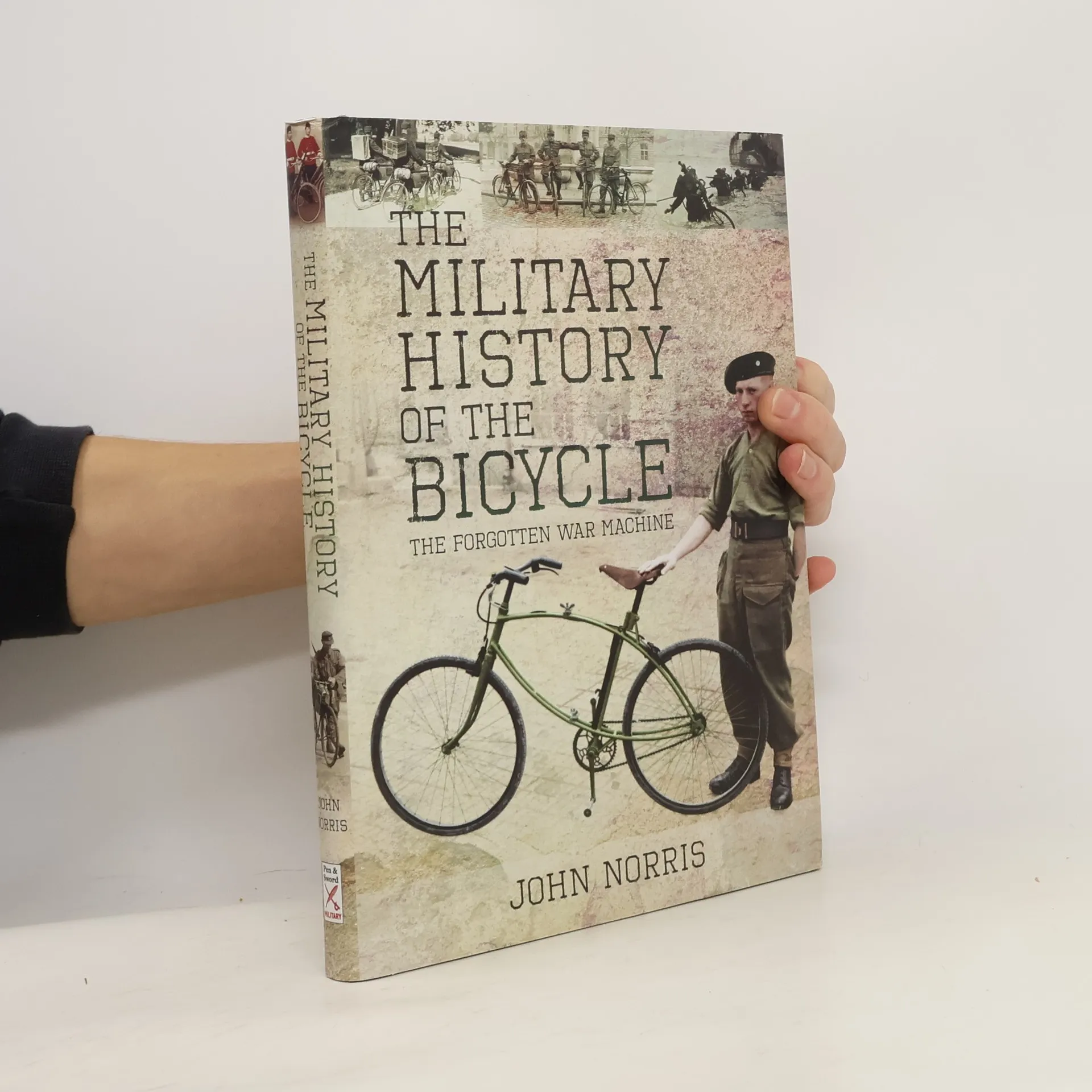
"Almost as soon as a viable metal-framed bike was invented, it was put to military use, offering a much cheaper, less fragile and less logistically demanding alternative to horse transport. Widely used in many armies from the late 19th century, through both world wars and beyond, the bicycle really is the forgotten war machine. John Norris traces the development of military cycling from first experiments, including early (often flawed) designs for armed and multi-passenger versions. He explains how and why bikes were used for rapid movement of infantry units as well as carrying messages and other tasks. First used in the Franco-Prussian War of 1870-71, then by both sides in the Boer War, they were widely adopted throughout Europe before the First World War. In the Second World War, the Japanese used over fifty thousand bicycles in the conquest of Malaya and the German army used over three million, relying on them increasingly as petrol shortages immobilized motor transport. The Allies famously made use of folding and air-dropped bikes in Operation Market Garden and in Normandy. After WW2 bikes were used extensively in Vietnam, particularly along the Ho Chi Minh trail and some European armies maintained specialist bicycle units throughout the Cold War and into the 21st century. Specialized military bikes, collapsible for use by parachutists, are still being made for Special Forces units. John Norris examines the whole history of pedal-powered warfare and illustrates it with an array of high-quality photographs." -- Jacket
John Norris Books
This author focuses on their writing, which frequently appears in leading publications. Their expertise in international affairs is reflected in their work. The author's writing is characterized by a deep exploration of key social and political themes. Their prose is both challenging and highly accessible.


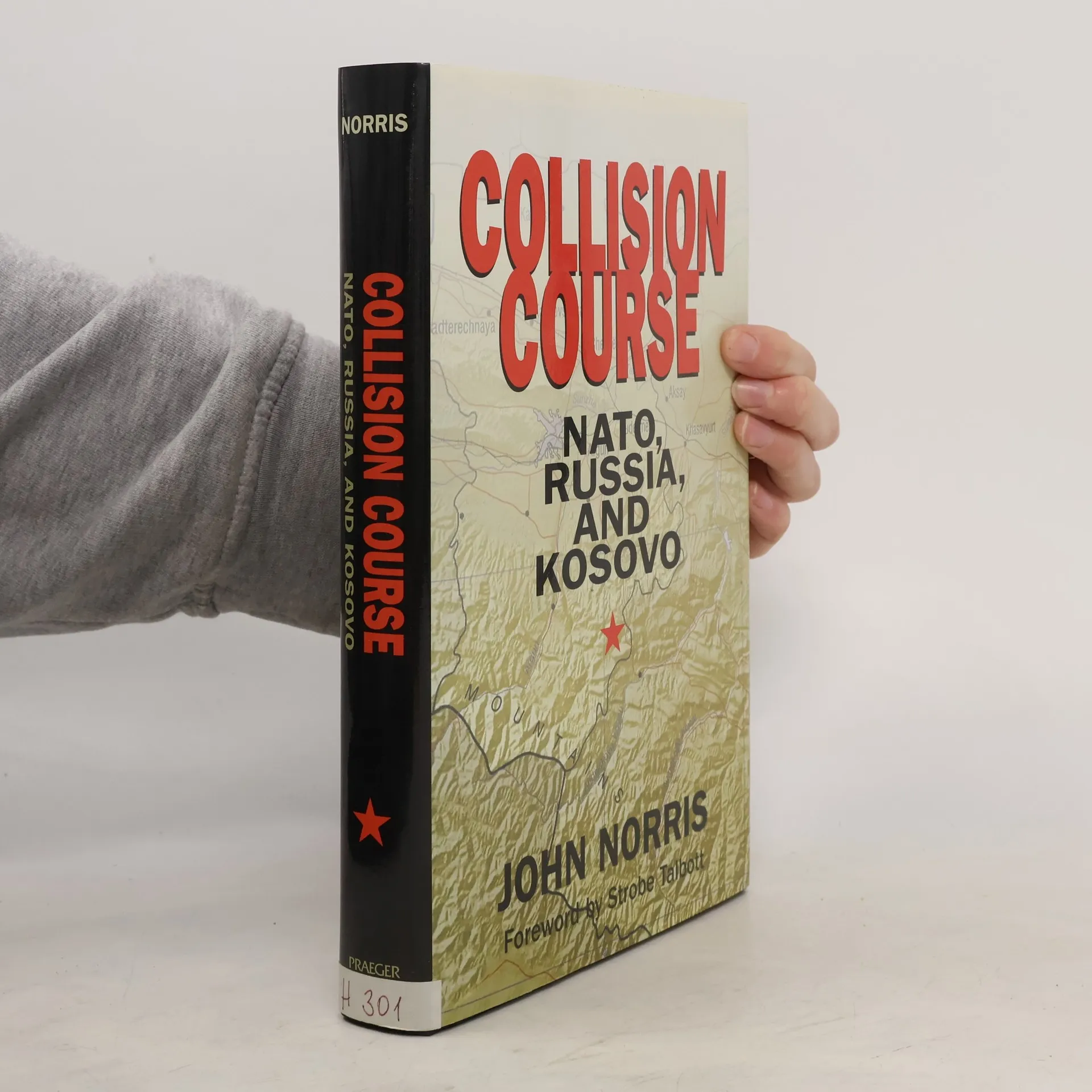
The book delves into the critical negotiations between the United States and Russia during the Kosovo conflict, highlighting the strategies of brinksmanship and deception employed to resolve the crisis. It draws parallels to Iraq's future, suggesting that lessons from the Kosovo war are vital for understanding current geopolitical dynamics. By examining these historical interactions, the work provides essential insights into Russia's complex relationship with the West, making it a valuable resource for those interested in international relations and conflict resolution.
A collection of letters discussing the love of God and how it should be exclusive. This book is perfect for anyone seeking spiritual guidance or wanting to understand the importance of faith in one's life.
The Wisest Fools
- 78 pages
- 3 hours of reading
A classic work on the topic of humility, written from a Christian perspective. The book explores the nature of humility and its importance in the moral and spiritual life. The author draws on the wisdom of the Christian tradition, as well as the insights of the ancient philosophers, to offer a thoughtful and inspiring reflection on this essential virtue.
Tales from the Martian Gold Rush
- 112 pages
- 4 hours of reading
The Enduring Struggle
The History of the U.S. Agency for International Development and America's Uneasy Transformation of the World
- 338 pages
- 12 hours of reading
Focusing on the U.S. Agency for International Development (AID), this book offers an in-depth exploration of its profound impact on millions of lives, highlighting both positive and negative outcomes. As AID approaches its 60th anniversary, John Norris uncovers a largely untold history, presenting a compelling narrative that reflects on the agency's significant role in shaping international policy and humanitarian efforts.
Second Language Educational Experiences for Adult Learners
- 308 pages
- 11 hours of reading
Second Language Educational Experiences for Adult Learners explains the latest research on adult learning and then applies that work to specifically address second language learning. In the foundational chapters, this book introduces some of the differences between language learning for adults. In the second half of the volume, the authors move to consider educational design in chapters on curriculum, materials, assessment, and technology. This is an essential book for researchers and students interested in the science of language learning or anyone looking to better understand the science of adult education.
The must-have book for any military vehicle enthusiast