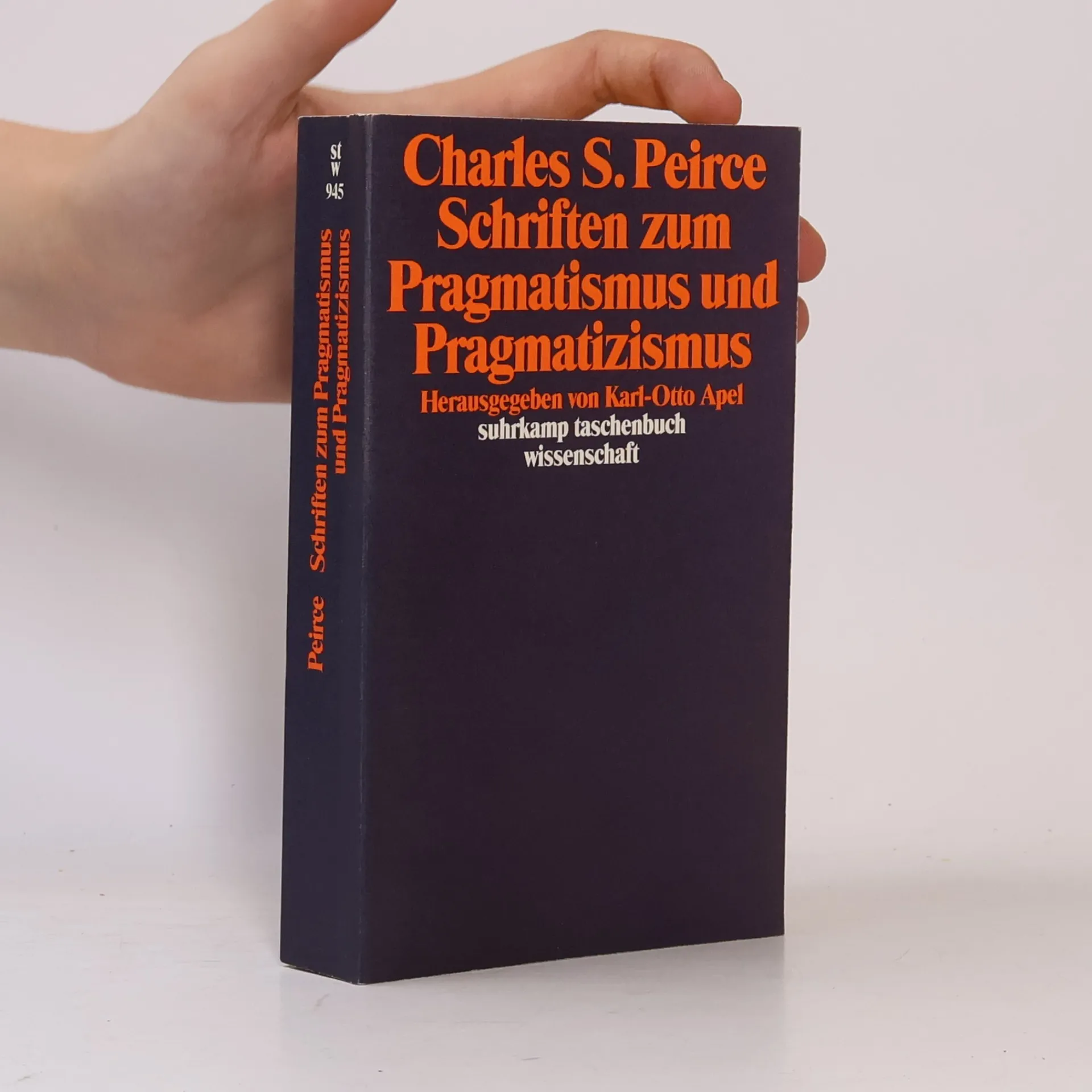
Charles Sanders Peirce Books
Charles Sanders Peirce was an American philosopher, logician, and scientist, often called the "father of pragmatism." He was a pioneer in logic, mathematics, and the philosophy of science, considering himself primarily a logician. His work explored a vast range of subjects, from formal logic to epistemology and the methodology of scientific inquiry. Peirce's thought, which anticipated modern computing concepts, has garnered significant international recognition and his influence is evident across numerous academic fields.

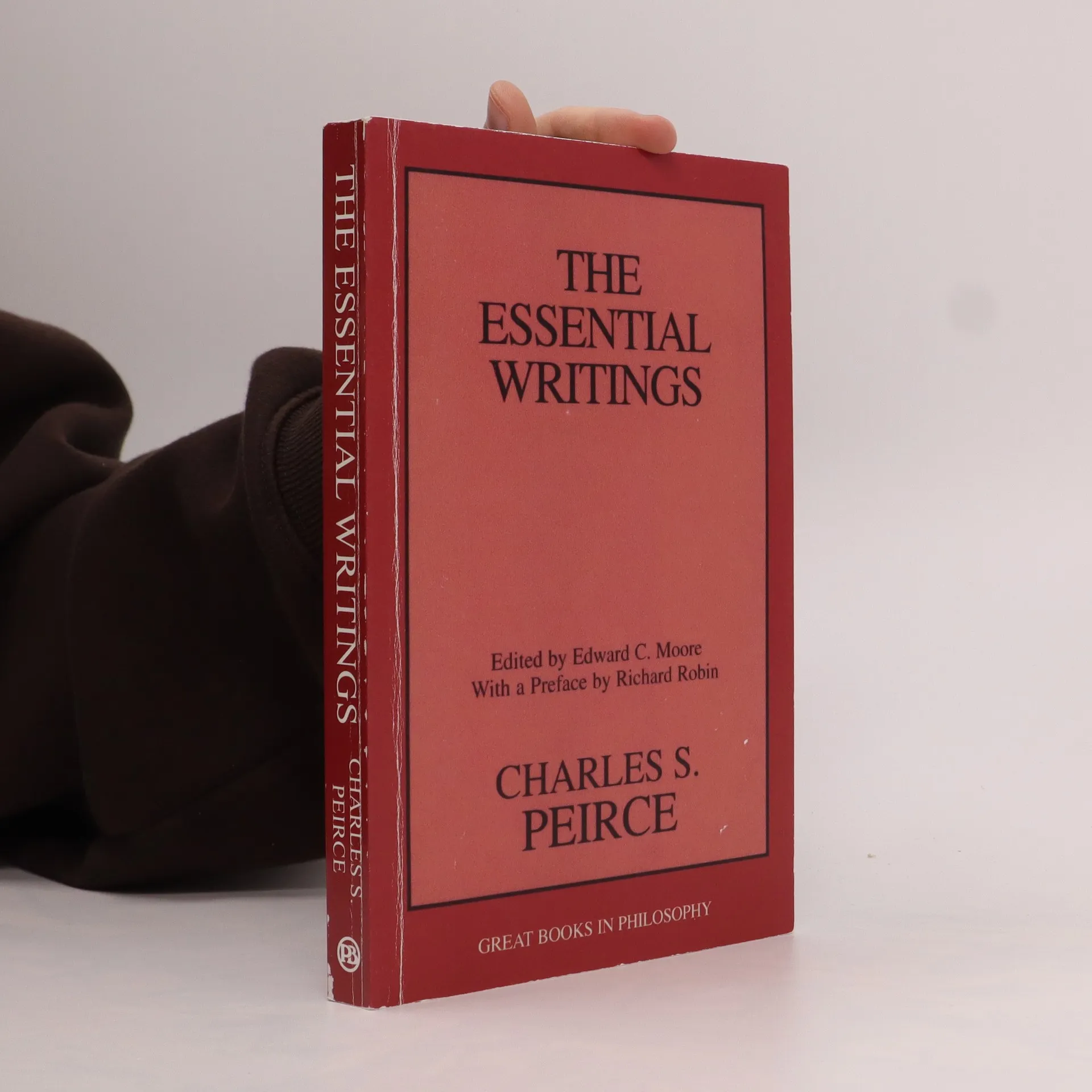
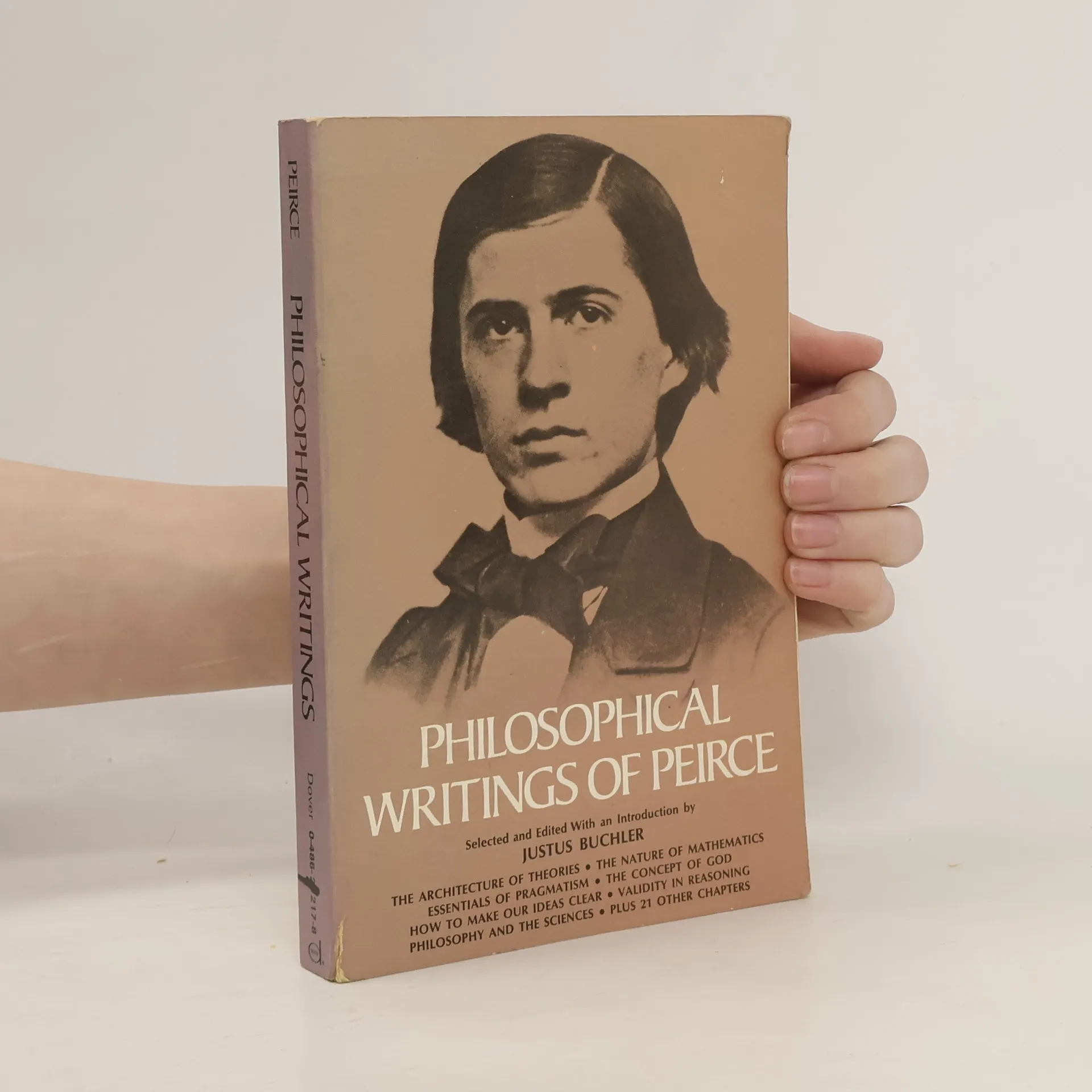
The essential writings
- 322 pages
- 12 hours of reading
Physicist, mathematician, and logician Charles S. Peirce (1839-1914) was America's first internationally recognized philosopher, the man who created the concept of "pragmatism," later popularized by William James. Charles S. Peirce: The Essential Writings is a comprehensive collection of the philosopher's writings, including: "Questions Concerning Certain Faculties Claimed for Man" (1868), which outlines his theory of knowledge; a review of the works of George Berkeley; papers from between 1877 and 1905 developing the ground of pragmatism and Peirce's theory of scientific inquiry; his basic concept of metaphysics (1891-93); and the important 1902 articles in Baldwin's dictionary on his later pragmatism (or pragmaticism), uniformity, and synechism. Included are Peirce's well-known essays: "The Fixation of Belief" and "How to Make Our Ideas Clear."
Reasoning and the Logic of Things
The Cambridge Conferences Lectures of 1898
- 312 pages
- 11 hours of reading
Charles Sanders Peirce (1839-1914) was a pivotal American philosopher, physicist, mathematician, and the founder of pragmatism. Despite his significant contributions to philosophy, a cohesive presentation of his ideas has been elusive. This publication finally offers a complete and coherent account of Peirce's work, originally delivered as the Cambridge Conferences Lectures of 1898. It serves as an accessible introduction to Peirce's mature thought. He begins by explaining the nature of philosophy and argues that mathematics underpins our logic and metaphysics. The text presents a clear distinction between three types of reasoning: induction, deduction, and retroduction, which Peirce has developed since the 1860s. It also introduces his key logical doctrines, attempts at classifying the sciences, and his theories of categories and science. Peirce shifts from "reasoning" to the "logic of things," advocating for an evolutionary cosmology to elucidate the reality of laws and detailing the reasoning he used to formulate this cosmology. Encouraged by William James, Peirce aimed to make his ideas accessible to a broader audience, including those without advanced training in logic and philosophy. The introductory materials by Kenneth Ketner and Hilary Putnam enhance the clarity of the text, making it a valuable resource for readers beyond Peirce specialists.
Charles S. Peirce (1839-1914), bekannt als Logiker, Philosoph, Mathematiker und Physiker, zählt zu den wichtigsten Denkern der modernen Wissenschaftsgeschichte. In der späten und wichtigsten Phase seines Schaffens (1891-1909) hat er programmatische Aufsätze sowie ausgewählte Vorlesungen explizit als eine Reihe für die Zeitschrift „The Monist“ konzipiert, Beiträge, von denen bislang nur Ausschnitte und stark revidierte Fassungen veröffentlicht worden sind. Die erstmalige und vollständige Veröffentlichung der „Monist“-Texte in diesem Band beabsichtigt eine zeitgemäße Annäherung an das höchst heterogene Werk von Peirce. Sie ist der Versuch, Peirces Gedanken der internationalen wissenschaftlichen Öffentlichkeit originalgetreu zu präsentieren. Zentrales Ziel der „Monist“-Reihe bildet die Begründung einer Methode der Semiotik. Die Abhandlungen präsentieren Erklärungen zu Universalgesetzmäßigkeiten wie Gefühle, Wille und Kognition, zu Differenzen zwischen auf Erfahrung basiertem und imaginiertem Wissen, aber auch zur Definition der Aufmerksamkeit als einer symbolischen Tätigkeit. Neben ihrer wissenschaftlichen Relevanz in der philosophischen, bildwissenschaftlichen und kulturwissenschaftlichen Forschung, in der Kognitionswissenschaft und Logik besitzen die von Peirce diskutierten Themen auch eine hohe Aktualität für die zeitgenössischen Naturwissenschaften.
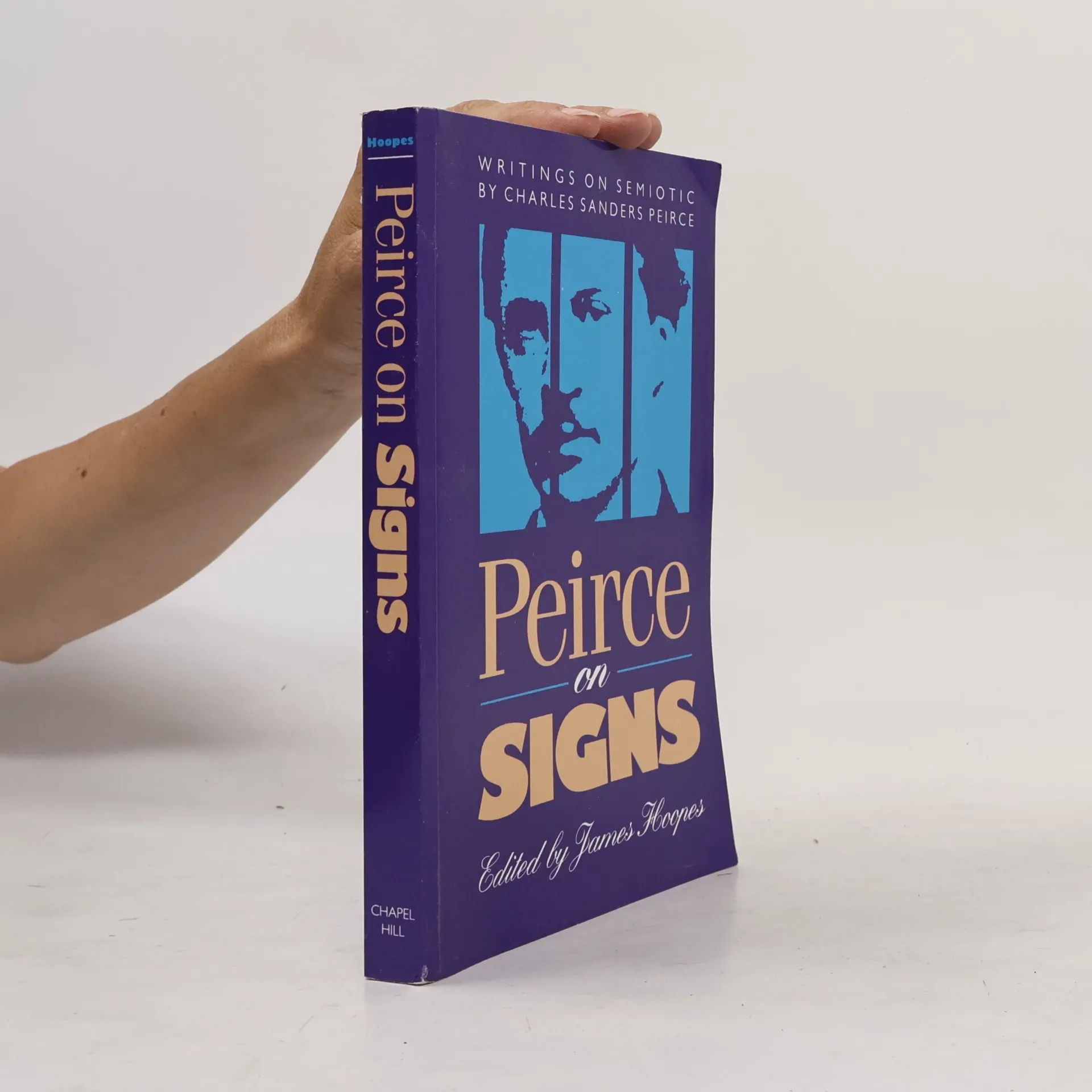
Charles Sanders Peirce (1839-1914) is rapidly becoming recognized as the greatest American philosopher. At the center of his philosophy was a revolutionary model of the way human beings think. Peirce, a logician, challenged traditional models by describing thoughts not as "ideas" but as "signs," external to the self and without meaning unless interpreted by a subsequent thought. His general theory of signs -- or semiotic -- is especially pertinent to methodologies currently being debated in many disciplines.
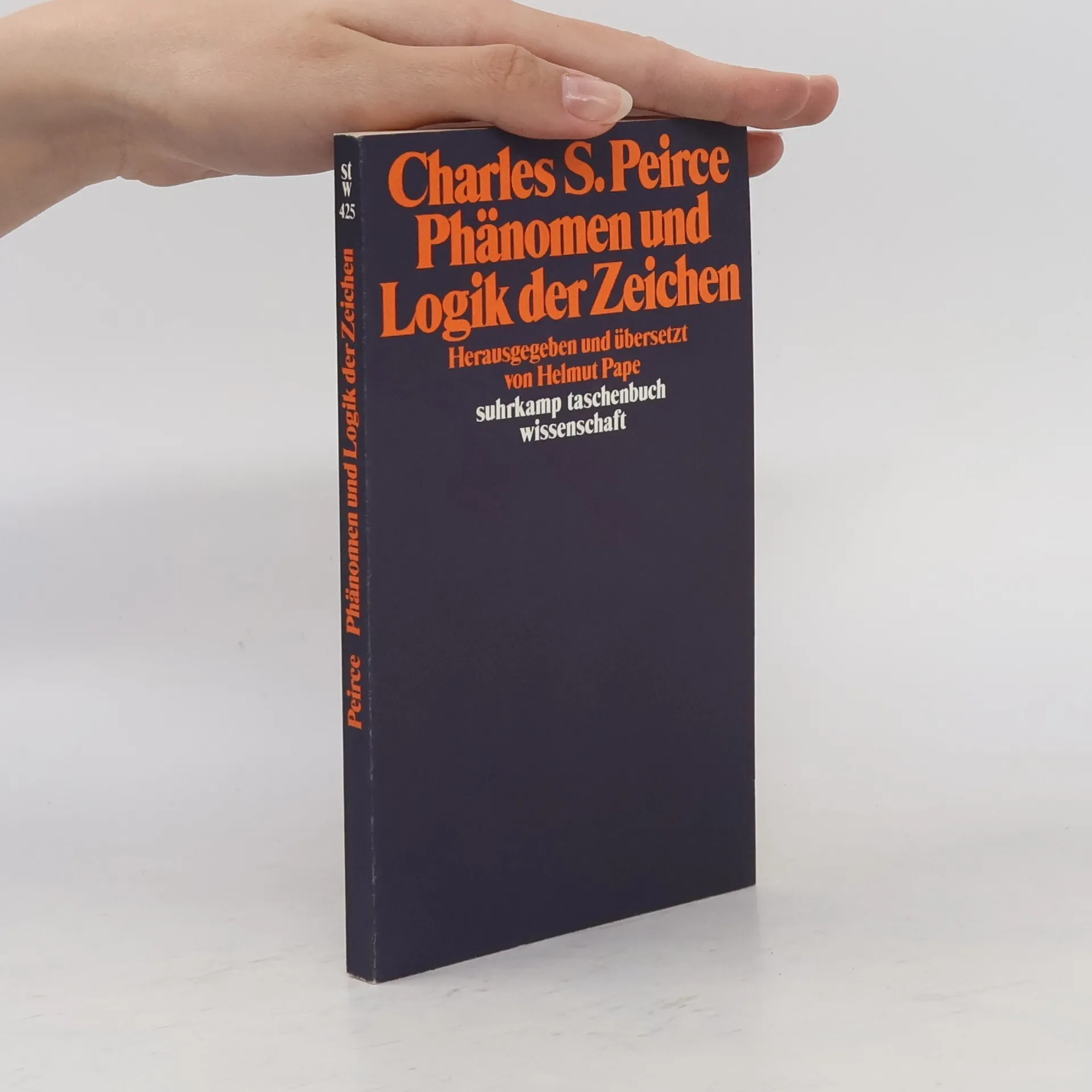
Phänomen und Logik der Zeichen
- 182 pages
- 7 hours of reading
Dieser Band ist eine Übersetzung von Peirces Syllabus of Certain Topics of Logic, eines in weiten Teilen bisher auch im Englischen noch nicht veröffentlichten Manuskriptes. Der Titel Syllabus hat ausschließlich die von ihm dort als »spekulative Grammatik« oder auch »Physiologie der Formen« bezeichnete allgemeine Zeichentheorie zum Gegenstand.
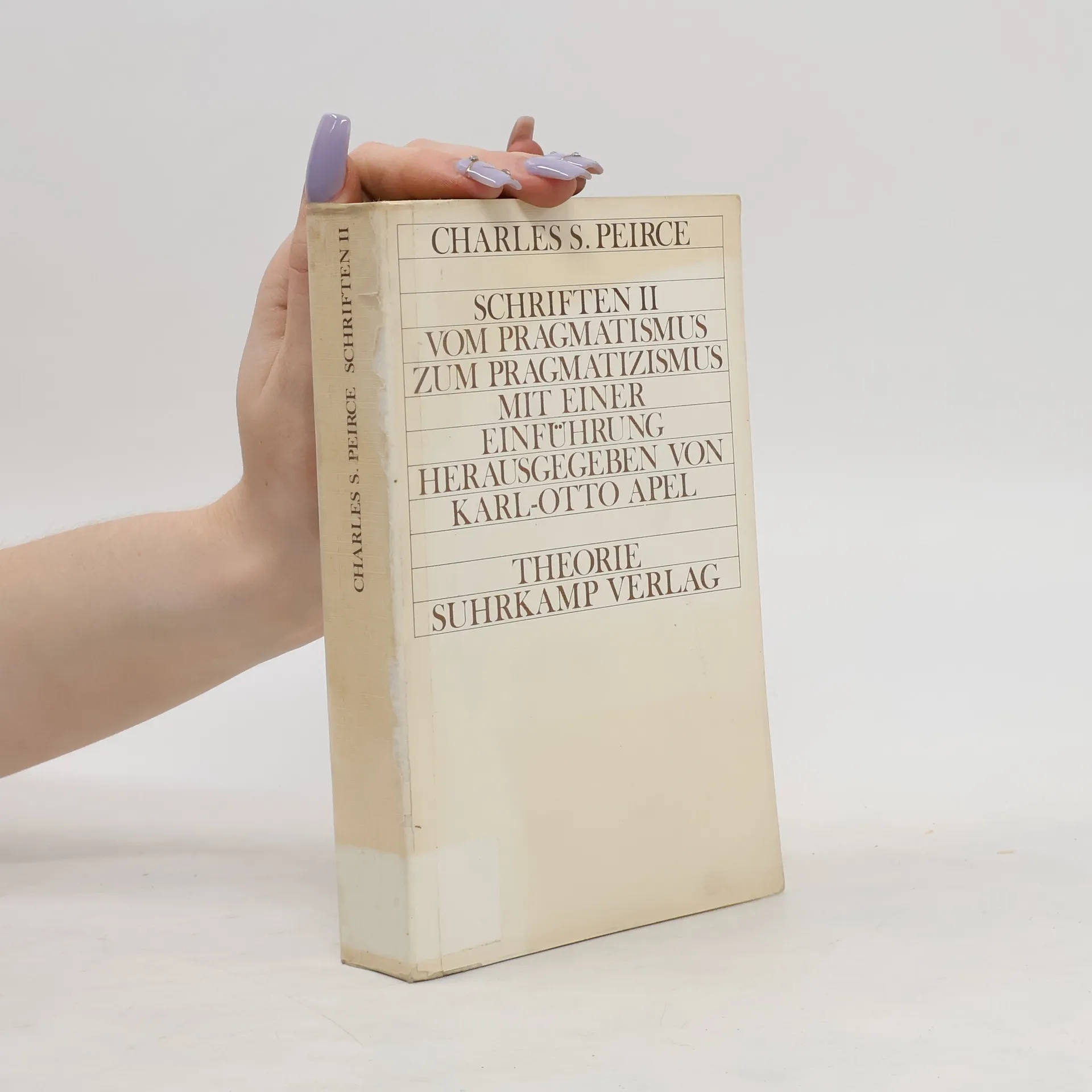
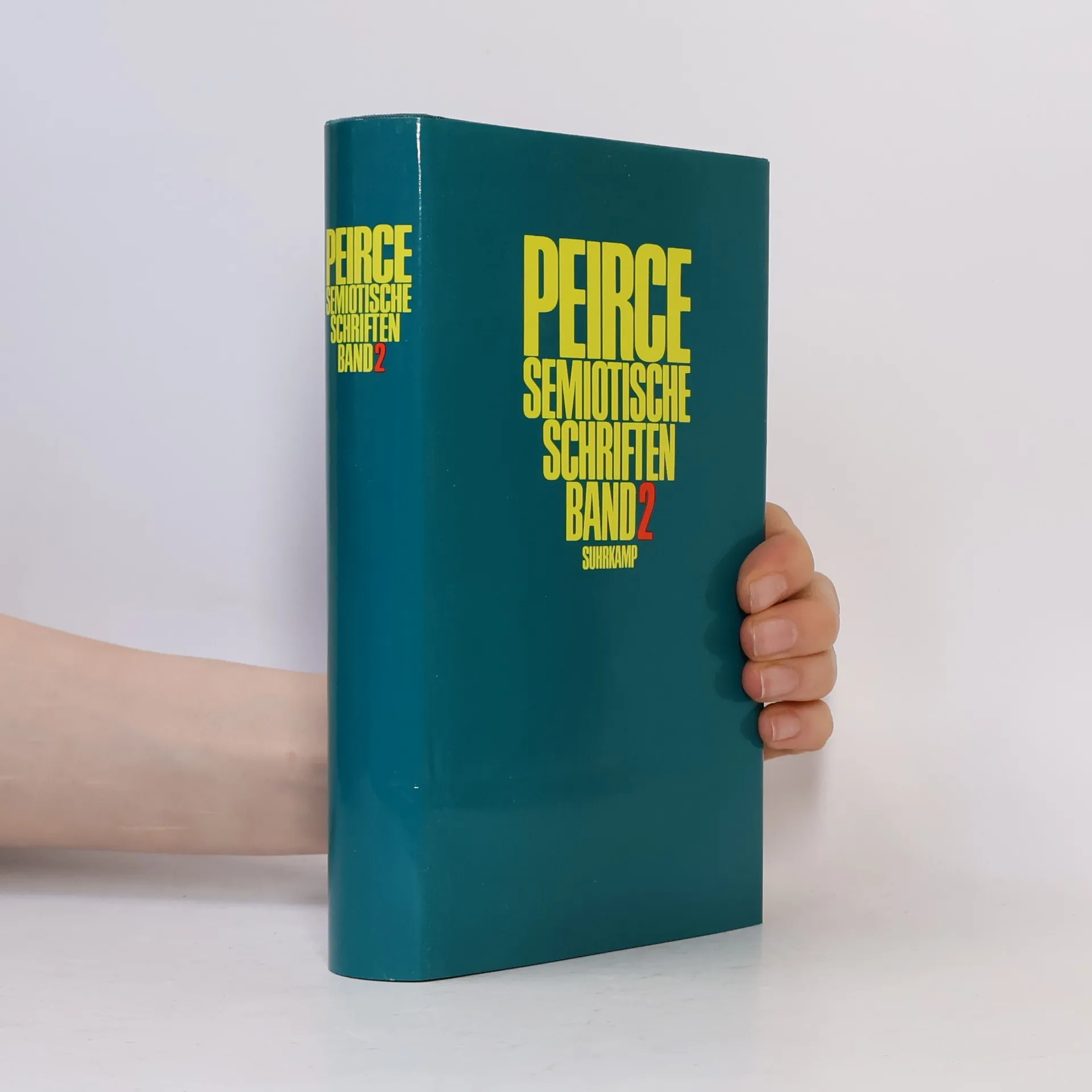
Schriften II
Vom Pragmatismus zum Pragmatizismus
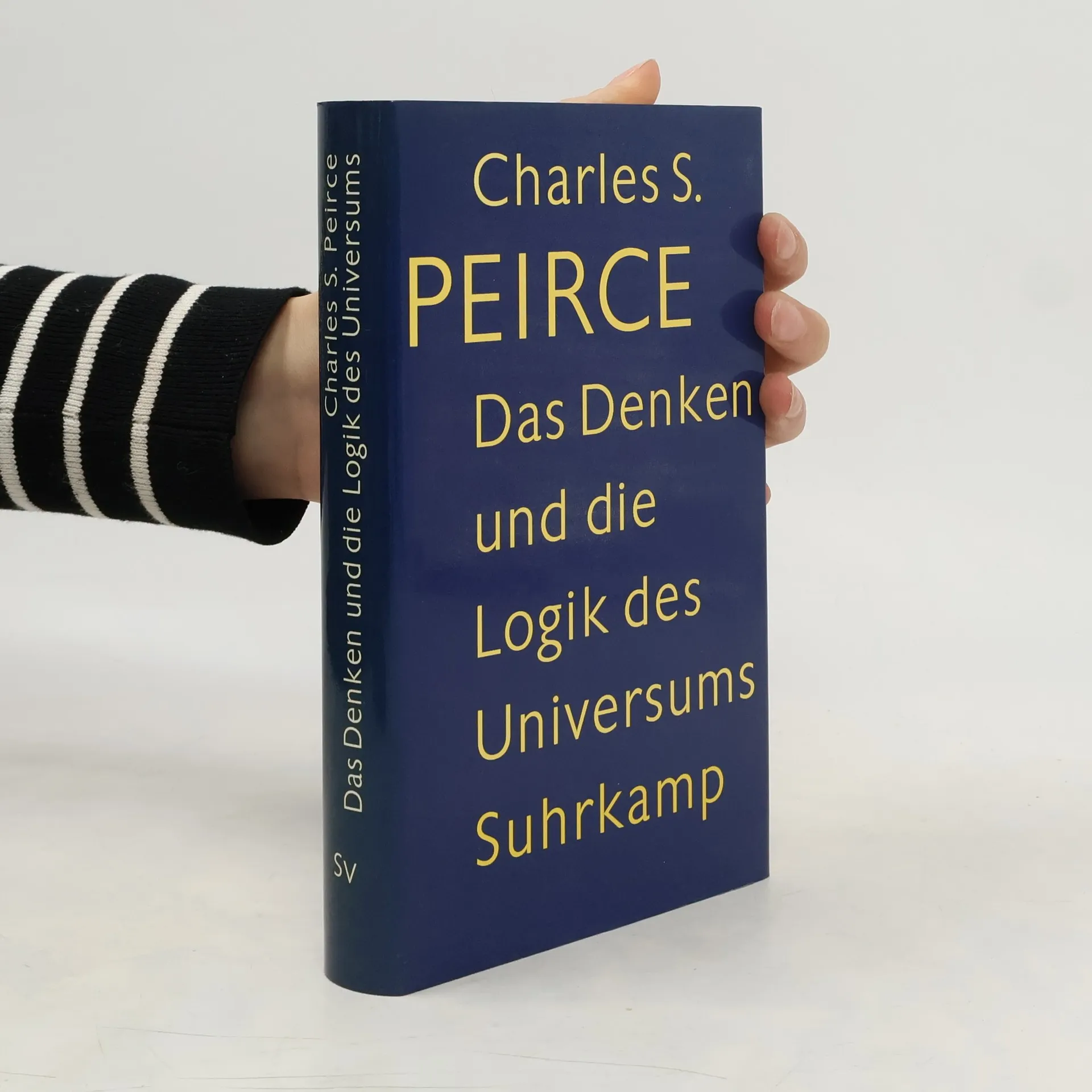
Das Denken und die Logik des Universums
- 412 pages
- 15 hours of reading
Religionsphilosophische Schriften
- 602 pages
- 22 hours of reading
Vorlesungen über Pragmatismus
- 214 pages
- 8 hours of reading
Die Vorlesungen von Charles S. Peirce beleuchten die zentralen Verbindungen zwischen Logik und Praxis sowie zwischen Denken und Handeln im amerikanischen Pragmatismus. Der Autor untersucht grundlegende Konzepte wie die normativen Wissenschaften, universale Kategorien und die Realität der Drittheit. Zudem werden verschiedene Arten des Guten und Schließens thematisiert. Ergänzt durch Anmerkungen der Herausgeberin sowie eine Bibliographie und Register, bietet das Werk tiefgehende Einblicke in die Philosophie eines der bedeutendsten amerikanischen Denker.
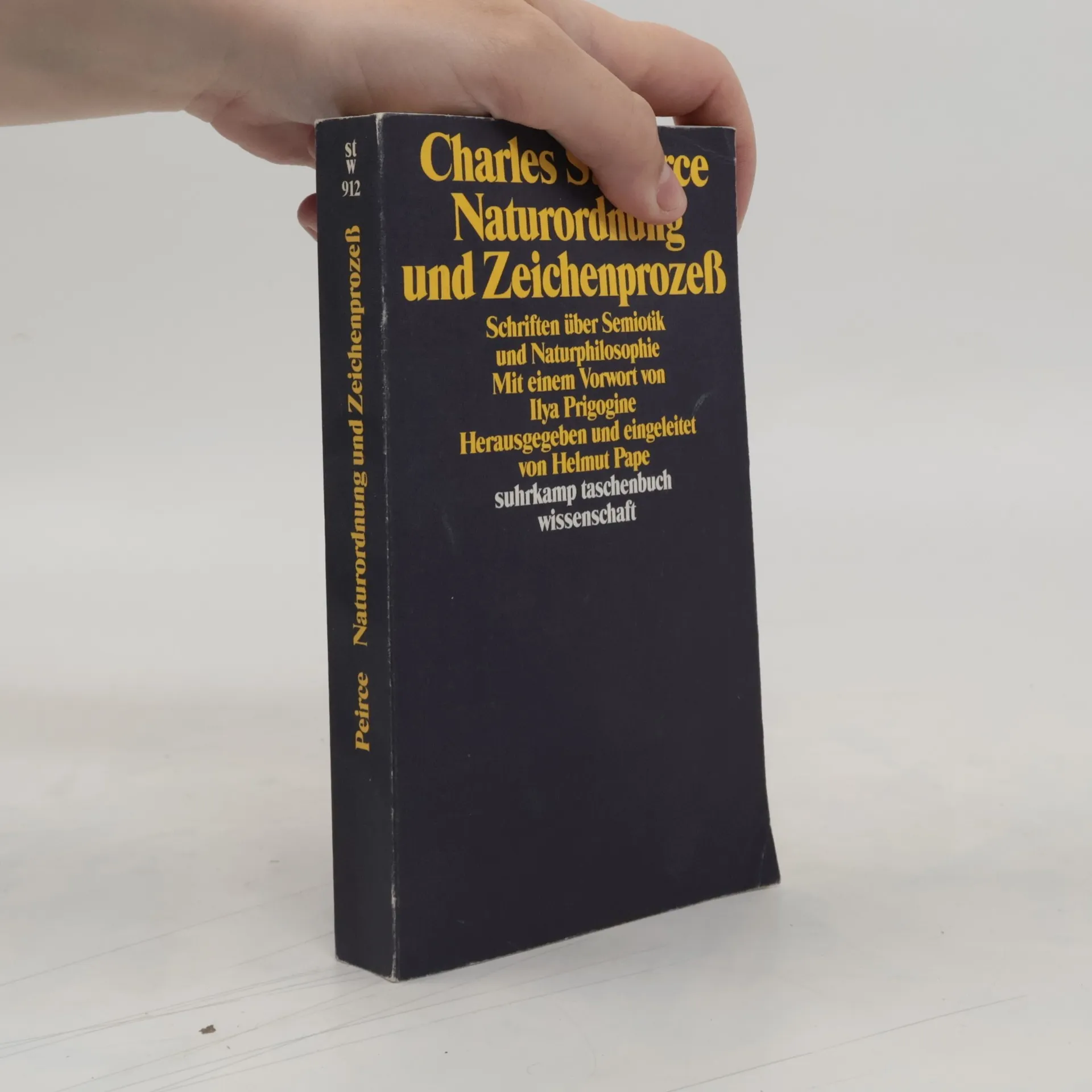
Naturordnung und Zeichenprozess
Schriften über Semiotik und Naturphilosophie
- 484 pages
- 17 hours of reading
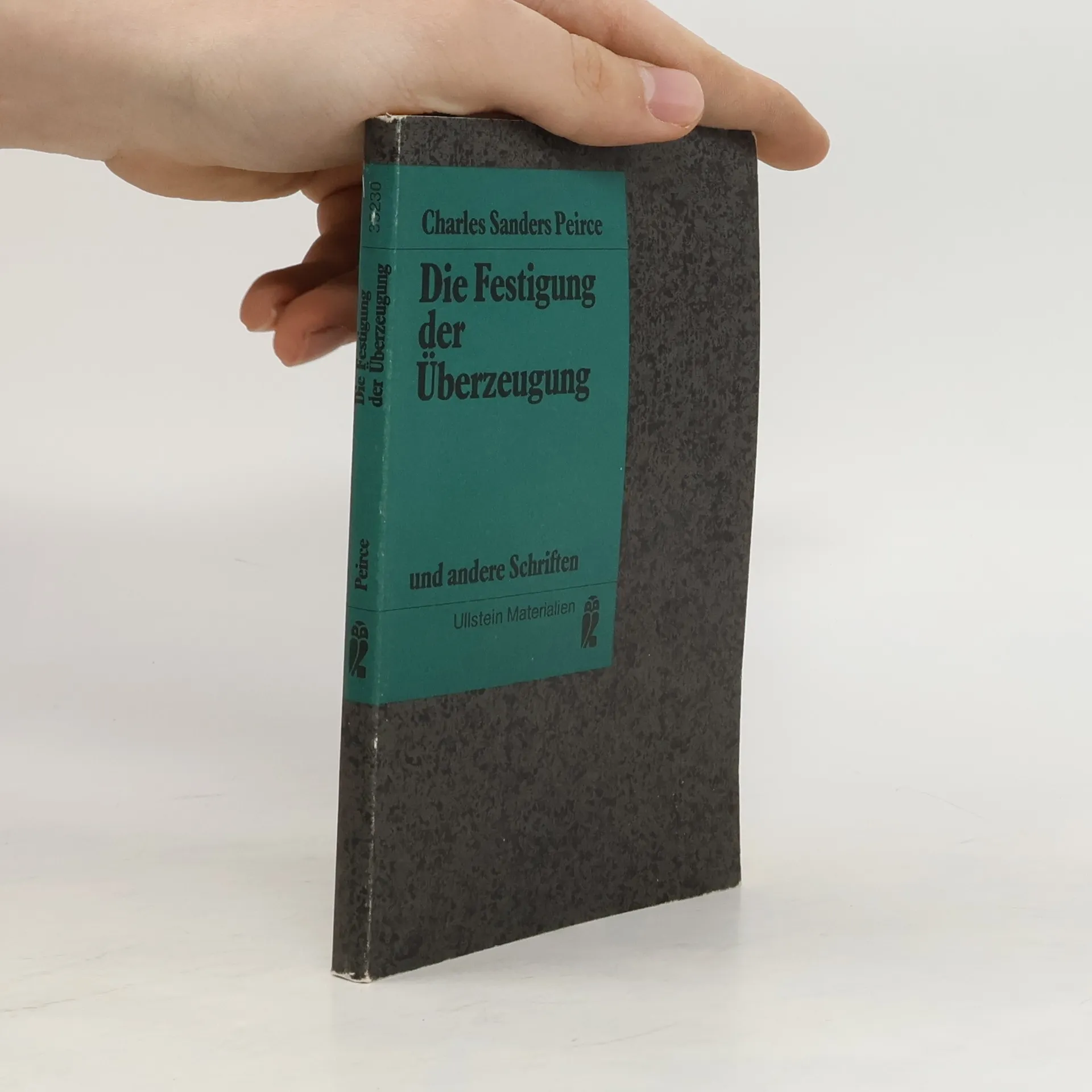
Die Festigung der Überzeugung und andere Schriften
- 195 pages
- 7 hours of reading
Philosophie des Pragmatismus
- 255 pages
- 9 hours of reading
Charles Sanders Peirce (1839–1914), amerikanischer Wissenschaftler, Mathematiker und Logiker, entwickelte einen Großteil der heute weit verbreiteten Logik. Dieses Buch bietet eine umfassende Sammlung von Peirces Schriften zur Phaneroskopie und den Umrissen seines Projekts zur Entwicklung einer Wissenschaft des Denkens. Die Sammlung konzentriert sich auf drei Hauptbereiche: Phaneroskopie, die Wissenschaft der Beobachtung, Semeiotik, die Wissenschaft der Zeichenbeziehungen, und Logik, die Wissenschaft der Inferenz. Peirce versteht allen Gedanken als durch Zeichen vermittelt und dessen Wesen als diagrammatisch. Das Buch leistet einen zeitgemäßen Beitrag zur Einführung von Peirces Phaneroskopie in das aufkommende Forschungsfeld der Bildwissenschaften.
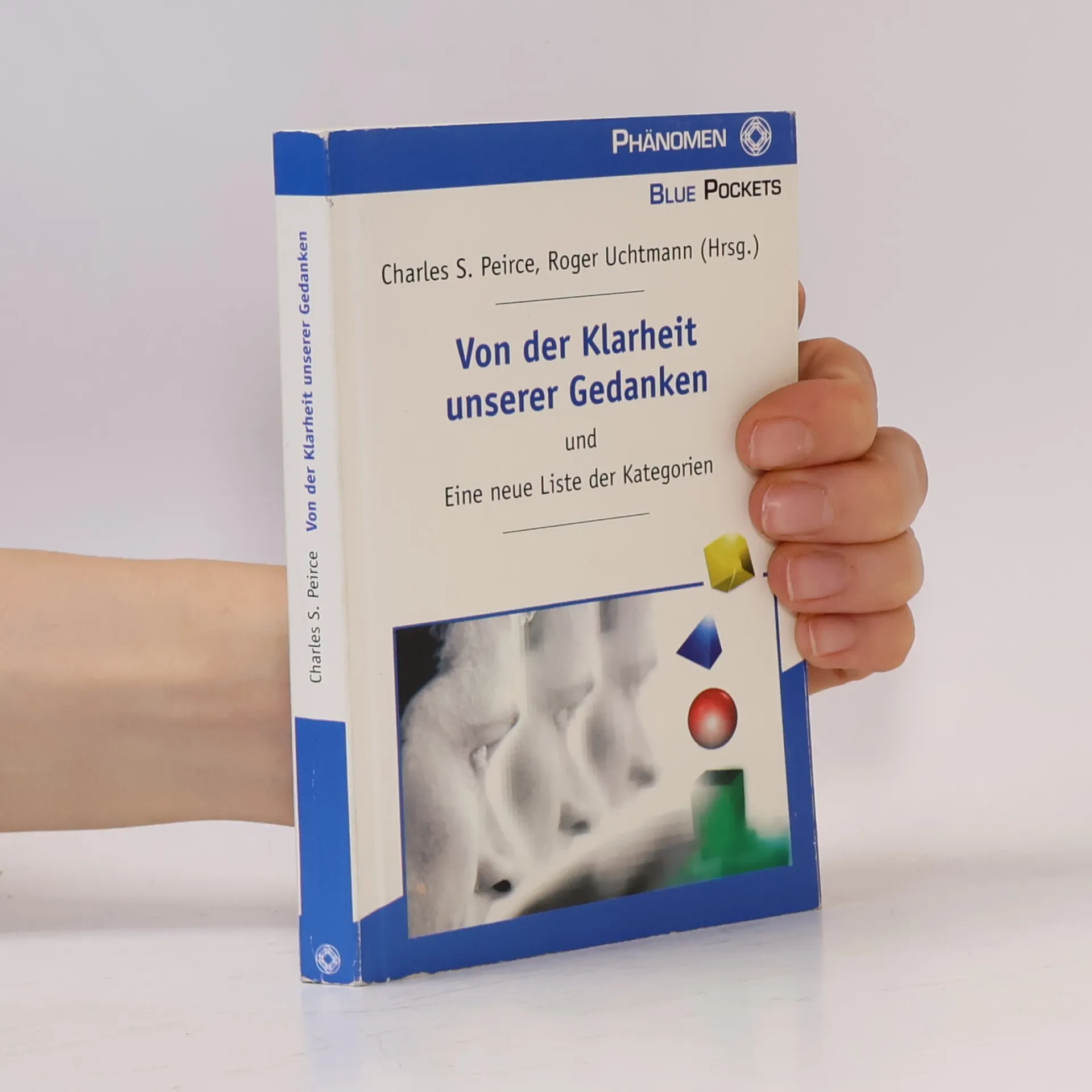
Von der Klarheit unserer Gedanken und eine neue Liste der Kategorien
- 152 pages
- 6 hours of reading
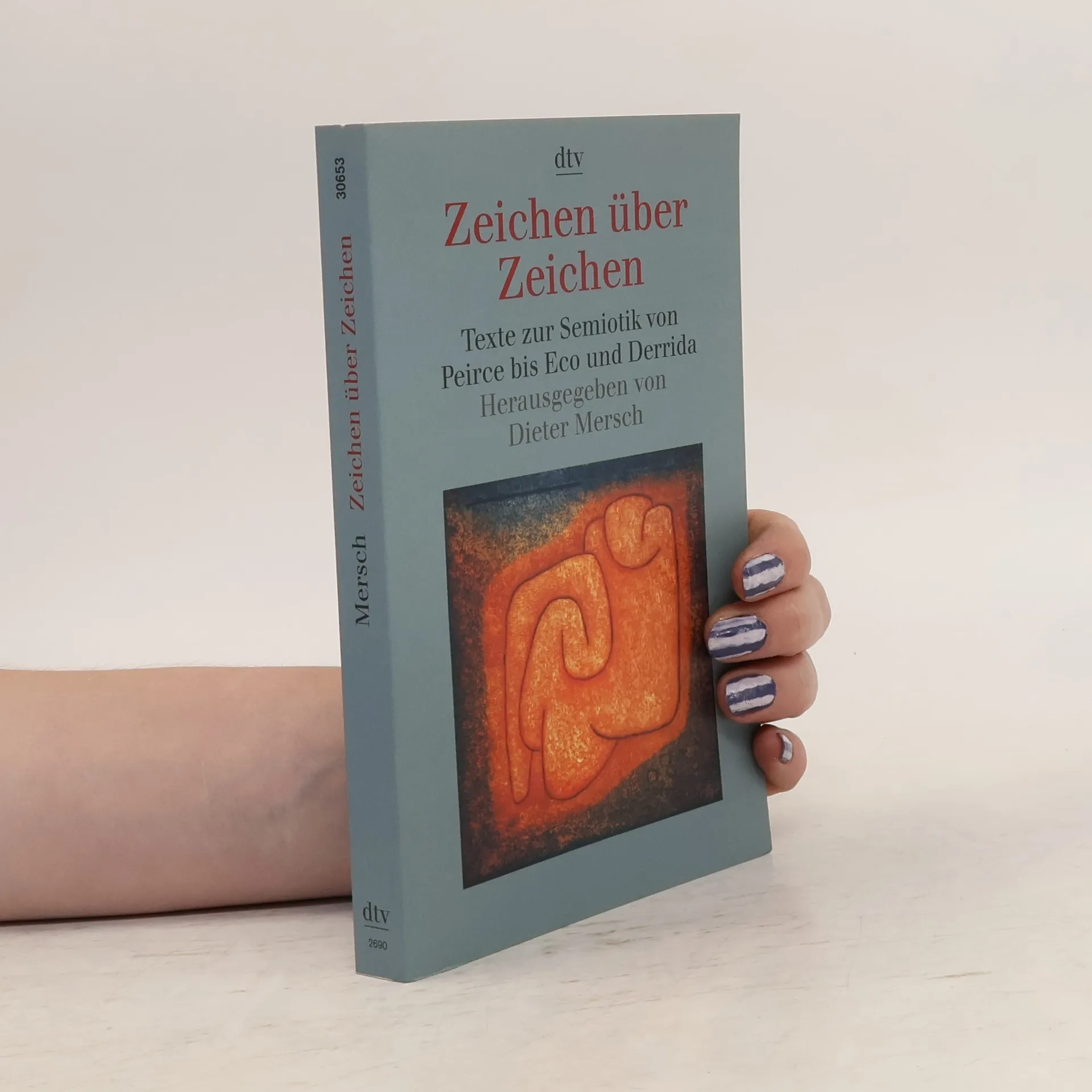
Zeichen über Zeichen
- 299 pages
- 11 hours of reading
Die in diesem zweiten und dem noch folgenden dritten Band dieser Ausgabe gedruckten Manuskripte gehören zu Peirce' wichtigsten Beiträgen zur Theorie einer philosophischen Semiotik, die an die Stelle der Erkenntnistheorie tritt: sie wird zu einer Theorie der formalen Bedingungen der Objekte aller Darstellungen, also alles Wissens. Statt transzendentale Erkenntnistheorie und -kritik zu treiben, untersucht Peirce die Bedingungen der Möglichkeit von Erfahrung anhand der formalen Bedingungen der Objekte aller Darstellungen.
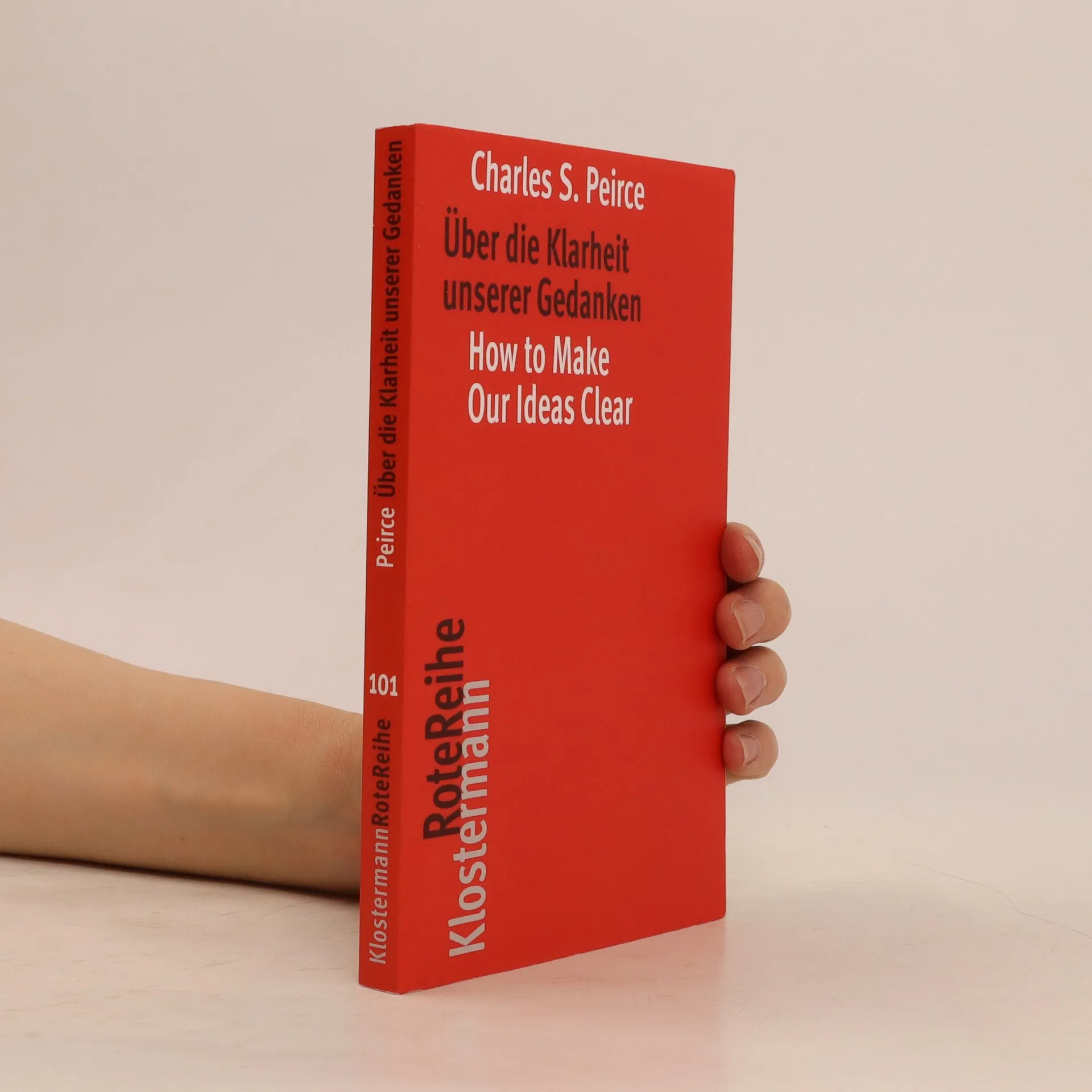
Über die Klarheit unserer Gedanken
- 178 pages
- 7 hours of reading
Charles S. Peirce (1839-1914) ist der Begründer der Philosophie des Pragmatismus. Das Interesse für Zeichen und deren Betrachtung unter dem Aspekt ihrer praktischen Konsequenzen im Handeln, das den Ansatzpunkt seiner Philosophie bildet, ist für pragmatisches Denken bis heute verbindlich geblieben. Mit diesem Ansatz wurde Peirce auch zum Begründer der Semiotik und der Relationenlogik. Sein Handlungsbegriff bildet bis heute eine wesentliche Grundlage handlungstheoretischer Diskussionen. Der Aufsatz „How to Make Our Ideas Clear“, den dieser Band im Original und in deutscher Übersetzung bringt, formuliert die entscheidenden Argumente, die zur Theorie des Pragmatismus geführt haben. Die Ausgabe enthält Einleitung, Übersetzung und einen ausführlichen Kommentar von Klaus Oehler und ein neues Nachwort von Edward Craig.
Karl-Otto Apel, geboren 1922 in Düsseldorf, gestorben 2017 in Niedernhausen, war Professor für Philosophie an der Goethe-Universität Frankfurt/M. Im Suhrkamp Verlag sind u. a. erschienen: Transformation der Philosophie (1999), Diskurs und Verantwortung (1988), Auseinandersetzungen in Erprobung des transzendentalpragmatischen Ansatzes (1998).
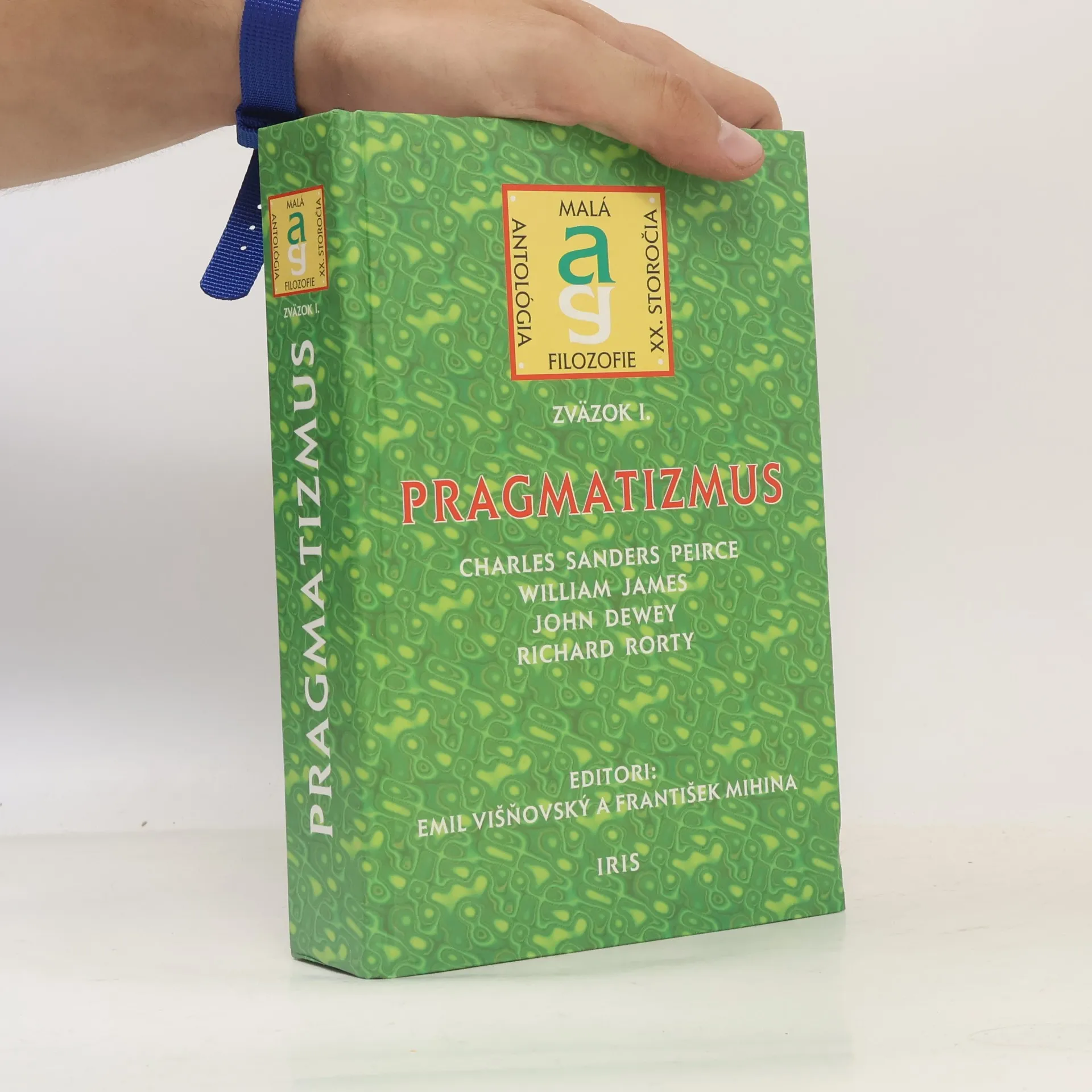
Pragmatizmus
- 569 pages
- 20 hours of reading
Obsah: Predhovor k Malej antológii filozofie 20. storočia (František Mihina - Emil Višňovský) PRAGMATIZMUS VČERA A DNES (Emil Višňovský — František Mihina) Klasický pragmatizmus CHARLES SANDERS PEIRCE (František Mihina) — Upevňovanie viery — Ako vyjasniť naše idey — Princípy fenomenológie — Základy pragmatizmu — Logika ako semiotika: teória znakov — Filozofia a vedy: klasifikácia — Uniformita WILLIAM JAMES (František Mihina) — Prúd myslenia — Existuje „vedomie“? — Radikálny empirizmus — Pragmatizmus a radikálny empirizmus — Pragmatizmus a zdravý rozum — Pragmatistická koncepcia pravdy — Pragmatistický výklad pravdy a jeho nesprávne pochopenia — Pragmatizmus a humanizmus — Pragmatizmus a náboženstvo — Vôľa veriť JOHN DEWEY (Emil Višňovský) — Prečo študovať filozofiu? — Filozofia a americký národný život — Vplyv darvinizmu na filozofiu — Vplyv pragmatizmu na výchovu — Filozofia výchovy — Potreba obnovy filozofie — Skúsenosť a filozofická metóda — Súkromné a verejné — Indivíduum v kultúrnej kríze — Únik z ohrozenia — Model skúmania — Budúcnosť filozofie v nalej ére vedy (Jej rola nikdy nebola väčšia) Neopragmatizmus RICHARD RORTY (Emil Višňovský) — Čo je pragmatizmus — Pragmatizmus a filozofia — Pragmatizmus je politický skrz-naskrz Vybraná bibliografia k štúdiu filozofie pragmatizmu Edičná poznámka Menný register...