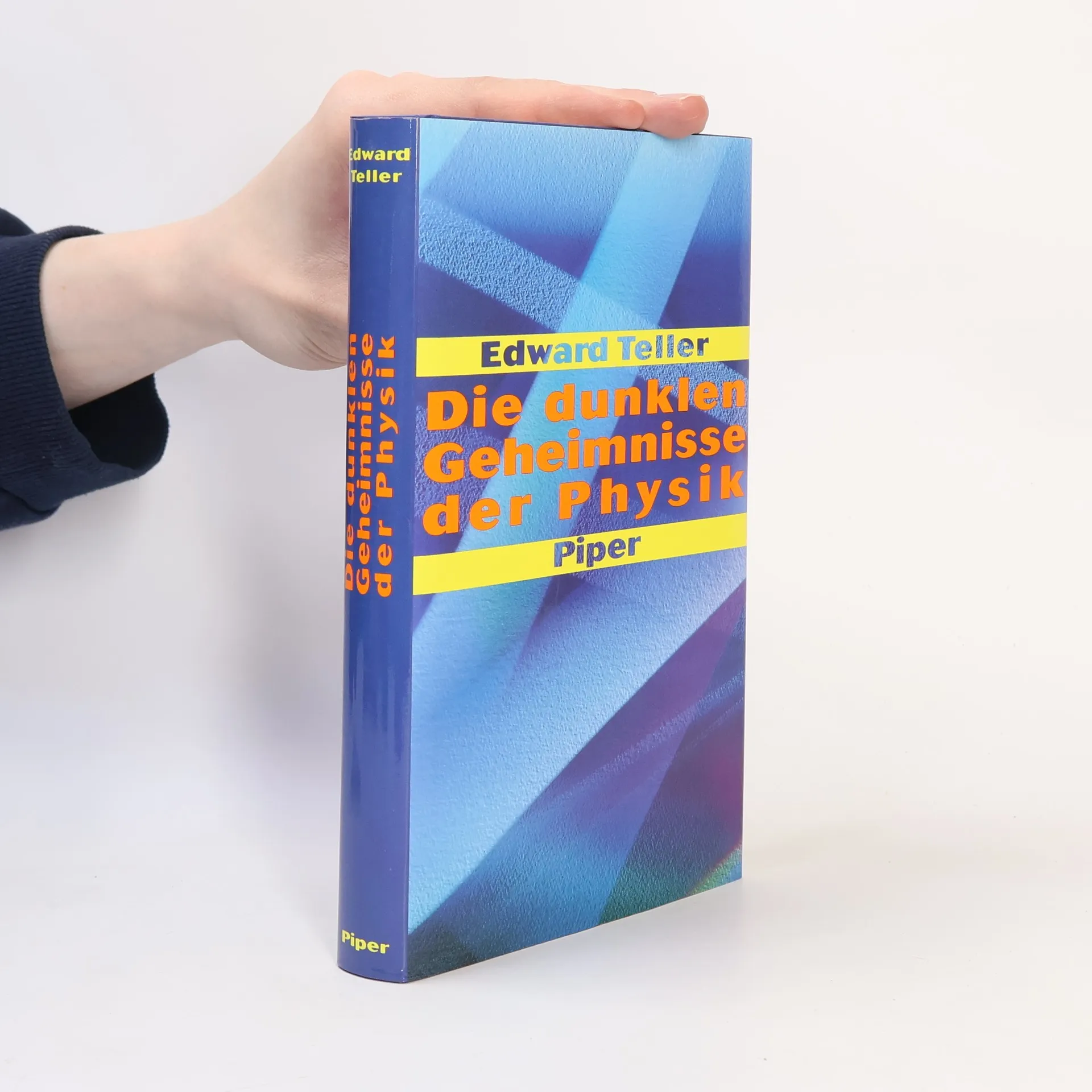
Energy from Heaven and Earth
- 322 pages
- 12 hours of reading


Edward Teller, often hailed as the father of the American hydrogen bomb, forged a profound yet controversial career in science. Recognized as one of the most imaginative and creative physicists of his era, his work fundamentally shaped the nuclear weapons program. However, his singular focus on developing the hydrogen bomb and his autocratic approach often created friction with his colleagues. His life journey, marked by an escape from a politically turbulent Hungary and studies in Germany, ultimately led him to the United States, where he became a pivotal figure in the advancement of nuclear technology.




Lifesaving Nuclear Facts and Self-Help Instructions
Be prepared for the worst case scenario with t this field-tested guide to surviving a nuclear attack, written by a revered civil defense expert.This edition of Cresson H. Kearny’s iconic Nuclear War Survival Skills (originally published in 1979 and updated by Kearny himself in 1987 and again in 2001), offers expert advice for ensuring your family’s safety should the worst come to pass. Chock-full of practical instructions and preventative measures, Nuclear War Survival Skills is based on years of meticulous scientific research conducted by Oak Ridge National Laboratory.Written at a time when global tensions were at their peak, Nuclear War Survival Skills remains relevant in the dangerous age in which we now live.
The story of Edward Teller encapsulates the tumultuous events of the twentieth century. Born in Hungary in 1908, he experienced the rise of Nazism, two world wars, and the McCarthy era, all while witnessing the evolution of big science. A brilliant yet controversial figure, Teller's contributions to nuclear weapons were pivotal to the American war effort, and he championed the philosophy of freedom through strong defense, which influenced his views on arms control and nuclear policy. His extraordinary recollections unveil the man behind the headlines—passionate, humorous, devoted, and loyal. Through clear and engaging prose, Teller recounts the people, events, and ideas that shaped his scientific journey, from his early love of music and math to studying quantum physics with Werner Heisenberg. He shares insights from pivotal moments in modern science and reflects on friendships with luminaries like Einstein, Bohr, and Oppenheimer, providing an honest account of the atomic and hydrogen bomb developments. Additionally, Teller offers a poignant glimpse into his childhood, marriage, and family life, revealing his conservative politics and relationships with scientists and presidents, all while expressing his deep beliefs about liberty, security, and the moral responsibilities of science.
A personal tour through the world of physics--from Newton's laws to quantum mechanics--by one of the most celebrated physicists of the twentieth century. In Conversations on the Dark Secrets of Physics , Teller returns to the fundamentals of physics to share with readers his unbridled enthusiasm for the world of physical reality--from the nature of molecules to quantum mechanics and superconductors, from the elementary laws of thermodynamics to how planets, asteroids, and comets develop their orbits. By simplifying the math and forgoing the often-confusing technical jargon, Teller helps the reader break through physic's bewildering formulas and equations and get to the wonders of our physical universe. A timeless and personal explanation of the importance of physics in our life, Conversations on the Dark Secrets of Physics is certain to become a classic.