

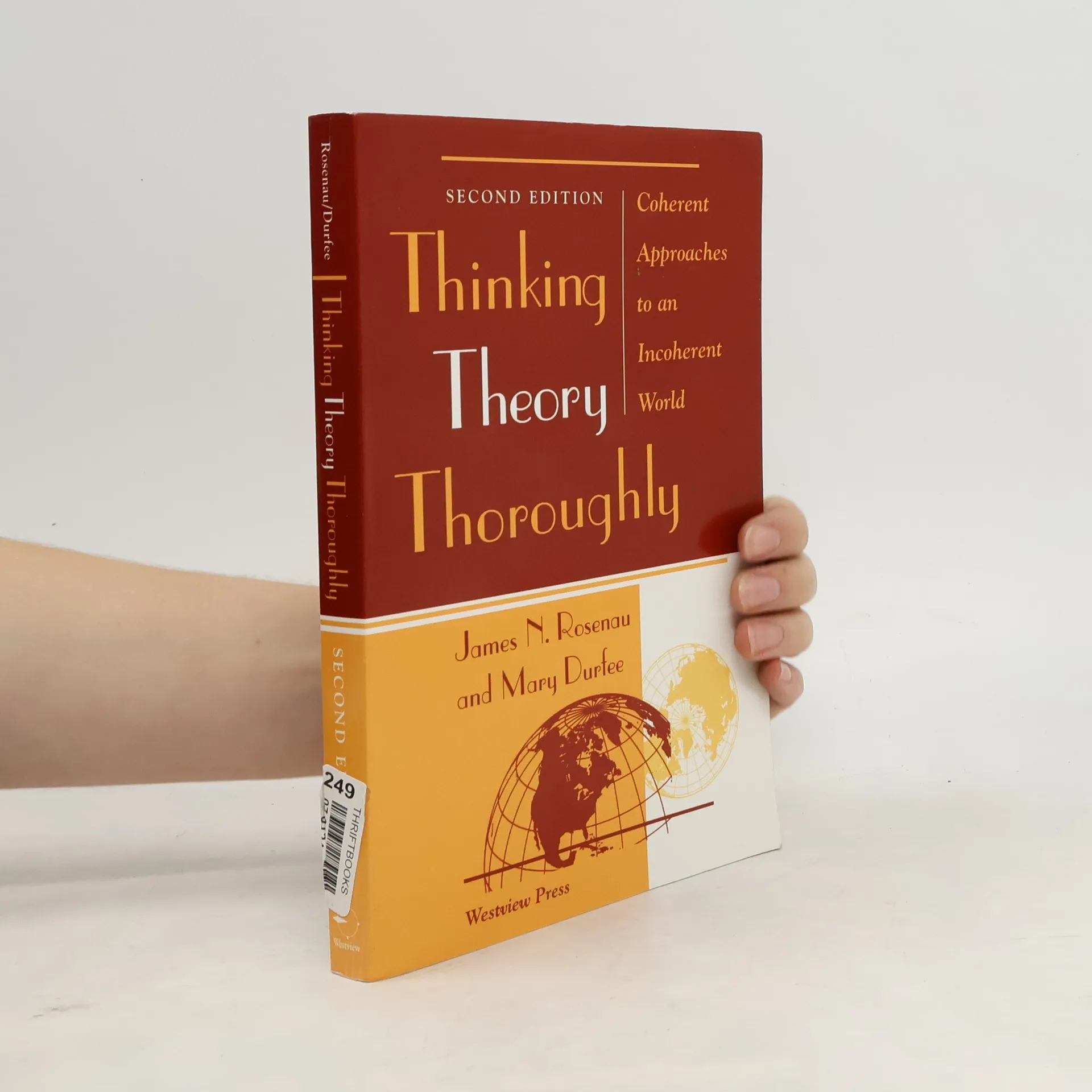
Think theory is thoroughly removed from explaining international crises such as Bosnia, Rwanda, and Korea? Think again! James Rosenau and Mary Durfee have teamed up to show how the same events take on different coloration depending on the theory used to explain them. In order to better understand world politics, the authors maintain, theory does make a difference.Thinking Theory Thoroughly is a primer for all kinds of readers who want to begin theorizing about international relations (IR). In this second edition, realism (the dominant theoretical perspective in IR), postinternationalism (Rosenau's famed turbulence paradigm), and liberalism are treated together in a chapter that compares them along various analytic dimensions, which makes the book even more useful.In this new edition, the order and content of case chapters have been changed to better reflect the ways theory can be used to organize empirical material. The chapter on crises, which is now at the beginning, shows how systemic theories might cope with problems and evidence of a more local and temporally constrained nature. A chapter on the U.N. illustrates how systemic theories can cope with institutions, and the last chapter, on Antarctica, delineates how systemic theories can be used to generate hypotheses that then demand different kinds of evidence.
James N. Rosenau Book order (chronological)

Who are Westfem, SAR, Tsitsi, SUKA, Mother Courage, SICC, and GORP, and what insights do they offer on contemporary international affairs? This book presents a thought-provoking introduction to pressing global issues through dialogues crafted by prominent figures in international relations research. Covering topics from the New World Order to postmodernism's impact on the deconstruction of the Soviet Union, the narrative unfolds through five distinct “dialoguers.” These characters include a Senior American Researcher, British and feminist counterparts, a young Western feminist, her Third World alter ego, a skeptical citizen, and elusive postmodern figures. The dialogues capture a spectrum of perspectives—youth and age, male and female, realist and idealist, science and art, Western and Third World. As the characters engage in conversation, their defenses dissolve alongside the Berlin Wall, mirroring the unraveling of American hegemony, the Soviet republics, and gendered perceptions of reality. This engaging exploration of theory, issues, and controversies in international relations appeals to both scholars and general readers, making it an ideal resource for students eager to “listen in” on discussions that are redefining international political thought and action.