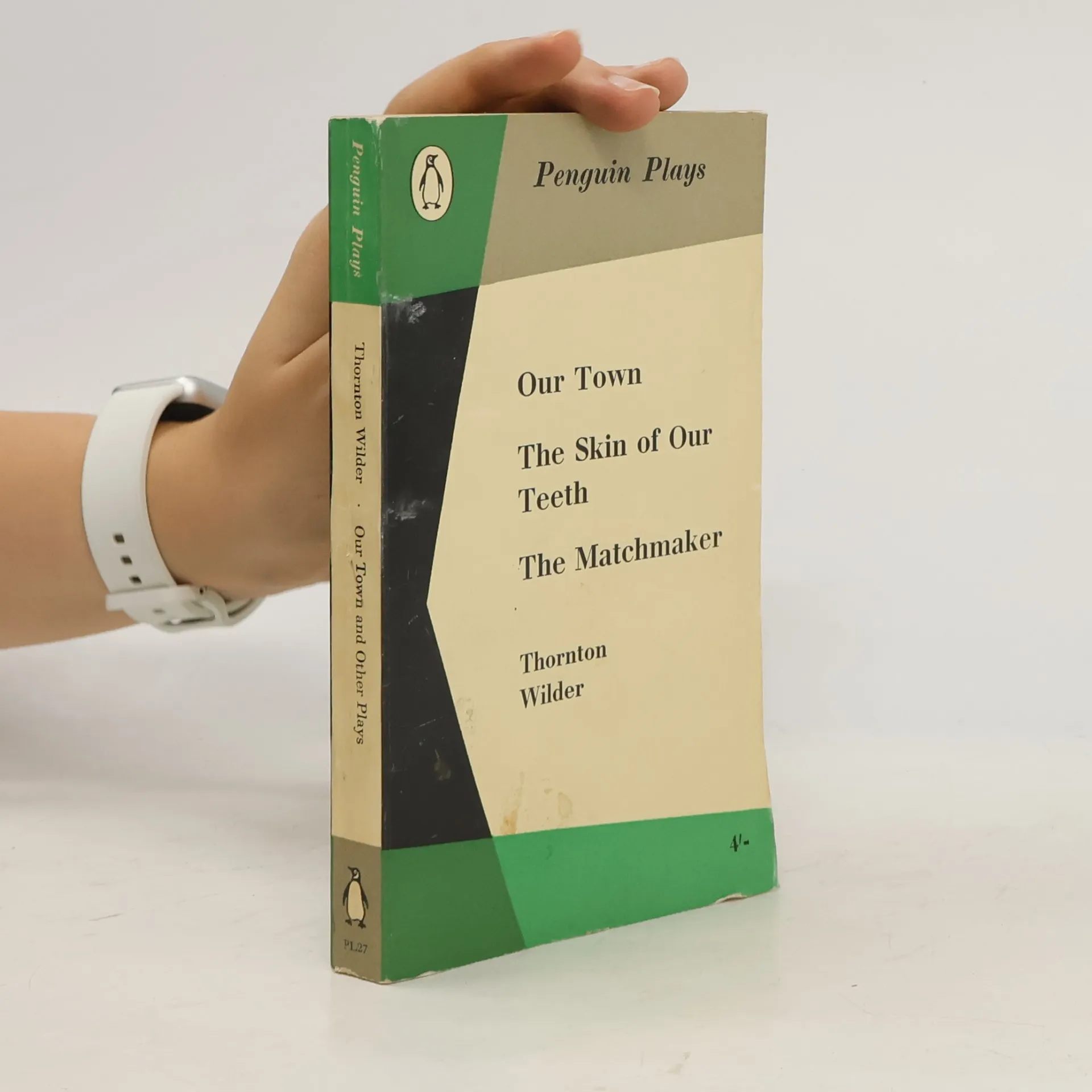

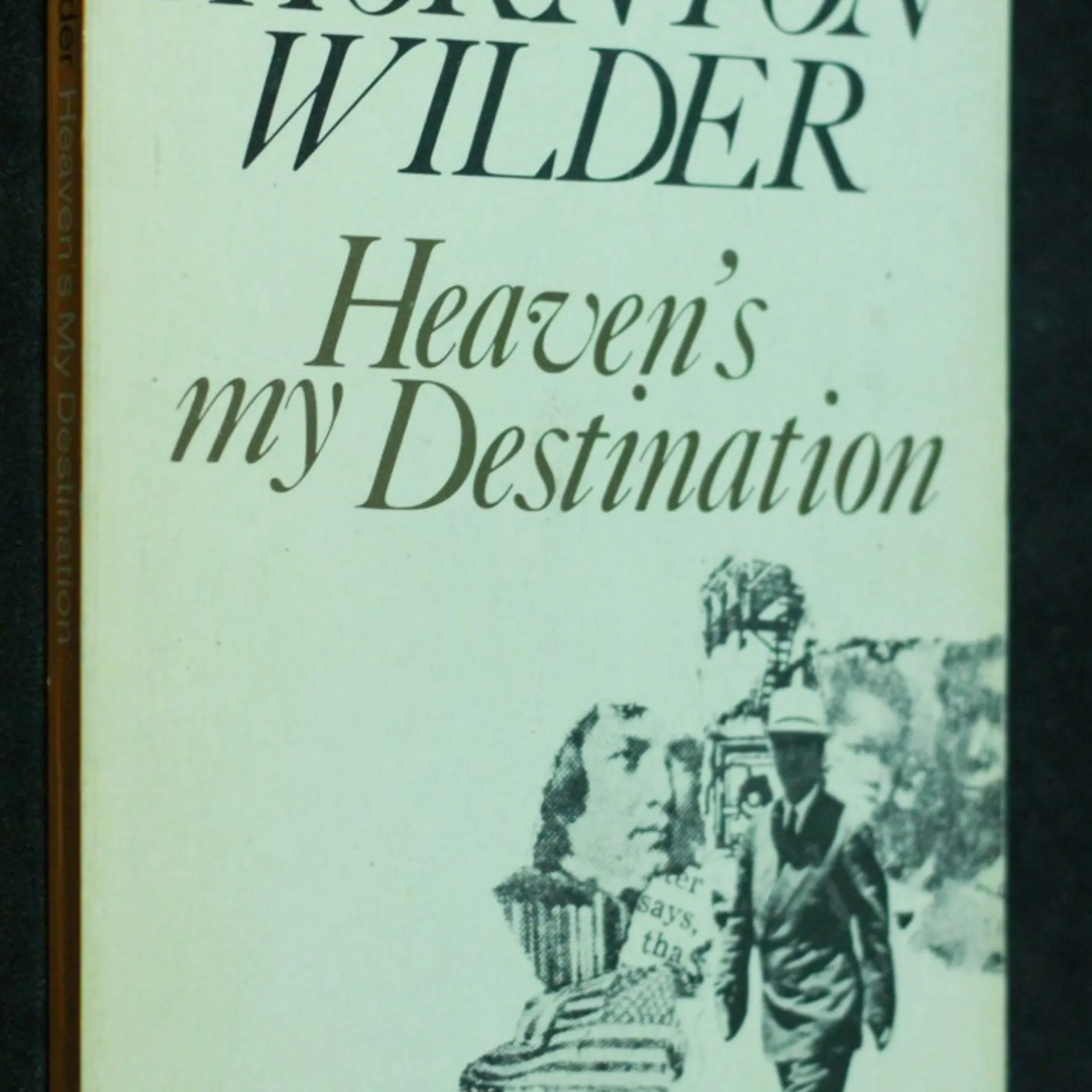
A young American student spends a year in the exotic world of post-World War I Rome. While there, he experiences firsthand the waning days of a secret community (a "cabala") of decaying royalty, a great cardinal of the Roman Church, and an assortment of memorable American ex-pats. The Cabala, a semiautobiographical novel of unforgettable characters and human passions, launched Wilder's career as a celebrated storyteller and dramatist
Thornton Wilder Book order (chronological)
Thornton Wilder was an American playwright and novelist whose works often delve into universal themes of human existence and societal values. He masterfully wove humor with profound reflection, earning acclaim for his unique ability to capture the essence of human life. Wilder's plays and novels explore the complexities of relationships, the passage of time, and the search for meaning in everyday experiences. His influence on modern drama and literature is undeniable, as his works continue to resonate with readers worldwide.


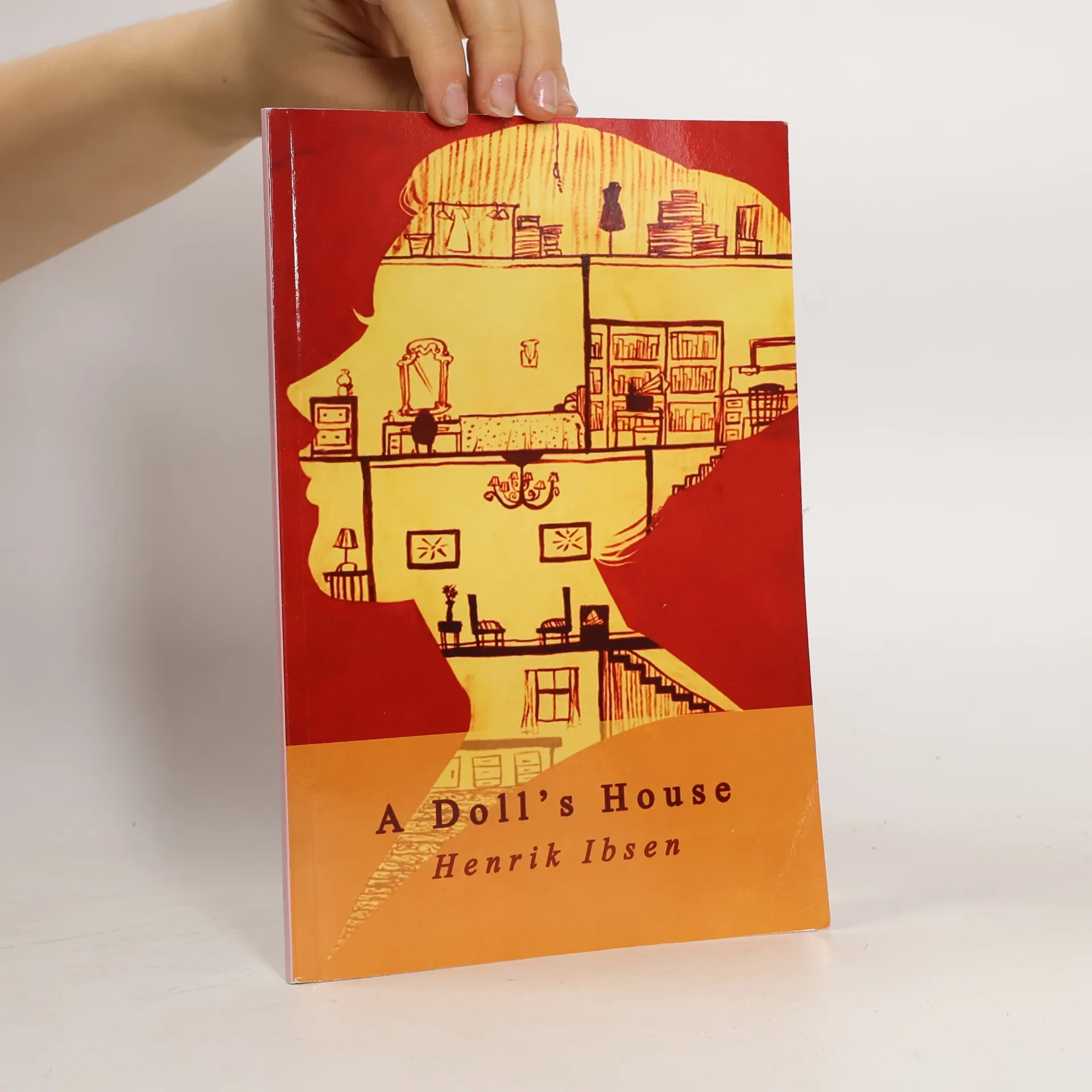
A Doll's House by Henrik Ibsen A Doll's House is a three-act play in prose by Henrik Ibsen. It premiered at the Royal Theatre in Copenhagen, Denmark, on 21 December 1879, having been published earlier that month. The play is significant for its critical attitude toward 19th-century marriage norms. It aroused great controversy at the time, as it concludes with the protagonist, Nora, leaving her husband and children because she wants to discover herself. Ibsen was inspired by the belief that "a woman cannot be herself in modern society," since it is "an exclusively male society, with laws made by men and with prosecutors and judges who assess feminine conduct from a masculine standpoint." Its ideas can also be seen as having a wider application: Michael Meyer argued that the play's theme is not women's rights, but rather "the need of every individual to find out the kind of person he or she really is and to strive to become that person." In a speech given to the Norwegian Association for Women's Rights in 1898, Ibsen insisted that he "must disclaim the honor of having consciously worked for the women's rights movement," since he wrote "without any conscious thought of making propaganda," his task having been "the description of humanity."
Los Idus de Marzo (Bolsillo)
- 312 pages
- 11 hours of reading
Novela epistolar situada en Roma en el año 45 a.C., un sugestivo acercamiento a la figura de César y su tiempo. Según Gabriel García Márquez es «una fuente deslumbrante de la grandeza y las miserias del poder».
Wir sind noch einmal davongekommen
Schauspiel in drei Akten
Die Tagebücher 1939 - 1961
- 411 pages
- 15 hours of reading
Die Brücke von San Luis Rey. Die Iden des März. Unsere kleine Stadt
- 515 pages
- 19 hours of reading
Die Alkestiade
- 133 pages
- 5 hours of reading