

When John Maynard Smith and Eors Szathmary published The Major Transitions in Evolution, it was seen as a major work in biology. Nature hailed it as a book of "grand and daunting sweep.... A splendid and rewarding tour de force." And New Scientist wrote that it captured "the essence of modern biology," calling it "an extremely significant book which, as a bonus, is very readable." Now, in The Origins of Life, Maynard Smith and Szathmary have completely rewritten Transitions to bring their ideas to a wider audience of general readers. Here is a brilliant, state-of-the-art account of how life evolved on earth, focusing primarily on six major transitions--dramatic breakthroughs in the way that information was passed between generations. The authors offer illuminating explorations of the origin of life itself, the arrival of the first cells with nuclei, the first reproduction by sexual means, the appearance of multicellular plants and animals, the emergence of cooperation and of animal societies, and the birth of language. The Origins of Life represents the thinking of two leading scientists on questions that engage us all--how life began and how it gradually evolved from tiny invisible cells into whales and trees and human beings.
John Maynard Smith Book order (chronological)
This British evolutionary geneticist was among the most important biologists of his era, with work that fundamentally shaped our understanding of evolutionary processes. His innovative approach to game theory and evolutionary biology opened new avenues for research and the comprehension of organismal behavior. His ideas continue to inspire scientists and students globally who seek to unravel the complexities of life.
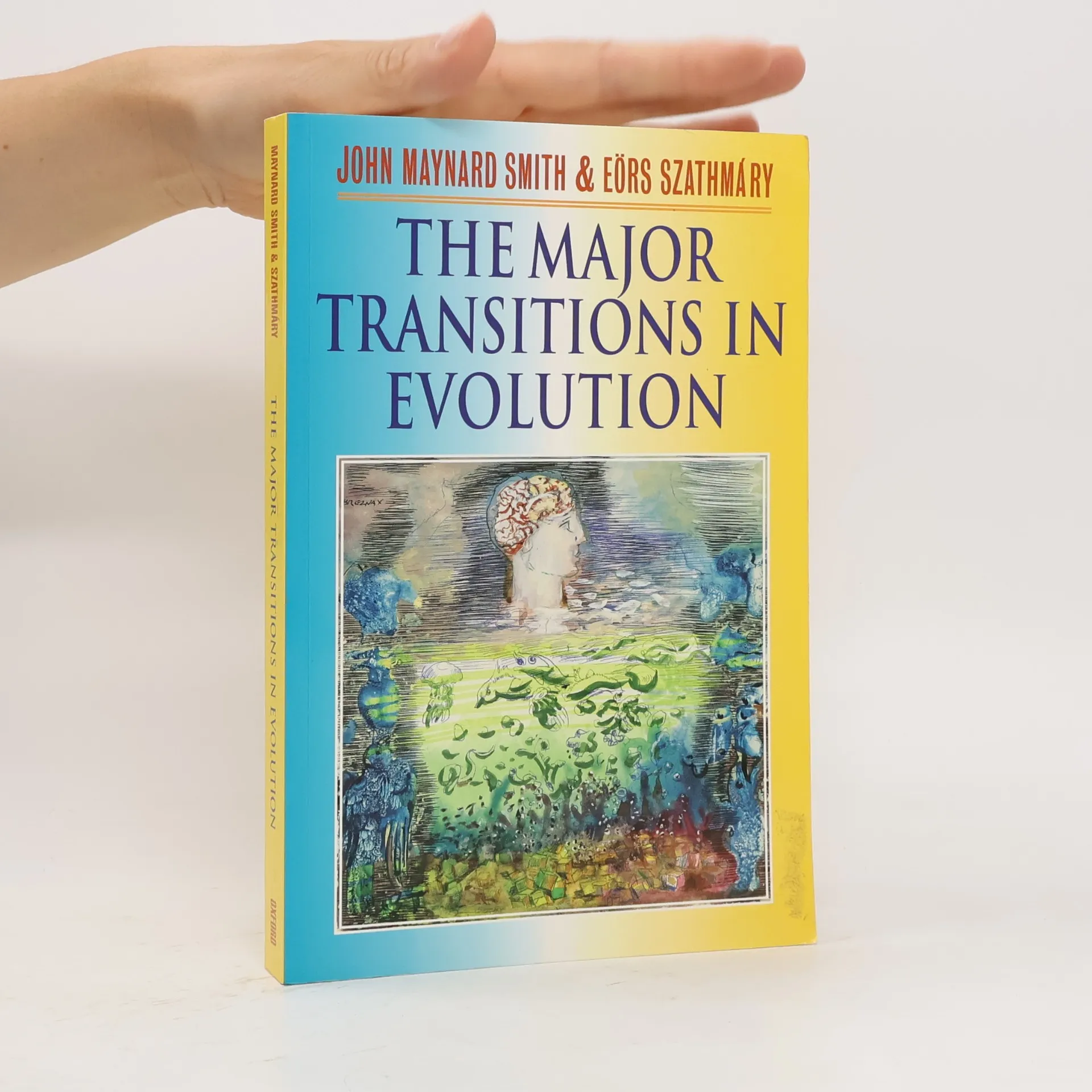
The Major Transitions in Evolution
- 360 pages
- 13 hours of reading
Throughout the history of life, significant changes have occurred in how genetic information is organized and passed down. These transitions encompass the origin of life, the emergence of eukaryotic cells, sexual reproduction, the development of multicellular organisms, the rise of cooperation, and the unique language capabilities of humans. This ambitious work offers a unified exploration of these transitions, highlighting the similarities among them—such as the formation of chromosomes from replicating molecules and the assembly of cells into multicellular entities. The authors illustrate how understanding one transition can illuminate others, revealing a common theme: after a major transition, some entities lose their ability to replicate independently, relying on a larger whole for reproduction. They delve into this pattern and explore why selection at lower levels does not disrupt higher-level selection, proposing a compelling theory of cooperation's evolution across varying complexities. Engagingly written and richly illustrated, this book is accessible to anyone with an undergraduate background in biology and serves as an excellent resource for advanced discussions on evolution, covering diverse topics from molecular biology to insect societies.
Evolution and the Theory of Games
- 234 pages
- 9 hours of reading
The book presents an innovative perspective on evolution through the lens of game theory, exploring how strategic interactions influence biological processes. Professor John Maynard Smith delves into the implications of this approach for understanding the behavior and development of species, offering a fresh framework that challenges traditional evolutionary concepts.
A century ago Darwin and Wallace explained how evolution could have happened in terms of processes known to take place today. This book describes how their theory has been confirmed, but at the same time "transformed", by recent research.