



C. John Collins is a professor of Old Testament who explores Hebrew and Greek grammar, science and faith, and biblical theology. His work stems from a profound interest in connecting scholarly inquiry with theological understanding. Collins examines how biblical texts shape our comprehension of God and the world. His approach is characterized by meticulous analysis and a pursuit of synthesis between faith and reason.
The book is targeted at international history, drug policy, international
relations and international law specialists. It provides the first focused,
systematic historical account of the creation of the UN drug control system,
the UN Single Convention on Narcotic Drugs and the first major regulatory
history of UN drug control.
What does the Bible actually say about many of today's most contentious moral issues? "For drawing attention to the relevant scriptures and for guidance in recognizing what are and aren't valid interpretations of them, Collins' pertinent brief is beyond praiseworthy."--Booklist (starred review) "Collins pours a lifetime of scholarship into this study of what the Bible says about controversial ethical topics. It's highly readable, and it's honest."--Jane McBride, Christian Century Many people today claim that their positions on various issues are grounded in biblical values, and they use scriptural passages to support their claims. But the Bible was written over the course of several hundred years and contains contradictory positions on many issues. The Bible seldom provides simple answers; it more often shows the complexity of moral problems. Can we really speak of "biblical values"? In this eye-opening book, one of the world's leading biblical scholars argues that when we read the Bible with care, we are often surprised by what we find. Examining what the Bible actually says on a number of key themes, John Collins covers a vast array of topics, including the right to life, gender, the role of women, the environment, slavery and liberation, violence and zeal, and social justice. With clarity and authority, he invites us to dramatically reimagine the basis for biblical ethics in the world today.
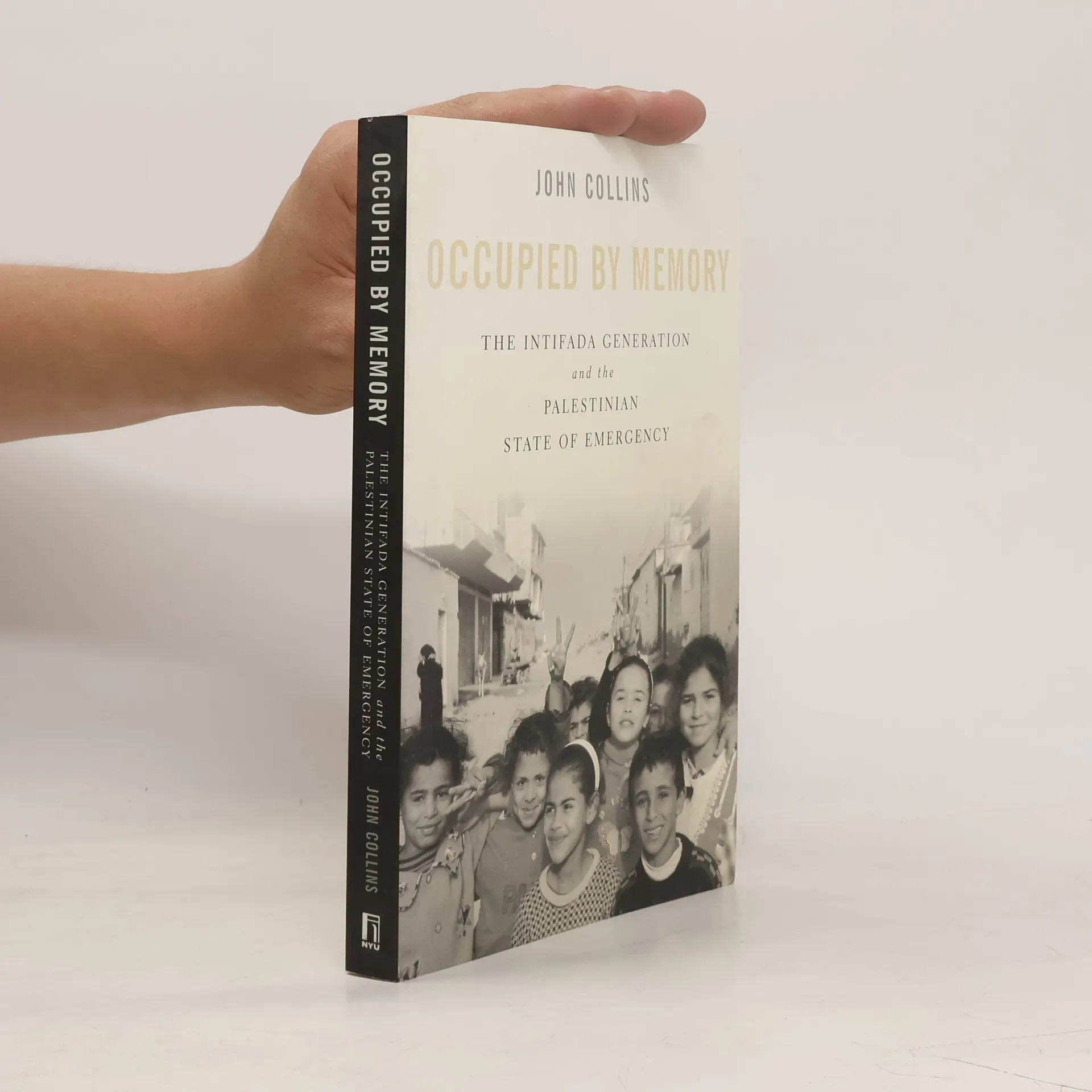
The Intifada Generation and the Palestinian State of Emergency
285 pages
10 hours of reading
Occupied by Memory explores the memories of the first Palestinian intifada. Based on extensive interviews with members of the "intifada generation," those who were between 10 and 18 years old when the intifada began in 1987, the book provides a detailed look at the intifada memories of ordinary Palestinians. These personal stories are presented as part of a complex and politically charged discursive field through which young Palestinians are invested with meaning by scholars, politicians, journalists, and other observers. What emerges from their memories is a sense of a generation caught between a past that is simultaneously traumatic, empowering, and exciting--and a future that is perpetually uncertain. In this sense, Collins argues that understanding the stories and the struggles of the intifada generation is a key to understanding the ongoing state of emergency for the Palestinian people. The book will be of interest not only to scholars of the Middle East but also to those interested in nationalism, discourse analysis, social movements, and oral history.
Bill's Story delves into the life of Bill Wilson, co-founder of Alcoholics Anonymous, exploring his struggles with alcoholism and the transformative journey towards recovery. The narrative captures his personal battles, the pivotal moments that led to his spiritual awakening, and the relationships that shaped his path. Through introspection and connection with others, the book highlights themes of hope, resilience, and the power of community in overcoming addiction. Bill's experiences serve as a testament to the possibility of change and the importance of support in healing.
This book provides a comprehensive exploration of perturbative Quantum Chromodynamics (QCD), detailing essential concepts and theorems along with their justifications. It serves as an invaluable resource for graduate students and researchers aiming to deepen their understanding of QCD, offering systematic treatments that clarify complex topics in the field.
Set against the backdrop of the Civil War, a young boy from East Kentucky embarks on a journey with his father to buy horses, only to be conscripted into Morgan's raiders. Isaac Collins transforms from a peaceful youth into a life filled with adventure, gunsmoke, and cattle drives. As he navigates this tumultuous period, he becomes a deputy US marshal and finds love with a schoolteacher, while also forging a lasting friendship with the Indians of Oklahoma.
Highlife is Ghana's most important modern home grown dance-music that has its roots in traditional music infused with outside influences coming from Europe and the Americas. Although the word 'highlife' was not coined until the 1920s, its origins can be traced back to the regimental brass bands, elite-dance orchestras and maritime guitar and accordion groups of the late 19th and very early 20th centuries. Highlife is, therefore, one of Africa's earliest popular music genres. The book traces the origins of highlife music to the present - and include information on palmwine music, adaha brass bands, concert party guitar bands and dance bands, right up to off-shoots such as Afro-rock, Afrobeat, burger highlife, gospel highlife, hiphop highlife (i.e. hiplife) and contemporary highlife. The book also includes chapters on the traditional background or roots of highlife, the entrance of women into the Ghanaian highlife profession and the biographies of numerous Ghanaian (and some Nigerian) highlife musicians, composers and producers. It also touches on the way highlife played a role in Ghana's independence struggle and the country's quest for a national - and indeed Pan-African - identity. The book also provides information on music styles that are related to highlife, or can be treated as cousins of highlife, such as the maringa of Sierra Leone, the early guitar styles of Liberia, the juju music of Nigeria the makossa of the Cameroon/ It also touches on the popular music of Ghana's Francophone neighbours. There is also a section on the Black Diasporic input into highlife, through to the impact of African American and Caribbean popular music styles like calypsos, jazz, soul, reggae, disco, hiphop and rap and dancehall. that have been integrated into the highlife fold. Thus, highlife has not only influenced other African countries but is also an important cultural bridge uniting the peoples of Africa and its Diaspora.