Abraham Maslow, a pioneer of humanistic psychology, profoundly influenced various fields with his theories on human behavior and motivation. Following his passing, biographer Edward Hoffman compiled a selection of Maslow's unpublished articles, essays, and letters, showcasing his impactful ideas. This collection highlights Maslow's insights and contributions, providing a deeper understanding of his work and its relevance across psychology, education, counseling, and management.
Abraham Maslow Books
April 1, 1908 – June 8, 1970
Abraham Maslow was a psychologist known for his theory of the hierarchy of needs, outlining the steps toward self-actualization. He analyzed achievers, finding them to be reality-centered. His work explored themes of "peak experiences" that are not limited to the religious or supernatural, cautioning against the potential for selfishness in the pursuit of personal salvation. Maslow also delved into questions about why individuals fail to self-actualize even when basic needs are met, and how to humanistically understand the problem of evil.




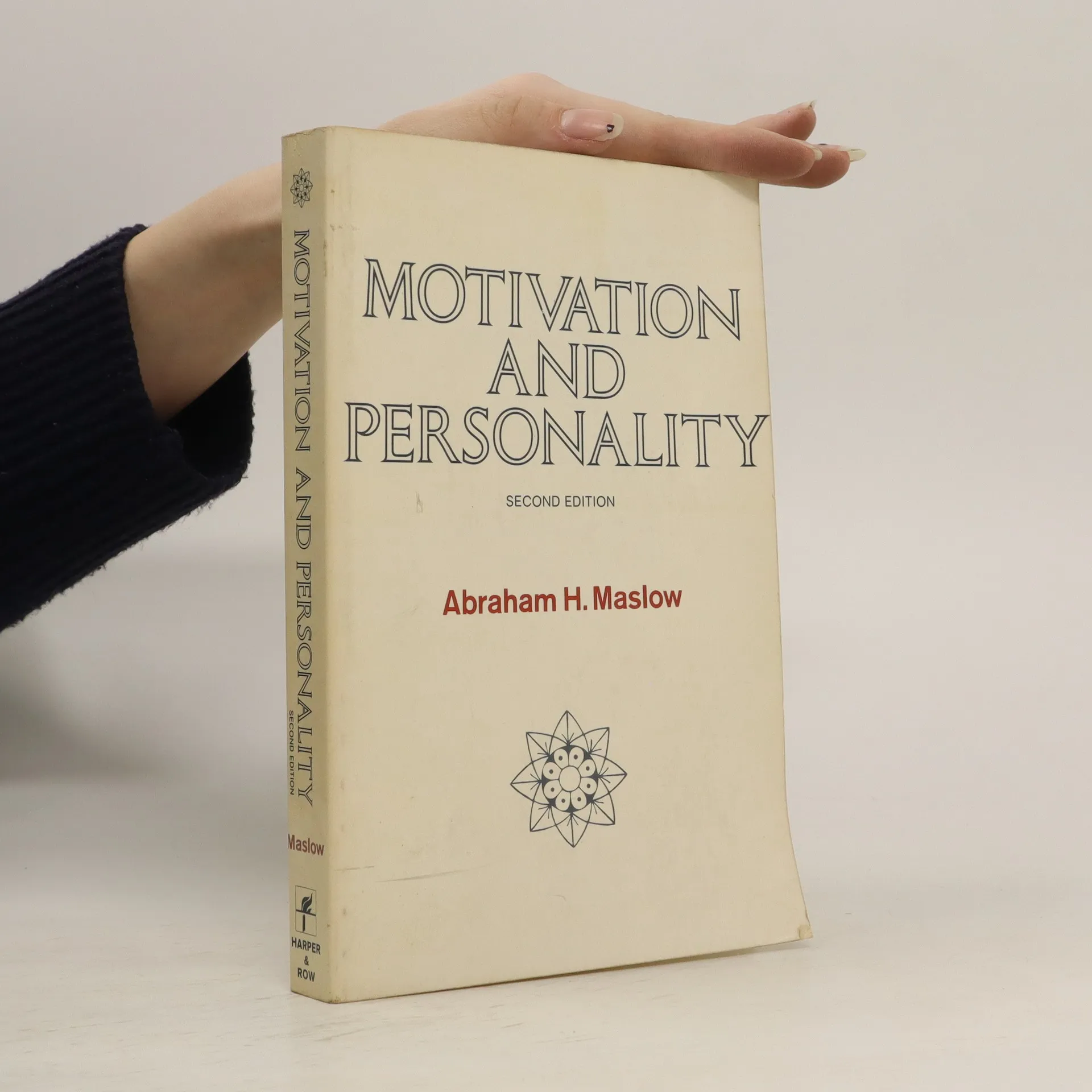
A statement on self-actualisation and data. Applications are made to the theories and science of personality, psychotherapy, personal growth and general psychology.
The Maslow Business Reader
- 304 pages
- 11 hours of reading
This collection features previously unpublished essays and letters by Abraham Maslow, along with excerpts from "Maslow on Management" and "Toward a Psychology of Being." It's an excellent introduction for those new to Maslow's groundbreaking ideas on self-actualization and human behavior in the workplace, influencing modern management practices.
To help humans become more fully human, we must understand their struggles with self-realization. Recognizing the tension between sickness and health is essential to fostering well-being. Abraham Maslow's theories on self-actualization and the hierarchy of human needs form the foundation of modern humanistic psychology, and his classic work profoundly influences various fields, including psychology, humanities, social theory, and business management. Its lasting appeal lies in the critical questions it raises about human nature and psychological well-being, as well as the insights it offers for promoting mental health. Maslow's ability to articulate complex philosophical ideas with clarity and passion inspires readers to pursue creative joy and wholeness. This Third Edition makes his concepts accessible to a new generation of psychology students and professionals interested in applying human behavior insights to management. Maslow, an energetic scholar, authored over twenty books and nearly one hundred articles, and his teachings remain essential for psychologists and students alike. He emphasizes the importance of using our capacities for growth, asserting that neglect can lead to atrophy or disease. This edition reflects Maslow's belief in the intrinsic goodness of humanity and the potential for love, creativity, and the pursuit of high values, making it relevant for both business and psychology audiences.
A Theory of Human Motivation
- 24 pages
- 1 hour of reading
This is the article in which Maslow first presented his hierarchy of needs. It was first printed in his 1943 paper "A Theory of Human Motivation". Maslow subsequently extended the idea to include his observations of humans' innate curiosity. His theories parallel many other theories of human developmental psychology, some of which focus on describing the stages of growth in humans. Maslow described various needs and used the terms "Physiological, Safety, Belongingness and Love, Esteem, Self-Actualization and Self-Transcendence" needs to describe the pattern that human motivations generally move through. Maslow studied what he called exemplary people such as Albert Einstein, Jane Addams, Eleanor Roosevelt, and Frederick Douglass rather than mentally ill or neurotic people.
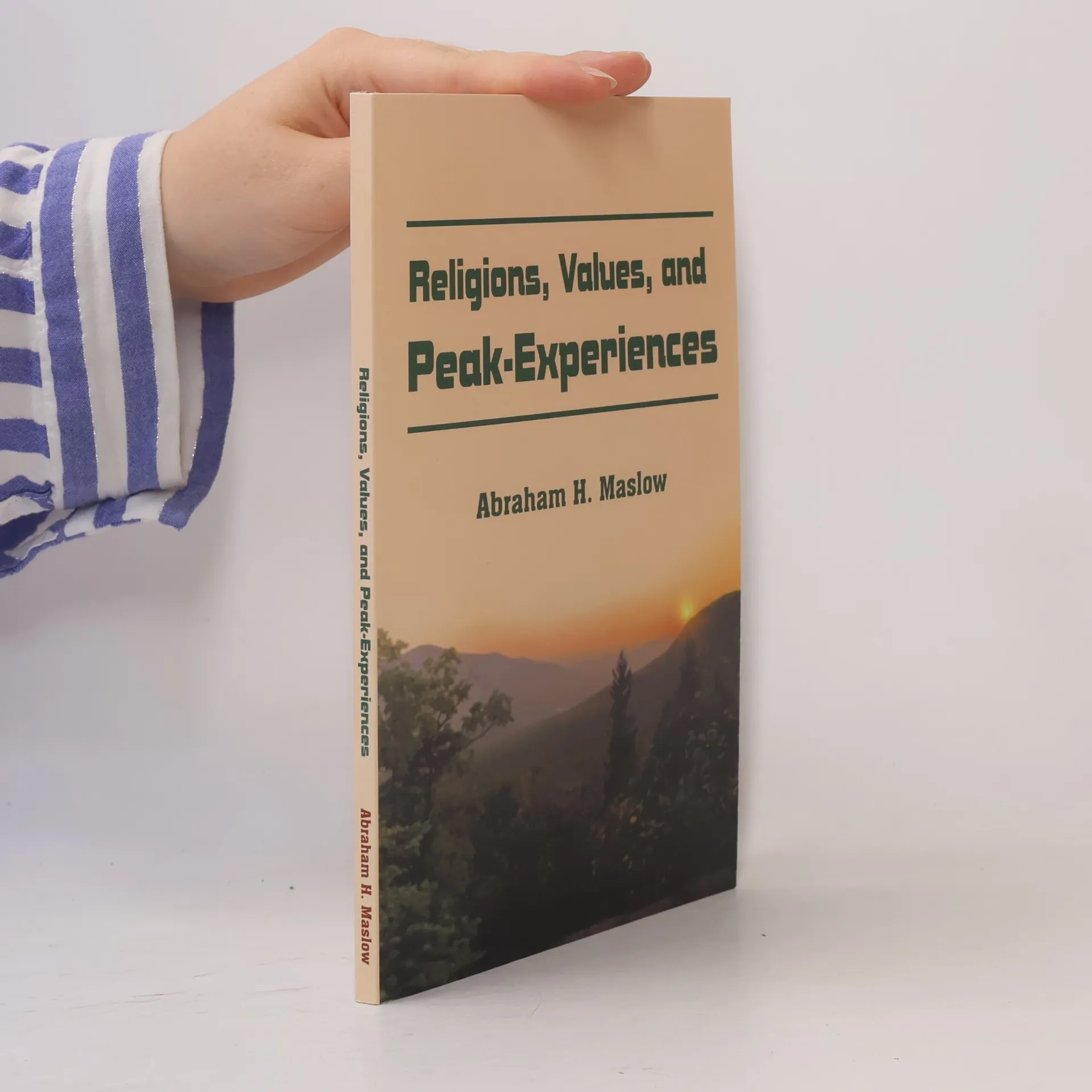
Religions, Values, and Peak-Experiences
- 122 pages
- 5 hours of reading
Proposing religious experience as a legitimate subject for scientific investigation, Maslow studies the human need for spiritual expression. About the Author Abraham H. Maslow taught at Brooklyn College and the Western Behavioral Sciences Institute, and was Chairman of the Department of Psychology at Brandeis University. From 1967 to 1968 he was Preseident of the American Psychological Association. Dr. Maslow was one of the foremost spokesmen of the humanistic, or "Third Force," psychologies, and author of many books and articles, including Toward a Psychology of Being, The Psychology of Science, and Religions, Values, and Peak-Experiences.
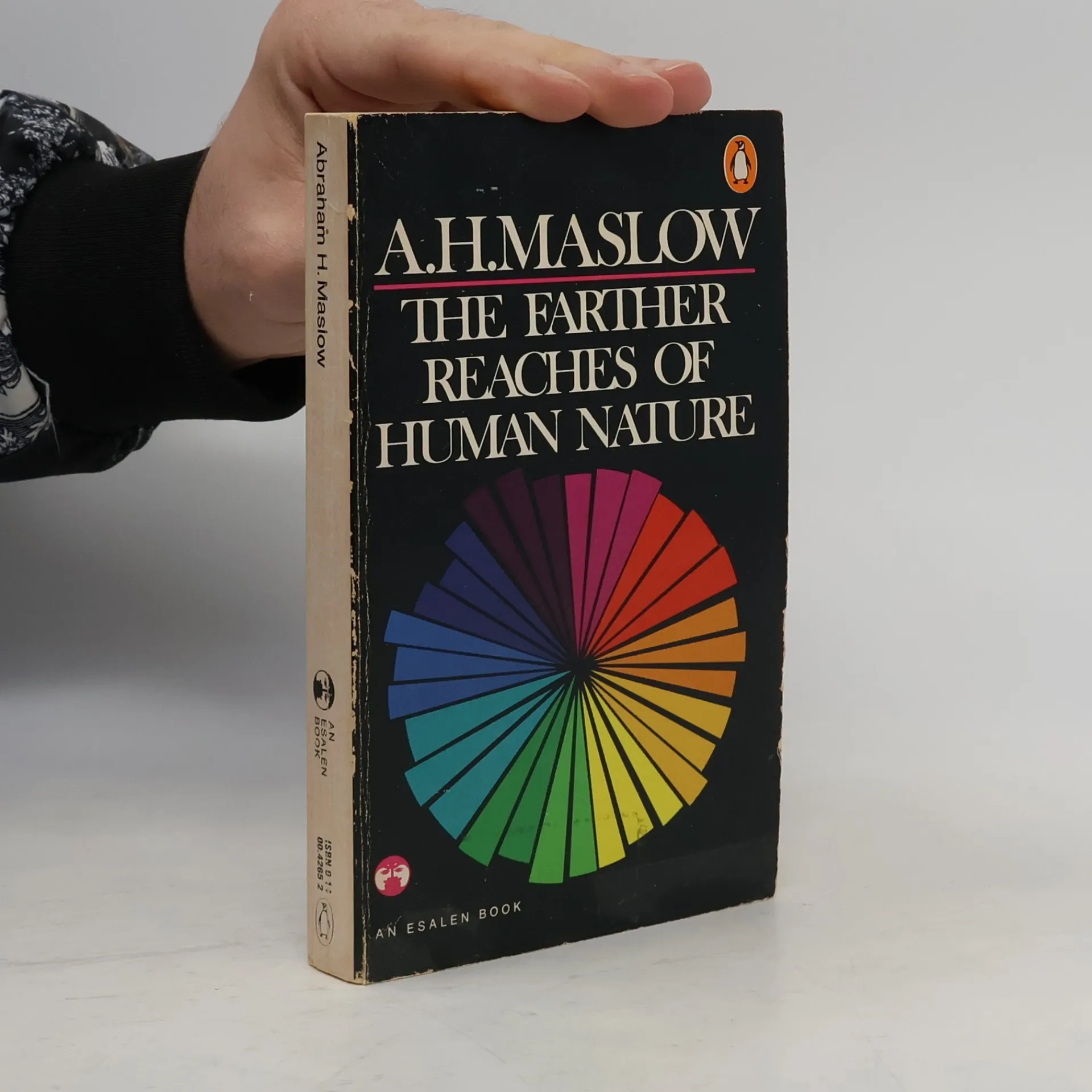
An Esalen Book: The Farther Reaches of Human Nature
- 407 pages
- 15 hours of reading
Abraham H. Maslow was one of the foremost spokespersons of humanistic psychology. In <b>The Farthest Reaches of Human Nature</b>, an extension of his classic <b>Toward a Psychology of Being</b>, Maslow explores the complexities of human nature by using both the empirical methods of science & the aesthetics of philosophical inquiry. With essays on biology, synergy, creativity, cognition, self-actualization & the hierarchy of needs, this posthumous work is a wide-ranging synthesis of his inspiring & influential ideas.
Set against the backdrop of a transformative era in America, the course led by psychologist Abraham H. Maslow delved into experiential learning to uncover neglected aspects of personality. Through a mix of lectures and vibrant discussions, students were encouraged to confront their unconscious thoughts and challenge both Maslow's ideas and their own beliefs. This unique approach fostered critical thinking and personal responsibility, reflecting the broader societal shifts occurring during the 1963-'64 winter term at Brandeis University.
Psychologie des Seins
- 243 pages
- 9 hours of reading
Die Psychologie der Wissenschaft
- 206 pages
- 8 hours of reading
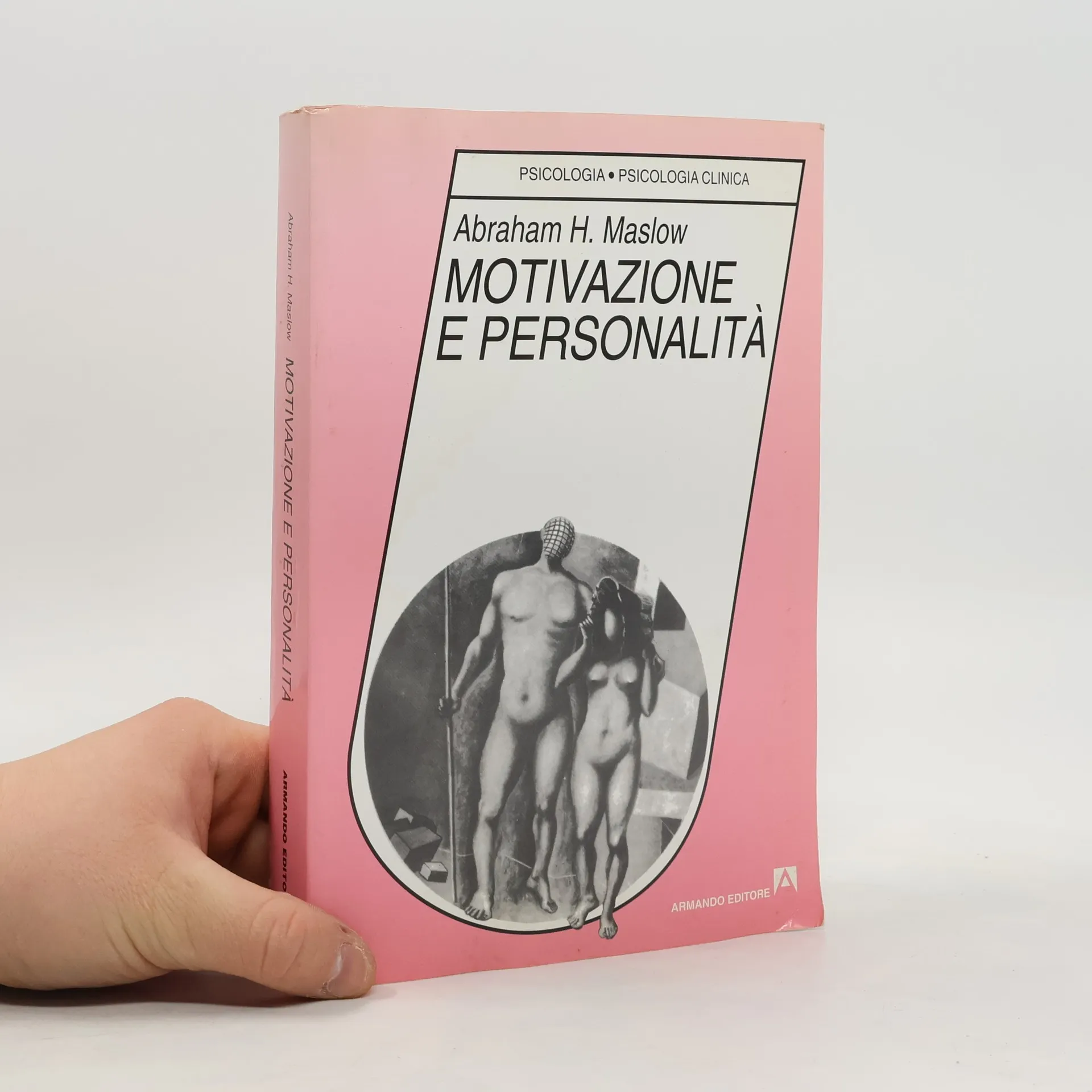
Motivazione e personalità
- 544 pages
- 20 hours of reading
Lidskému životu nikdy plně neporozumíme, pokud nebudeme brát v úvahu nejvyšší aspirace člověka. Růst, sebeaktualizace, usilování o zdraví, hledání identity a autonomie, touha po dokonalosti (a další způsoby, jak vyjádřit směřování „vzhůru“) je třeba brát jako široce rozšířené a snad i univerzální lidské sklony. V knize Motivace a osobnost představuje Maslow systematickou teorii a aplikaci motivace a osobnosti, kterou vyvodil ze syntézy tří přístupů: holistického, dynamického a kulturního. Nabízí rozšíření našeho chápání lidské osobnosti pohledem do „vyšších“ úrovní lidské podstaty. Jeho teorie je dnes citována nejen v psychologii, ale také ve vzdělávání, managementu, sociologii a mnoha dalších humanitních oborech. Její znalost patří k základům poznání o lidských potřebách a hodnotách, které člověku „umožňují být dostatečně silný a lidský, aby převzal kontrolu nad svým osudem“.
Ku psychológii bytia
- 223 pages
- 8 hours of reading
Ako môžeme podporiť slobodný rozvoj? Aké sú preň najlepšie výchovné podmienky? Sexuálne? Ekonomické? Politické? Aký svet potrebujeme, v ktorom by takíto ľudia rástli? Aký svet takíto ľudia vytvoria? Chorí ľudia sú vytváraní chorou spoločnosťou, je možné, že zdraví ľudia sú vytváraní zdravou spoločnosťou. Ale je tiež je pravdou práve to, že chorí jednotivci robia svoju spoločnosť viac chorou a zdraví jednotlivci robia svoju spoločnosť zdravšou. Rozvíjanie zdravia jednotlivca je jeden prístup k tomu, ako vytvárať lepší svet. Inými slovami, rozvíjanie osobného rastu je skutočná možnosť; liečba aktuálnych neurotických symptómov je ďaleko menej možná bez vonkajšej pomoci. Je relatívne ľahké zámerne sa pokúsiť byť čestnejším človekom; je veľmi náročné snažiť sa liečiť svoje vlastné kompulzie a obsesie.