

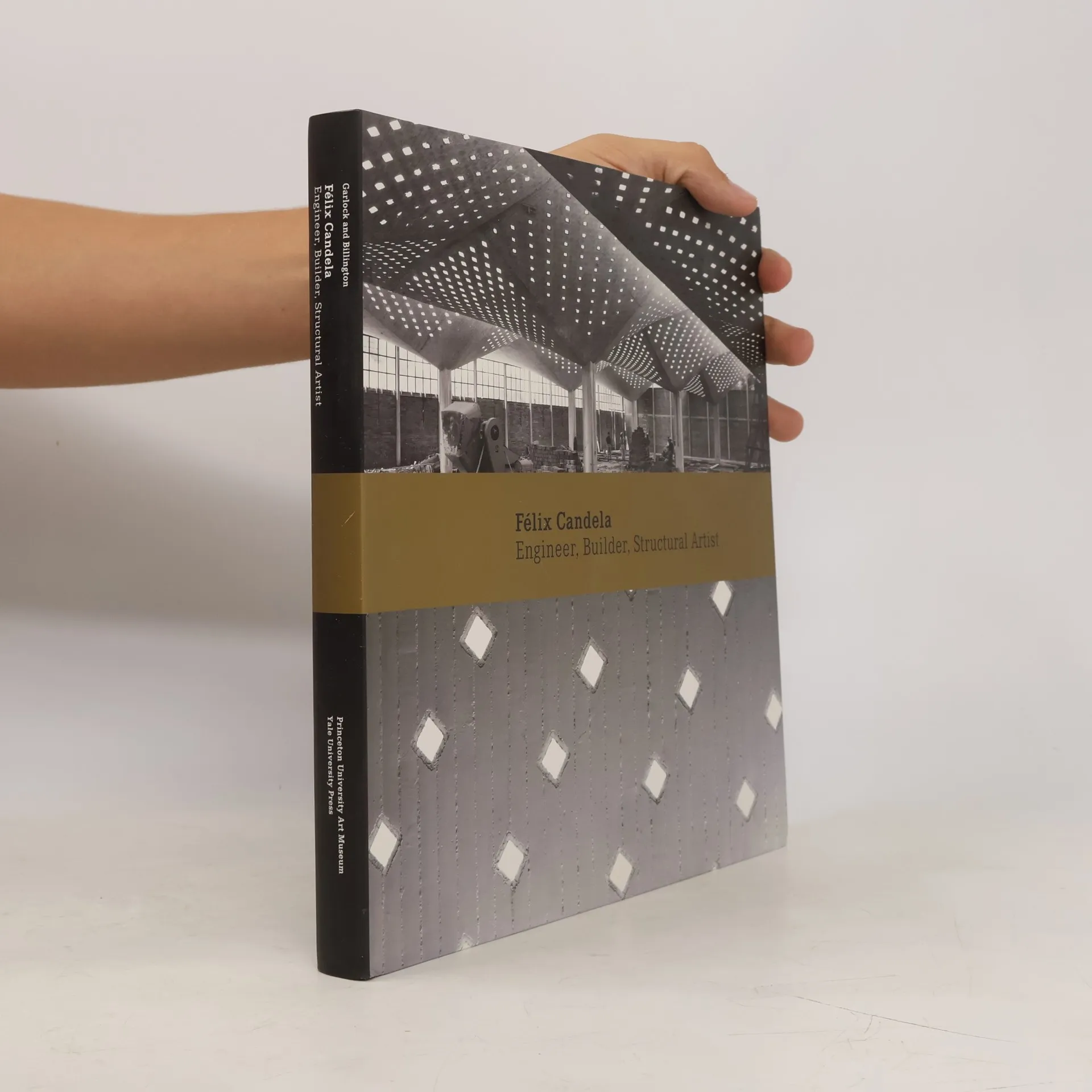
Spanish-born Félix Candela (1910–1997) is acknowledged as a master builder who designed and built innovative thin shell concrete roof structures in Mexico. This book goes further, however, hailing Candela as a structural engineer whose elegant forms should be considered works of art. This handsomely designed volume begins by presenting the lineage of master builders and structural artists who preceded him, including those from the period of the Industrial Revolution. The authors then examine Candela’s life, studies, and experiences, and analyze his early thin shell designs. They focus on the geometric form that Candela eventually used to create his most important works, examine several of the structures in detail, compare them to the works of other contemporary structural artists, and discuss the most important features of his legacy: the conservation of natural resources by minimizing materials; the reduction of cost by intimately connecting design to construction, and the creation of beautiful forms.
David P. Billington Book order (chronological)
This author focuses on exploring the influence of engineering on society and culture. Their works often delve into how architectural and infrastructural structures reflect and shape human values and aspirations. Through their writing, they offer a unique perspective on the interconnectedness of technology, art, and history. Readers will appreciate their ability to reveal deeper meanings within the very foundations of our civilization.



This handsomely designed book brings together for the first time the outstanding work of four Swiss engineers and their teachers who form the most impressive group of structural artists in the twentieth Wilhelm Ritter (1847–1906), Robert Maillart (1872–1940), Othmar Ammann (1879–1965), Pierre Lardy (1902–1956), Heinz Isler (b. 1926), and Christian Menn (b. 1927).David P. Billington, who has written widely on these engineers, argues that it is important to consider them as artists, for aesthetics played a major role in their design philosophy. He explains that their shared approach to design was developed while they attended the Federal Technological Institute in Maillart and Amman studied with Ritter there, and Isler and Menn studied under Lardy. Billington focuses on the engineers’ artistic approach to bridge design and construction, and he discusses their impressive individual contributions to structural engineering.Generously illustrated, this book features many newly commissioned photographs, including images of important new structures such as the Charles River Bridge in Boston, completed by Menn in 2002.
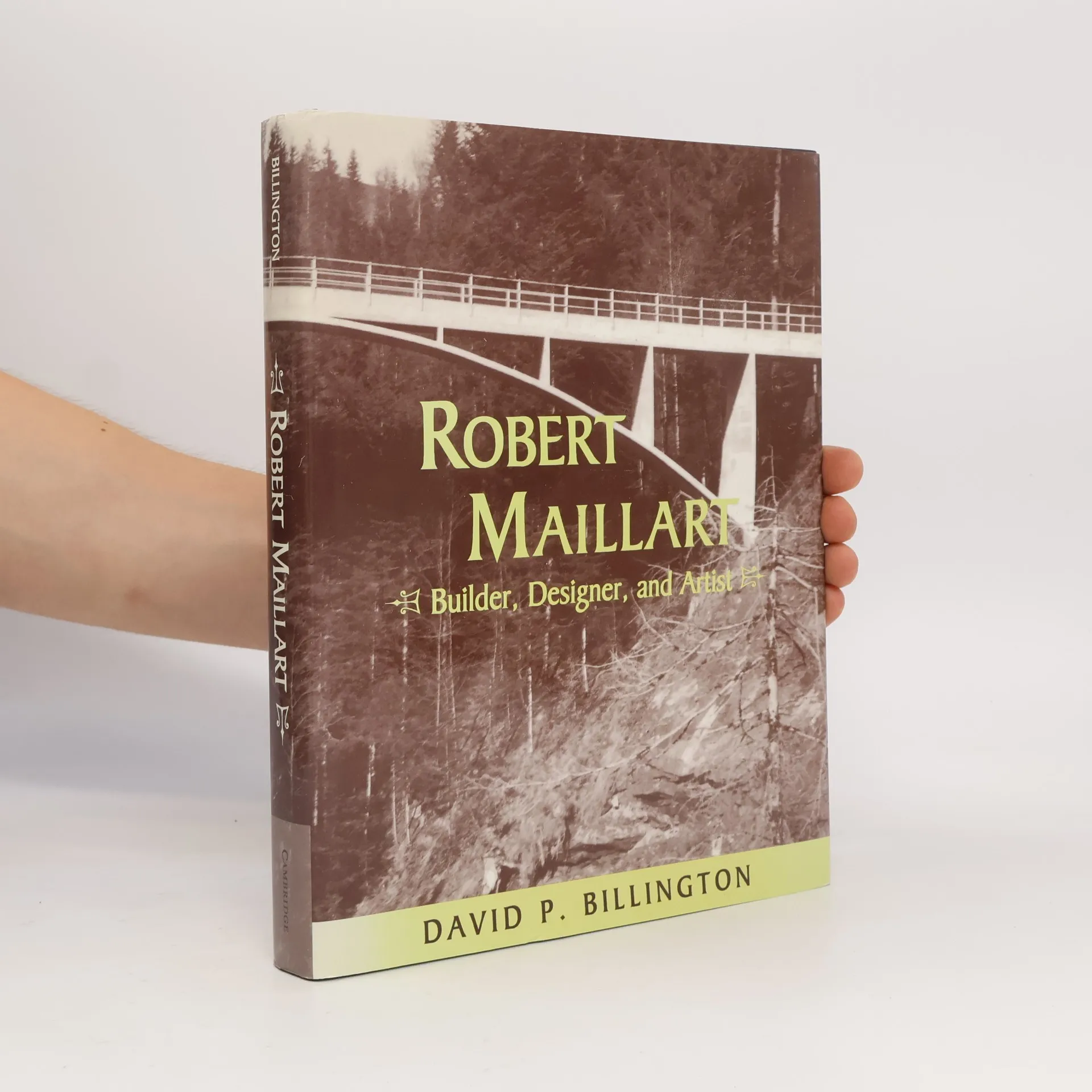
This comprehensive biography traces the life and works of Robert Maillart, one of the most important engineers and designers of the twentieth century. His career developed around a central issue of modern technological society: the debate between two antithetical views of engineering opposing applied science, which relied on general mathematical theories for understanding structures against design, which Maillart championed. Maillart considered structures not merely works of utility but also as works of art. As utilitarian objects, he created a series of innovations of lasting significance. Aesthetically, Maillart shaped his three innovations in concrete to create surprising and often stunning new forms. Providing an analysis of these innovations, this biography also connects Maillart's aesthetic ideas with the private and professional context in which he worked.
Thin Shell Concrete Structures
- 373 pages
- 14 hours of reading
This is a revision of the standard reference,updated and made more practical. Much theoretical material has been excised,and a multitude of applications and examples have been added. Worked-out designs for cooling towers,water tanks,and point-supported domes have been added. The emphasis is now placed on useful material on the analysis and design of concrete shells for the practicing architect and engineer. The book covers in detail the practice in designing shells developed over the last 20 years both in America and abroad and stresses the importance of most recent developments in shell design.
Robert Maillart's Bridges
The Art of Engineering