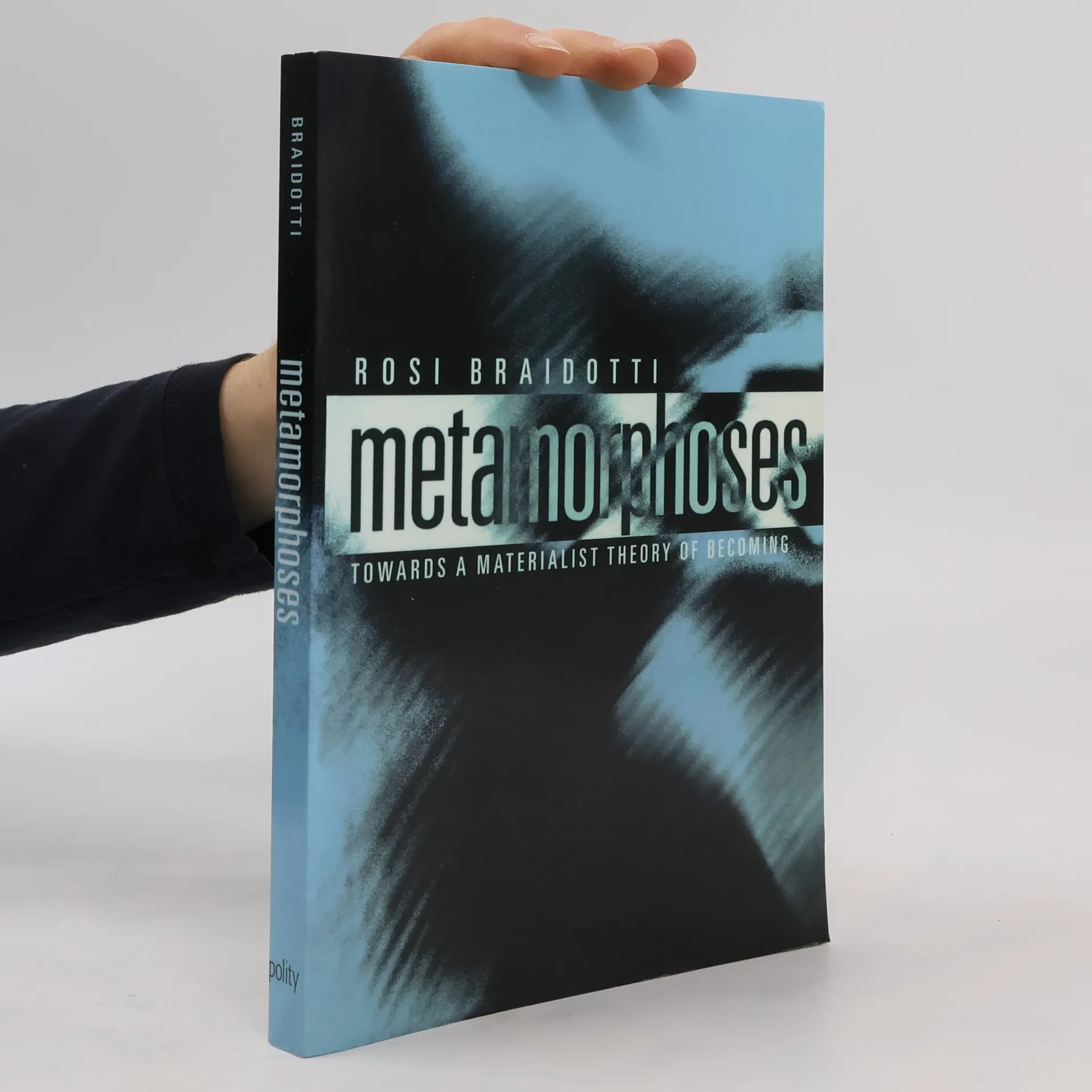
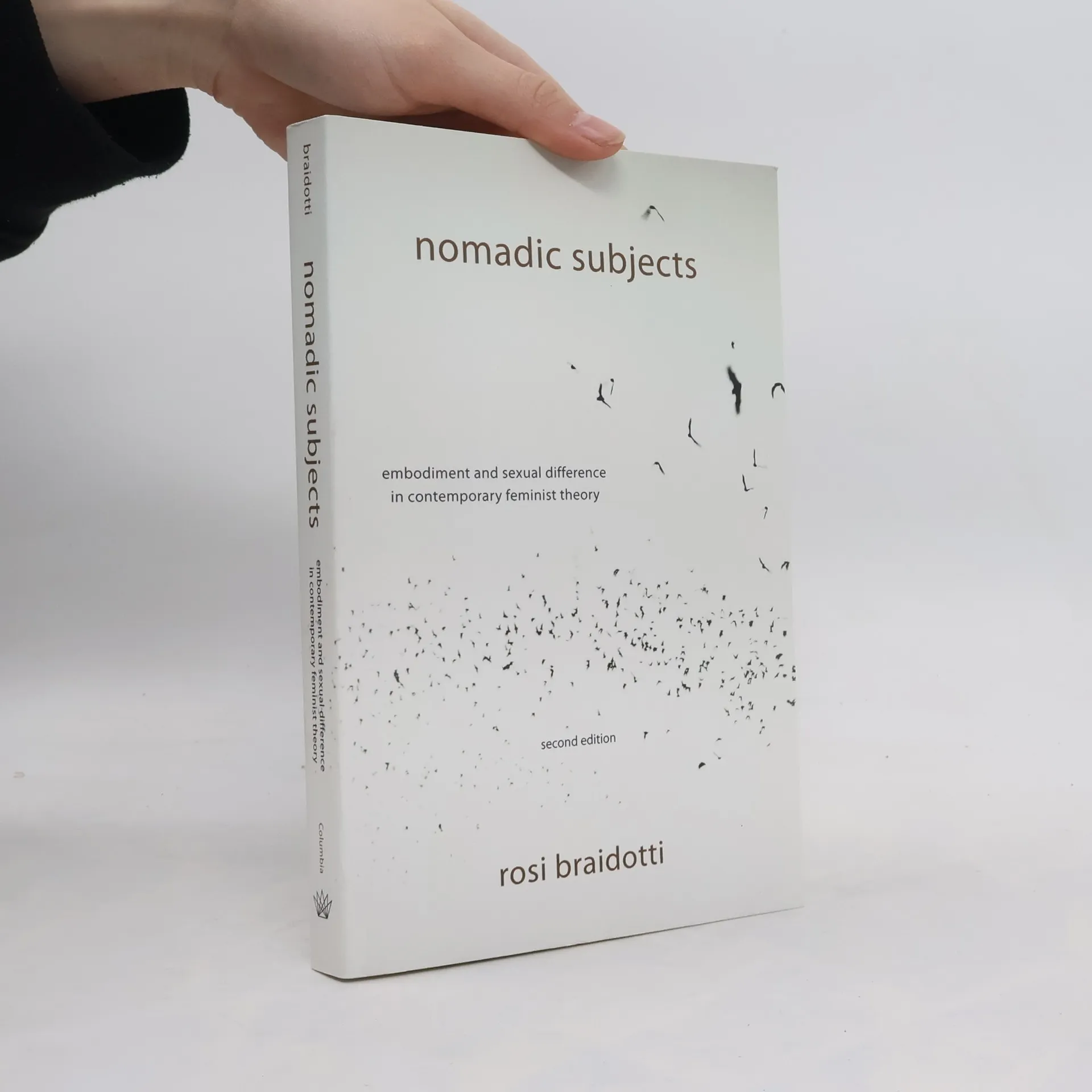
This revised and expanded edition retains all but two of Braidotti's original essays, including her investigations into epistemology's relation to the 'woman question', feminism and biomedical ethics; European feminism; and the possible relations between American feminism and European politics and philosophy. A new piece integrates Deleuze and Guattari's concept of the 'becoming-minoritarian' more deeply into modern democratic thought, and a chapter on methodology explains Braidotti's methods while engaging with her critics.
Rosi Braidotti Books
September 28, 1954


Posthuman Feminism
- 120 pages
- 5 hours of reading
In a climate of resurgent patriarchy and white supremacy, a new wave of activists, including Xenofeminists and Pussy Riot, join forces with prominent feminists like Emma Watson and Scarlett Johansson, highlighting the vibrant feminist movement of today.
Intro -- [CONTENTS] -- ACKNOWLEDGMENTS -- INTRODUCTION -- 1 METAMORPHOSES -- 1. TRANSPOSING DIFFERENCES -- 2. META(L)MORPHOSES -- 3. ANIMALS AND OTHER ANOMALIES -- 4. THE COSMIC BUZZ OF INSECTS -- 2 FEMINIST TRANSPOSITIONS -- 5. MATTER-REALIST FEMINISM -- 6. INTENSIVE GENRE AND THE DEMISE OF GENDER -- 7. POSTSECULAR PARADOXES -- 3 NOMADIC CITIZENSHIP -- 8. COMPLEXITY AGAINST METHODOLOGICAL NATIONALISM -- 9. NOMADIC EUROPEAN CITIZENSHIP -- 4 POWERS OF AFFIRMATION -- 10. POWERS OF AFFIRMATION -- 11. SUSTAINABLE ETHICS AND THE BODY IN PAIN -- 12. FORENSIC FUTURES -- 5 CONCLUSION -- 13. A SECULAR PRAYER -- NOTES -- BIBLIOGRAPHY -- INDEX
Metamorphoses
- 328 pages
- 12 hours of reading
Major new work in feminist theory, cultural theory and gender studies Author is well known in the fields of feminism and post-structuralism and for her work on problems of identity and difference. schovat popis
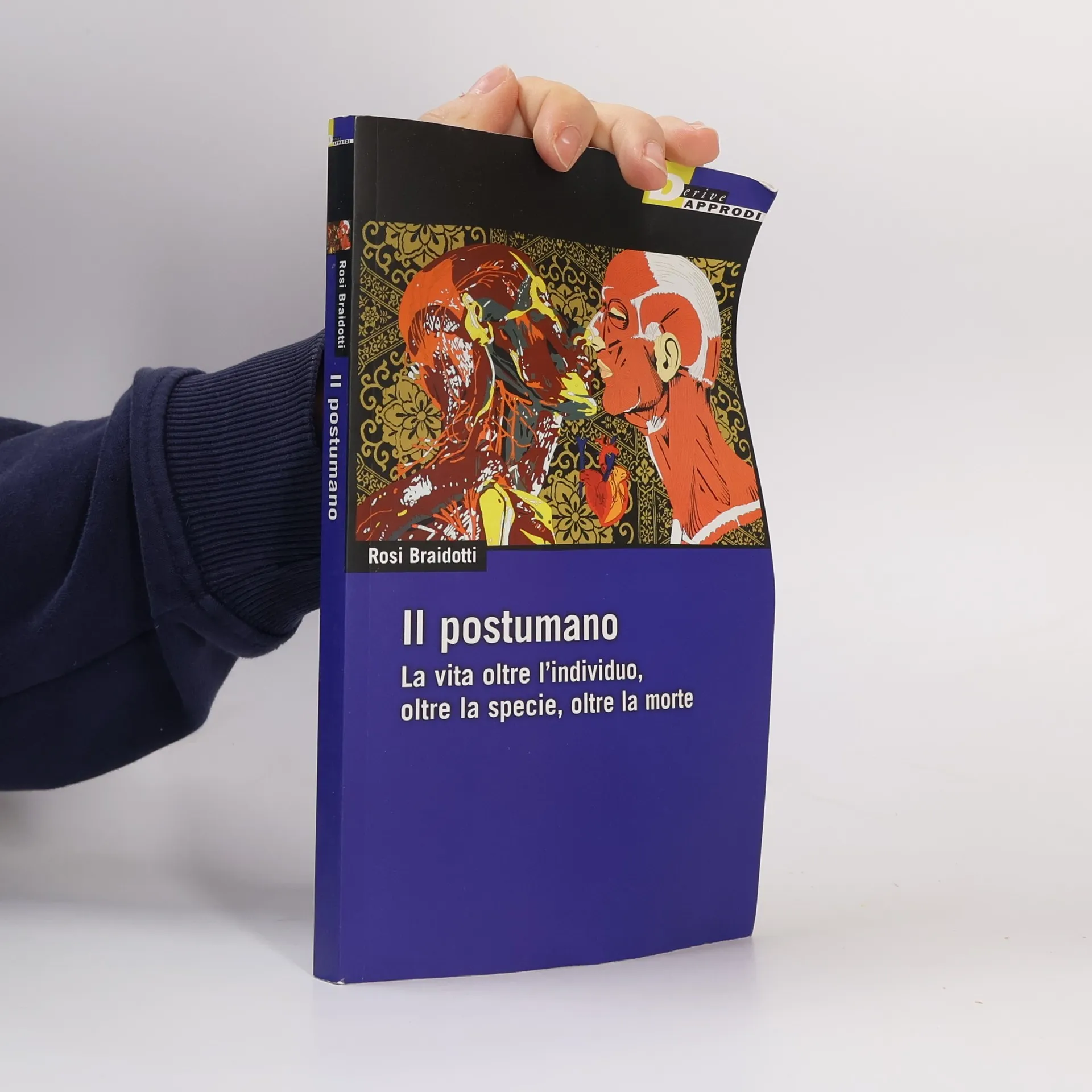
The Posthuman
- 180 pages
- 7 hours of reading
The Posthuman offers both an introduction and major contribution to contemporary debates on the posthuman. Digital 'second life', genetically modified food, advanced prosthetics, robotics and reproductive technologies are familiar facets of our globally linked and technologically mediated societies.
Posthuman Knowledge
- 210 pages
- 8 hours of reading
The question of what defines the human, and of what is human about the humanities, have been shaken up by the radical critiques of humanism and the displacement of anthropomorphism that have gained currency in recent years, propelled in part by rapid advances in our knowledge of living systems and of their genetic and algorithmic codes coupled with the global expansion of a knowledge-intensive capitalism. Braidotti takes a closer look at the impact of these developments on three major areas: the constitution of our subjectivity, the general production of knowledge and the practice of the academic humanities
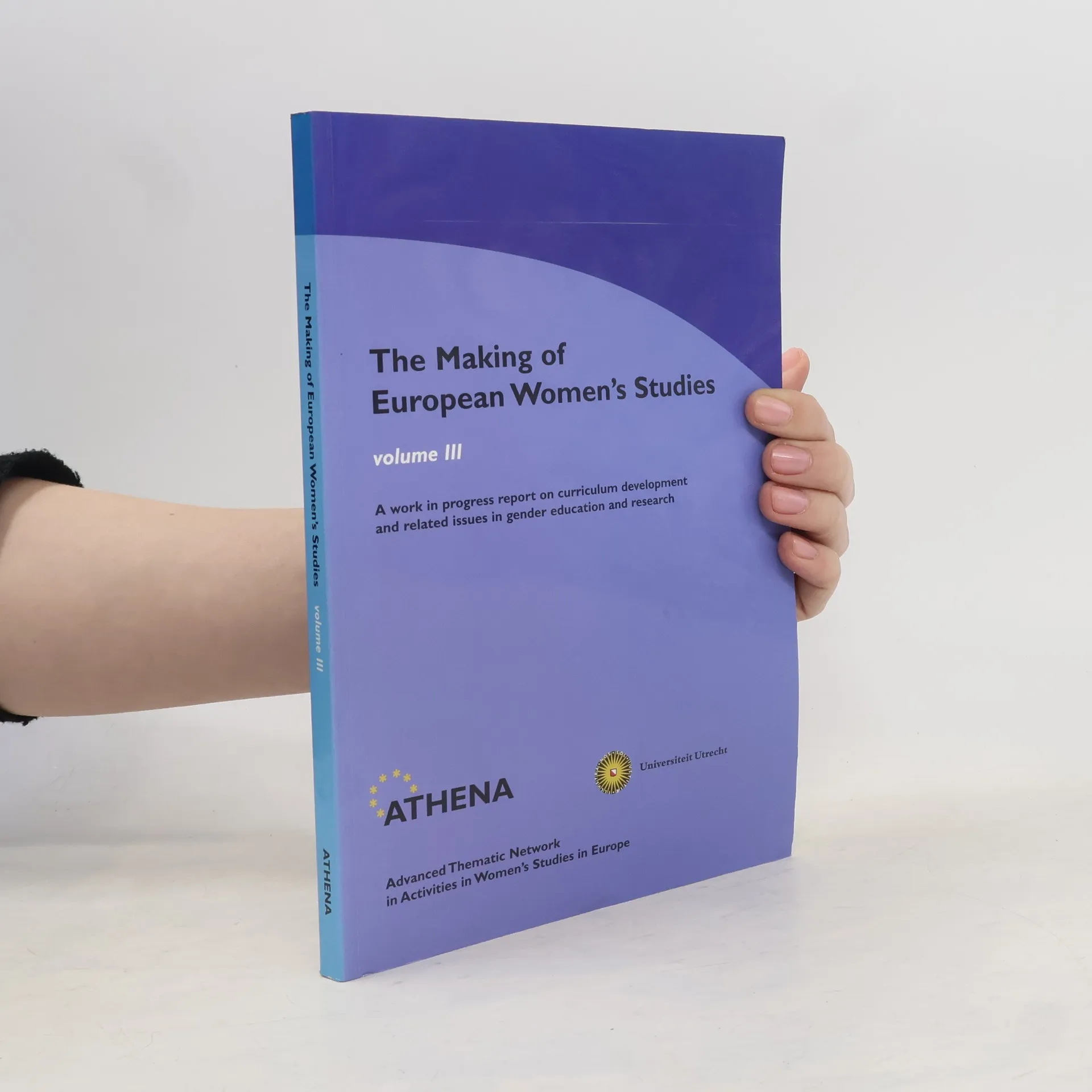
The Making of European Women's Studies
A Work in Progress Report on Curriculum Development and Related Issues in Gender Education and Research
- 264 pages
- 10 hours of reading
Athena, het Europees netwerk voor vrouwenstudies, geeft in deze publicatie een overzicht van haar activiteiten. Er is een dossier in opgenomen over de situatie van de vrouw in de Balkanstaten. Verder worden rapporten gepresenteerd over de arbeidsmarktperspectieven van studenten vrouwenstudies, het gebruik van nieuwe technologieën in vrouwenstudies en het pilootproject afsandsonderwijs via de introductie van nieuwe technologieën.In een historisch luik wordt het otstaan en de evolutie van vrouwenstudies aan de Britse universiteiten nader bekeken. Deze bijdragen zijn maar een selectie uit het grote aanbod dat je in deze bundel vindt.
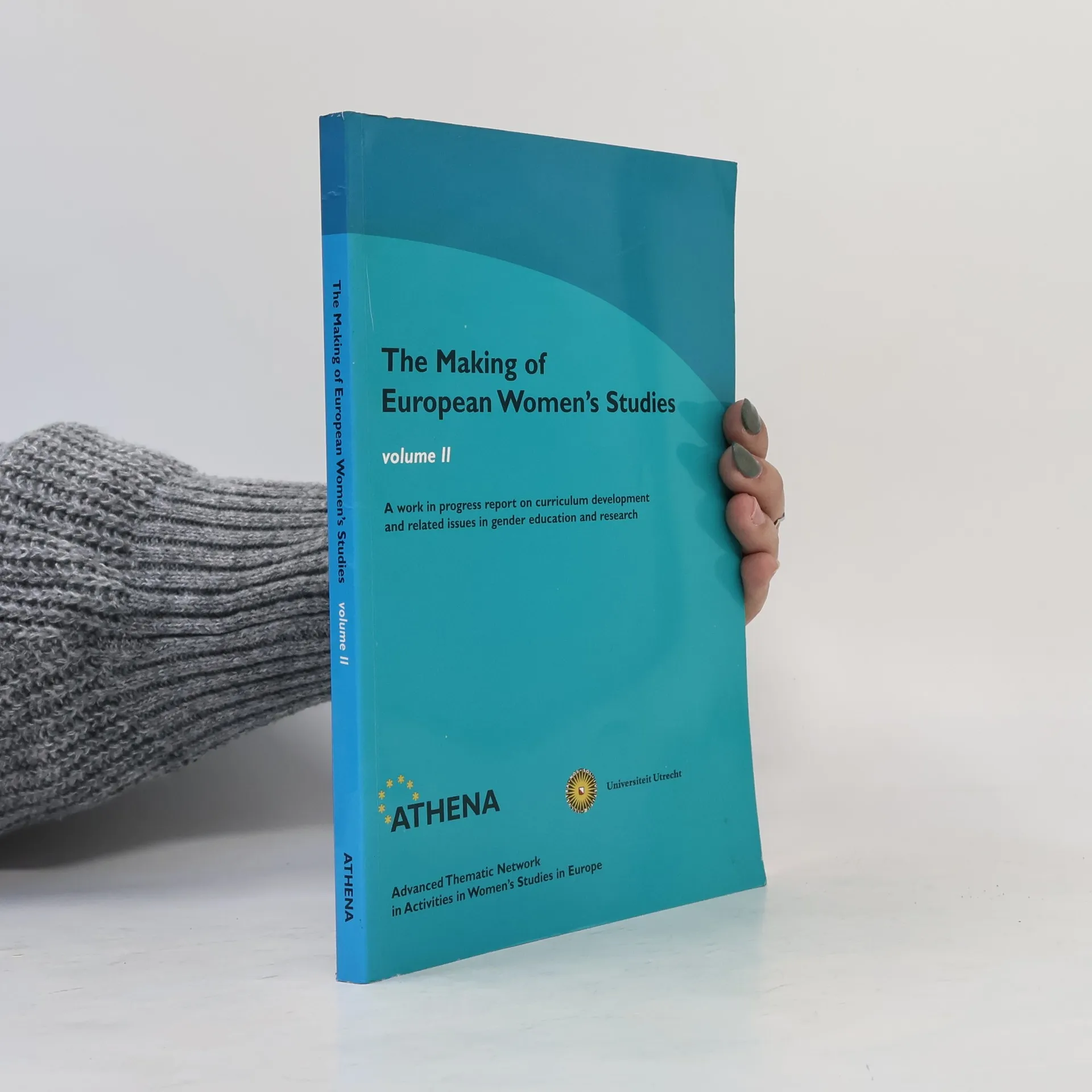
ATHENA - 2: The Making of European Women's Studies
A Work in Progress Report on Curriculum Development and Related Issues in Gender Education and Research
- 232 pages
- 9 hours of reading
Bevat hoofdstukken over vrouwenstudies en democratisering in Marokko, Tunesië, Algerije en Cairo, in de Scandinavische landen, de Europese vrouwenthesaurus (door Marianne Boere), etniciteit, migratie en gender in Europa, een verslag van de vierde Europese Feminist Research Conferentie in Bologna, (2000), een inleiding op het feministische debat over informatie- en communicatietechnologie, een kort verslag van AOIFE, de organisatie die het platform voor Europese samenwerkingsprojecten vormt en een historisch dossier over vrouwenstudies in Frankrijk.
Studie over de rol van het vrouwelijke en het feminisme in de hedendaagse filosofie.
Politik der Affirmation
- 104 pages
- 4 hours of reading
Dea ex machina
- 160 pages
- 6 hours of reading
»Wenn auch beide in einem rituellen Tanz verbunden sind, wäre ich lieber ein Cyborg als eine Göttin« - Donna Haraway, 1995. Die Kritiken am »Manifest für eine akzelerationistische Politik« (Williams/Srnicek) sind vielfältig, doch die Behauptung, es sei ein Ausdruck machistischen Technonihilismus, ist besonders irreführend. Diese Debatten ignorieren das Potenzial des Akzelerationismus für die gegenwärtige Genderpolitik und seine Verbindung zu technofeministischem Denken. Dea ex machina bringt verdrängte Genealogien zurück, die das akzelerationistische Projekt im Kontext von 50 Jahren feministischer Gender- und Techniktheorie beleuchten. Das Herzstück des Buches ist ein Manifest des Kollektivs Laboria Cuboniks, ergänzt durch bedeutende technofeministische Stimmen. Zu den Beiträgen gehören Rosi Braidotti über Cyberfeminismus, das Manifest des Kollektivs, Shulamith Firestone zur Verbindung von Feminismus und Ökologie, Donna Haraway über Femaleman©_meets_OncomouseTM, Nina Power zu Frauen und Maschinen in der Noise-Musik, Paul B. Preciado mit einem Auszug aus »Testo Junkie«, Alexandra Pirici und Raluca Voinea mit einem Manifest für das Gynozän sowie Lisa Nakamura über Rassismus und Sexismus im Gaming.
La nostra seconda vita negli universi digitali, il cibo geneticamente modificato, le protesi di nuova generazione, le tecnologie riproduttive sono gli aspetti ormai familiari di una condizione postumana. Tutto ciò ha cancellato le frontiere tra ciò che è umano e ciò che non lo è, mettendo in mostra la base non naturalistica dell’umanità contemporanea. Sul piano della teoria politica e filosofica, urge adeguare le categorie di comprensione delle identità e dei fenomeni sociali a partire da questo salto. Sul piano dell’analisi, dopo aver constatato la fine dell’umanesimo, occorre vedere in questa trasformazione le insidie di una colonizzazione della vita nel suo complesso da parte dei mercati e della logica del profitto. Occorre dunque adeguare la teoria ai cambiamenti in atto, senza rimpianti per un’umanità ormai perduta e cogliendo le opportunità offerte dalle forme di neoumanesimo che scaturiscono dagli studi di genere, postcoloniali e dai movimenti ambientali.
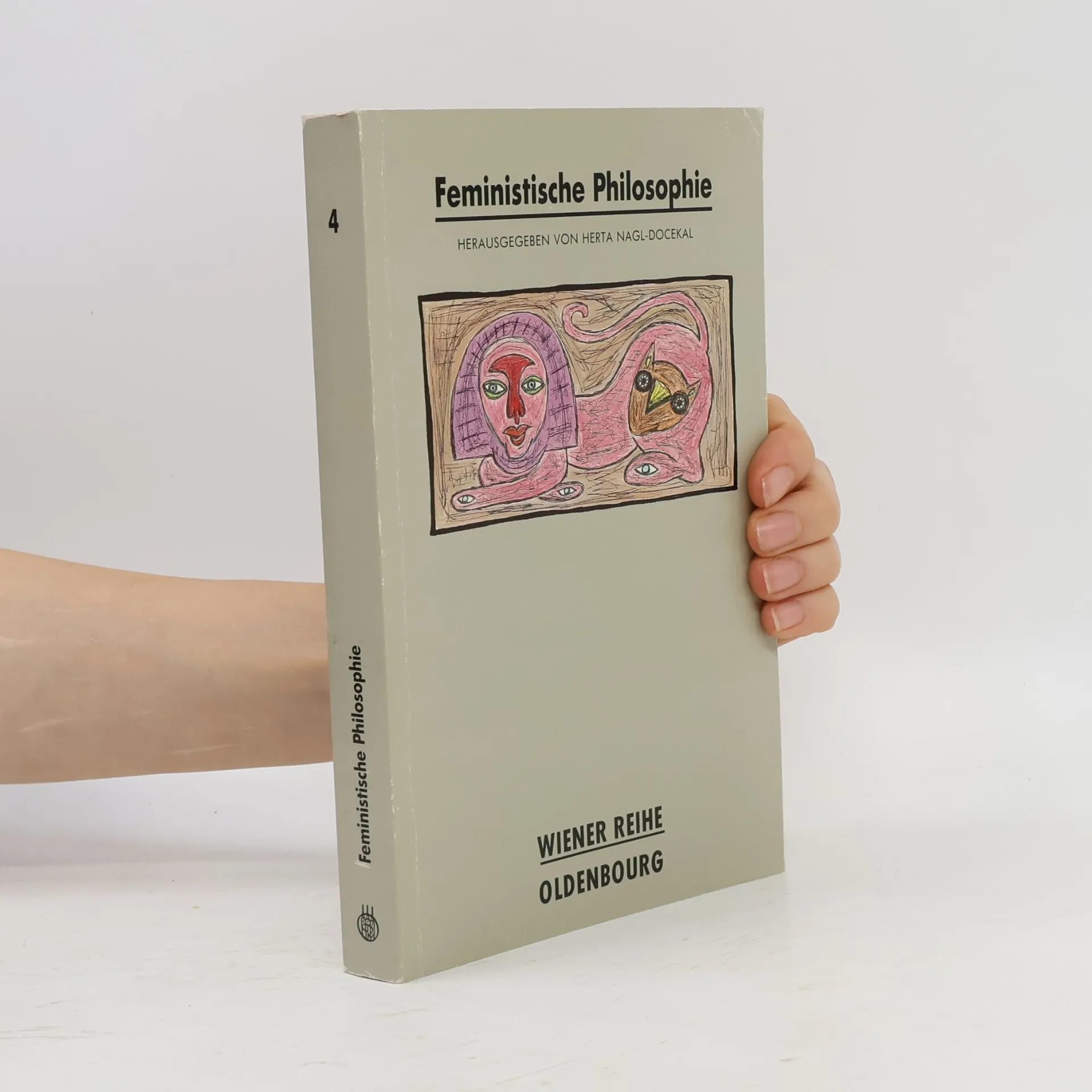
zeigt die patriarchalen Züge der Philosophiegeschichte (Kofman, Klinger, Cavarero) und die Notwendigkeit einer Transformation der einzelnen Teildisziplinen von der Wissenschaftstheorie (List) bis zur Ethik (Gould, Benhabib), Rechts- und politischen Philosophie (Schröder, Heller). Dabei steht auch zur Debatte, ob die postmoderne Subjektkritik feministisch gedeutet werden kann (Braidott, Iveković, Weisshaupt). Die Herausgeberin erläutert die wissenschaftliche Legitimitar der Feministischen Philosophie und gibt einen Oberblick über die recenten Entwicklungen. Eine Auswahlbibliographie (Klinger) beschließt den Band
Le donne e i segni
- 158 pages
- 6 hours of reading