
Explore the latest books of this year!
Bookbot

Dirk Helbing

    The Automation of Society Is Next
    Next Civilization
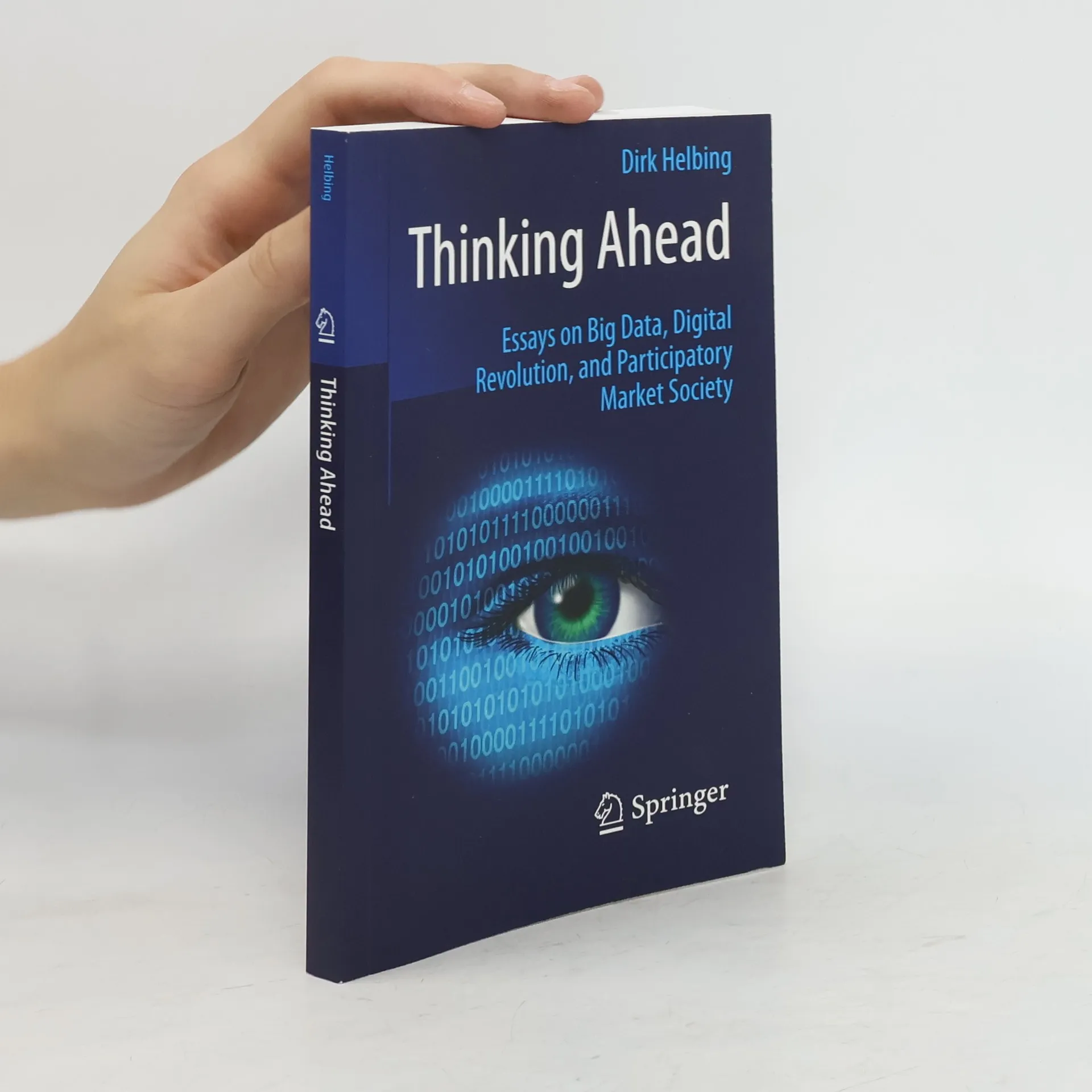
    Thinking Ahead - Essays on Big Data, Digital Revolution, and Participatory Market Society
    • 2021

      Next Civilization

      Digital Democracy and Socio-Ecological Finance - How to Avoid Dystopia and Upgrade Society by Digital Means

      • 349 pages
      • 13 hours of reading

      "Digital transformation" sounds harmless, given that the explosion in data volumes, processing power and Artificial Intelligence has driven humanity and the entire world to a point of no return. We will surely see a new civilization, but we are at a crossroads. The future needs to be re-invented, decisions must be taken. After the automation of factories and the creation of self-driving cars, the automation of society is on its way. But there are two kinds of automation: a centralized top-down control of the world and a distributed control approach, supporting local self-organization. Using the power of today’s information systems, governments and big tech companies seem to engage in the first approach. Might they even build a „digital Crystal Ball“ that knows almost everything, including your personality, and a super-intelligent "digital God“ to control what we do? We are much closer to such „science fiction scenarios“ than you probably think. In this much expanded second edition of "The Automation of Society is Next: How to Survive the Digital Revolution" (2015), the author discusses lessons learned on digital democracy, aspects of transhumanism and far-reaching thoughts about life in the digital age and what it may mean to be human in the future.

      Next Civilization
    • 2015

      "The rapidly progressing digital revolution is now touching the foundations of the governance of societal structures. Humans are on the verge of evolving from consumers to prosumers, and old, entrenched theories - in particular sociological and economic ones - are falling prey to these rapid developments. The original assumptions on which they are based are being questioned. Each year we produce as much data as in the entire human history - can we possibly create a global crystal ball to predict our future and to optimally govern our world? Do we need wide-scale surveillance to understand nd manage the increasingly complex systems we are constructing, or would bottom-up approaches such as self-regulating systems be a better solution to creating a more innovative, more successful, more resilient, and ultimately happier society? Working at the interface of complexity theory, quantitative sociology and Big Data-driven risk and knowledge management, the author advocates the establishment of new participatory systems in our digital society to enhance coordination, reduce conflict and, above all, reduce the "tragedies of the commons," resulting from the methods now used in political, economic and management decision-making."--Back cover

      Thinking Ahead - Essays on Big Data, Digital Revolution, and Participatory Market Society
    • 2015

      The Automation of Society Is Next

      • 266 pages
      • 10 hours of reading

      The digital revolution, characterized by unprecedented data volumes, processing power, and Artificial Intelligence, has brought us to a critical juncture where decisions about our future must be made. As society moves towards automation, we face two distinct paths: a centralized, top-down control model or a distributed approach that fosters local self-organization. Current trends suggest that entities like governments and companies such as Google are leaning towards the former, potentially aiming to create a "digital God" that governs our actions. With billions spent on forecasting and controlling our world, and with data production now exceeding all of human history, the question arises: can we leverage this abundance to create a better society? This data-driven paradigm could lead to the development of tools akin to a "crystal ball" for predicting the future or a "magic wand" for effective governance. The digital revolution may empower a "wise king" or "benevolent dictator" through AI, but we must consider whether large-scale surveillance is necessary to manage our complex systems or if it leads us toward a totalitarian nightmare. The choices we make now will shape the future landscape of our societies.

      The Automation of Society Is Next