Explore the latest books of this year!
Bookbot

Philip Kitcher

    February 20, 1947

    Philip Kitcher is a philosopher deeply engaged with the intricate relationship between science and society. His work probes how scientific knowledge shapes our values and calls for its ethical guidance. Kitcher champions a vision of science that is more integrated with public discourse, aiming to serve the broader good. His writing is insightful and challenging, prompting readers to consider the responsibilities that accompany scientific advancement.

    Moral Progress
    Life After Faith
    Living with Darwin
    The Lives to Come
    Beyond Biofatalism
    The Main Enterprise of the World
    • 2023

      Sharing insights from teaching John Stuart Mill for many years, the eminent philosopher Philip Kitcher makes a cogent case for why we should read this nineteenth-century thinker now. He reflects on Mill's ideas in the context of contemporary ethical, social, and political issues.

      On John Stuart Mill
    • 2023

      What's the use of philosophy? Many a philosopher has been asked this question - in either a skeptical or curious tone of voice. Philip Kitcher here aims to grapple with this perhaps most important philosophical question: what the point of philosophy is, and what it should and can be. This short manifesto by an eminent figure should attract wide attention in its urgent and sweeping call for reform.

      What's the Use of Philosophy?
    • 2022

      The Main Enterprise of the World

      Rethinking Education

      • 440 pages
      • 16 hours of reading

      Focusing on the goals of education, Kitcher presents a comprehensive vision for reforming schools and universities to promote high-quality education for all. He emphasizes the necessary social changes and argues for the economic sustainability of these reforms. Drawing on influential thinkers like Dewey and Mill, this accessible volume reexamines educational institutions' roles in addressing both the demands of the 21st-century economy and the fundamental need for lifelong human flourishing.

      The Main Enterprise of the World
    • 2021

      Moral Progress

      • 200 pages
      • 7 hours of reading
      3.1(10)Add rating

      "The overall aim of this book is to understand the character of moral progress, so that making moral progress may become more systematic and secure, less chancy and less bloody. Drawing on three historical examples - the abolition of chattel slavery, the expansion of opportunities for women, and the increasing acceptance of same-sex love - it asks how those changes were brought about, and seeks a methodology for streamlining the kinds of developments that occurred. Moral progress is conceived as pragmatic progress, progress from rather than progress to, achieved by overcoming the problems and limits of the current situation. Two kinds of problems are distinguished: problems of exclusion, found when the complaints of some people (the oppressed) are ignored; and problems of false consciousness, present when the oppressed adopt judgments from the ambient society and do not protest their condition. The proposed methodology advocates procedures for listening to voiced complaints and for systematically reviewing the way in which particular self-conceptions, ideals and identities are taken to be appropriate for various groups of people. Through outlining a picture of moral practice, at both the individual and the societal levels, the book seeks to orient moral philosophy away from metaethical questions of realism and towards moral methodology"--

      Moral Progress
    • 2015

      Beyond Biofatalism

      • 162 pages
      • 6 hours of reading
      3.8(12)Add rating

      Are we hard-wired for disaster? Or do new findings in evolution, development, and behavior show that human beings can adapt positively to adverse circumstances and realize a more just and inclusive society?

      Beyond Biofatalism
    • 2014

      Life After Faith

      The Case for Secular Humanism

      • 175 pages
      • 7 hours of reading

      Although there is no shortage of recent books arguing against religion, few offer a positive alternative—how anyone might live a fulfilling life without the support of religious beliefs. This enlightening book fills the gap. Philip Kitcher constructs an original and persuasive secular perspective, one that answers human needs, recognizes the objectivity of values, and provides for the universal desire for meaningfulness. Kitcher thoughtfully and sensitively considers how secularism can respond to the worries and challenges that all people confront, including the issue of mortality. He investigates how secular lives compare with those of people who adopt religious doctrines as literal truth, as well as those who embrace less literalistic versions of religion. Whereas religious belief has been important in past times, Kitcher concludes that evolution away from religion is now essential. He envisions the successors to religious life, when the senses of identity and community traditionally fostered by religion will instead draw on a broader range of cultural items—those provided by poets, filmmakers, musicians, artists, scientists, and others. With clarity and deep insight, Kitcher reveals the power of secular humanism to encourage fulfilling human lives built on ethical truth.

      Life After Faith
    • 2011
    • 2009

      Living with Darwin

      Evolution, Design, and the Future of Faith

      • 210 pages
      • 8 hours of reading
      3.7(16)Add rating

      The book presents a compelling argument for Darwinian evolutionary theory, emphasizing its scientific validity while critiquing alternatives like Intelligent Design as lacking substance. Kitcher explores the tensions between scientific discoveries and religious faith, highlighting the unresolved challenges posed by Darwin's work for both proponents and opponents of his ideas. Through a concise and articulate approach, he clarifies the significance of evolutionary theory in understanding our world.

      Living with Darwin
    • 2009

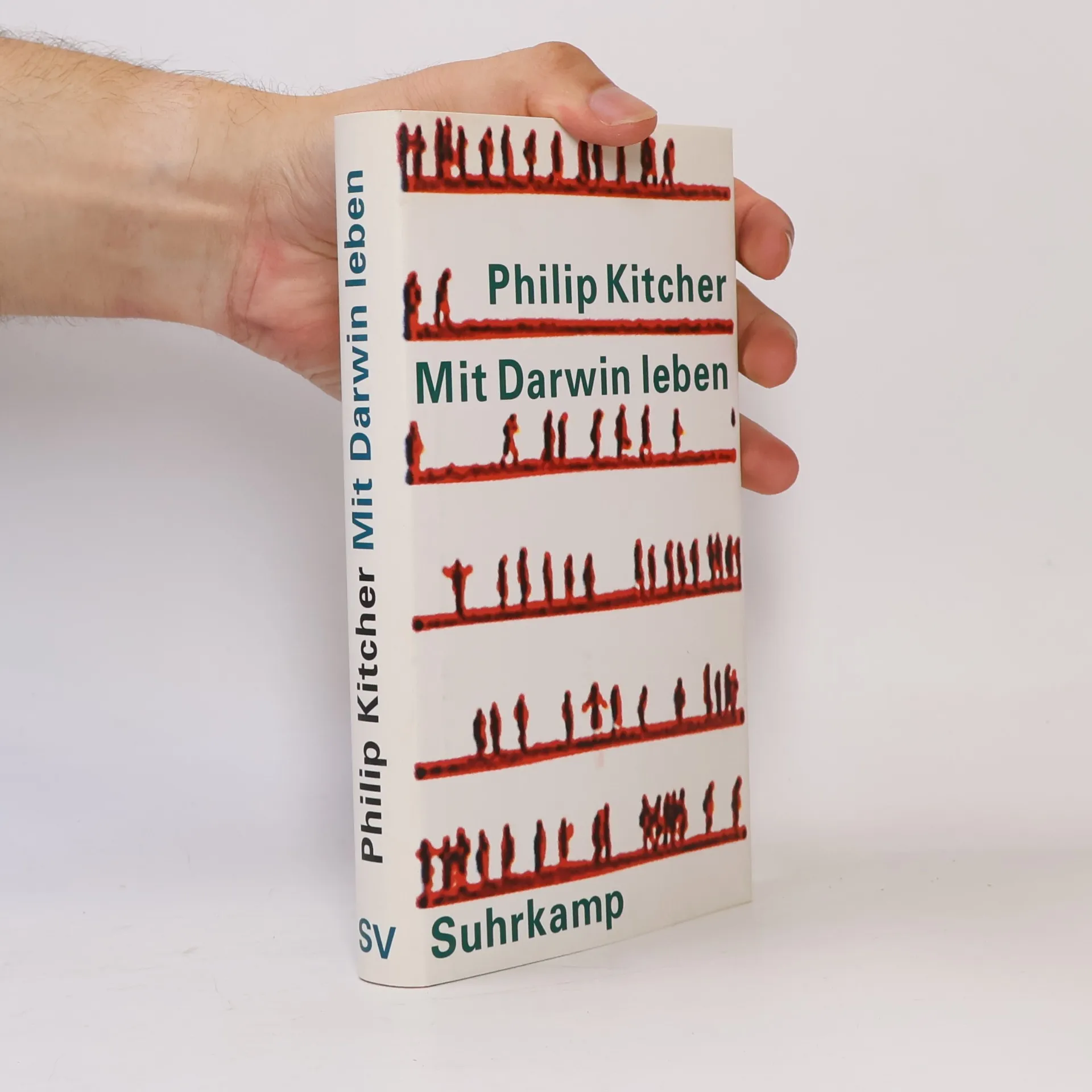
      Mit Darwin leben

      Evolution, Intelligent Design und die Zukunft des Glaubens

      Als Charles Darwin im Jahr 1882 starb, sollte er auf Wunsch der Familie auf dem Friedhof jenes kleinen Dorfes in Kent beigesetzt werden, in dem er fast sein halbes Leben verbracht hatte. Daraus wurde nichts. Eine öffentliche Kampagne mit ausdrücklicher Unterstützung der anglikanischen Kirche führte dazu, dass der Begründer der Evolutionstheorie ein Staatsbegräbnis erhielt und seine letzte Ruhestätte in der Westminster Abbey fand - direkt neben dem Grabmal Isaac Newtons. Der Frieden zwischen der Kirche und Darwin war allerdings nur von kurzer Dauer. Heute, 150 Jahre nach der Veröffentlichung von On the Origin of Species, ist der Kampf um die Evolutionstheorie wieder neu entbrannt und Darwins gefährliche Idee steht insbesondere für Vertreter der christlichen Schöpfungslehre und ihrer wissenschaftlichen Spielart, der sogenannten Intelligent-Design-Theorie, zur Disposition.

      Mit Darwin leben
    • 1997

      The Lives to Come

      • 400 pages
      • 14 hours of reading
      3.8(31)Add rating

      Delving into the forefront of genetic research, Philip Kitcher explores the profound philosophical implications of this scientific revolution. He addresses critical ethical, legal, and political questions that arise from advancements in genetics, prompting readers to consider the broader impact of these developments on society both now and in the future.

      The Lives to Come