
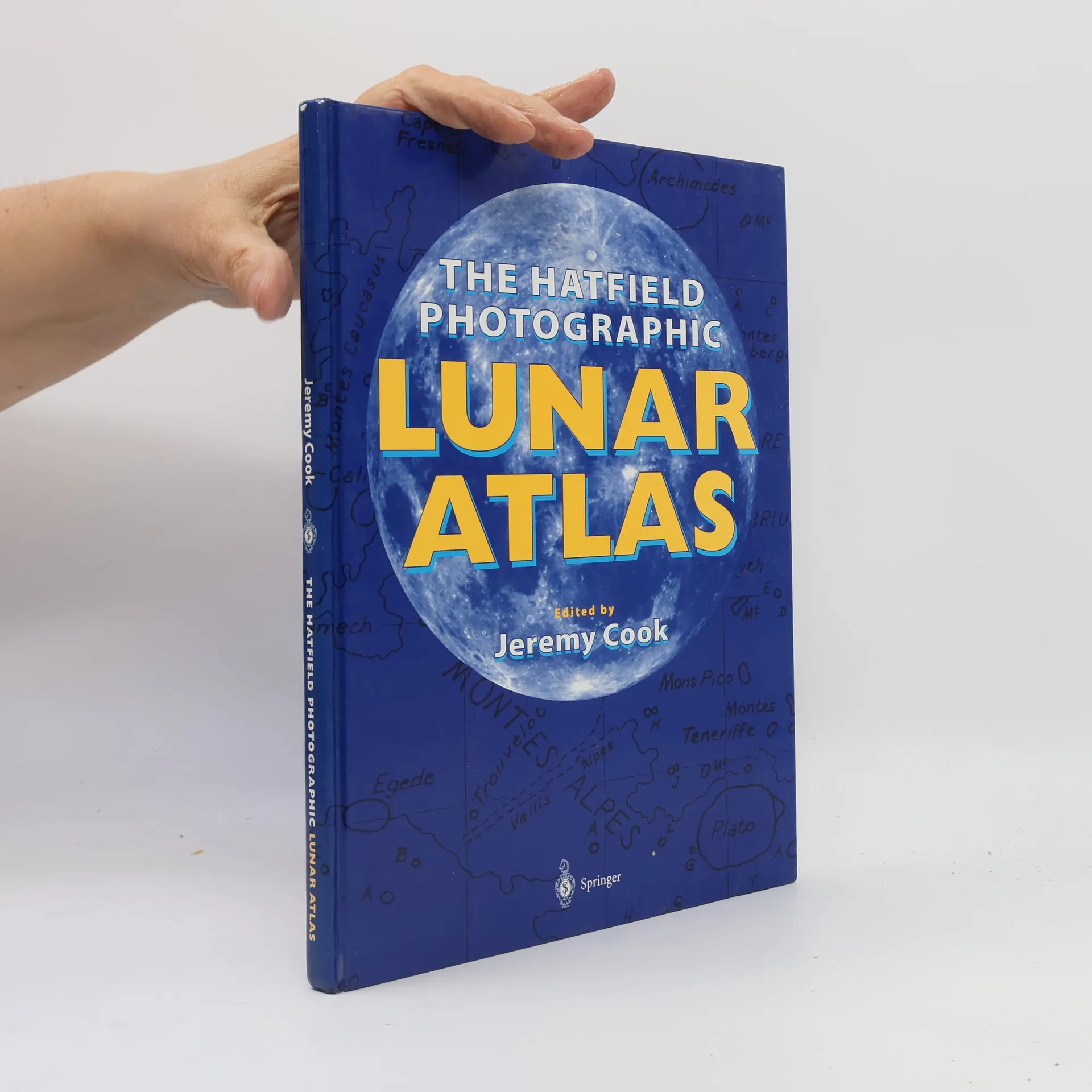
Long regarded as the finest photographic lunar atlas available, The Hatfield Lunar Atlas is a model of accuracy and clarity. This new version updates some of the maps, names and technical data, but uses Commander Henry Hatfield's original - and unexcelled - photographic plates, taken with a purpose-built 30 cm reflector. The Atlas is divided into sixteen sections, each of which is made up of five or more photographic plates together with a map. Each map is based primarily of the facing plate. Where detail is lacking on this primary plate (particularly near the Moon's limb) supplementary detail is provided by one or more of the other plates in a particular section.
Jeremy Cook Books
Jeremy Cook is an author whose background in finance and business informs his writing. His experiences, including significant financial setbacks and involvement in high-stakes legal battles, provide a unique perspective on wealth, risk, and the human condition. Cook's work often delves into the complexities of financial markets and the personal toll they can take, offering readers a nuanced exploration of economic realities and their impact on individuals.


Ghost Trader
- 372 pages
- 14 hours of reading
Exploring the interplay between wealth and perception, this book delves into how dreams can distort our understanding of reality while highlighting the deceptive nature of affluence. It challenges readers to reconsider their values and the societal constructs surrounding wealth, ultimately prompting a deeper reflection on what is truly real versus what is merely an illusion. Through thought-provoking insights, it invites a journey into the complexities of human desire and aspiration.
The Hatfield Sct Lunar Atlas
Photographic Atlas for Meade, Celestron and Other Sct Telescopes
- 122 pages
- 5 hours of reading
The book addresses the challenges of using SCT and Maksutov telescopes, particularly the issue of reversed visual images that complicate lunar feature identification. It discusses how conventional atlases depict the Moon with south at the top, creating a "mirror image" effect that can confuse observers. The focus is on popular models from leading manufacturers like Meade and Celestron, providing insights into navigating these difficulties for more effective lunar observation.